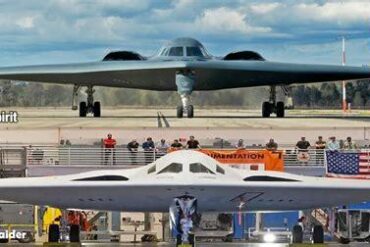
The B-21 Raider is moving through one of the most closely guarded aircraft production programs in the world, making a simple question surprisingly difficult to answer: how many bombers will Northrop Grumman actually build each year? The United States Air Force has confirmed the aircraft is in low-rate initial production and remains on track for operational service in 2027, but it has not published a straightforward annual production schedule. That leaves analysts working from budget documents, executive comments, procurement lots, facility plans, and the broader structure of the U.S. strategic bomber fleet.
What can be established is that production is gradually moving beyond the prototype stage. The first B-21 flew in 2023, low-rate production contracts followed in 2024, and additional aircraft have been ordered for flight and ground testing. Yet the exact number of Raiders at different stages remains classified or simply undisclosed. Public statements therefore provide pieces of the puzzle rather than a complete production chart.
A reasonable estimate is that the program could eventually deliver roughly nine to 11 B-21 Raiders per year, with a mature rate around ten aircraft annually becoming plausible near the end of the decade. Earlier expectations were closer to seven or perhaps nine aircraft per year. Additional funding intended to accelerate production could add roughly two aircraft to the annual output once expanded facilities, tooling, workers, and suppliers are ready.
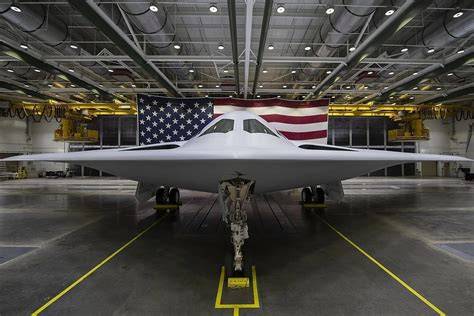
B-21 Raider Production Remains Classified
The unusual secrecy surrounding the B-21 makes production estimates different from those for commercial aircraft or even many other military programs. Northrop Grumman and the Air Force have released photographs and broad milestones, but they have not provided a public monthly or annual delivery schedule. Even the number of aircraft physically present at Air Force Plant 42 in Palmdale, California, cannot be established with confidence from official announcements alone.
That distinction matters when interpreting comments from Northrop Grumman executives. In 2025, CEO Kathy Warden said the company was through its first two production batches. Some observers interpreted that statement as evidence that roughly 40 aircraft were already represented by early production activity. That conclusion appears too aggressive because production batches, aircraft lots, test articles, and aircraft at different stages should not automatically be counted as completed operational airframes.
The lack of a public figure does not mean production is standing still. The B-21 can exist simultaneously in structural assembly, systems integration, ground testing, flight testing, and final preparation, while long-lead components may be purchased well before an aircraft reaches final assembly. Consequently, a statement about a production lot does not necessarily mean that the same number of complete bombers has rolled out or been delivered.
How Many B-21s Are Being Built Today?
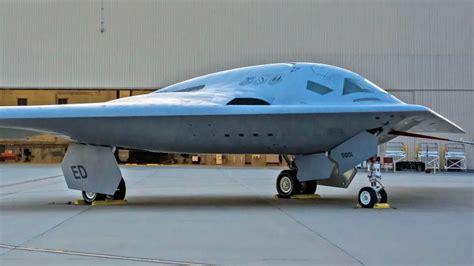
The safest public assessment for 2026 is that the Air Force has at least two flying test aircraft, while additional Raiders are involved in ground testing, assembly, or other production activities. Six test aircraft have reportedly been ordered and built at Plant 42, although the precise status of each airframe is not fully public.
The early production lots appear to average around four aircraft, with five lots associated with more than 20 aircraft in some estimates. However, those figures should be treated carefully. They indicate procurement and manufacturing activity rather than a precise count of aircraft currently sitting on the flight line.
It is currently more defensible to describe the program as having at least two flying examples, several aircraft associated with ground testing, and additional airframes at different stages of assembly and production. Depending on how unfinished aircraft and long-lead components are counted, the total activity could represent somewhere between roughly ten and more than 20 aircraft. That is very different from claiming that dozens of completed Raiders are already operational.
The first B-21 flew in November 2023, establishing the program’s transition from development into flight testing. The Air Force announced its second test aircraft in September 2024, providing another important milestone. Northrop later indicated that another test article was being sold to the Air Force, reinforcing the picture of a growing test fleet rather than a program limited to one prototype.
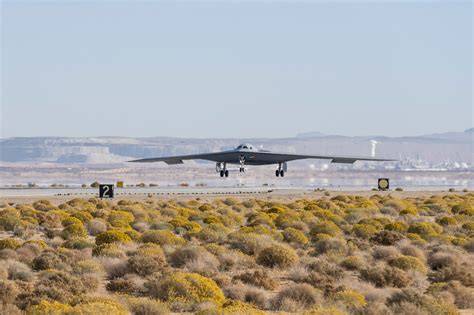
Why B-21 Production Could Reach Ten Aircraft Per Year
That secrecy also affects how confidently outside observers can forecast the program. A production line can appear quiet from public reporting while work continues behind closed doors, particularly when aircraft are being assembled for testing rather than announced as operational deliveries. Conversely, a large procurement authorization can create the impression of rapid production even when the aircraft are still represented by contracts, components, or work in progress. The safest approach is therefore to separate ordered aircraft, aircraft under construction, completed aircraft, and operational Raiders. Those categories overlap in time but are not interchangeable.
The major change in the production outlook came from additional funding. In early 2025, then-Air Force Secretary Frank Kendall said he had discussed the possibility of increasing the B-21 production rate with industry. He also indicated that the practical limits of acceleration were tied to the government’s five-year planning horizon.
Congress subsequently provided approximately $4.5 billion in supplementary funding intended to accelerate B-21 production by about 25%. That does not mean the factory can immediately produce 25% more finished aircraft. A modern stealth bomber depends on specialized manufacturing equipment, trained personnel, carefully qualified suppliers, and complex integration processes. Expanding any one of those elements without the others would simply move the bottleneck somewhere else.
An earlier mature production estimate of roughly seven to nine aircraft annually can therefore be shifted upward toward nine to 11 aircraft per year. Ten Raiders per year is a useful midpoint for understanding the potential scale, but it should not be mistaken for an officially announced production target.
When Could Full-Rate Production Begin?
The timing is just as important as the eventual annual number. The B-21 is still in low-rate initial production, a phase designed to prove manufacturing processes while flight testing and operational development continue. Full-rate production normally requires confidence that the production system can repeatedly deliver aircraft at the desired quality and cost.
For the Raider, full-rate production could plausibly arrive around 2029 or somewhat later. That estimate reflects the time required to turn additional funding into physical production capacity. A decision made in 2025 does not instantly create a mature assembly line. Facilities must be prepared, specialized tooling installed, workers trained, and suppliers brought up to the required output.
The aircraft itself also has to move through testing and certification milestones. The B-21 is intended to enter operational service in 2027, but early operational aircraft can still be part of a broader maturation process. The difference between producing an airframe and having a fully combat-ready bomber is significant.
Could 100 B-21 Raiders Be Delivered by the Mid-2030s?
The Air Force has repeatedly described 100 B-21s as the minimum planned procurement, although recent reporting has indicated that a larger fleet of 145 or more aircraft is being considered. The additional Fiscal 2026 funding is primarily associated with accelerating production rather than formally changing the procurement objective.
At an annual delivery rate of around nine to 11 aircraft once production matures, reaching 100 total aircraft becomes a mid-to-late 2030s proposition. A simplified scenario using roughly ten deliveries per year would not mean ten brand-new operational bombers appear every calendar year immediately. Early production remains slower, and aircraft are also needed for testing and development.
The 25% production increase could nevertheless have a meaningful cumulative effect. If it ultimately translates into approximately two additional deliveries each year from around 2028 through 2035, the increase could amount to roughly 16 additional aircraft over that period. That is an estimate rather than a published Air Force schedule, but it illustrates why industrial capacity is so important to the program’s timeline.
If procurement eventually rises to 145 B-21 Raiders, production would probably need to continue well beyond the point at which the first 100 aircraft are delivered. Depending on the mature annual rate and future budget decisions, that could push the program into the 2040s.
The B-21 Is Not Simply Replacing Every B-1 and B-2 One-for-One
The broader bomber fleet provides another clue about the intended scale of the Raider program. In 2026, the Air Force fleet includes approximately 44 B-1B Lancers, 19 B-2 Spirits, and 75 to 76 B-52Hs, alongside the growing B-21 force. On paper, replacing the B-1 and B-2 with 100 B-21s would already increase the number of modern stealth bombers available compared with the current B-2 fleet.
The transition is not happening through a simple one-for-one exchange. Earlier plans called for faster B-1 retirements, but more recent budget planning has extended the service life of both B-1 and B-2 aircraft to help avoid operational gaps. The B-1 fleet is now funded into the 2030s, while B-2 aircraft are expected to remain available into the late 2030s.
That overlap is strategically significant. It means the Air Force can introduce the B-21 while retaining some legacy bombers rather than waiting for each old aircraft to retire before adding its replacement. The result could be a larger bomber force during the transition period.
The B-52 is a separate case. Its modernization into the B-52J is expected to keep the aircraft relevant into the 2040s and 2050s, allowing it to operate alongside the B-21 rather than being replaced by it.
What the B-21 Production Line Could Look Like by 2030
If the current trajectory holds, the late 2020s should be the critical period for the Raider’s industrial expansion. By 2030, a plausible fleet estimate is somewhere around 25 to 35 B-21s, depending on how quickly production accelerates and how many aircraft are assigned to testing, training, development, and operational units.
A ten-aircraft annual production rate would represent a step up from the program’s early low-rate phase. It would also place the B-21 among the more significant U.S. military aircraft production programs, even though its manufacturing process is necessarily slower and more controlled than that of a conventional fighter.
The physical production line at Palmdale will be only part of the story. A stealth bomber depends on a broad industrial network, including composite structures, coatings, avionics, propulsion, mission systems, electronic warfare equipment, and specialized components. A shortage anywhere in that chain can limit the final delivery rate.
For that reason, the headline number of ten aircraft per year should be viewed as the output of an entire industrial ecosystem rather than simply the number of bombers workers can assemble inside one building.
The Biggest Variable Is Still the Final Fleet Size
The Air Force’s long-standing minimum of 100 aircraft establishes a baseline, but a requirement for 145 or more would fundamentally extend the production timeline.
A 100-aircraft fleet combined with roughly 76 B-52s would produce a future bomber force exceeding the current combined B-1, B-2, and B-52 inventory in numerical terms. A 145-aircraft B-21 fleet would expand that total even further. However, aircraft numbers alone do not determine combat capability, because readiness, weapons availability, crew training, maintenance, basing, and mission availability all affect how much usable force the Air Force actually has.
The B-21 program is therefore best understood as a long-term industrial transformation rather than a short burst. The early aircraft are establishing the testing and operational foundation, while additional funding is preparing the manufacturing system for a higher rate. The precise numbers remain hidden, but the direction is becoming easier to understand.
A Ten-Per-Year B-21 Production Rate Is Plausible, Not Official
That is why the annual figure should be treated as a production-rate estimate, not a promise about fleet size in any individual year. The industrial base will determine how quickly the aircraft can be delivered; future budgets and strategy will determine how long the line remains busy.
The most defensible public estimate is that B-21 production could mature at around nine to 11 aircraft per year, with approximately ten annually serving as a reasonable midpoint. Earlier estimates were lower, while the 2025 funding increase provides a mechanism for pushing the industrial base toward the higher range.
That does not mean ten Raiders will roll out every year beginning immediately. The program remains in low-rate initial production, and the transition to full-rate manufacturing could take several more years. The Air Force and Northrop Grumman also have to balance operational aircraft with test and development requirements.
What makes the production question so fascinating is that even a relatively small annual increase compounds quickly. Two additional bombers per year can become more than a dozen extra aircraft over a decade, while an increase from 100 to 145 total aircraft could keep the production line active for many years longer.
By the early 2030s, the B-21 should provide a much clearer picture of its true manufacturing rhythm. Until then, the best available answer is necessarily an estimate: around ten Raiders per year once the production system matures, with the possibility of sustained output near the upper end of that range if funding, facilities, suppliers, and testing all remain aligned.