Some aircraft programs fail before an airframe is ever completed. Others go much further: prototypes fly, customers sign contracts, certification campaigns consume years, and production infrastructure begins taking shape. Yet even at that advanced stage, an aircraft can still disappear when money, market conditions, industrial strategy, or certification challenges become impossible to overcome.
The five aircraft examined here are especially striking because their cancellations came after manufacturers had already invested heavily in turning ambitious designs into real commercial products. Some flew hundreds or thousands of hours. One received a type certificate. Another was already sitting on the factory floor with a major airline lined up as its launch customer.
What makes these stories particularly fascinating is that the aircraft themselves were not necessarily failures. In several cases, the decisive problem was the world around them. Financial crises, changing airline requirements, competing programs, manufacturing difficulties, and corporate strategy ultimately mattered more than the underlying engineering.
Mitsubishi SpaceJet: Thousands of Flight-Test Hours Could Not Save the Program
The Mitsubishi SpaceJet came closer to commercial service than almost any other canceled Japanese airliner program. Originally launched as the Mitsubishi Regional Jet (MRJ), the aircraft represented an extraordinary attempt by Mitsubishi Heavy Industries to establish Japan as a major player in modern commercial aircraft manufacturing.
The program formally began in 2008 after All Nippon Airways (ANA) ordered 15 aircraft and took options for another 10. Mitsubishi initially envisioned entering service in 2013, a remarkably aggressive target for a company developing its first clean-sheet commercial airliner. The aircraft was intended to compete in the regional-jet market dominated by manufacturers such as Embraer and Bombardier.
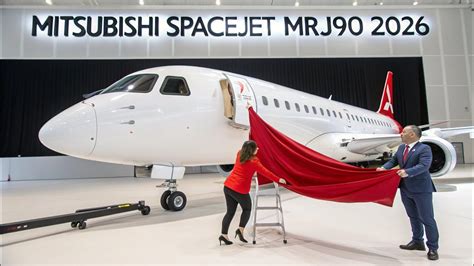
The schedule quickly began slipping. The first flight eventually took place on November 11, 2015, roughly two years after the original planned entry into service. The 90-minute maiden flight proved that Mitsubishi could turn its design into a flying aircraft, but flight testing exposed additional certification and engineering challenges.
Mitsubishi subsequently established a major flight-test operation at Moses Lake in Washington State, giving the program access to extensive testing opportunities in the United States. The company also invested heavily in facilities, engineering expertise, certification procedures, and the organizational infrastructure required to become a commercial aircraft manufacturer.
The numbers illustrate just how far the project progressed. According to Mitsubishi Heavy Industries, the SpaceJet accumulated more than 3,900 flight-test hours without safety issues. That represented an enormous amount of testing for a program that ultimately never carried a single scheduled passenger.
Yet certification remained unfinished. Design revisions continued, suppliers presented difficulties, and the manufacturer faced increasingly serious financial requirements. More importantly, the aircraft’s 88-seat M90 encountered a fundamental problem in the North American market: its configuration did not fit US airline scope-clause restrictions, which govern important aspects of regional-airline aircraft.
Mitsubishi paused development in 2020 and finally canceled the SpaceJet program in February 2023. By then, the company had demonstrated that it could design, build, test, and operate a sophisticated commercial jet. But proving technical capability was not enough. The economics of completing certification and finding a sufficiently large market had become too difficult.
The SpaceJet therefore stands as one of aviation’s clearest examples of an aircraft that was remarkably close to service yet ultimately defeated by certification costs, market limitations, and program complexity.
Tupolev Tu-334: A Type Certificate Without an Airline Passenger
The Tupolev Tu-334 followed a very different path. Its roots stretched back to the Soviet era, when the aircraft was envisioned as a replacement for the widely used Tu-134. The original ambition was for the aircraft to join Aeroflot during the early 1990s, but history intervened before that could happen.
The collapse of the Soviet Union created enormous economic and industrial disruption. Funding for aerospace development became much harder to secure, while Russia’s aviation industry struggled to determine which projects deserved scarce resources. Consequently, the Tu-334’s development extended far beyond its original schedule.
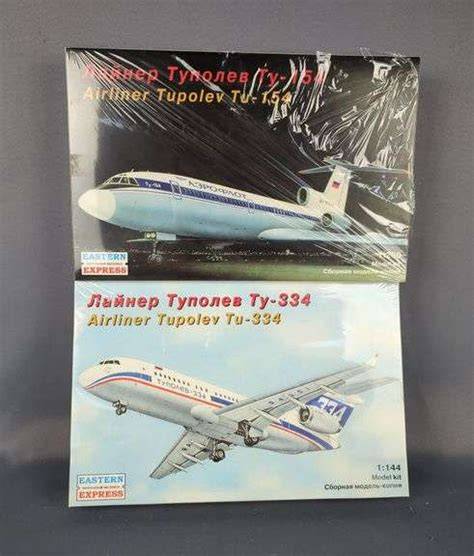
The first functional aircraft finally flew on February 8, 1999. A second flying prototype followed in November 2003, demonstrating that Tupolev had managed to keep the project alive despite years of uncertainty.
The program even accumulated tangible commercial interest. Manufacturing arrangements were discussed across several facilities, and in December 2003 a factory in Kyiv received an order for five aircraft intended for two Russian airlines. None of those aircraft were ultimately built.
The most remarkable milestone arrived on December 30, 2003, when the Tu-334 received a Russian type certificate. At first glance, that sounds like the aircraft had crossed the final barrier separating it from airline service.
There was, however, an important qualification.
The certificate was temporary rather than full approval for passenger operations. Tupolev still needed to complete another aircraft and conduct additional certification testing before the Tu-334 could receive the necessary authorization for regular passenger flights.
That final stage never happened.
Production plans moved between facilities, including proposals to begin series manufacturing in Kazan in 2007. But funding remained constrained, while Russia’s aerospace industry increasingly concentrated its resources on newer projects. The Sukhoi Superjet 100 became a strategic priority, while the Antonov An-148 occupied a similar regional-aircraft market.
The Tu-334 was consequently left behind. By 2009, after roughly two decades of development and only two flying prototypes, the program was effectively abandoned.
Its story is unusual because the aircraft had already passed a milestone that many canceled programs never reach. Yet a type certificate alone could not create an airline. Without sufficient funding, production capacity, customer commitment, and strategic backing, certification became an achievement without a commercial future.
Fairchild Dornier 728: A Factory-Complete Jet That Never Flew
The Fairchild Dornier 728 may have been physically closer to service than its cancellation initially suggests. Unlike aircraft that disappeared while still existing primarily as engineering projects, the 728 reached the factory floor and was almost ready for its first flight.
Fairchild Dornier intended the 728 to become the foundation of a new family of regional jets. The company was targeting a market where Bombardier and Embraer were establishing increasingly strong positions, and it needed substantial customer support to justify the investment.
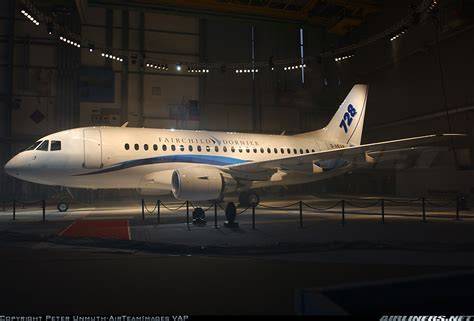
By March 2002, the program had reportedly secured 125 firm orders and 164 options from eight customers. That was a substantial commercial commitment. Lufthansa CityLine was positioned as the launch customer, while GECAS was also among the major buyers.
The aircraft itself was no longer merely a drawing. On March 21, 2002, the first prototype was rolled out at Fairchild Dornier’s German production facility. The maiden flight was scheduled for that summer, and deliveries to Lufthansa CityLine were expected in 2003.
Other airframes were also being prepared for structural and certification testing.
Then the program collapsed with extraordinary speed.
Fairchild Dornier had accumulated substantial debt during development and was unable to secure the financing required to continue. Less than two weeks after the rollout, on April 2, 2002, the manufacturer filed for insolvency.
The timing was devastating. The 728 had not failed because its prototype could not fly. It had not suffered a catastrophic test accident. It had not lost all of its prospective customers because of poor performance. Instead, the company responsible for completing the aircraft ran out of financial room at precisely the point when the program was transitioning from development into flight testing and production.
Customers quickly withdrew their orders, including Lufthansa and GECAS. Several attempts were later made to revive the program under different ownership arrangements, but none succeeded.
The Fairchild Dornier 728 consequently became one of aviation’s most frustrating “almost aircraft.” It had customers, a completed prototype, production preparations, and a scheduled first flight. The aircraft was ready for the next chapter, but the company could not survive long enough to write it.
IPTN N250: Indonesia’s Ambitious Turboprop Interrupted by Crisis
The IPTN N250 represented something larger than another regional aircraft project. For Indonesia, it was a statement that the country could develop an indigenous commercial airliner and compete internationally in a demanding technological industry.
Developed by the state-owned IPTN, now known as Indonesian Aerospace, the N250 was designed as a regional turboprop competing broadly with aircraft from ATR, de Havilland Canada, and Fokker.
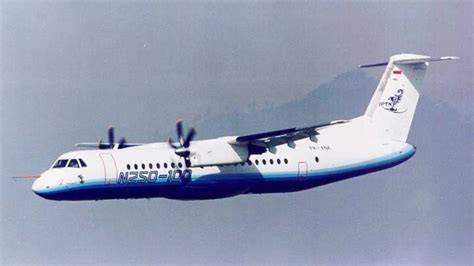
The first 50-seat prototype rolled out in 1994 and made its maiden flight on August 10, 1995. The occasion was so significant nationally that August 10 later became Indonesia’s National Technology Awakening Day.
A second, stretched version followed in December 1996. With capacity increased to approximately 64 to 68 passengers, it demonstrated that IPTN had ambitions to create more than a single limited-production aircraft.
The N250 was also being developed with international certification in mind. IPTN pursued Western certification standards and even considered establishing a second assembly line in the United States. The company was therefore attempting to build not simply an aircraft, but an international commercial-aircraft business around it.
By the time development stopped, the program was reportedly about halfway through a planned 1,400-hour flight-test campaign. Certification had originally been targeted for March 1999 but was later pushed into the fourth quarter of 2000.
Then the Asian financial crisis of 1997–1998 transformed the project’s prospects.
Indonesia was hit particularly hard. The country required an international financial rescue package, and government support for expensive industrial projects was withdrawn. Without the necessary funding, IPTN could no longer finance the remaining certification work or establish the production system required for airline deliveries.
The N250 itself therefore became a casualty of national economics rather than a straightforward engineering failure. Additional prototypes were abandoned, attempts were made to attract outside investment, and the project never regained its previous momentum.
For Indonesia, the N250 remains a powerful example of how commercial aviation programs depend on financial stability as much as engineering talent.
British Aerospace Jetstream 61: Certified, Flown, and Still Never Used by an Airline
The British Aerospace Jetstream 61 perhaps offers the clearest example of an aircraft being canceled for strategic reasons after overcoming many of the technical obstacles normally associated with certification.
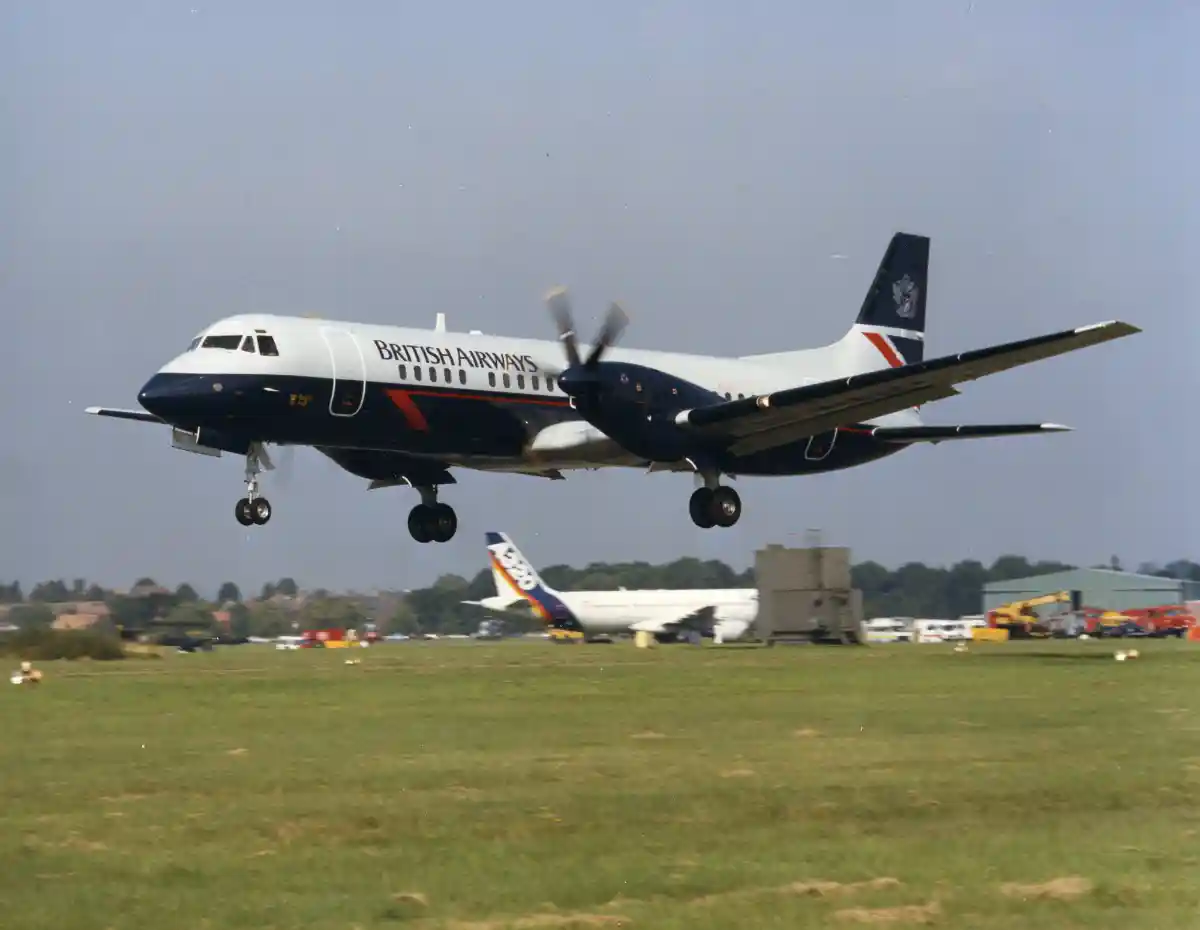
The aircraft was not an entirely new design. It evolved from the British Aerospace ATP, a 64-seat turboprop that had entered commercial service in 1988. The ATP had struggled to compete against successful rivals such as the ATR 42 and Dash 8, with only 63 examples ultimately produced.
British Aerospace responded by developing a larger and improved derivative initially known as the ATP Mk 2. It was eventually renamed the Jetstream 61.
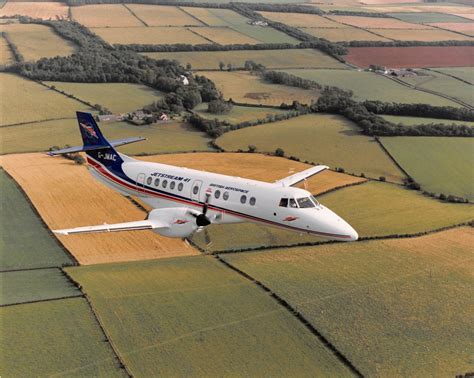
The redesigned aircraft could accommodate around 70 passengers and incorporated more powerful Pratt & Whitney PW127D engines, higher operating weights, additional range, and an updated passenger cabin. The first example flew from Glasgow Prestwick International Airport on May 10, 1994.
British Aerospace built four examples, with two reportedly becoming flying aircraft.
Then came the milestone that makes the Jetstream 61 particularly extraordinary.
On June 16, 1995, the aircraft received its UK type certificate.
Technically, the aircraft had crossed one of the most important barriers between development and commercial operation. Yet certification did not create a viable business case.
Earlier in 1995, British Aerospace had agreed to combine its regional-aircraft marketing activities with the Franco-Italian ATR consortium. That changed the strategic equation almost immediately.
The Jetstream 61 and ATR 72 occupied broadly similar market territory. Continuing to manufacture and sell two competing turboprops with comparable capacities made little sense when British Aerospace could instead concentrate its regional-aircraft strategy around the already established ATR family.
The Jetstream 61 was therefore abandoned despite being built, flown, and certified.
None of the four aircraft ever carried a scheduled passenger. Eventually, all four were scrapped.
Why These Aircraft Got So Close—and Still Failed
These five programs reveal that reaching the final stages of aircraft development does not guarantee commercial survival. In fact, the closer a project gets to service, the more complicated the financial decision can become.
The Mitsubishi SpaceJet demonstrated enormous technical progress but became trapped between expensive certification requirements and unfavorable market rules. The Tu-334 reached temporary certification but lacked the industrial and financial support required to finish the job. The Fairchild Dornier 728 had customers and a nearly complete prototype but lost its manufacturer to insolvency.
The IPTN N250 was undermined by a national financial crisis that removed the government support necessary to finish certification. Meanwhile, the Jetstream 61 was arguably the simplest case: it was already certified, but corporate strategy made continuing the program commercially unnecessary.
That distinction matters. Aircraft programs do not exist in isolation. A technically sound airplane still needs customers, financing, suppliers, certification resources, manufacturing capacity, and a market large enough to repay billions in development costs.
These aircraft got remarkably close because their manufacturers solved many of the hardest problems in aerospace engineering. They produced prototypes, conducted testing, developed production plans, secured customers, or achieved certification. But commercial aviation demands more than a flyable aircraft.
Ultimately, each program encountered a barrier that engineering alone could not overcome. Their unfinished stories show just how narrow the path can be between an aircraft becoming an airline workhorse and becoming an abandoned prototype.