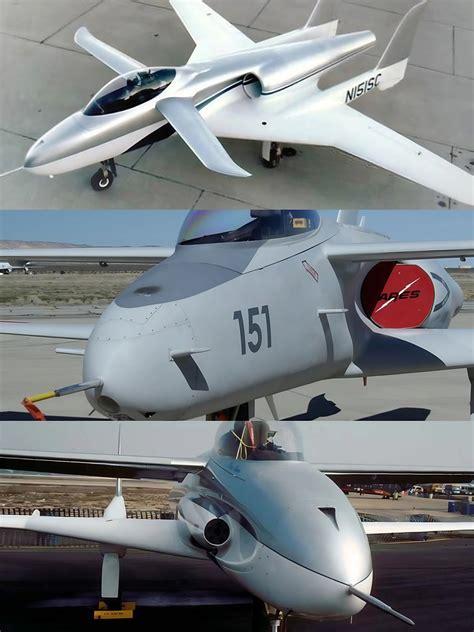
Military and commercial aviation history is filled with aircraft that promised to transform the skies but ultimately disappeared before mass production. Some were victims of politics, others of rapidly evolving technology, and a few simply arrived at the wrong moment in history. Yet many of these machines demonstrated extraordinary engineering brilliance, pushing the boundaries of speed, aerodynamics, and design philosophy.
These aircraft represent a fascinating paradox. They flew successfully, proved their technological concepts, and sometimes even outperformed competitors. Despite that success, changing strategic priorities, economic collapse, or shifting industry demands ended their journeys prematurely. Their stories reveal how innovation alone is not always enough to guarantee survival in aviation.
The prototypes highlighted here showcase remarkable achievements—from Mach 3 strategic bombers to stealth fighters that nearly changed the balance of air power. Each one played a role in shaping modern aerospace engineering, even though the production lines never materialized.
Avro Canada CF-105 Arrow: Canada’s Lost Supersonic Interceptor
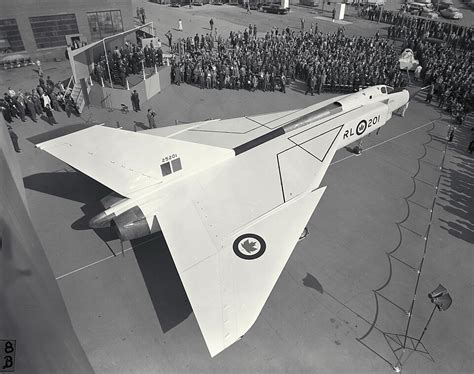
During the Cold War, Canada briefly stood at the forefront of aerospace innovation. The Avro Canada CF-105 Arrow was designed as a next-generation interceptor capable of defending North America against Soviet nuclear bombers. Developed by Avro Canada, the aircraft represented one of the most advanced aviation projects of the late 1950s.
The Arrow’s design was revolutionary for its time. It featured a large delta wing, a sophisticated fly-by-wire style control philosophy, and an integrated fire-control radar system capable of guiding advanced air-to-air missiles. Designed to operate at speeds above Mach 2 and at extremely high altitudes, the Arrow promised to intercept enemy bombers long before they could threaten North American cities.
Five prototypes were constructed, and the aircraft conducted its first flight in March 1958. Test pilots immediately reported excellent handling characteristics and exceptional performance. In several test flights, the Arrow exceeded expectations, demonstrating stability and acceleration that rivaled the most advanced fighters of its era.
Despite these achievements, the program collapsed in 1959 after the Canadian government abruptly canceled it. Strategic thinking had shifted toward surface-to-air missile systems and continental defense networks such as NORAD. Maintaining an expensive interceptor program no longer seemed politically viable.
The consequences were severe. Not only were the prototypes destroyed, but the manufacturing tooling and technical documentation were also dismantled. Thousands of engineers and aerospace specialists left Canada, many joining companies in the United States and Britain. The cancellation remains one of the most controversial decisions in Canadian aviation history, symbolizing both technological ambition and lost opportunity.
North American XB-70 Valkyrie: The Mach 3 Strategic Bomber
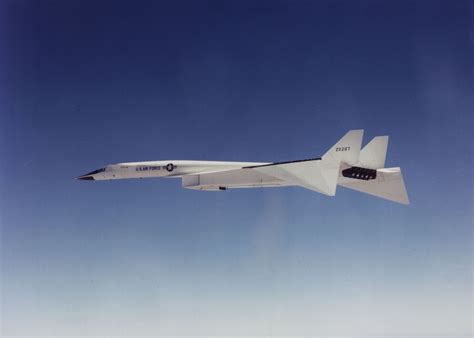
Few experimental aircraft captured the imagination of aviation enthusiasts like the North American XB-70 Valkyrie. Designed in the late 1950s for the United States Air Force, the Valkyrie was intended to be the ultimate strategic bomber.
Its mission profile was extraordinary. The aircraft would cruise at Mach 3.1—more than three times the speed of sound—while flying at altitudes approaching 77,000 feet. At these speeds and heights, enemy interceptors would struggle to reach it, allowing the bomber to penetrate Soviet airspace with relative immunity.
The Valkyrie’s design incorporated advanced aerodynamic innovations. Its delta wing with folding wingtips improved high-speed stability and generated compression lift, allowing the aircraft to ride its own shockwave for increased efficiency. Powered by six powerful turbojet engines, the bomber represented a massive leap in supersonic engineering.
Only two prototypes were ever built. Both demonstrated incredible speed and stability during testing. However, by the early 1960s, strategic thinking had changed dramatically. The development of intercontinental ballistic missiles (ICBMs) and sophisticated surface-to-air missile systems meant that even a Mach 3 bomber might be vulnerable.
Tragedy struck in 1966, when the second prototype collided with an F-104 Starfighter during a formation photo shoot. The accident destroyed the aircraft and killed two crew members. The remaining prototype continued research flights until 1969, when it was retired and placed in the National Museum of the United States Air Force.
Although it never entered service, the XB-70 contributed enormously to high-speed aerodynamics research and supersonic transport studies.
Northrop YF-23: The Stealth Fighter That Nearly Won
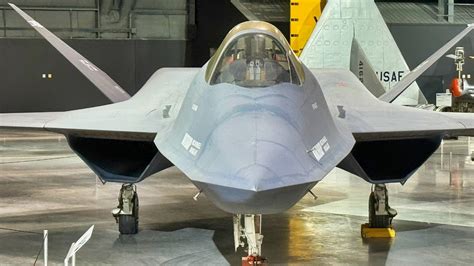
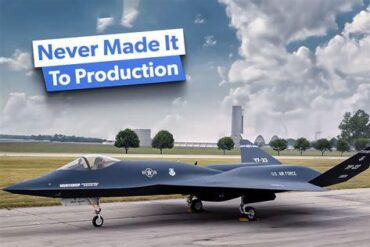
The Northrop YF-23 remains one of the most debated aircraft in modern aviation. Developed for the Advanced Tactical Fighter (ATF) competition during the late 1980s and early 1990s, it competed directly against the Lockheed YF-22, which later evolved into the F-22 Raptor.
At first glance, the YF-23 looked like something from the future. Its smooth, diamond-shaped wings, sharply angled tail surfaces, and elongated fuselage gave it an unmistakably futuristic appearance. Yet beneath the dramatic design was a highly practical stealth platform.
In many areas, the YF-23 actually outperformed its rival. The aircraft demonstrated higher top speeds, better supercruise capability, and a longer unrefueled range. Engineers also believed it had superior stealth characteristics, thanks to its carefully sculpted airframe and buried engine exhaust design.
Despite these advantages, the YF-22 won the contract in 1991. Several factors influenced the decision. Lockheed’s design demonstrated greater maneuverability, performed more impressive aerial demonstrations, and appeared closer to operational readiness. Additionally, Northrop was facing corporate scandals that weakened confidence in the company.
Only two YF-23 prototypes were built, nicknamed “Black Widow II” and “Gray Ghost.” Both are preserved today in aviation museums. The aircraft remains a symbol of how even an exceptional design can lose in a highly competitive procurement environment.
Eclipse 400: The Single-Engine Jet That Arrived Too Soon
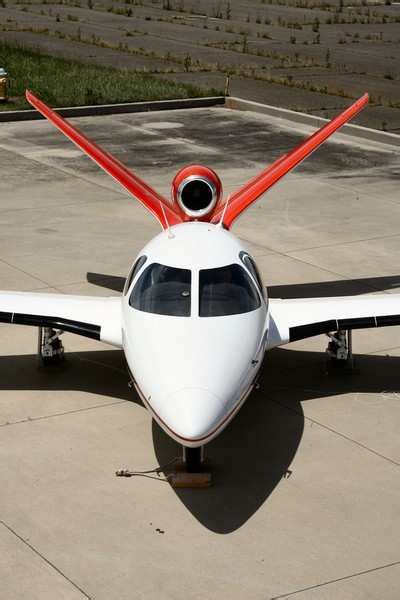
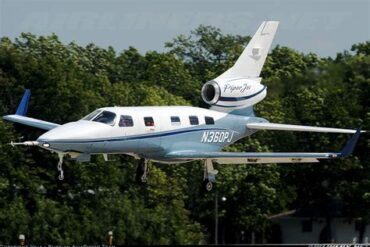
Not all revolutionary prototypes come from military programs. The Eclipse 400, originally called the Eclipse Concept Jet (ECJ), was a bold attempt to reshape the very light jet (VLJ) market.
Developed by Eclipse Aviation, the aircraft was designed as a compact, single-engine business jet capable of carrying four passengers. It was powered by a Pratt & Whitney Canada PW615F turbofan, offering jet performance in a small, relatively affordable package.
The concept was ambitious. At the time, most light business jets used twin-engine configurations due to safety concerns. Eclipse sought to challenge this convention by creating a highly efficient aircraft that reduced operating costs while maintaining strong performance.
The prototype was unveiled in 2007 and generated significant interest among private owners and corporate operators. However, the global financial crisis struck just as the program was gaining momentum. Eclipse Aviation entered bankruptcy in 2008, bringing development to a halt.
Only a single prototype was built. Ironically, the single-engine business jet concept later succeeded when Cirrus Aircraft introduced the Vision Jet, proving that Eclipse’s idea was technically viable but commercially premature.
Martin XB-51: The Unconventional Cold War Attack Aircraft
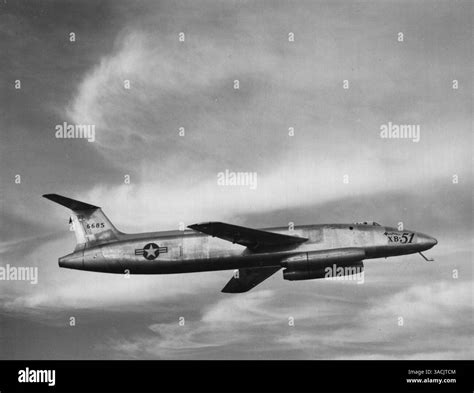
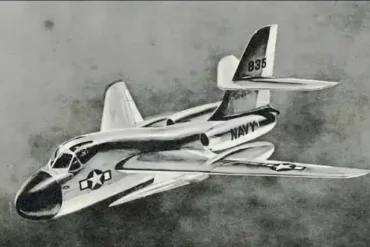
The Martin XB-51 was one of the most unusual aircraft developed during the early Cold War. Built by the Glenn L. Martin Company, it was designed as a high-speed tactical strike aircraft capable of delivering bombs deep into enemy territory.
The aircraft’s configuration was radically unconventional. It featured three turbojet engines, with two mounted beneath the forward fuselage and one positioned in the tail. Its swept wings were mounted high on the fuselage and could adjust their angle during flight, improving takeoff and landing performance.
The XB-51’s performance was impressive. With a top speed of approximately 645 miles per hour, it was one of the fastest attack aircraft of its era. Test pilots praised its agility and acceleration, noting that it handled more like a fighter than a bomber.
Despite these strengths, the aircraft faced stiff competition. The English Electric Canberra, a British-designed jet bomber, offered superior range and endurance while maintaining a simpler and more practical design.
Ultimately, the U.S. Air Force selected the Canberra, which was produced domestically as the Martin B-57 Canberra. Ironically, the company that lost the competition ended up manufacturing the winning aircraft under license.
Both XB-51 prototypes were eventually lost in accidents, ending the program permanently. Nevertheless, the aircraft remains a fascinating example of bold aerodynamic experimentation.
Douglas DC-1: The Prototype That Changed Air Travel
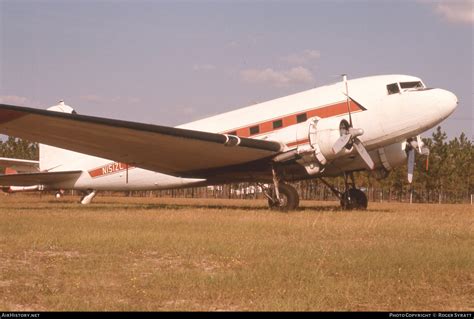
The Douglas DC-1 occupies a unique place in aviation history. Unlike most prototypes on this list, it succeeded brilliantly—but never entered production itself. Instead, it served as the foundation for a family of aircraft that transformed commercial aviation.
Developed in 1933 for Transcontinental and Western Air (TWA), the DC-1 was designed to compete with the Boeing Model 247. The aircraft introduced several groundbreaking features for passenger aviation, including a low-wing monoplane design, all-metal construction, and powerful twin engines.
Capable of carrying 12 to 14 passengers, the aircraft significantly outperformed earlier airliners such as the Ford Trimotor and Fokker Trimotor. It was faster, more reliable, and offered improved passenger comfort.
Only one DC-1 was built, but its success encouraged Douglas to develop the DC-2, which entered production shortly afterward. The design evolved further into the legendary Douglas DC-3, one of the most influential aircraft ever built.
The DC-3 became the backbone of global air transport, with thousands produced for both civilian and military use. In this sense, the DC-1 may be the most successful prototype in aviation history—an aircraft that never entered production but directly inspired one of the most iconic airliners ever created.
Yakovlev MC-21-300: A Promising Airliner Transformed by Sanctions
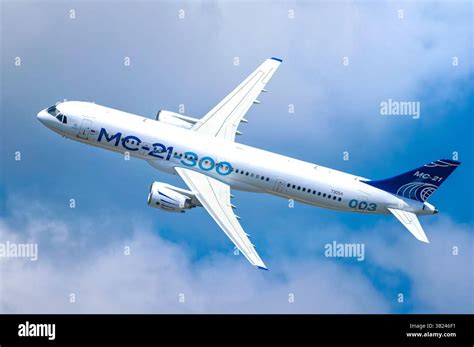
The Yakovlev MC-21-300 represents a unique case in modern aerospace development. Originally designed as Russia’s answer to the Airbus A320 and Boeing 737 MAX, the aircraft promised advanced efficiency and modern passenger comfort.
The MC-21 featured a composite wing, advanced avionics, and efficient Pratt & Whitney PW1400G geared turbofan engines. These technologies were expected to give the aircraft competitive fuel efficiency and range.
However, the geopolitical landscape changed dramatically after Western sanctions were imposed on Russia in 2022. Many critical components used in the aircraft—including avionics, electronics, and engines—were sourced from Western suppliers.
To keep the program alive, Russian engineers began replacing imported components with domestically produced alternatives. The new variant, known as the MC-21-310, uses the Aviadvigatel PD-14 engine and a wide range of locally developed systems.
While this allowed the aircraft to move toward production, the redesign introduced significant compromises. The modified aircraft became heavier, consumed more fuel, and experienced reductions in range and payload capacity.
From an engineering perspective, the MC-21 program survived extraordinary obstacles. Yet from the perspective of airlines that originally ordered the aircraft, the final product differs substantially from what they expected.
Why Brilliant Aircraft Sometimes Never Reach Production
These seven prototypes demonstrate a critical truth about aerospace innovation: technical excellence alone cannot guarantee success. Aircraft development exists at the intersection of engineering, politics, economics, and strategic priorities.
A project may fail because a government cancels funding, as happened with the Avro Arrow. It may lose a competitive procurement battle, like the YF-23. Economic collapse can end a promising commercial aircraft, as seen with the Eclipse 400.
In other cases, technological shifts render an aircraft obsolete before it even enters service. The XB-70 Valkyrie was designed to outrun fighter jets, only for missile technology to make speed less relevant. Similarly, geopolitical changes reshaped the fate of the MC-21.
Despite their canceled futures, these aircraft played crucial roles in advancing aviation technology. Research from experimental designs often feeds directly into later projects, influencing everything from aerodynamics and materials science to avionics and propulsion.
Some prototypes disappear quietly, while others become legendary symbols of unrealized potential. Together, they remind us that aviation progress often comes from bold experimentation—even when the final aircraft never rolls off a production line.
Frequently Asked Questions
Why are many prototype aircraft canceled despite successful test flights?
Prototype aircraft often meet their technical goals but fail due to budget constraints, political decisions, strategic changes, or shifting market demand. Aviation programs typically cost billions of dollars, so even successful prototypes can be canceled if circumstances change.
What happens to prototype aircraft after a program is canceled?
Many prototypes are preserved in aviation museums for historical and educational purposes. Others may be scrapped, dismantled, or used for further research and flight testing.
Do canceled prototypes still influence future aircraft designs?
Yes. Experimental aircraft frequently contribute valuable research data and technological innovations. Concepts tested in prototypes—such as stealth shaping, composite materials, and high-speed aerodynamics—often appear in later operational aircraft.