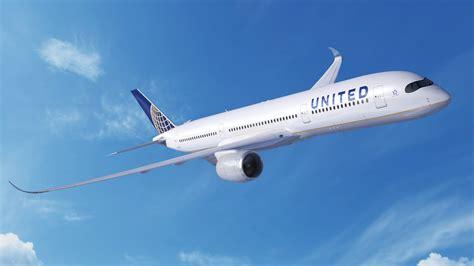
For nearly two decades, United Airlines carried an Airbus order that looked increasingly disconnected from reality. What began in 2009 as a bold attempt to modernize the airline’s long-haul fleet slowly evolved into one of the strangest unresolved aircraft commitments in modern commercial aviation. On paper, United remained an Airbus A350 customer. In practice, the airline never moved meaningfully closer to operating the jet.
Now, after years of delays, restructurings, variant swaps, and strategic reversals, United has effectively walked away from the aircraft it once positioned as a cornerstone of its future international network. The airline may not have formally canceled the Airbus A350 order yet, but removing the aircraft from long-term fleet planning was the clearest signal possible: the relationship is functionally over.
What makes the story remarkable is that the A350 itself was never the problem. The aircraft became one of the aviation industry’s biggest success stories, praised by airlines and passengers alike for its efficiency, range, comfort, and economics. Instead, the collapse of United’s A350 ambitions reveals how airline strategy, timing, engine negotiations, and fleet commonality can completely reshape billion-dollar decisions over time.
United’s original Airbus decision reflected a very different era in aviation. By the time the airline finally appeared ready to undo it, the industry around it had fundamentally changed.
After years of hesitation, United ultimately concluded that the future it once envisioned around the Airbus A350 no longer matched the airline it had become.
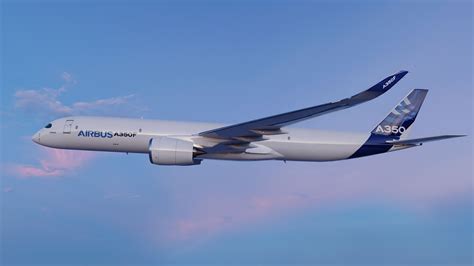
United Airlines’ Original Airbus A350 Order Was Meant To Transform The Fleet
When United Airlines announced its split widebody order in 2009, the move carried enormous strategic importance. The carrier committed to purchasing 25 Boeing 787-8s alongside 25 Airbus A350-900s, signaling a rare moment where Airbus appeared poised to gain meaningful ground inside one of Boeing’s most loyal airline customers.
At the time, United desperately needed modernization. The airline operated aging Boeing 747-400s that consumed large amounts of fuel and carried increasingly expensive maintenance requirements. Oil prices had punished airlines throughout the late 2000s, and carriers around the world were racing toward newer generation twin-engine aircraft that promised dramatic efficiency improvements.
The Airbus A350 fit perfectly into that narrative.
United envisioned the A350-900 as a long-range replacement for the iconic 747 fleet. The aircraft offered lower operating costs, modern composite construction, advanced aerodynamics, and exceptional range capabilities. Airbus was aggressively pursuing North American customers during this period, and winning part of United’s long-haul future represented a major symbolic victory.
The order also arrived during a period when Airbus still needed flagship airline endorsements in the United States. Delta had not yet committed to the A350, and American Airlines had not become an Airbus widebody customer. United joining the program alongside US Airways and Hawaiian Airlines gave Airbus momentum in a market long dominated by Boeing.
But the order reflected more than fleet renewal. It reflected uncertainty.
United in 2009 was not the powerhouse international airline it would later become. The company was struggling operationally and financially, attempting to reduce inefficiencies while cautiously reshaping its global network. Management wanted flexibility, efficiency, and potentially even a smaller international footprint.
That strategy would not survive the next decade.
Why United Suddenly Changed The Airbus A350-900 Into The Larger A350-1000
By 2013, United Airlines had changed dramatically. The merger with Continental Airlines reshaped the carrier into a far larger international operator with ambitious long-haul growth plans. Suddenly, the original A350-900 order no longer looked sufficient.
United executives decided the aircraft was too small to replace the Boeing 747-400 effectively. Instead of proceeding with the original configuration, the airline converted the order into 35 Airbus A350-1000s and delayed deliveries to 2018.
On paper, the move made sense.
The A350-1000 offered significantly more seating capacity and stronger economics on dense international routes. United’s long-haul ambitions were expanding rapidly across the Pacific and Atlantic, and larger aircraft aligned better with the airline’s evolving strategy.
However, this decision unintentionally triggered the chain reaction that ultimately doomed the order.
The larger A350-1000 had not yet entered service, meaning delivery schedules shifted further into the future. At the same time, United’s aging 747 fleet was approaching a critical maintenance deadline involving costly fuel tank modifications. The airline needed replacements sooner than Airbus could realistically deliver them.
Boeing recognized the opportunity immediately.
The manufacturer offered United attractive pricing and near-term availability on the Boeing 777-300ER, an aircraft already proven in global service and capable of replacing the 747 almost immediately. For United, the economics became irresistible.
The airline ordered 14 Boeing 777-300ERs, later increasing the total to 22 aircraft. Deliveries began in 2016, and by 2017 the Boeing 747 fleet was retired permanently.
That moment fundamentally changed the role of the Airbus A350 inside United’s fleet strategy.
The aircraft it had originally ordered to replace the 747 suddenly had no mission left to perform.
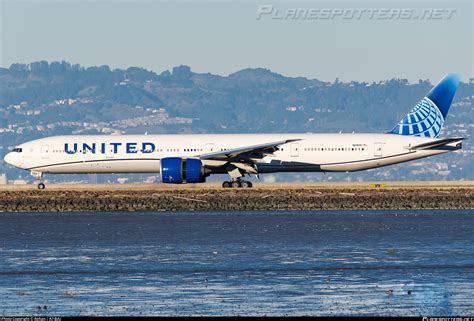
The Airbus A350 Order Slowly Became A Strategic Burden
After replacing the 747 with Boeing 777-300ERs, United faced an uncomfortable reality. It still held a massive Airbus A350 commitment, but the airline’s network and fleet strategy no longer required the aircraft urgently.
Rather than canceling the order outright, United attempted another restructuring.
In 2017, the airline converted the order yet again, this time reverting back to 45 Airbus A350-900s scheduled for delivery beginning in 2022. But even this revised plan lacked clarity. The aircraft increasingly looked like a placeholder rather than a genuine fleet priority.
As the years passed, the delivery timeline slipped repeatedly.
First, United deferred the A350 to 2027. Later, the carrier pushed deliveries again to 2030. By then, the original 2009 order would have remained unresolved for 21 years.
That level of delay is extraordinary even in commercial aviation, where aircraft programs routinely encounter scheduling changes.
Behind the scenes, United’s strategy was becoming centered almost entirely around the Boeing 787 Dreamliner family. The airline expanded its 787 fleet aggressively, deploying the aircraft across transatlantic, transpacific, and ultra-long-haul markets. Operationally, the 787 proved flexible, efficient, and scalable in ways that aligned perfectly with United’s expanding global network.
The more successful the Dreamliner became inside United, the less logical the Airbus A350 appeared.
Adding a completely separate widebody fleet would require new maintenance systems, additional pilot pools, spare parts inventories, and engine support infrastructure. Those costs become manageable only when an airline operates large numbers of aircraft within the same family.
United executives repeatedly emphasized this point publicly.
CEO Scott Kirby stated that if United were ever to operate the A350 meaningfully, the airline would likely need close to 100 examples to achieve worthwhile economies of scale. Anything smaller risked becoming operationally inefficient compared with simply expanding the Boeing 787 fleet further.
By the mid-2020s, United’s Airbus order increasingly resembled a relic from a different corporate era.
The Rolls-Royce Dispute Exposed The Real Collapse Of The Deal
The clearest evidence that United wanted out of the Airbus A350 agreement emerged during its dispute with Rolls-Royce over the Trent XWB engines.
The Trent XWB is widely regarded as one of the aviation industry’s finest modern engines. It powers every Airbus A350 variant and delivers impressive reliability and efficiency. But it is also expensive.
Very expensive.
United’s original aircraft agreement dated back to 2009, meaning pricing terms negotiated during that era likely became extremely favorable relative to current market conditions. As inflation, production costs, and demand increased over the following decade and a half, those old terms became increasingly unattractive for suppliers expected to honor them.
That appears to have created tension between United and Rolls-Royce.
According to disclosures in United’s SEC filings, negotiations over final engine terms deteriorated significantly. Reports suggested Rolls-Royce wanted updated pricing that reflected current market realities for the Trent XWB program. United, meanwhile, sought refunds connected to deposits it had already paid years earlier.
In December 2025, United reportedly requested the return of a $175 million deposit tied to the engine agreement. Rolls-Royce refused, arguing that United had breached contractual obligations.
The legal dispute became more than a financial disagreement. It revealed how disconnected the A350 order had become from United’s actual operational future.
Airlines do not typically pursue large deposit refunds when they remain committed to taking aircraft.
The conflict strongly suggested United no longer intended to move forward under existing terms.
Then came the decisive signal.
In February 2026, United removed all Airbus A350 deliveries from internal fleet planning documents disclosed through SEC filings. Technically, the order still exists on Airbus’ backlog. Realistically, the airline appears to have already moved on.
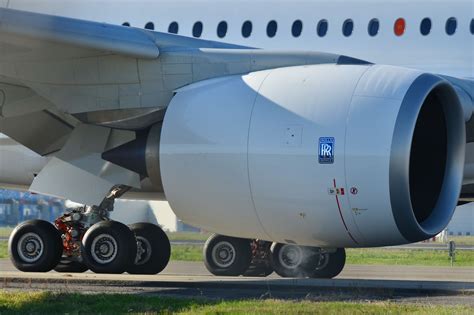
Why The Boeing 787 Became United Airlines’ True Long-Haul Strategy
The irony surrounding United’s A350 saga is that the airline genuinely operates the kind of network where the aircraft could perform exceptionally well.
United maintains one of the world’s largest long-haul systems, particularly across the Pacific. The airline serves ultra-long-range markets from hubs like San Francisco and Newark, where aircraft range and efficiency matter enormously.
On paper, the Airbus A350-900 is an ideal aircraft for many of these routes.
The jet offers greater range and payload capability than most Boeing 787 variants while maintaining excellent fuel efficiency. It also provides strong passenger comfort, including wider cabins and quieter interiors.
Yet United increasingly viewed fleet simplicity as more valuable than marginal performance advantages.
The airline already operates a massive Boeing 787 fleet and has invested heavily in associated infrastructure, maintenance systems, pilot training, and operational expertise. Maintaining commonality across aircraft families creates enormous cost savings over time.
The engine situation matters heavily here as well.
United’s future fleet planning already revolves around engines from General Electric, Pratt & Whitney, and CFM International. Introducing large numbers of Rolls-Royce Trent XWB engines would add another layer of complexity across maintenance operations and spare parts management.
This becomes especially important at scale.
United operates sprawling international hubs requiring extensive parts inventories and technical support capabilities. Every additional aircraft family multiplies operational complexity. For an airline obsessed with maximizing efficiency across a massive network, simplicity itself becomes economically powerful.
That philosophy explains why United doubled down on Boeing.
In 2022, the airline ordered 100 additional Boeing 787s while securing options for another 100 aircraft. Later, United exercised 50 more options, further cementing the Dreamliner as the backbone of its future long-haul operations.
Those orders alone provide enough capacity to replace older Boeing 767s and early-generation 777s while still supporting substantial international expansion.
At that point, the Airbus A350 became increasingly redundant.
San Francisco Constraints Could Still Influence United’s Future Widebody Plans
Although the Airbus A350 appears effectively dead at United, the airline’s long-haul fleet strategy remains far from complete.
One critical factor continues shaping fleet discussions: airport constraints.
United’s San Francisco hub plays an enormous role in the airline’s transpacific network. The airport’s operational limitations make large aircraft especially valuable because growth opportunities through additional frequencies remain restricted.
That reality explains why United deploys most of its Boeing 777-300ER fleet from San Francisco. Larger aircraft allow the carrier to maximize passenger capacity within limited slot availability.
The Airbus A350-1000 could theoretically have served this role well. However, because the airline moved away from the aircraft years ago, attention increasingly turns toward Boeing’s delayed 777X program.
Specifically, the Boeing 777-9.
United executives previously criticized the aircraft’s pricing, but circumstances may be changing. Boeing’s competitive position on the 777X is weaker than Airbus’ commanding position with the A350 family, potentially giving United leverage in negotiations.
If Boeing becomes aggressive on pricing, United could ultimately view the 777-9 as a more logical flagship aircraft than reviving the troubled Airbus relationship.
Such a move would preserve fleet commonality while delivering the high-capacity aircraft United needs for constrained hubs like San Francisco and Newark.
Nothing is finalized yet, but the strategic direction is increasingly clear: United wants its future widebody operations centered around Boeing ecosystems wherever possible.
Airbus No Longer Needs United Airlines The Way It Once Did
One of the most important reasons this saga reached its current conclusion is simple: Airbus no longer needs to fight for validation.
Back in 2009, securing a major United Airlines widebody order represented a symbolic breakthrough for Airbus in the American market. Today, the situation looks completely different.
The Airbus A350 became a global success.
Airbus has sold nearly 1,600 A350 aircraft worldwide, and major North American carriers already operate the type successfully. Delta Air Lines built a substantial A350 fleet, while Air Canada committed to the larger A350-1000 variant as part of its international expansion strategy.
The aircraft enjoys strong passenger reviews, solid reliability, and healthy airline economics. Airbus no longer needs to discount the A350 aggressively just to secure marquee customers.
That fundamentally changes negotiations.
United may have expected unusually favorable terms based on the age of its original agreement, but Airbus and Rolls-Royce now operate from positions of strength. Production demand remains robust, margins are healthier, and the manufacturer has little incentive to bend dramatically for an airline that spent years delaying deliveries.
Meanwhile, Airbus already maintains an important relationship with United through the airline’s enormous Airbus A321neo orders. Those narrowbody aircraft generate extremely strong profits for Airbus and remain central to United’s domestic growth strategy.
In many ways, Airbus likely benefits more from expanding that partnership than forcing a difficult A350 marriage that neither side appears enthusiastic about anymore.
There is even growing speculation that United could eventually convert portions of the dormant A350 commitment into additional A321neo orders instead.
That outcome would quietly end one of aviation’s longest unresolved fleet stories without requiring dramatic public confrontation.
United Airlines Finally Accepted The Reality Of Its Fleet Future
For years, United Airlines appeared trapped between old commitments and new realities. The Airbus A350 order lingered because canceling it outright carried financial, contractual, and political complications. But operationally, the airline’s future increasingly pointed elsewhere.
Eventually, reality won.
United became a Boeing 787-centered airline. Its network planning, maintenance systems, pilot training structures, and international growth strategies all evolved around the Dreamliner family. The more that transformation accelerated, the harder it became to justify introducing the Airbus A350.
Ironically, United never rejected the A350 because it was a poor aircraft. Quite the opposite. The jet succeeded spectacularly across the global industry.
Instead, United rejected the idea of disrupting a fleet ecosystem that already worked.
After nearly two decades of delays, reversals, and strategic indecision, the airline finally appears ready to close the chapter on one of commercial aviation’s most prolonged aircraft orders. The Airbus A350 may technically remain in United’s backlog, but the decision has effectively already been made.
United spent years wishing it could undo the Airbus commitment it made in 2009.
Now, it finally has.