As the Chinese aviation sector rapidly repositions itself for long-term global competitiveness, industry analysts and insiders alike are asking one pivotal question: Will China’s Big Three carriers place orders for the Airbus A350-1000 or Boeing 777X? With Cathay Pacific and Taiwan’s long-haul carriers already embracing both widebody models, the absence of mainland orders is a glaring strategic gap.
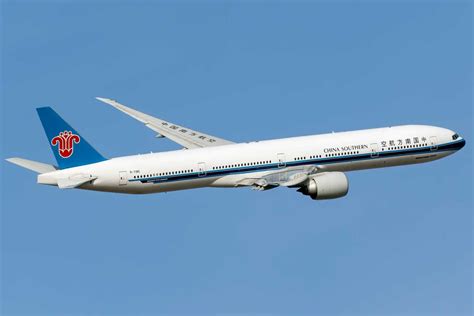
China Southern Airlines, China Eastern Airlines, and Air China — the nation’s dominant state-backed carriers — have a combined total of 63 Boeing 777-300ERs, aircraft that have historically shouldered the lion’s share of long-haul operations to North America, Europe, and Oceania. However, these workhorses are gradually aging. Despite their relative youth, they are no longer future-proof in terms of fuel efficiency, passenger comfort, and environmental compliance.
The Growing Need for Next-Generation Widebodies
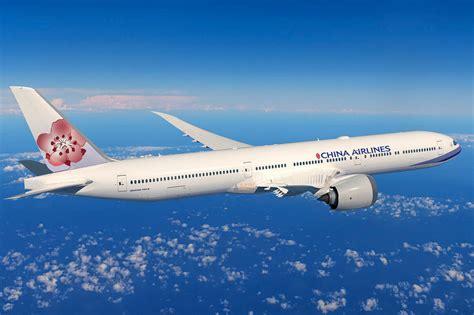
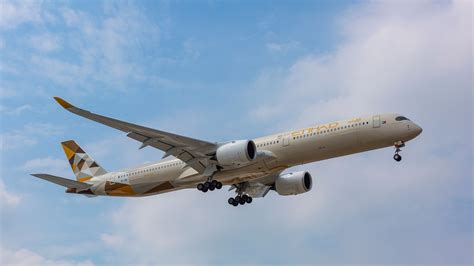
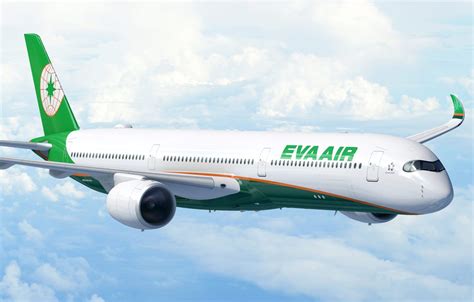
As China’s outbound travel rebounds post-pandemic and international route networks are restored, there is an urgent need to modernize long-haul fleets. The A350-1000 and 777X represent the pinnacle of next-gen twin-aisle jets, offering higher fuel efficiency, quieter cabins, and lower emissions per seat. The A350-1000, in particular, has seen strong interest in Asia-Pacific markets, with Cathay Pacific and all three Taiwanese long-haul carriers — China Airlines, EVA Air, and Starlux Airlines — committing to the type.
Mainland carriers, however, have yet to declare their allegiance to either platform. The question is no longer if, but when and which.
A Tale of Two Aircraft: The A350-1000 vs. the 777X
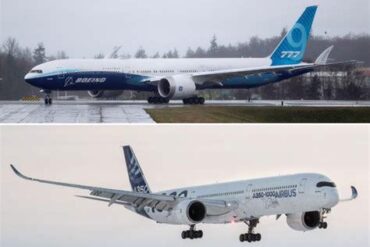
At first glance, both aircraft are compelling. The Airbus A350-1000 offers a range of 8,700 nautical miles and seating for approximately 350 passengers in a standard three-class configuration. Its carbon fiber fuselage and fuel-efficient Rolls-Royce Trent XWB engines make it one of the most advanced widebodies in the sky.
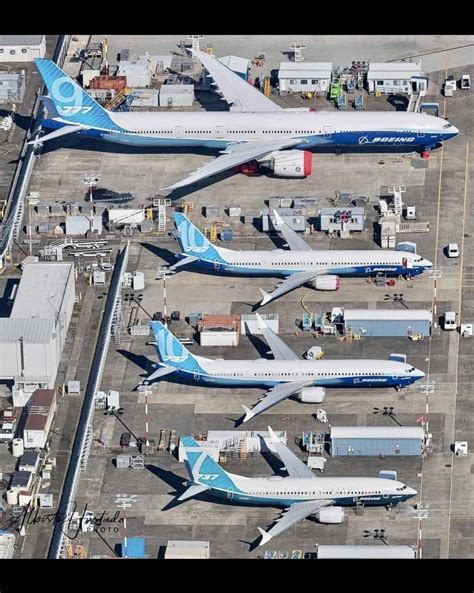
The Boeing 777X, comprising the 777-8 and 777-9 variants, is positioned as the spiritual successor to the 777-300ER. With a massive wingspan enabled by folding wingtips and powered by GE9X engines, it offers unmatched capacity, particularly in the 777-9, which can seat over 400 passengers. However, the program has suffered repeated delays, and deliveries are now expected to begin in 2025 at the earliest.
Political Winds and Strategic Realignment
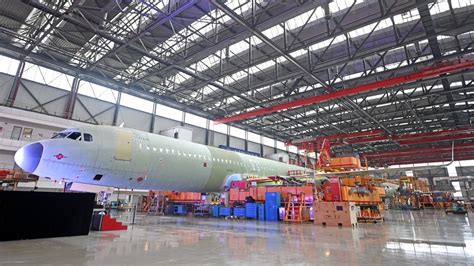
Aircraft procurement in China is inextricably linked to geopolitics. While Boeing’s commercial aircraft business has seen limited activity in China over the last few years — largely due to deteriorating U.S.-China relations and the 737 MAX grounding — Airbus has expanded its presence dramatically. Not only has Airbus maintained its Tianjin Final Assembly Line (FAL) for the A320 family, but it also secured major orders during high-level state visits.
This political alignment may tilt Chinese airlines toward the A350-1000. The fact that Airbus continues to deliver jets into China with relative ease, while Boeing shipments remain sporadic and politically fraught, gives the European manufacturer a clear edge.
Moreover, China is known to favor technology transfer, which Airbus has willingly accommodated through local production partnerships. The 777X, by contrast, is entirely produced in the United States, and there’s no current sign of Boeing offering any industrial collaboration in China akin to Airbus’s strategy.
Cathay Pacific and Taiwan Airlines as Strategic Bellwethers
Cathay Pacific operates A350-1000s and has a pending order for the 777X, positioning itself as a dual-platform user. Given its proximity to the mainland and overlap in long-haul market demand, mainland carriers are likely watching closely how Cathay deploys and maintains both aircraft.
Taiwan’s long-haul carriers present another case study. All three have ordered the A350-1000, and China Airlines is set to take delivery of 10 Boeing 777Xs. This dual commitment, despite the political sensitivities around the 777X, underlines a key fact: operational capability and economics still trump ideology in airline boardrooms — at least in semi-private entities.
The Clock Is Ticking: Delivery Backlogs Are Ballooning
One critical aspect that mainland Chinese airlines cannot ignore is delivery timing. The order backlog for both aircraft types is growing steadily, with slots for A350-1000s extending well into the 2030s. The 777X backlog, while thinner, is complicated by Boeing’s production ramp-up delays and FAA certification hurdles.
If China’s Big Three hope to induct these aircraft in time for the 2030 air travel surge, they must lock in their orders now. Delays could force them to rely on aging aircraft, or worse, miss out on long-haul market share gains.
Domestic Pressure and the Rise of the C919 and CR929
There is another angle to consider: China’s pursuit of indigenous aircraft programs. The COMAC C919, while focused on short- to medium-haul routes, is symbolic of national aerospace ambitions. The still-in-development CRAIC CR929, a joint venture with Russia’s UAC, aims to be a direct competitor to the A350 and 777X.
But the CR929 project has stalled, particularly after the fallout from the Russia-Ukraine war, and UAC’s increasing isolation from Western aerospace suppliers. Without critical components and design collaboration, it is increasingly unlikely that the CR929 will enter service within this decade.
This places additional urgency on sourcing proven Western widebodies to bridge the gap. Neither Airbus nor Boeing can be fully replaced in the near term.
What Might Happen Next?
Insider chatter and geopolitical movements suggest that a major Airbus deal may be on the horizon. A European delegation is expected in China this summer, and analysts anticipate a substantial A350-1000 order could be part of the diplomatic package.
Conversely, some believe that Boeing might make inroads through quiet, unpublicized orders or through state-owned lessors, bypassing direct airline contracts until relations improve. Given China’s need for aircraft, even a politically cool Boeing might still find a way into the Chinese market — albeit subtly.
The Bottom Line: A Tipping Point in Fleet Strategy
Whether China chooses the Airbus A350-1000, the Boeing 777X, or both, the decision will shape the global widebody landscape. With more than 1.4 billion potential air travelers, Chinese carriers must align their fleet strategies with not only efficiency and cost—but also geopolitical realities and futureproof planning.
A unilateral tilt toward Airbus seems likely in the near term, but a full exclusion of the 777X remains improbable. It’s more plausible that Air China or China Southern could break ranks and place selective orders, especially for ultra-long-haul services.
Until official announcements are made, speculation will persist. But one thing is clear: the window to act is closing, and the world is watching China’s next move in widebody aviation.