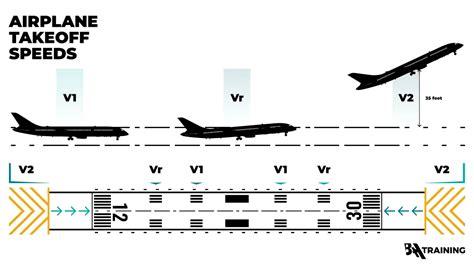
The moment an airliner begins accelerating down the runway, it enters one of the most unforgiving phases in aviation. Passengers often experience takeoff as a smooth surge of power followed by liftoff, but inside the cockpit, every second is governed by rigid calculations, rehearsed reactions, and a narrow margin between survival and catastrophe. Among all the speeds pilots memorize, none carries more weight than V1, the critical threshold where the aircraft reaches the point of no return.
At that speed, the crew must either continue into the sky or stop with absolute commitment. There is no room for hesitation, second-guessing, or delayed reactions. A delay of only two seconds can transform a routine rejected takeoff into a runway overrun measured in shattered landing gear, burning brakes, and twisted fuselage sections scattered beyond the pavement.
Modern commercial aviation is built upon layers of redundancy and extraordinary engineering, yet the physics of high-speed takeoff remain brutally uncompromising. When a 300-ton aircraft barrels down a runway at nearly 170 miles per hour, the laws of momentum dominate everything. The pilots are no longer simply flying an airplane; they are managing a controlled explosion of thrust, heat, acceleration, and kinetic energy.
The public often assumes that pilots can simply “slam on the brakes” whenever something goes wrong. The reality is far more disturbing. At high speed, stopping can become more dangerous than flying.
By the time the aircraft approaches V1, the safest place for many emergencies is no longer the runway. It is the sky.
What V1 Speed Actually Means In Aviation
The most misunderstood concept in commercial aviation is the idea that V1 represents the moment a pilot begins deciding whether to stop or continue. That interpretation is dangerously wrong.
In reality, V1 is the speed by which the decision has already been made and the first stopping action must already be underway. The distinction sounds subtle, but in aviation safety, it is enormous.
If pilots wait until hearing “V1” before mentally processing an emergency, valuable runway disappears faster than the brain can react. At 150 knots, a large jet covers approximately 253 feet every second. In the time it takes a startled pilot to fully comprehend an engine explosion, the aircraft may already have traveled the length of a football field.
That is why regulators including the Federal Aviation Administration and European Union Aviation Safety Agency define V1 with extraordinary precision. The speed assumes the crew has already recognized the problem and already initiated the rejection maneuver.
Those actions include:
- Retarding thrust levers to idle
- Applying maximum braking
- Deploying spoilers
- Activating reverse thrust
Once those motions begin, the aircraft transitions into a rejected takeoff sequence designed to stop within the calculated runway distance. But if the pilot delays even slightly beyond the certification assumptions, the aircraft may physically run out of pavement before the brakes can dissipate the immense kinetic energy.
The terrifying truth is that aviation does not leave room for indecision at V1. The calculations assume pilots react almost instantly.
The Two-Second Window That Determines Survival
Commercial aircraft certification standards include a built-in human reaction allowance. Regulators understand pilots are not robots, so accelerate-stop performance calculations incorporate approximately two seconds for failure recognition and response.
Two seconds.
That tiny interval represents the razor-thin line between a controlled stop and disaster.
The problem is that the human brain often struggles under sudden stress. In simulators, pilots know a malfunction is coming. Their reactions become crisp, aggressive, and immediate. In reality, an unexpected bang at 140 knots can trigger the startle effect — a neurological freeze where the brain pauses to process what just happened.
That pause can be fatal.
A pilot experiencing a three-to-five-second hesitation may consume thousands of additional feet of runway before initiating braking. At high speeds, the runway disappears almost unbelievably fast.
The physics are relentless. Kinetic energy increases with the square of velocity, meaning a jet traveling twice as fast carries four times the stopping energy. Every extra knot dramatically increases the thermal load dumped into the brakes.
The runway environment becomes even more dangerous in rain, snow, slush, or standing water. Wet conditions can reduce braking effectiveness by nearly 50 percent. Even a perfectly executed rejected takeoff may no longer stop within the available distance.
This is why contaminated runway operations frequently require lower V1 speeds. Pilots intentionally move the decision point earlier because the aircraft needs more runway to stop safely.
Aviation’s margin for error is not measured in minutes. It is measured in heartbeats.
Why High-Speed Aborts Are So Dangerous
Passengers instinctively believe remaining on the ground is safer than taking off with a malfunctioning aircraft. Counterintuitively, the opposite is often true once the aircraft passes approximately 100 knots.
Below that speed, pilots reject takeoff for nearly any abnormality. Warning lights, open doors, faulty instruments, system cautions, or unusual indications all justify stopping. The aircraft still possesses manageable kinetic energy, and the risks associated with heavy braking remain relatively low.
Everything changes after crossing into the high-speed regime.
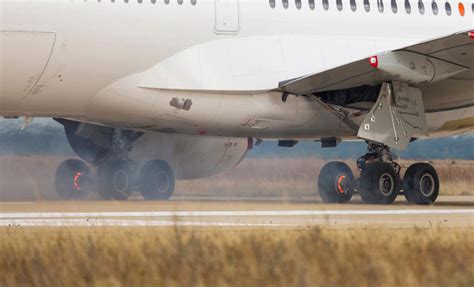
At higher velocities, braking loads become extreme. Tires can explode. Brakes can ignite. Aircraft can lose directional control. Overheated wheel assemblies may trigger catastrophic failures.
For this reason, airline training worldwide emphasizes that only three categories normally justify a high-speed abort:
- Engine failure
- Fire
- Unflyable aircraft conditions
Everything else generally becomes an airborne problem.
That philosophy sounds shocking to non-pilots, yet it reflects hard-earned lessons written in aviation accident reports across decades. A damaged tire at 140 knots may appear terrifying, but attempting to stop a massive jet with compromised landing gear can lead to a runway excursion far deadlier than taking the issue into the air.
Once airborne, crews gain options. They can burn fuel, reduce weight, coordinate with emergency services, review checklists, and prepare for landing with the entire runway available ahead of them.
On the ground at high speed, options disappear almost instantly.
The Physics Behind A Rejected Takeoff
When pilots initiate a rejected takeoff, the aircraft’s kinetic energy must go somewhere. Nearly all of it converts directly into heat inside the braking system.
The numbers are staggering.
Modern carbon brakes on widebody jets can exceed temperatures above 1,800 degrees Fahrenheit during high-energy stops. During certification tests, brake assemblies sometimes glow orange as they absorb the equivalent energy of a small industrial furnace.
Aircraft manufacturers such as Boeing and Airbus engineer braking systems capable of surviving extraordinary punishment, but every brake has limits.
If pilots attempt an abort above the aircraft’s maximum brake energy speed, the brakes may fail entirely before the aircraft stops.
That reality explains why takeoff calculations are obsessively precise. Runway length, aircraft weight, wind, temperature, altitude, and runway contamination all affect whether a jet can physically stop after a high-speed rejection.
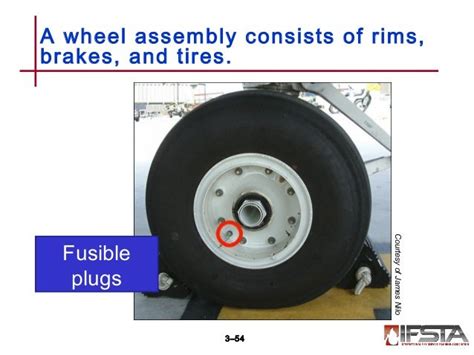
The wheel assemblies themselves contain remarkable safety mechanisms. One of the most important is the fusible plug, a small component filled with low-melting alloy. If wheel temperatures rise excessively, the plug melts and allows tire pressure to escape gradually.
Without that feature, overheated tires could explode violently enough to damage hydraulic systems or fuel tanks.
Modern carbon brakes also offer major advantages over older steel systems:
- Higher operating temperature tolerance
- Reduced weight
- Faster cooling times
- Improved energy absorption
But even carbon systems require strict cooling procedures after severe rejected takeoffs. Pilots must consult brake cooling charts before attempting another departure because residual heat can trigger fires or total braking loss during a subsequent stop.
The aircraft may look perfectly intact from the terminal window, yet its braking system could remain dangerously overheated for nearly an hour.
Why Pilots Train To Ignore Certain Failures
One of the most difficult concepts for the public to understand is that pilots are specifically trained to ignore many malfunctions during high-speed takeoff.
That training exists for a reason.
Human beings naturally want to diagnose problems immediately. Aviation deliberately suppresses that instinct during the takeoff roll because analysis consumes time the aircraft no longer has.
Professional crews conduct detailed takeoff briefings before departure specifically to eliminate ambiguity later. The briefing establishes exactly which failures justify an abort and which failures require continuing into the air.
This transforms the process from emotional reaction into procedural execution.
If the malfunction is not on the predetermined reject list, the aircraft flies.
That mental framework helps crews bypass the OODA loop — Observe, Orient, Decide, Act — during the most time-critical seconds of flight. Instead of debating the seriousness of an alert at 145 knots, the crew already knows the answer before advancing the throttles.
The discipline is psychologically brutal. Pilots may hear bangs, feel vibrations, or see warning messages while accelerating toward liftoff, yet they continue because experience and accident history show that unnecessary high-speed rejects often end worse than airborne emergencies.
This is not recklessness. It is risk management shaped by decades of data.
Cockpit Authority During A Rejected Takeoff
Commercial cockpit operations are heavily structured because confusion during emergencies can kill crews faster than mechanical failures.
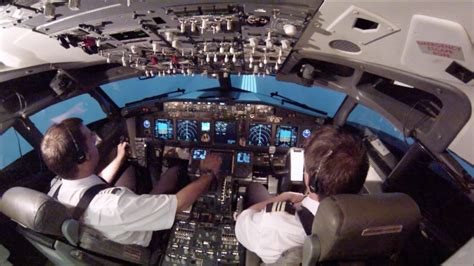
In most modern airlines, only the captain has authority to command a rejected takeoff once the aircraft enters the high-speed regime. Even if the first officer is physically flying the airplane, the captain alone decides whether to abort.
This hierarchy prevents contradictory control inputs during critical moments.
Imagine one pilot attempting to continue while the other simultaneously applies braking. At 150 knots, even a brief conflict could destroy directional control.
Training therefore standardizes callouts and responsibilities with military-like precision. If an abort becomes necessary, the captain announces it decisively, often with a single command: “Reject.”
The response sequence then unfolds almost automatically:
- Thrust levers idle
- Maximum braking
- Reverse thrust deployment
- Spoiler activation
- Aircraft directional control
Every second matters.
Even the physical sensation inside the cockpit changes dramatically during maximum rejected takeoff braking. Pilots describe violent deceleration, intense vibration, tire smoke, and overwhelming heat buildup. Carbon brakes howl under stress while reverse thrust roars behind the cabin.
Passengers often perceive it as controlled chaos.
Inside the cockpit, however, every action follows choreography refined through thousands of simulator repetitions.
When Pilots Abort After V1 Anyway
Although V1 represents the mathematical point of no return, aviation still contains rare exceptions where continuing flight becomes even more dangerous than overrunning the runway.
These situations involve aircraft that are fundamentally unflyable.
Examples include:
- Catastrophic flight control failures
- Major structural damage
- Jammed elevators
- Severe center-of-gravity shifts
- Uncontained mechanical destruction
In such scenarios, taking off may guarantee loss of the aircraft moments later. The crew may consciously choose a runway overrun because crashing on the ground offers greater survivability than losing control at low altitude.
Several real-world accidents illustrate the nightmare complexity of these decisions.
The Kalitta Air Flight 207 accident involved a rejected takeoff near V1 after engine failure. Despite aggressive braking, the heavily loaded Boeing 747 overran the runway and broke apart beyond the pavement.
Similarly, Garuda Indonesia Flight 865 rejected takeoff after V1 resulted in a fatal runway excursion and post-crash fire.
These incidents demonstrate the cruel reality of high-speed aviation physics. Once an aircraft crosses V1, stopping distance calculations no longer favor the crew.
Momentum takes control.
The Future Of Smarter Takeoff Decision Systems
Modern aviation technology is beginning to address one of the greatest vulnerabilities in takeoff safety: human reaction time.
Some advanced avionics systems now monitor real-time aircraft acceleration, runway remaining, engine performance, and environmental conditions during the takeoff roll. Future systems may dynamically adjust V1 calculations while the aircraft accelerates, accounting for wind shifts, degraded thrust, or changing runway contamination.
Artificial intelligence and predictive analytics could eventually provide pilots with continuously updated stop-or-go recommendations measured against actual aircraft performance rather than pre-calculated assumptions.
Yet even the most advanced automation cannot eliminate the central reality of takeoff decision-making.
At some point, a human pilot must still commit.
The responsibility remains immense because every commercial departure ultimately depends on a handful of seconds where judgment, training, and physics collide at nearly 200 miles per hour.
Why V1 Remains One Of Aviation’s Most Feared Speeds
Among professional pilots, V1 commands unusual respect because it represents a moment where options rapidly vanish. Before reaching it, the runway still provides escape. After crossing it, the aircraft belongs to the sky whether the crew feels ready or not.
That psychological transition is profound.
Pilots know that once the aircraft approaches V1, hesitation itself becomes a threat. The decision must already exist in the mind before the airspeed indicator reaches the number.
Commercial aviation’s extraordinary safety record often hides the violence operating beneath the surface. Every successful takeoff depends on brakes capable of surviving furnace-like temperatures, tires enduring immense stress, engines delivering flawless thrust, and pilots prepared to make irreversible decisions in less time than it takes to blink.
Passengers rarely notice the tension because professionalism masks it so effectively. The aircraft accelerates smoothly, rotates gracefully, and climbs away as if nothing extraordinary happened.
But hidden beneath that routine departure lies one of the harshest truths in aviation:
At high speed, there comes a moment when stopping is no longer the safer choice.
And pilots have only seconds to know exactly where that moment begins.