Every airline takeoff appears smooth and routine from the passenger cabin. Engines roar, the aircraft accelerates, and within moments the runway disappears beneath the wings. Yet during those few seconds of acceleration, airline pilots operate in one of the most demanding environments in aviation. Decisions must be made instantly, procedures must be executed flawlessly, and hesitation can have catastrophic consequences.
The most critical decision a flight crew may face during the takeoff roll is whether to continue flying or reject the takeoff altogether. A rejected takeoff, commonly known as an RTO, is one of the most intensely trained emergency procedures in commercial aviation. It is designed for situations where continuing the departure would be more dangerous than stopping on the runway.
What makes the process remarkable is not what happens after the aircraft stops. The truly fascinating part occurs in the final two seconds before the captain decides to abort. During that microscopic window of time, years of training, countless simulator sessions, and strict operational procedures converge into a single life-or-death judgment.
Understanding what happens inside the cockpit during those crucial moments reveals just how sophisticated modern airline operations have become.
The decision to reject a takeoff is never spontaneous. Long before the aircraft lines up on the runway, the flight crew has already established exactly what conditions will justify an abort. The process begins during the departure briefing, where pilots discuss aircraft performance, runway length, weather conditions, weight, obstacles, and emergency procedures.
Rather than relying on instinct, professional pilots create a predefined framework for action. This eliminates debate during high-pressure situations. If a specific event occurs, the response is already determined.
By the time passengers hear the engines increase thrust, the crew has already mentally rehearsed potential emergencies and agreed upon precise criteria for stopping the aircraft.
Why Takeoff Is One of Aviation’s Most Dangerous Phases
Takeoff is categorized as a critical phase of flight because the aircraft is rapidly accelerating while still confined to the runway environment. Unlike cruise flight, there is little time and little space available for recovery if something goes wrong.
A large commercial jet can accelerate from a standstill to more than 150 mph in less than a minute. During this period, the aircraft remains close to terminal buildings, taxiways, lighting structures, navigation equipment, terrain, and other aircraft.
At low speeds, stopping is relatively straightforward. At high speeds, however, every second matters.
The aircraft is carrying enormous kinetic energy. The faster it travels, the more energy must be absorbed by the braking system if the crew decides to stop. Consequently, pilots cannot reject takeoff for every warning light or abnormal indication once the aircraft reaches higher speeds.
Instead, airlines establish strict rules defining when an abort is justified and when continuing the takeoff is safer.
The Go/No-Go Decision Begins Before the Aircraft Moves
Many passengers imagine that pilots analyze emergencies only after they occur. In reality, airline crews prepare for them before departure.
During the takeoff briefing, pilots define their Go/No-Go criteria. These criteria determine which failures require an immediate stop and which failures can be handled after becoming airborne.
The exact criteria vary depending on aircraft type, runway conditions, weather, aircraft weight, and company procedures. However, the principle remains consistent: remove uncertainty before it can become dangerous.
This preparation transforms emergency decision-making into a procedural response rather than an emotional reaction.
When a warning appears during the takeoff roll, the pilots are not beginning their analysis from scratch. They are comparing the situation against criteria already established minutes earlier.
That preparation becomes invaluable when only seconds remain before reaching decision speed.
Understanding the Importance of V1 Speed
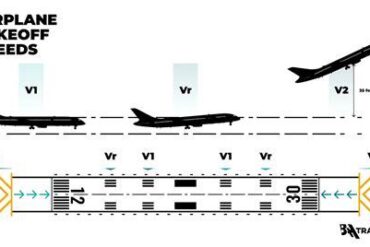
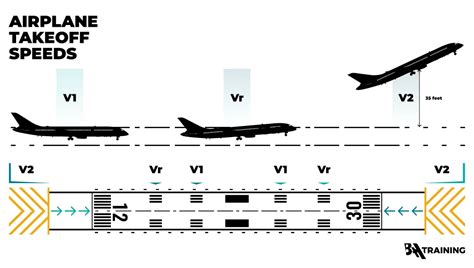
One of the most important numbers in aviation is V1, commonly called the decision speed.
V1 represents the point during takeoff at which the aircraft must either continue the departure or stop using the runway remaining. It is carefully calculated before every flight based on numerous variables.
Before reaching V1, the captain may reject the takeoff if a qualifying emergency occurs.
After passing V1, the situation changes dramatically.
The aircraft may no longer have sufficient runway available to stop safely. As a result, pilots are generally committed to flying, even if a serious malfunction occurs immediately afterward.
This creates an incredibly narrow decision window.
An engine fire occurring a few seconds before V1 may result in a rejected takeoff. The same engine fire occurring a second after V1 may require continuing into the air and addressing the emergency later.
The distinction is measured in seconds, yet it completely changes the crew’s response.
The Final Two Seconds Before an Aborted Takeoff
Imagine a fully loaded airliner racing down the runway at more than 140 mph.
The engines are producing maximum takeoff thrust. The aircraft is accelerating rapidly toward V1. The pilot flying maintains directional control while the pilot monitoring continuously scans instruments and airspeed indications.
At this stage, both pilots are highly focused.
The captain’s hand often remains positioned near or on the thrust levers. The pilot monitoring tracks airspeed progression and watches for abnormalities. Every indication is evaluated in real time.
Then something happens.
Perhaps a catastrophic engine failure occurs.
Perhaps a fire warning illuminates.
Perhaps violent vibration suddenly shakes the aircraft.
Perhaps multiple system failures indicate that the aircraft is no longer safely flyable.
The cockpit environment changes instantly.
A master warning light flashes.
Warning tones activate.
Engine instruments may show abnormal readings.
The aircraft may begin pulling slightly toward one side because one engine has lost thrust.
Within fractions of a second, both pilots recognize the abnormality.
Years of training immediately take over.
How Pilots Recognize a Catastrophic Failure Instantly
Contrary to popular belief, pilots do not spend valuable seconds diagnosing every detail of a malfunction during a high-speed takeoff.
Their training emphasizes recognition rather than investigation.
A fire indication, severe engine damage, uncontrollable aircraft behavior, or other critical warning signs are designed to trigger immediate action.
The crew’s objective is not determining every technical detail. Their objective is deciding whether the aircraft remains safely flyable.
During simulator training, instructors repeatedly expose crews to failures occurring just before V1. This repetition builds pattern recognition and muscle memory.
As a result, pilots learn to identify severe emergencies almost automatically.
The decision process may appear instantaneous from the outside, but it is actually the product of thousands of hours of accumulated experience and structured training.
The Moment the Captain Calls “Reject”
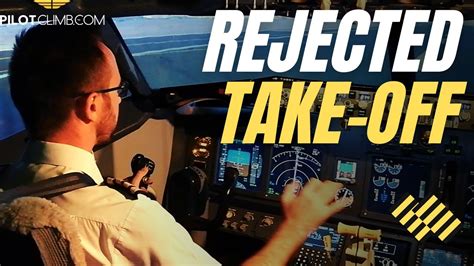
Once the captain determines that takeoff must be abandoned, a single command initiates a precisely choreographed sequence.
The captain announces:
“REJECT!”
That single word immediately transforms the cockpit from takeoff mode into maximum stopping mode.
There is no debate.
There is no discussion.
There is no committee decision.
The command itself triggers actions that have been practiced countless times.
If the first officer is serving as the pilot flying, the captain simultaneously assumes direct control while ensuring the rejection procedure begins without delay.
Every second saved translates directly into stopping distance.
The First Actions After the Abort Decision
The first priority is eliminating thrust.
The pilot flying rapidly retards the thrust levers to idle, removing the enormous forward force generated by the engines.
Simultaneously, maximum braking is applied.
Modern airliners are equipped with sophisticated autobrake systems capable of delivering enormous hydraulic braking force. These systems engage alongside pilot inputs to achieve maximum deceleration.
At nearly the same moment, speedbrakes deploy.
Speedbrakes, also known as spoilers, rise from the upper wing surfaces and destroy lift. This forces the aircraft’s weight back onto the landing gear, dramatically improving tire grip and braking effectiveness.
Without spoiler deployment, a significant portion of the aircraft’s weight would remain supported by aerodynamic lift, reducing braking performance.
Everything occurs within seconds.
Reverse Thrust: Turning Engine Power Into Braking Force
Another critical component of a high-speed rejected takeoff is reverse thrust.
Normally, jet engines accelerate an aircraft by directing air backward. During reverse thrust operation, specialized mechanisms redirect airflow forward.
The result is a powerful braking effect.
Passengers often notice a loud roar and significant deceleration during reverse thrust deployment. During an RTO, however, reverse thrust becomes a vital tool for stopping a rapidly accelerating aircraft before the runway ends.
The combination of idle thrust, maximum wheel braking, spoiler deployment, and reverse thrust creates the strongest deceleration capability available to the aircraft.
Even then, stopping a heavy airliner at high speed remains an enormous challenge.
What the Pilot Monitoring Does During the Emergency
While the pilot flying concentrates entirely on controlling and stopping the aircraft, the pilot monitoring performs equally important tasks.
The monitoring pilot verifies that critical systems are functioning correctly.
Callouts may include:
- Speedbrakes deployed
- Reverse thrust operating normally
- Deceleration achieved
- System indications verified
The pilot monitoring also communicates with air traffic control.
Controllers must immediately know that the aircraft is rejecting takeoff so that emergency services can be dispatched if necessary and other traffic can be protected.
These communications occur while the aircraft is still decelerating at high speed.
The coordination is highly structured, ensuring that both pilots remain focused on their assigned responsibilities.
The Incredible Forces Experienced During a High-Speed RTO
Stopping an aircraft weighing hundreds of thousands of pounds from approximately 150 mph generates astonishing amounts of heat.
The energy involved is difficult to comprehend.
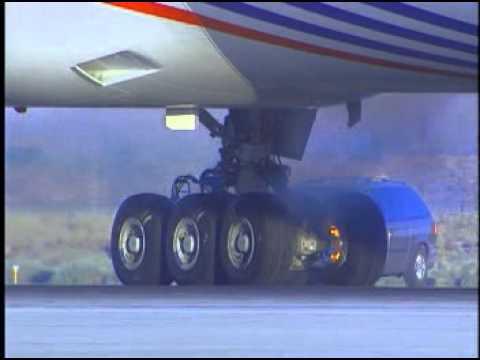
The braking system converts massive kinetic energy into thermal energy within seconds. Brake temperatures can rise to extraordinary levels, sometimes exceeding 2,500°F (1,370°C).
At these temperatures, brake assemblies glow with intense heat.
Tires may deflate through thermal fuse plugs designed specifically to prevent catastrophic explosions.
Wheel assemblies, brake rotors, and landing gear components endure stresses far beyond normal operations.
A successful rejected takeoff does not necessarily end when the aircraft stops moving. In many respects, a new phase of risk management begins.
What Happens After the Aircraft Stops
Once safely stopped, pilots must carefully manage the aftermath.
Parking brakes may be avoided if brake temperatures are excessively high because components can fuse together under extreme heat.
Air traffic control coordinates emergency response vehicles to inspect the aircraft.
Airport fire crews frequently monitor wheel and brake temperatures using infrared thermal imaging equipment.
Pilots continue monitoring cockpit indications because brake temperatures may continue rising even after the aircraft has stopped.
In some situations, temperatures peak fifteen minutes or more after the rejected takeoff.
This delayed heat buildup makes ongoing observation essential.
If temperatures exceed operational limits, passengers may eventually be disembarked while maintenance personnel perform inspections.
Why Pilots Train for This Scenario Repeatedly
The extraordinary precision displayed during a rejected takeoff is not accidental.
Airline pilots regularly practice these emergencies in advanced flight simulators, often every six months as part of recurrent training programs.
Instructors deliberately create failures at the worst possible moment, sometimes just one or two knots before V1.
The purpose is not merely teaching procedures.
The purpose is developing automatic responses under intense pressure.
Pilots learn that successful rejected takeoffs depend on immediate action, disciplined adherence to procedures, and unwavering commitment to predefined criteria.
When a real emergency occurs, there is no time for lengthy analysis.
Training ensures that recognition, decision-making, and execution occur almost seamlessly.
The Two Seconds That Reflect Years of Preparation
To passengers, a rejected takeoff may feel like a sudden and unexpected event. Inside the cockpit, however, those dramatic moments are the culmination of years of professional training, operational discipline, and meticulous preparation.
The two seconds before a pilot decides to abort takeoff represent one of aviation’s most concentrated periods of decision-making. Warning lights, system indications, aircraft behavior, runway performance calculations, and established Go/No-Go criteria all converge into a single judgment.
When the captain calls for a rejection, the response unfolds with remarkable precision. Thrust is reduced, brakes engage, spoilers deploy, reverse thrust activates, and communication procedures begin almost simultaneously.
Behind that seemingly instantaneous decision lies an aviation system built around preparation rather than reaction. Every briefing, every simulator session, every checklist, and every procedural callout exists for one purpose: ensuring that when those critical two seconds arrive, the crew already knows exactly what to do.
Frequently Asked Questions
What is a rejected takeoff?
A rejected takeoff is an emergency procedure in which pilots stop the aircraft on the runway after beginning the takeoff roll but before becoming airborne. It is used when continuing the takeoff would be unsafe.
Can pilots reject takeoff after V1?
In most situations, no. After V1 speed, pilots are generally committed to continuing the takeoff because there may not be enough runway remaining to stop safely.
What are the most common reasons for an aborted takeoff?
Common reasons include engine failures, fire warnings, incorrect flap configurations, unreliable airspeed indications, severe vibrations, and other system malfunctions that make continued takeoff unsafe.
How hot do aircraft brakes get during a high-speed rejected takeoff?
Brake temperatures can exceed 2,500°F (1,370°C) during severe high-speed rejected takeoffs, requiring extensive cooling and inspection before the aircraft can fly again.
Do pilots practice rejected takeoffs?
Yes. Airline pilots repeatedly practice rejected takeoffs during simulator training, often every six months, including scenarios that occur just moments before V1 speed.