
Takeoff accidents, particularly during the initial climb, represent a significant safety risk, with fatality rates much higher than those during landing. Understanding the dangers and knowing when and how to abort a takeoff can be the difference between life and death in these critical phases of flight. Pilots must carefully observe various performance indicators throughout the takeoff process to recognize potential issues and make timely decisions. In this guide, we will explore the five crucial phases of takeoff and the steps pilots can take to abort safely when necessary.
Why Takeoff Aborts Matter
Takeoff and initial climb accidents are ten times more deadly than landing accidents. The primary reasons for this discrepancy include factors such as the aircraft’s maximum weight at takeoff, acceleration (as opposed to deceleration during landing), and unfamiliar wind conditions and aircraft loading. Given the significant risks involved, pilots need to be prepared to recognize when things are going wrong and abort the takeoff before it becomes too late. By breaking the takeoff process into five key phases, pilots can create a strategy to handle each phase and react promptly when necessary.
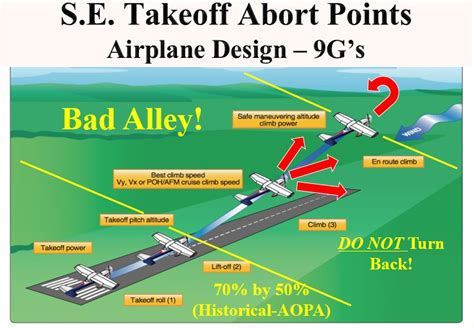
Phase 1: Pre-Takeoff Preparation
A successful takeoff begins long before the aircraft starts rolling down the runway. The pre-takeoff phase is all about planning and preparation. Pilots must consider multiple factors that could affect the takeoff performance. This includes evaluating the runway length, checking for obstacles, and calculating the expected takeoff distance based on aircraft weight and weather conditions.
Key Considerations Before Takeoff
- Runway Length: Pilots must ensure that the available runway is sufficient for the aircraft to reach rotation speed and achieve a safe liftoff. If the runway is too short, aborting the takeoff could become difficult if an emergency arises.
- Aircraft Weight: The aircraft’s weight, including fuel, passengers, and cargo, directly impacts takeoff performance. The heavier the aircraft, the more distance it will need to become airborne.
- Wind Conditions: Wind speed and direction play a crucial role in takeoff performance. A headwind can reduce the distance required for takeoff, while a tailwind can increase it. Pilots should check the wind conditions and adjust their technique accordingly.
- Flap Settings and Takeoff Technique: Depending on the specific conditions, pilots must determine whether to use flaps and choose an appropriate takeoff technique (such as whether to aim for a V_X climb rate for obstacle clearance or V_Y for optimal climb performance).
Proper planning during this phase is essential to setting the foundation for a safe takeoff. Without this preparation, a pilot is flying blind, increasing the risks of encountering unforeseen problems during the flight.
Phase 2: Power Application
Once the aircraft is lined up on the runway and ready to go, the next phase is applying full power and confirming that the engine is providing maximum available power. For fixed-pitch propeller airplanes, pilots need to check the static RPM before starting the takeoff roll. As the aircraft begins to move, they should monitor the RPM to ensure it remains within expected limits.
For aircraft with controllable-pitch propellers or turbine engines, it’s critical to verify that the manifold pressure and RPM are consistent with pre-established performance targets. For turbocharged engines, the manifold pressure should reach its full rated value regardless of elevation. As a general rule, pilots should lean the fuel mixture based on the Pilot Operating Handbook (POH) to achieve optimal engine performance during takeoff. Failing to do this, especially at higher altitudes, could result in reduced engine power and poor performance.
Key Steps in the Power Phase
- Check RPM and Manifold Pressure: Ensure that the engine is producing maximum power by checking RPM on fixed-pitch planes and manifold pressure on controllable-pitch and turbine engines.
- Lean the Mixture: Adjust the mixture to ensure maximum power is available, particularly at higher altitudes where reduced air pressure requires a leaner fuel mixture.
- Monitor Engine Parameters: Keep a close eye on any deviations from expected parameters, as they could signal a problem that requires aborting the takeoff.
Phase 3: Acceleration Monitoring
During the acceleration phase, pilots need to monitor the aircraft’s acceleration to ensure it’s consistent with expectations. In some cases, military or large aircraft will have acceleration charts that predict expected speeds at various intervals during the takeoff roll. For smaller aircraft, this assessment is typically more subjective.
Pilots can better assess whether their acceleration feels normal by identifying a specific reference point on the runway. This could be a turnoff, a distance marker, or any other noticeable feature along the runway that will help them determine if the aircraft is accelerating as expected.
If the aircraft is not accelerating as expected, pilots must be prepared to abort the takeoff. Early recognition of a potential issue during the acceleration phase can prevent a larger problem during the next phase.
Phase 4: Liftoff and Climbout
Once the aircraft reaches rotation speed, it is time for liftoff. The key here is to raise the nose to the optimal climb attitude. Depending on the conditions, pilots may aim for a V_X attitude (for best climb rate in case of obstacles) or V_Y (for optimal climb rate). However, pitch attitude is critical—too much nose-up attitude can cause excessive drag, and too little can result in a poor climb rate.
Pilots must also be mindful of density altitude, which can impact engine performance and climb rate. At higher altitudes, where the air is thinner, the aircraft will climb more slowly. Pilots must adjust their attitude accordingly to maintain optimum climb performance.
Liftoff and Climbout Considerations
- Achieve the Optimal Climb Attitude: Based on aircraft weight and runway distance, choose the appropriate climb attitude. V_X is ideal for obstacle clearance, while V_Y is best for maximum climb rate.
- Monitor Climb Performance: After liftoff, continue monitoring vertical speed and climb attitude. A deviation from expected climb performance may indicate an issue that requires corrective action.
Phase 5: Initial Climbout and Performance Monitoring
In the initial climbout phase, the focus shifts to maintaining an adequate climb rate and preparing for the transition to cruise climb. Pilots should have a clear idea of the expected climb attitude and vertical speed. If the climb performance doesn’t match expectations, it’s essential to recheck power settings, configuration (such as flap and landing gear positions), and attitude to ensure that the aircraft is climbing safely.
Identifying and Responding to Problems
Pilots should be prepared to abort the takeoff at any point during the first stage of climb if performance deviates significantly from expectations. Early intervention is key to ensuring the aircraft doesn’t continue climbing under unsafe conditions. Abort decisions should be based on established performance targets and immediate analysis of flight parameters.
Takeoff Aborts: When and How to Execute
Takeoff and abort decisions require a clear understanding of performance limitations and the necessary actions to stop safely. Pilots should know the accelerate/stop distance required for their specific aircraft and should always add a safety margin to account for factors like pilot reaction time, weak brakes, or wet runway conditions.
If the aircraft fails to meet a target, pilots should execute a takeoff abort as follows:
- Maintain Control: Keep the aircraft wings level and the nose straight. Control is paramount to prevent loss of control.
- Reduce Power: Smoothly reduce power to idle and, if necessary, chop the throttle if the runway end is near.
- Apply Brakes: Use the brakes progressively to bring the aircraft to a complete stop. If braking effectiveness is compromised, pump the brakes (apply and release quickly).
If the aircraft is headed off the runway, pilots must shut off the fuel, turn off electrical switches, and ensure that propellers are left in a position that minimizes drag. These actions help prevent fires if the aircraft crashes after leaving the runway.
Pre-Flight Preparation for Takeoff Aborts
An effective takeoff abort strategy begins with thorough preflight preparation. This includes carefully evaluating runway length, aircraft weight, and environmental conditions. Having a clear abort plan before takeoff increases the chances of a successful execution if problems arise.
Conclusion
Takeoff aborts are a critical skill that can save lives. Pilots must carefully monitor each phase of the takeoff and recognize early signs of trouble. With proper planning, power management, and performance monitoring, pilots can confidently handle takeoff abnormalities and execute safe aborts when necessary.