Alaska Airlines has found itself at the center of a technological crisis that is rapidly eroding passenger trust and exposing deep systemic vulnerabilities in its IT infrastructure. In the span of just six months, the airline has suffered four major outages, each disrupting critical customer-facing services and, at times, even grounding flights entirely. While digital disruptions are not uncommon in the airline industry, the repeated failures of Alaska’s systems signal a broader and potentially unsalvageable issue: is the carrier’s tech stack beyond repair?
The Latest Disruption: A Familiar Error, A Frustrated Customer Base
On a seemingly ordinary Tuesday morning, thousands of passengers attempted to access the Alaska Airlines app and website—only to be greeted with a now-infamous message: “It seems this application has become very popular, and its available rate limit has been reached. Please retry after a few minutes.” This seemingly benign message masked a deeper truth: Alaska’s platforms had once again buckled under routine demand.

This failure rendered customers unable to log in, check in for flights, or retrieve boarding passes digitally. As a result, many were forced to print boarding passes at the airport, leading to long queues, operational delays, and elevated stress levels during peak travel hours. Alaska responded with a boilerplate apology and the reassurance that its technical team was working on a fix. But the larger issue isn’t whether they’ll fix this problem—it’s how they allowed the problem to happen again.
A Pattern of Failure: A Six-Month Timeline of Outages
The current incident is just the latest in a cascade of IT breakdowns:
- July 2025: A hardware failure in one of Alaska’s core data centers forced the airline to ground flights for three hours, affecting thousands of passengers.
- October 2025: A separate and unexplained internal IT failure grounded the fleet for approximately eight hours, delaying and cancelling hundreds of flights.
- Late October 2025: A Microsoft Azure outage impacted Alaska’s mobile app and website—raising questions about third-party cloud dependency.
- December 2025: The most recent outage crippled passenger access yet again, with login and booking systems failing intermittently across both app and web platforms.
The cumulative effect of these disruptions is devastating. Flights are delayed or cancelled, passengers are stranded, and public confidence wanes. Each failure underscores the fragility of Alaska’s digital ecosystem.
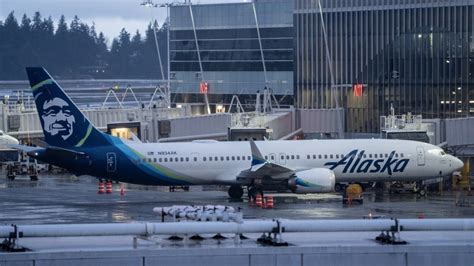
The Domino Effect: When IT Fails, Operations Collapse
Unlike isolated glitches in retail or social platforms, airline IT failures can lead to chaos on a national scale. Alaska’s July and October outages resulted in massive ripple effects across its entire North American network. With critical systems like crew scheduling, gate management, passenger bookings, and safety protocols all dependent on stable tech operations, any failure means aircraft can’t legally or safely take off.
Alaska Airlines, like all major carriers, is deeply dependent on real-time data flow to:
- Coordinate aircraft rotations and gate assignments
- Recalculate flight plans based on weather or traffic changes
- Manage fuel loads and consumption analytics
- Handle baggage routing and crew assignments
- Provide up-to-date mobile app info for passengers
When these systems go dark, recovery isn’t as simple as flipping a switch. It can take hours—or even days—for normal operations to resume, especially when thousands of passengers must be manually rebooked or rerouted.
Outsourcing to Accenture: A Band-Aid or a Real Cure?
In response to the repeated failures, Alaska has enlisted Accenture, a global consulting firm, to conduct a full-scale audit and overhaul of its IT systems. While outsourcing IT infrastructure review to experts might seem like a prudent move, it also raises concerns.
Accenture’s expertise is undisputed—but how much influence will they have over legacy decisions? Alaska’s tech stack is likely a complex patchwork of aging systems, cloud solutions, and custom-built software. Consultants can provide recommendations, but implementing real change requires time, money, and cultural shifts within the airline’s leadership.
If Alaska’s management doesn’t commit to a fundamental rebuild—or worse, opts for surface-level fixes—it may simply delay the next inevitable outage.
Cost of Repeated Outages: Dollars, Reputation, and Loyalty
Beyond operational headaches, Alaska’s outages carry staggering financial implications. Analysts suggest these tech failures could cost the airline over $40 million in lost revenue, rebooking fees, labor costs, and compensation.
But the greater damage may be reputational. Alaska Airlines has historically enjoyed a loyal customer base and solid public perception for punctuality and safety. However, in today’s hyper-competitive and digitally-driven market, tech reliability is non-negotiable.
Every outage pushes frustrated passengers to consider alternatives. For business travelers and frequent flyers, reliability trumps loyalty. If Alaska becomes synonymous with check-in errors and grounded flights, no loyalty program or low fare will reverse the churn.
Alaska Is Not Alone—But the Repetition Is Alarming
It’s important to note that Alaska Airlines is not the only carrier plagued by tech woes. In recent years:
- Southwest Airlines experienced a historic meltdown in 2022, stranding thousands over the holidays.
- Delta Air Lines suffered a multi-day outage in 2016, traced back to a power control module failure.
- United and American Airlines have each had app and system outages that caused brief disruptions.
However, what sets Alaska apart is the frequency and diversity of failures in such a short window. Multiple outage types—hardware, cloud, platform—suggest systemic fragility, not isolated misfortunes.
Is the Technology Beyond Repair?
That’s the defining question. Can Alaska realistically repair, stabilize, and future-proof its tech? Or are the flaws so foundational that a complete digital transformation is the only viable path forward?
Repair is plausible, but only with:
- A massive investment in modernizing infrastructure, including new servers, scalable cloud-native solutions, and 24/7 monitoring.
- Transparent communication with customers and regulators during and after outages.
- Internal restructuring to elevate IT leadership within corporate decision-making.
- Abandonment of any outdated or unsupported technologies.
Anything short of a bold, public commitment to technological excellence risks deepening the cycle of failure.
Conclusion: Alaska’s Future Hangs in the Balance
For an airline with deep roots in customer service and innovation, Alaska Airlines is now dangerously close to becoming a case study in digital mismanagement. Four outages in six months isn’t just a glitch—it’s a signal. The airline must act decisively and invest heavily to regain customer trust and operational reliability.
Because in aviation, the margin for error is slim, and the cost of digital failure is often measured not just in dollars, but in lost lives, lost loyalty, and lost leadership.