The commercial aviation industry is often defined by the aircraft that enter service, but some of its most influential stories belong to airplanes that never left the drawing board. Behind every successful jetliner lies a long trail of ambitious concepts, engineering experiments, and billion-dollar decisions that ultimately ended in cancellation. Boeing and Airbus have both abandoned projects that promised greater range, higher capacity, or revolutionary efficiency, only to discover that market conditions had shifted faster than technology could adapt.
Many of these canceled aircraft were not technical failures. Instead, they became victims of changing airline strategies, insufficient customer demand, or economic realities that made further investment impossible. Ironically, several innovations developed for these shelved programs later found their way into successful aircraft families, influencing modern aviation despite never reaching production.
After decades of fierce competition between the two aerospace giants, these abandoned programs provide remarkable insight into how manufacturers forecast future demand—and sometimes get it wrong.
Boeing 767-400ERX: The Long-Range Twinjet That Lost Its Engine Strategy
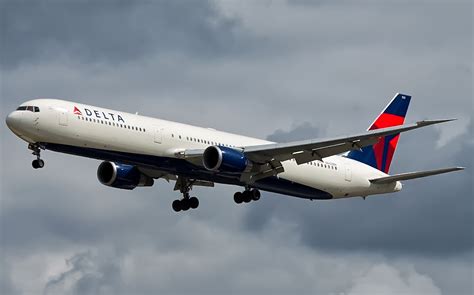
At the dawn of the new millennium, Boeing envisioned an upgraded version of the 767 family capable of competing more aggressively in the long-haul market. The proposed Boeing 767-400ERX aimed to extend the capabilities of the existing 767-400ER through increased fuel capacity, structural reinforcement, and significantly improved performance.
The aircraft was designed to fly more than 6,150 nautical miles, extending its reach by roughly 525 nautical miles beyond the standard 767-400ER while maintaining seating for approximately 245 passengers in a three-class layout. Such improvements would have positioned it as an attractive option for airlines seeking efficient long-distance operations without moving to a larger aircraft category.
However, the enhanced capabilities required a substantial increase in maximum takeoff weight to approximately 465,000 pounds, creating a major engineering challenge. Existing engines could not deliver sufficient thrust, forcing Boeing to depend on an entirely new powerplant program.
Rather than funding a dedicated engine exclusively for the 767-400ERX, Boeing intended to share development costs by using engines simultaneously planned for another ambitious project—the 747X. This strategy reduced financial risk on paper but also tightly linked the destinies of both aircraft.
Unfortunately, airline enthusiasm remained lukewarm. Kenya Airways became the only carrier to place a firm order, leaving Boeing without the broad customer base necessary to justify continued investment. When the 747X itself lost momentum, the engine development strategy collapsed alongside it.
By 2001, Boeing formally canceled the 767-400ERX and redirected resources toward two programs that would define its future: continued expansion of the 777 family and development of the revolutionary 7E7, later introduced as the Boeing 787 Dreamliner.
Boeing 747X: The Jumbo Jet Reinvention That Never Won Airlines Over
The Boeing 747 had already transformed global aviation, yet Boeing sought to extend its dominance with an entirely new generation of superjumbos capable of challenging Airbus’ upcoming A380.
Initial concepts introduced during the late 1990s included the 747-500X, 747-600X, and 747-700X, each promising dramatic improvements in range, passenger capacity, and wing technology. Engineers proposed incorporating advanced 777-derived wings while stretching or widening the iconic fuselage to accommodate hundreds more travelers.
Some concepts projected seating capacities approaching 650 passengers, placing them firmly in the ultra-large aircraft category.
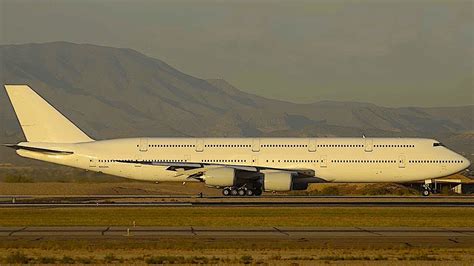
Despite their technical ambition, development costs proved staggering, while airlines showed little appetite for ordering aircraft of such immense size. Boeing subsequently revised its plans into the more conservative 747X, incorporating new engines, redesigned wings, and numerous cockpit technologies borrowed from the successful 777 program.
A stretched derivative, known as the 747X Stretch, would have increased capacity even further while preserving long-range capabilities.
Yet market conditions were already evolving. Airlines increasingly favored direct point-to-point services rather than concentrating passengers through giant hub airports. This trend made fuel-efficient twin-engine aircraft substantially more attractive than four-engine giants.
Without enough launch customers, Boeing concluded that future growth belonged to advanced twinjets rather than ever-larger jumbos.
Although the aircraft itself disappeared, several engineering concepts survived. Technologies originally investigated for the canceled project later contributed to improvements incorporated into the 747-400ER and ultimately the 747-8, ensuring that years of research were not entirely wasted.
Boeing 787-3: The Dreamliner Designed For Japan’s Domestic Aviation Market
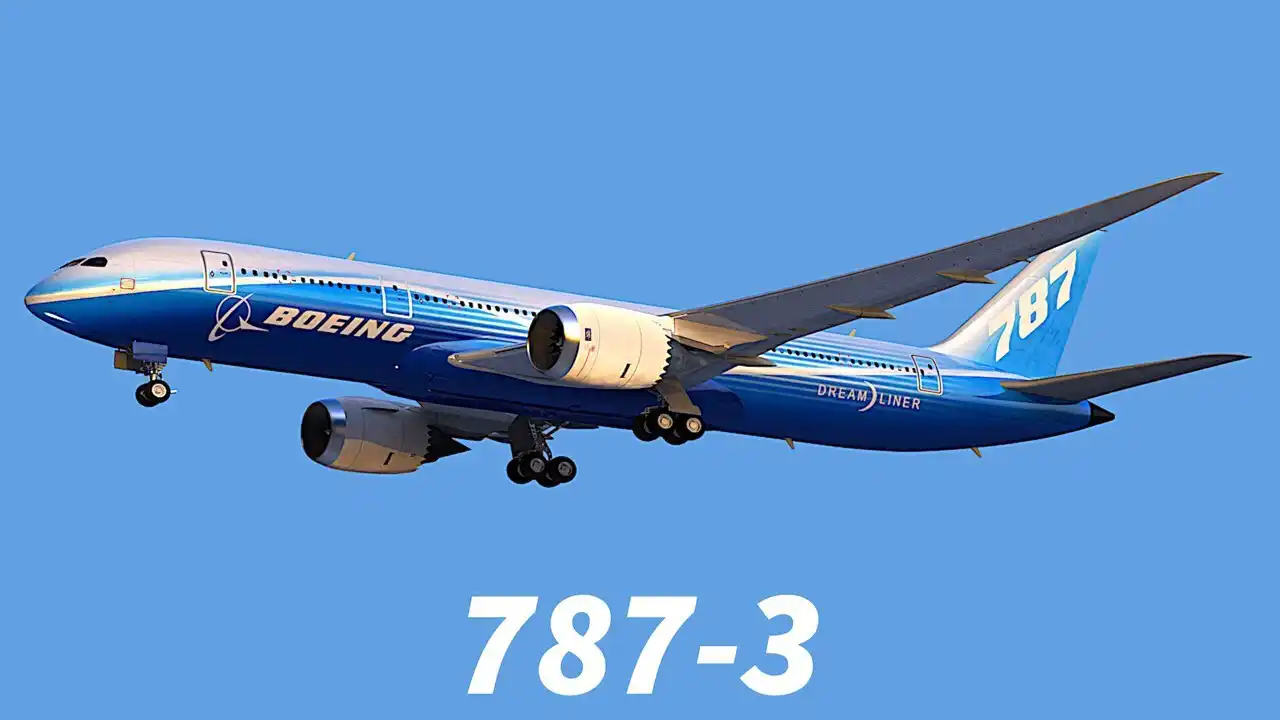
Today, the Boeing 787 is synonymous with ultra-long-haul efficiency, connecting cities separated by thousands of miles while consuming remarkably little fuel. Yet one proposed member of the Dreamliner family pursued an entirely different mission.
The Boeing 787-3 targeted high-density domestic routes, particularly within Japan, where airports often face gate constraints and passenger demand reaches extraordinary levels.
Unlike its longer-range siblings, the aircraft would have carried between 290 and 330 passengers across routes spanning roughly 2,500 to 3,050 nautical miles. Engineers retained the fuselage dimensions of the 787-8 while shortening the wingspan to improve compatibility with airport infrastructure common throughout Asia.
A reduced maximum takeoff weight would have optimized efficiency for shorter sectors where excessive fuel capacity was unnecessary.
At first glance, the concept addressed a genuine market need. Major Japanese carriers Japan Airlines and All Nippon Airways both expressed significant interest and placed orders.
However, reality intervened through production delays affecting the broader Dreamliner program. Boeing prioritized certification and delivery of the globally marketable 787-8, delaying work on the specialized domestic variant.
Faced with uncertainty, both Japanese airlines converted their commitments to the standard 787-8, preferring to maintain fleet modernization schedules rather than wait indefinitely.
Once those conversions occurred, the business case evaporated almost overnight. With virtually no customers remaining, Boeing officially canceled the 787-3 before production could begin.
Its story demonstrates how even technically sound aircraft can disappear when timing and customer priorities shift.
Airbus A350-800: The Smallest A350 That Struggled Against Physics
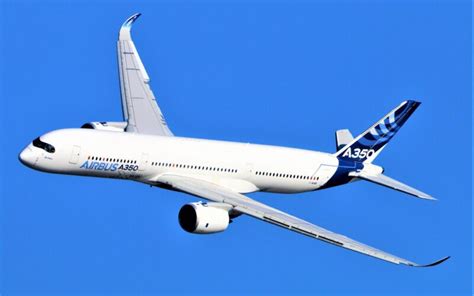
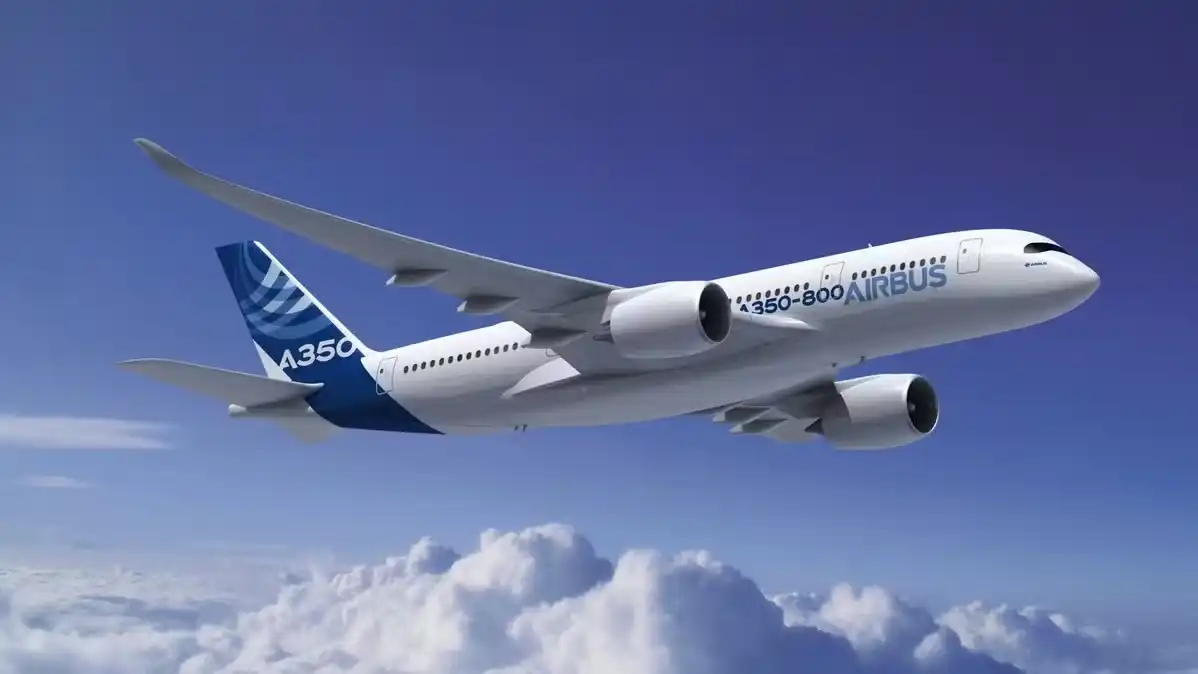
When Airbus launched the A350 XWB family, the manufacturer intended to offer multiple variants capable of serving different market segments. Among them, the A350-800 was envisioned as the smallest member, seating approximately 276 passengers while competing directly with Boeing’s 787-8.
Initially, airlines responded positively, and the aircraft accumulated roughly 180 outstanding orders.
Despite encouraging sales, engineers confronted a fundamental design limitation.
The A350-800 inherited major structural components—including its landing gear and wing architecture—from the significantly larger A350-900. While this approach simplified development, it also imposed substantial weight penalties.
Carrying oversized structural elements reduced seat-by-seat efficiency because the aircraft hauled more mass than its intended passenger capacity justified. Fuel burn per passenger therefore became less competitive compared with rival aircraft designed specifically for the same size category.
Rather than redesign the airframe extensively, Airbus watched many customers voluntarily upgrade to the larger A350-900, whose economics benefited from spreading structural weight across additional seats.
The decisive turning point arrived in 2014 with the introduction of the A330neo family. The A330-900neo offered similar passenger capacity but leveraged an already mature platform, resulting in lower acquisition costs and attractive operating economics.
Faced with shrinking demand and internal competition from its own products, Airbus abandoned the A350-800 entirely.
Its cancellation illustrates how engineering compromises made early in development can ultimately reshape an entire product strategy.
Airbus A380neo: The Superjumbo Revival That Never Left The Proposal Stage
Among all canceled Airbus concepts, none has generated more speculation than the A380neo.
The original A380 entered service as the world’s largest passenger aircraft and represented the ultimate expression of hub-and-spoke travel. Yet even before production ceased, Airbus explored the possibility of creating a substantially improved version featuring next-generation engines and aerodynamic refinements.
Industry discussions suggested the aircraft could receive redesigned wings, upgraded propulsion systems, and cabin modifications allowing approximately 50 additional seats while significantly lowering fuel consumption.
For airlines already operating large A380 fleets, especially Emirates, such enhancements promised meaningful economic improvements.
Emirates repeatedly encouraged Airbus to pursue the project, with executives publicly expressing enthusiasm for a re-engined version capable of reducing fuel burn by as much as 20 to 25 percent through advanced engines and lightweight composite technologies.
Additional concepts even included folding wingtips, similar to those adopted for the Boeing 777X, improving compatibility with airport infrastructure without sacrificing aerodynamic performance.
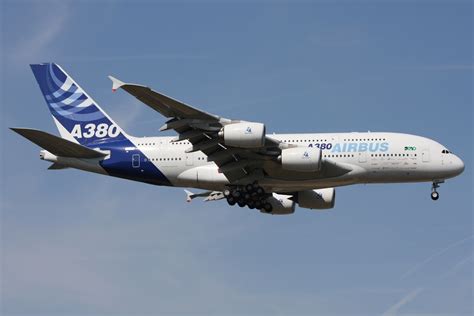
Despite these attractive ideas, Airbus leadership consistently concluded that the financial case simply did not exist.
Developing entirely new engines, modifying production facilities, and restarting manufacturing would require enormous investment for a market supported primarily by a single enthusiastic customer. By 2017, company executives publicly acknowledged that no sustainable business case justified proceeding with the A380neo.
Instead, Airbus briefly promoted incremental upgrades through the A380plus concept before ultimately ending A380 production in 2021.
The proposed A380neo remains one of aviation’s greatest “what if” scenarios—a vision of a cleaner, more efficient superjumbo that never advanced beyond planning studies.
Why These Canceled Boeing And Airbus Aircraft Still Matter Today
Aircraft cancellations are often viewed as failures, yet history suggests they frequently serve as stepping stones toward future innovation. The abandoned 767-400ERX encouraged Boeing to focus resources on programs that eventually produced the highly successful 787. Lessons learned from the 747X informed improvements applied to later jumbo variants. The unrealized 787-3 highlighted the challenges of creating highly specialized airframes in a global marketplace.
On the Airbus side, the A350-800 demonstrated the importance of optimizing structural efficiency rather than simply shrinking a larger design, while the unrealized A380neo underscored how dramatically airline business models had evolved away from extremely large four-engine aircraft.
These projects reveal that commercial aviation is shaped not only by engineering excellence but also by economics, timing, customer demand, and strategic vision. Some concepts disappear before the first prototype is assembled, yet their technologies and lessons continue influencing aircraft generations that follow.
The skies may never have seen these five remarkable programs in operation, but their legacy remains embedded in the modern fleets connecting the world every day.