Alaska Airlines has spent years occupying an unusual position in the U.S. airline industry. It has never carried the same global scale as Delta Air Lines, United Airlines, or American Airlines, yet its pilots increasingly have little reason to view those larger carriers as the only destinations worth pursuing. Behind that shift is a fundamental change in pilot compensation, one that has quietly narrowed a wage gap that once separated Alaska from the industry’s biggest legacy airlines.
For generations, the conventional career path was relatively straightforward. Pilots accumulated experience at regional airlines, built seniority and flight hours, and eventually moved to a major carrier where the combination of larger aircraft, international flying, and stronger contracts offered substantially higher earning potential. Alaska Airlines was certainly a desirable destination, but its role in that progression was often viewed differently from the Big Three.
That distinction has become much harder to maintain. Alaska’s latest pilot contract structure has pushed its compensation remarkably close to the levels offered by the country’s largest legacy carriers. More importantly, the change is not simply the result of one unusually generous pay increase. It reflects a broader labor strategy in which market-rate adjustments, retirement contributions, minimum pay protections, and premium flying opportunities work together to make the cockpit a financially competitive long-term career.
Alaska Airlines Pilot Pay Has Changed the Career Equation
The most important development is the way Alaska Airlines approaches market-based pilot compensation. Through its agreement with the Air Line Pilots Association, or ALPA, the airline incorporated mechanisms designed to keep its wage structure aligned with major industry benchmarks. Rather than allowing Alaska’s pilots to fall progressively behind as larger carriers negotiated new contracts, the compensation structure creates a path for Alaska to respond when the broader market moves upward.
That matters because pilot contracts at the largest U.S. airlines have historically influenced the entire labor market. When Delta, United, and American dramatically increase pilot pay, they do not simply improve the financial position of their own crews. They effectively raise the price that every airline must consider when recruiting and retaining experienced pilots.
For Alaska Airlines, that created a strategic choice. The company could allow the gap to remain and risk losing experienced captains and first officers to larger competitors, or it could spend more on labor and make staying attractive. Alaska chose the second option.
The result is particularly significant because Alaska does not need to operate a massive widebody fleet to offer compensation that approaches legacy-carrier levels. Its predominantly Boeing 737 operation demonstrates how a carrier can generate substantial pilot earnings through a high-utilization narrowbody network.
Senior Alaska 737 Captains Are Now Within Striking Distance
The numbers illustrate just how dramatically the market has changed. Under the referenced 2025 schedules, a first-year Alaska Airlines Boeing 737 first officer earns a base hourly rate of approximately $119.92, increasing to about $124.72 under 2026 rates. Those figures are already far removed from the compensation environment that characterized airline pilot careers only a generation ago.
The more striking figure appears at the top of the narrowbody pay scale. Senior Alaska Airlines captains can reach approximately $361.29 to $375.74 per hour, depending on the contractual step and applicable schedule. That puts the airline’s highest narrowbody captain rates extraordinarily close to the compensation available at much larger network carriers.
Delta and United, for example, have top narrowbody captain rates around $388.27 per hour in the figures referenced. American Airlines is listed at approximately $360.85 per hour. Alaska’s highest rate therefore sits only a small distance below two of the industry’s largest employers and can exceed the cited American figure.
This is the point at which the old career hierarchy begins to break down. If an experienced captain can earn a legacy-level hourly rate while remaining at Alaska Airlines, the economic incentive to leave solely for a higher base salary becomes considerably weaker.
The Real Advantage Goes Beyond Hourly Pay
Looking only at hourly rates, however, understates the value of Alaska’s pilot contract. Airline compensation is not equivalent to multiplying an hourly rate by a standard number of working hours. Monthly guarantees, retirement contributions, profit sharing, premium flying, scheduling protections, and other contractual provisions can materially alter a pilot’s total annual compensation.
One of Alaska’s most important advantages is its 17% direct company contribution to pilot 401(k) plans. Retirement benefits may not attract the same attention as a headline hourly wage, but they become extraordinarily important over a 20- or 30-year career.
A highly compensated pilot receiving a substantial employer contribution every year is effectively receiving additional compensation that compounds over time. This makes the comparison with other airlines much more complicated than simply asking which company has the highest published hourly rate.
Alaska also provides a 70-hour monthly minimum pay guarantee. Such protections can be particularly valuable in an industry where weather, maintenance, scheduling disruptions, and fluctuations in demand can affect the amount of flying available. A pilot does not necessarily need to operate every scheduled flight to receive the contractual minimum.
When those protections are combined with profit sharing and premium open-time flying, senior Alaska captains can push annual W-2 earnings beyond $400,000, according to the supplied reference material. That does not mean every Alaska captain earns that amount, but it demonstrates how the total compensation structure can move well beyond the basic hourly rate.
Why Alaska Can Afford Legacy-Level Pilot Wages
At first glance, Alaska’s willingness to pay nearly legacy-level wages seems difficult to reconcile with its narrower fleet strategy. Delta, United, and American operate enormous networks spanning regional aircraft, narrowbodies, and widebodies. Their economics are supported by international business travel, long-haul premium cabins, global alliances, and multiple aircraft categories.
Alaska’s operating model is different. Its fleet has historically centered heavily on the Boeing 737 family, allowing the airline to simplify training, maintenance, scheduling, and fleet management. That operational concentration can produce efficiencies that help offset some of the pressure created by higher cockpit labor costs.
The airline also benefits from a network built around dense markets in the western United States. Seattle-Tacoma International Airport is especially important, while Portland and Anchorage provide additional strategic foundations. High-frequency domestic and transcontinental flying keeps aircraft productive and gives pilots access to substantial amounts of scheduled flying.
At Seattle, Alaska’s Boeing 737-900ER and 737 MAX 9 fleets support an extensive domestic and transcontinental network. Portland provides another major West Coast base, while Anchorage remains critical to Alaska’s distinctive northern network.
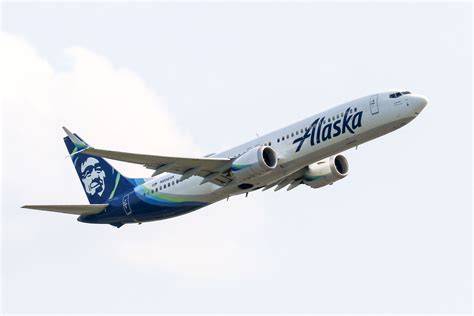
That high aircraft utilization matters because pilot pay is only one part of the airline’s cost structure. An airline that keeps aircraft moving efficiently can generate revenue from a large number of daily segments without depending exclusively on ultra-long-haul international operations.
In other words, Alaska does not necessarily need a widebody operation to create a high-value pilot career. It needs sufficient aircraft utilization, strong demand, and a contract that allows its crews to participate meaningfully in the value they generate.
Seattle and Portland Strengthen the Pilot Proposition
The geography of Alaska’s network adds another dimension to its attractiveness. Seattle and Portland offer pilots access to major metropolitan markets while maintaining a network that is heavily oriented toward domestic and transcontinental flying.
A senior captain operating Boeing 737 aircraft from Seattle can spend a career flying high-demand routes rather than treating narrowbody flying as merely an intermediate stage before attempting to secure a widebody position elsewhere. The aircraft may be smaller than a Boeing 777 or Airbus A350, but the compensation structure increasingly removes the assumption that smaller aircraft must automatically mean a dramatically smaller paycheck.
This can have a powerful effect on pilot decision-making. Seniority is one of the most valuable assets in an airline career, and moving between airlines often means sacrificing some or all of that seniority. A pilot who has already accumulated substantial seniority at Alaska may think twice before moving to another carrier simply for the possibility of eventually reaching a higher-paying aircraft.
The calculation becomes even more compelling when retirement contributions and minimum guarantees are included. Career stability itself has economic value, especially when moving to another airline could mean years of rebuilding seniority.
The Pilot Shortage Changed the Bargaining Environment
Alaska’s compensation strategy cannot be separated from the wider pilot labor market. The U.S. airline industry has faced sustained pressure to attract and retain qualified flight crews, while retirements, training requirements, fleet growth, and competition between airlines have increased the value of experienced pilots.
That environment strengthened the negotiating position of pilot unions. Airlines could no longer assume that experienced captains would remain simply because moving elsewhere was inconvenient. If another carrier offered dramatically higher compensation, the economic incentive to leave became difficult to ignore.
The result has been a form of wage competition extending far beyond the largest airlines. Once major carriers raised pilot pay substantially, mid-sized operators had to reconsider their own contracts or risk becoming training grounds for larger competitors.
Alaska’s response effectively turns compensation into a retention mechanism. Rather than continuously watching its most experienced pilots depart for legacy competitors, it can offer a career structure designed to make staying financially rational.
Higher Pilot Pay Creates a New Cost Challenge
There is, however, another side to the story. Matching legacy-level pilot compensation is not free, and contractual wage protections can create significant fixed costs for an airline.
If Alaska’s pilot pay rises automatically alongside major industry benchmarks, the airline has less flexibility to reduce labor costs when revenue weakens. Fuel prices can rise, demand can fall, and capacity can become constrained, but pilot contracts generally cannot be adjusted with the same speed as ticket prices.
That creates pressure on operating margins. The supplied reference material points to Alaska Air Group’s non-fuel unit costs rising approximately 1.3% year over year in 2025 and 2026, while the company has also operated in an environment of relatively narrow adjusted pretax margins.
The situation becomes easier to manage when premium revenue and corporate demand are strong. The reference material cites premium revenue growth of roughly 7% and corporate bookings increasing about 9% year over year. Stronger yields provide the financial cushion necessary to support a more expensive labor structure.
But aviation rarely remains predictable for long. Fuel shocks, recessions, geopolitical disruptions, aircraft delivery delays, and unexpected maintenance events can all expose weaknesses in an airline’s cost base.

What the New Pay Structure Means for Pilot Careers
Perhaps the biggest consequence of Alaska’s compensation strategy is psychological rather than financial. It changes what pilots consider a successful career.
For decades, widebody flying at a major legacy carrier represented the natural endpoint of the airline pilot ladder. A pilot might begin at a regional airline, move to Alaska or another major carrier, and eventually seek a position at Delta, United, or American. The larger aircraft and international routes were closely associated with the highest earnings.
That model is becoming less absolute.
If a pilot can achieve legacy-level narrowbody captain compensation at Alaska, receive substantial retirement contributions, benefit from a monthly minimum guarantee, and retain seniority in a familiar operation, leaving may no longer be the obvious financial decision.
The distinction between a stepping-stone airline and a final career destination is therefore becoming blurred. Alaska’s cockpit can now represent an endpoint rather than merely another rung on the ladder.
Alaska Airlines Has Quietly Changed the Industry Benchmark
The significance of Alaska Airlines’ pilot pay is not simply that its captains earn more. It is that the airline has helped demonstrate that a carrier does not need the global scale of the Big Three to build a highly competitive cockpit compensation package.
Its strategy combines market-linked wages with retirement security and minimum-pay protections, creating a package that can compete for pilots on more than one dimension. The result is a labor model designed not only to recruit pilots but to persuade experienced pilots to stay.
That may ultimately prove to be Alaska’s most important achievement. When compensation reaches parity, the battle for pilots moves away from salary alone and toward seniority, schedules, bases, quality of life, fleet opportunities, benefits, and long-term career stability.
Alaska Airlines has therefore quietly changed the question pilots must ask. It is no longer simply whether a larger legacy airline can offer a bigger paycheck. Increasingly, the question is whether leaving Alaska offers enough additional value to justify giving up the seniority and financial security already established there.
That is a very different competitive landscape from the one that existed a decade ago. And if Alaska continues expanding while maintaining its market-linked pilot compensation, the traditional hierarchy of U.S. airline careers may continue to narrow—one contract provision at a time.