The fight against drones is increasingly becoming a battle of economics as much as technology. Militaries need systems capable of stopping large numbers of relatively inexpensive unmanned aircraft without spending vastly more on every interception. Auriga Space’s Hermes is designed around that problem, combining a container-sized launcher, electromagnetic acceleration, and reusable electrical power to create a different approach to counter-drone defense.
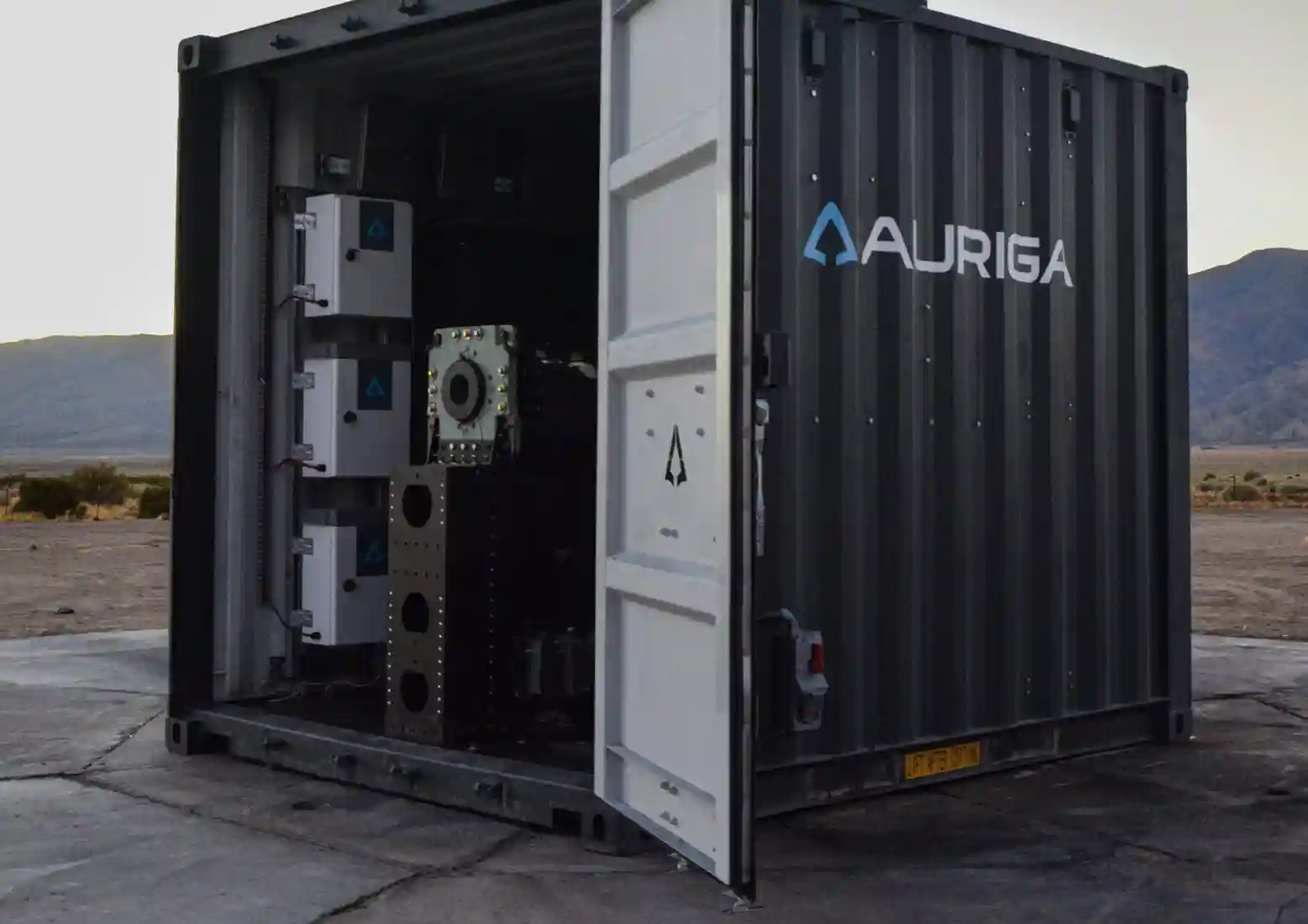
The most striking feature of Hermes is its portability. The complete launcher is designed to fit inside a 10-foot shipping container, allowing it to be transported by conventional logistics equipment rather than requiring a specialized weapons platform. That makes the concept particularly interesting for forces seeking mobile counter-drone capabilities that can be deployed rapidly and operated from locations where traditional air-defense infrastructure would be difficult to establish.
Unlike conventional launchers that rely on rocket motors or other expendable propellants, Hermes uses electromagnetic acceleration to propel its projectiles. Auriga says the system is capable of firing projectiles at speeds exceeding Mach 1, meaning the launcher has demonstrated repeated supersonic launches. The company conducted its first field test in the Mojave Desert in August 2026, completing more than a dozen launches despite temperatures reaching roughly 100 degrees Fahrenheit.
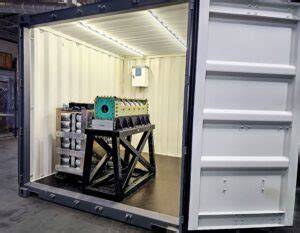
How the Hermes Electromagnetic Anti-Drone Weapon Works
The technology behind Hermes relies on magnetic forces rather than conventional chemical propulsion. Auriga’s system uses magnetic levitation to prevent the projectile from physically contacting the launcher as it accelerates, an approach that has similarities to electromagnetic catapult technology used aboard some U.S. Navy aircraft carriers. Removing direct physical contact during acceleration is intended to support rapid and repeatable launches while reducing reliance on conventional propellant.
That architecture could give Hermes an important advantage in sustained counter-drone operations. According to Auriga, the launcher can support hundreds of launches on a single charge, while onboard batteries can be replenished using solar panels. A diesel generator can also provide field power when solar generation is insufficient. This combination potentially gives operators several ways to keep the system running without carrying large quantities of launch propellant.
Why Hermes Could Matter in the Drone War
The economic argument may ultimately be as important as the Mach 1 performance. Modern drones can be comparatively inexpensive, yet many conventional methods of defeating them involve sophisticated interceptors or other costly ammunition. Hermes is intended to launch relatively inexpensive projectiles, creating the possibility of a more sustainable response when an operator faces repeated drone attacks.
Auriga has also emphasized flexibility in the types of projectiles Hermes can fire. During the Mojave testing, different shapes and types of effectors were reportedly used, while repeated supersonic launches demonstrated that the electromagnetic accelerator could operate more than once during a test sequence. That adaptability could eventually allow the launcher to support different counter-drone missions rather than being restricted to one specialized projectile.
From Army Research to Field Testing
Hermes is not an isolated experiment that appeared overnight. Its development is connected to a three-year research agreement with the U.S. Army, announced in July 2026, under which the Army’s DEVCOM Armaments Center is working with Auriga to advance electromagnetic accelerator technology. Auriga had previously explored related systems through U.S. government contracts.
The August test therefore represents an important transition from laboratory and development work toward a more practical field system. Hermes was transported to the test site by flatbed truck, reinforcing the emphasis on mobility. Auriga plans another field test later in 2026 as development continues.
The broader significance of Hermes is its attempt to combine supersonic performance, reusable electrical power, containerized transport, and potentially lower-cost ammunition in one counter-drone package. It is still a developmental system rather than a proven operational replacement for established air defenses, but its design points toward a future in which defending against drone swarms requires weapons that can fire quickly, relocate easily, and remain economical over prolonged engagements.