Elbit Systems has secured a $275 million defense contract to deliver an advanced helicopter self-protection and airborne electronic warfare suite to an Asia-Pacific military customer, reinforcing the region’s accelerating push to upgrade survivability in increasingly contested airspace. Announced on January 12, 2026, the five-year agreement covers system delivery, platform integration, and long-term support, positioning rotary-wing fleets to operate effectively against modern missile and radar-based threats.
The deal reflects a broader strategic shift among Asia-Pacific armed forces, where helicopters remain central to transport, special operations, maritime security, and combat search-and-rescue missions. As regional tensions intensify and the proliferation of man-portable air defense systems (MANPADS) and radar-guided weapons grows, survivability has become a defining requirement rather than an optional enhancement.
Rising Threat Environment Driving Helicopter Survivability Investments
Helicopters are uniquely exposed in modern conflict scenarios. Their operational profiles—low-altitude flight, slower speeds, and proximity to hostile forces—place them squarely within the engagement envelopes of infrared-guided missiles and short-range air defense systems. In the Indo-Pacific, where island chains, maritime chokepoints, and dense littoral zones dominate operational planning, these vulnerabilities are magnified.
The unnamed customer’s decision to invest heavily in an integrated electronic warfare and self-protection suite signals recognition that future helicopter operations will take place in high-threat, sensor-saturated environments. Rather than relying on legacy countermeasures, regional forces are increasingly prioritizing automated, multi-layered defensive systems capable of detecting, identifying, and neutralizing threats in real time.
Elbit Systems’ Integrated Electronic Warfare Solution Explained
At the core of the $275 million agreement is Elbit Systems’ fully integrated airborne electronic warfare suite, designed to provide continuous, autonomous protection throughout all mission phases. The architecture combines multiple subsystems into a single defensive ecosystem, enabling seamless coordination between detection, tracking, and countermeasure deployment.
Key components of the suite include radar warning receivers, laser warning sensors, electronic support measures, and advanced countermeasure dispensers. Together, these systems create a 360-degree defensive shield, capable of identifying threats across multiple spectrums and responding within fractions of a second. This level of automation is critical for helicopter crews, reducing cognitive workload while ensuring rapid and accurate defensive responses.
Mini-MUSIC DIRCM as the Cornerstone of Missile Defense
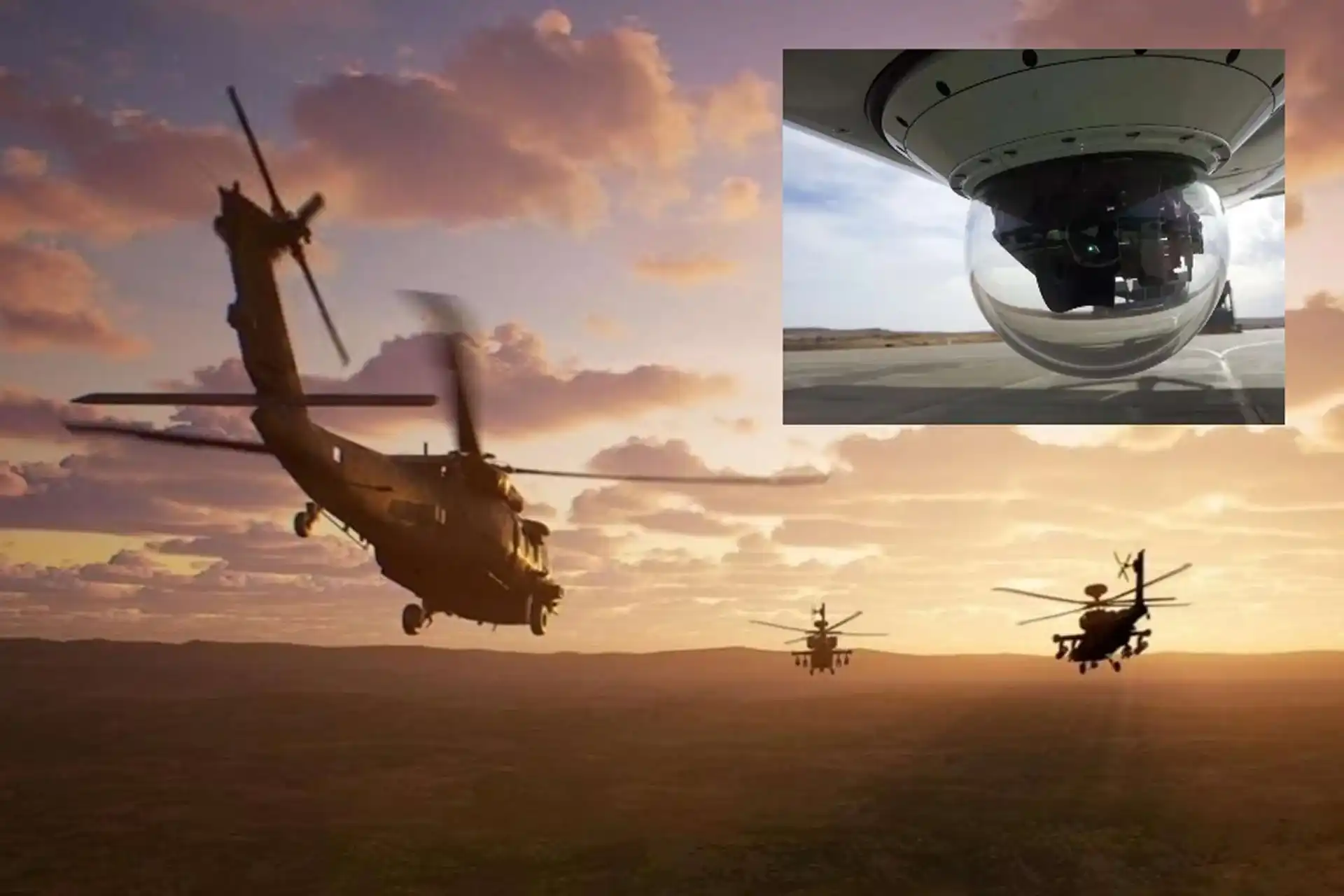
Anchoring the self-protection package is Elbit Systems’ Mini-MUSIC™ Directed Infrared Countermeasure (DIRCM), a combat-proven laser-based system engineered to defeat infrared-guided missiles. Unlike traditional flare-based defenses, DIRCM systems actively jam the missile’s seeker head, disrupting its guidance logic and forcing it off target.
The Mini-MUSIC is optimized for rotary-wing platforms, offering a compact, lightweight design without compromising performance. Its ability to detect, track, and neutralize multiple missile threats simultaneously makes it particularly effective against coordinated or ambush-style attacks, a growing concern in asymmetric warfare scenarios.
Operational data from multiple theaters demonstrates the system’s maturity. The Mini-MUSIC has accumulated hundreds of thousands of flight hours with NATO and European air forces, validating its reliability in both peacetime operations and combat deployments. Its modular architecture also allows for adaptation to different helicopter types, a key advantage for mixed fleets common in the Asia-Pacific.
Tailored Integration for Medium-Lift Helicopter Fleets
While the customer nation remains undisclosed due to defense sensitivities, industry analysts note that the system is being configured for medium-lift helicopter platforms, which form the backbone of many regional air forces. These aircraft are frequently tasked with troop transport, disaster relief, maritime patrol, and special operations—missions that increasingly intersect with hostile threat zones.
Elbit Systems’ approach emphasizes platform-specific integration, ensuring sensors, processors, and countermeasures are optimized for the aircraft’s flight envelope and mission profile. This tailored configuration enhances not only survivability but also mission continuity, allowing helicopters to remain on task rather than aborting due to threat exposure.
Strategic Significance for the Asia-Pacific Defense Landscape
The contract underscores a broader regional trend toward advanced airborne protection technologies as part of comprehensive modernization efforts. Asia-Pacific militaries are no longer viewing electronic warfare as a niche capability but as a core enabler of operational freedom, particularly in environments shaped by anti-access and area-denial strategies.
Shoulder-fired missiles, legacy radar systems, and emerging networked air defenses pose persistent risks even in limited-intensity conflicts. By investing in integrated EW and DIRCM solutions, regional forces are effectively raising the survivability threshold for their aviation assets, complicating adversary targeting and reducing the effectiveness of low-cost missile threats.
Elbit Systems Strengthens Its Global EW Leadership
For Elbit Systems, the $275 million agreement represents more than a single program win. It reinforces the company’s position as a global leader in airborne self-protection and electronic warfare, building on a growing portfolio of contracts across Europe, North America, and the Indo-Pacific.
Company leadership has framed the deal as evidence of sustained confidence in Elbit’s technology. The firm’s ability to deliver combat-proven, scalable solutions has become a differentiator in a market where reliability and integration expertise are paramount. The inclusion of long-term support within the contract further cements Elbit’s role as a strategic partner rather than a one-time supplier.
Implications for Future Helicopter Operations
As the nature of aerial threats continues to evolve, the line between survivability and mission success is increasingly blurred. Helicopters equipped with advanced self-protection suites are better positioned to operate in contested zones, support joint operations, and respond rapidly to crises without disproportionate risk.
Elbit Systems’ latest Asia-Pacific contract highlights a clear reality shaping modern defense planning: aircraft survivability is now a decisive factor in operational effectiveness. By delivering an integrated, laser-based defensive solution, Elbit is helping regional militaries adapt to a battlespace where missiles are cheap, plentiful, and unforgiving—and where staying airborne can mean the difference between mission success and catastrophic loss.