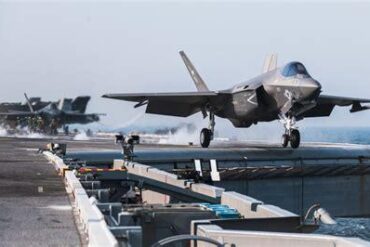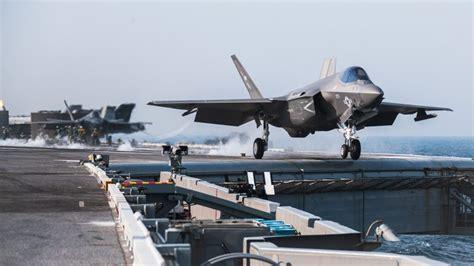
The US Navy is preparing to dramatically enhance the survivability of its premier fighter jets—the F-35 Lightning II and F/A-18 Super Hornet—through the acquisition of up to 6,000 active expendable decoys (AEDs). These cutting-edge countermeasures, designed to thwart advanced radar-guided missile threats, will be supplied by Leonardo UK, a global leader in defensive avionics and electronic warfare systems.
According to a presolicitation notice released by the US Naval Air Systems Command (NAVAIR), the proposed contract with Leonardo will be structured to include an initial base year with up to four optional extension years, spanning fiscal years 2027 through 2031. The acquisition plan outlines an ambitious procurement target—starting with 3,000 AED units per year, with quantities doubling in the subsequent years as production scales up.
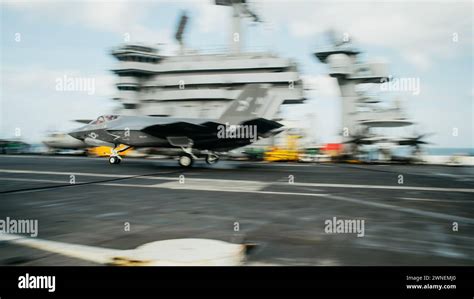
Leonardo has been singled out as the “only contractor” capable of fulfilling the comprehensive technical and operational requirements specified by NAVAIR, leaving little doubt that the highly advanced BriteCloud 218 decoy is at the center of this procurement.
Leonardo’s BriteCloud 218: Next-Generation Self-Protection Technology
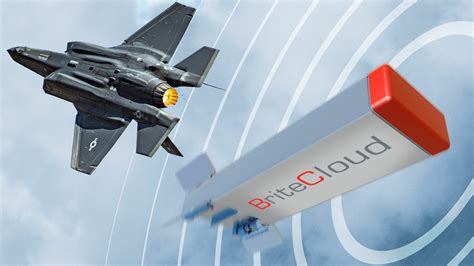
Although neither the BriteCloud name nor its US military designation, AN/ALQ-260(V)1, was explicitly mentioned in the recent notice, the technical specifications match Leonardo’s BriteCloud 218 system exactly. The notice specifies an AED form factor of 2x1x8 inches—a precise match to the BriteCloud 218 design—solidifying its expected role in the contract.
BriteCloud 218 is the latest evolution in Leonardo’s active expendable decoy lineup. The system leverages Digital Radio Frequency Memory (DRFM) technology to generate complex and highly realistic false targets that can deceive and disrupt enemy radar-guided missile systems. Once deployed from a standard countermeasure dispenser, BriteCloud emits a deceptive radiofrequency signature designed to lure incoming threats away from the host aircraft.
Leonardo literature emphasizes that BriteCloud offers “mission load programmable” capabilities, a key requirement set by NAVAIR, ensuring the system can be tailored for different threat environments. Furthermore, the BriteCloud 218 has achieved Technology Readiness Level 9 (TRL-9) status—the highest maturity rating for military technology—indicating it is fully operational and combat-proven.
Proven Effectiveness with F-35 and F/A-18 Fighters
The BriteCloud 218 is no stranger to high-performance combat aircraft. It has already been integrated, tested, and, in some instances, deployed operationally on platforms such as the Eurofighter Typhoon, F-16 Fighting Falcon, Saab Gripen, MQ-9 Reaper, and the Panavia Tornado. Its compatibility with the F-35C Lightning II and F/A-18 Super Hornet, two of the most crucial assets in the US Navy’s arsenal, represents a significant step in fortifying the service’s air superiority capabilities.
In a landmark milestone, a March 2025 report by the Defense Visual Information Distribution Service (DVIDS) revealed that BriteCloud was expended by an undisclosed F-35 squadron under Carrier Air Wing 2 (CVW-2) for the first time. This operational event was overseen by Capt. Timothy Myers, the former CVW-2 commander, highlighting the system’s real-world deployment aboard US Navy aircraft carriers.
Notably, VFA-97, an F-35C squadron assigned to CVW-2, is the only known unit to have operational experience with BriteCloud to date, signaling the beginning of broader fleet-wide adoption pending the successful conclusion of Leonardo’s supply contract.
Expanding Production to Meet Rising Demand
The NAVAIR presolicitation notice projects an initial production rate of 300 AED units per month, with scalability to support annual deliveries of 3,000 units in the first two years, followed by an increase to 6,000 units annually. This production surge reflects the Navy’s urgent need to bolster the survivability of its aircraft against evolving anti-access/area denial (A2/AD) threats and next-generation missile systems.
Spare impulse cartridges and other ancillary equipment are included as part of the contract, ensuring sustainment and operational readiness of the decoy systems throughout their service life.
This large-scale acquisition aligns with the 2022 fielding recommendation issued by the US Air National Guard (ANG) for the BriteCloud 218, reinforcing the system’s validated performance and reliability across multiple platforms and mission sets.
Strategic Implications for US Naval Aviation
The procurement of thousands of active expendable decoys represents a decisive investment in survivability for the US Navy’s carrier-based air wings. Modern conflicts increasingly involve highly contested airspaces saturated with advanced radar and missile defenses, particularly from near-peer adversaries equipped with sophisticated surface-to-air missile (SAM) systems.
The F-35C and F/A-18 are essential components of the Navy’s power projection capabilities, operating at the forefront of maritime security operations, deterrence patrols, and potential conflict zones. Enhancing these aircraft with state-of-the-art AEDs like BriteCloud dramatically improves their ability to operate in high-threat environments while reducing vulnerability to enemy missile engagements.
BriteCloud’s ability to autonomously deploy and simulate radar signatures provides a critical advantage, buying pilots valuable time to evade or counter incoming missiles without overburdening cockpit workload.
Leonardo’s Dominance in Electronic Warfare Solutions
Leonardo’s selection as the “only contractor” capable of fulfilling the Navy’s AED requirements underscores the company’s leadership in electronic warfare and self-protection technologies. Headquartered in the UK with extensive operations worldwide, Leonardo has cultivated a reputation for developing highly sophisticated, combat-ready defensive solutions tailored to modern aerial warfare.
The company’s BriteCloud product family has evolved over years of research, testing, and operational deployments, consistently pushing the boundaries of countermeasure effectiveness. With BriteCloud 218’s proven success across multiple allied air forces and platforms, its adoption by the US Navy represents a logical extension of this legacy.
In addition to the BriteCloud series, Leonardo continues to advance its portfolio of integrated defensive aids suites (IDAS), radar warning receivers, and electronic attack systems, solidifying its role as a critical supplier for NATO and allied defense initiatives.
Looking Ahead: Contract Award and Deployment Timeline
While the presolicitation notice signals NAVAIR’s intent to award the AED contract to Leonardo, the formal procurement process is expected to culminate with a definitive agreement by November 2026. Once finalized, production will commence promptly, ensuring initial deliveries align with the start of Fiscal Year 2027.
As production scales and fielding expands, both the F-35C and F/A-18 fleets will progressively integrate BriteCloud 218 into their mission sets, enhancing survivability across carrier strike groups and joint-force operations.
The planned acquisition of up to 6,000 active expendable decoys marks a significant leap forward in defensive countermeasure capabilities for US Naval Aviation, ensuring that American fighter pilots maintain the technological edge necessary to survive—and succeed—in the increasingly complex and contested air domains of the future.