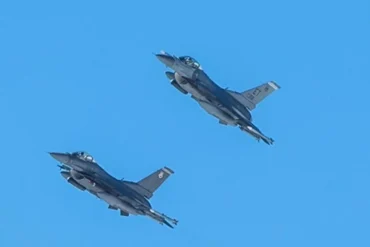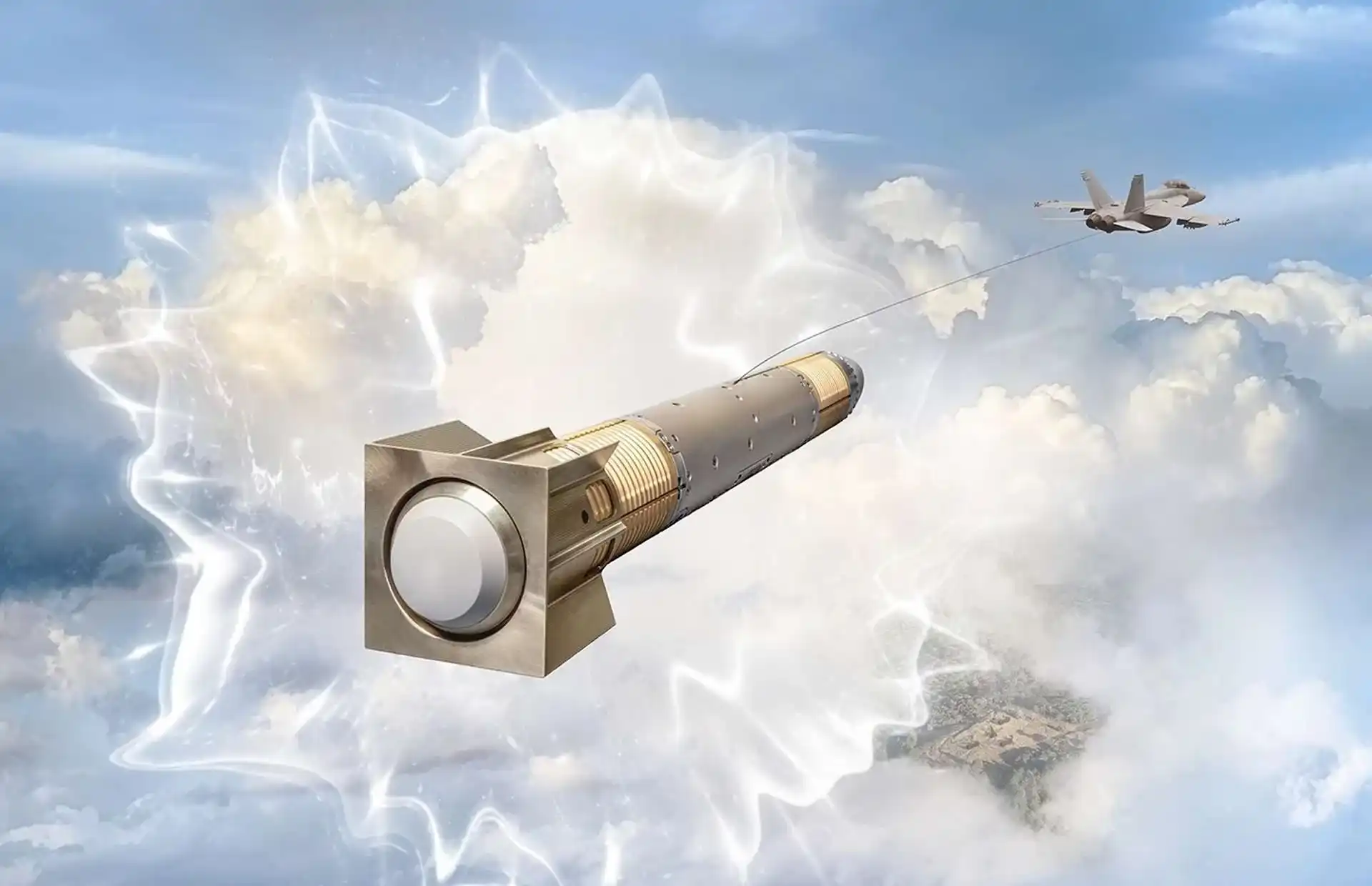
The U.S. Navy has taken a decisive step to reinforce the survivability of its tactical aviation fleet by awarding a $73.8 million contract modification to BAE Systems for the production of advanced radio frequency (RF) countermeasures. This investment targets one of the most dangerous phases of modern air combat: the moment when a radar-guided missile is already in flight and actively homing on its target. Rather than expanding offensive firepower, the program focuses squarely on keeping pilots and aircraft alive inside some of the world’s most heavily defended airspace.
The contract, issued by Naval Air Systems Command (NAVAIR), covers the procurement of 1,248 RF countermeasure units for U.S. Navy, U.S. Air Force, and allied fighter aircraft through Foreign Military Sales (FMS) channels. Valued at $73,798,992, the modification extends an existing agreement with BAE Systems Information and Electronic Systems Integration Inc., underscoring the Pentagon’s long-term commitment to electronic survivability as a core combat capability rather than an auxiliary enhancement.
Work under the contract will be distributed across multiple U.S. facilities, including Nashua, New Hampshire, Elkton, Maryland, and several locations in California, with additional production and integration activities spread nationwide. Deliveries are scheduled to continue through February 2029, aligning with broader fleet modernization timelines. Funding is drawn from a mix of FY2025 and FY2026 Navy and Marine Corps ammunition procurement accounts, FY2026 Air Force aircraft procurement funds, and a substantial FMS contribution, reflecting the joint and allied nature of the capability.
In operational terms, RF decoys represent a last line of defense against radar-guided missiles, which remain the backbone of advanced integrated air defense systems. Unlike early-warning or midcourse countermeasures, these systems are designed to function during the missile’s terminal engagement phase, when reaction time is measured in seconds and the margin for error is razor-thin. By misleading the missile at this critical moment, RF decoys can decisively break the enemy’s kill chain.
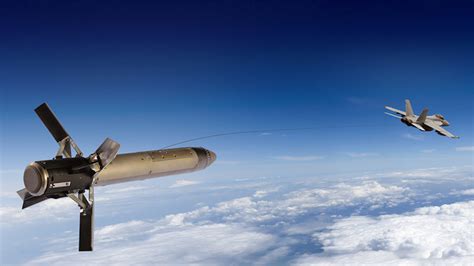
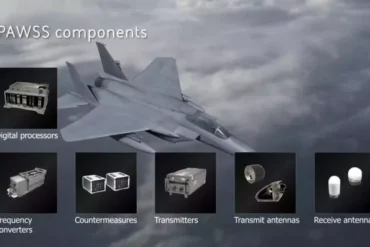
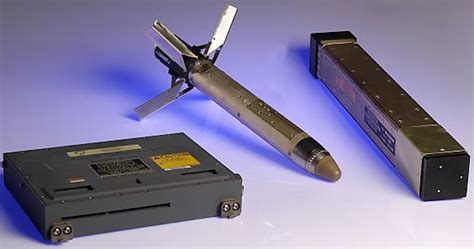
Although the Navy has not publicly confirmed the system designation, the contract vehicle has long been associated with the ALE-70 family of radio frequency countermeasures. This technology centers on a towed decoy deployed from the aircraft via a launcher and reel assembly. Connected by a fiber-optic tether, the decoy carries its own RF transmitter, allowing it to operate as an electronically independent target under the control of the aircraft’s electronic warfare management system.
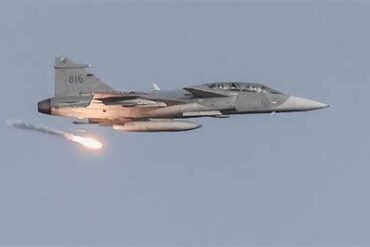
Once deployed, the decoy replicates and exaggerates the radar signature of the host aircraft, deliberately presenting itself as a more attractive target than the fighter itself. Modern radar-guided missiles rely on sophisticated seeker logic and tracking algorithms, but those systems can be manipulated. By emitting carefully tailored waveforms, the decoy exploits these algorithms, pulling the missile’s aim point away from the aircraft and onto the expendable device trailing behind it.
From a tactical standpoint, the value proposition is stark and compelling. A single RF decoy, even one costing tens or hundreds of thousands of dollars, is trivial when compared to the loss of a multi-million-dollar aircraft and a highly trained pilot. If the decoy is damaged or compromised, it can be severed and replaced, transforming what would otherwise be a catastrophic hit into a manageable expenditure of matériel.
This investment arrives against the backdrop of a rapidly evolving threat environment. Potential adversaries now field dense, layered air defense networks that combine long-range surveillance radars, mobile fire-control radars, networked command-and-control nodes, and frequency-agile missile seekers specifically designed to counter traditional jamming techniques. Even aircraft with low-observable shaping can find themselves exposed when carrying external stores, operating in large strike packages, or maneuvering within constrained airspace.
For the U.S. Navy, whose carrier air wings are expected to operate deep inside anti-access and area-denial (A2/AD) zones, layered self-protection is no longer optional. It is a prerequisite for mission success. RF decoys complement onboard electronic attack systems, radar warning receivers, and signature management techniques, creating multiple opportunities to confuse, delay, or defeat incoming threats. The result is not invulnerability, but a meaningful increase in survivability that preserves operational freedom.
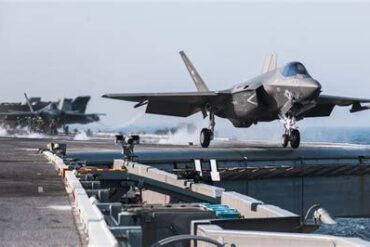
The relevance of this capability is particularly acute for the F-35 Lightning II community within the Navy and Marine Corps. The aircraft’s integrated electronic warfare suite provides powerful detection, geolocation, and onboard jamming, but physics still matters. An offboard RF source physically separated from the aircraft introduces a level of complexity that onboard systems alone cannot replicate. When combined, onboard and towed countermeasures force enemy missiles to solve a far more difficult targeting problem under extreme time pressure.
The January 2026 contract modification also signals continuity rather than experimentation. The Navy has previously exercised options under the same contract to sustain production and expand inventory, indicating confidence in both the technology and the industrial base supporting it. By extending deliveries through 2029, the service ensures that operational squadrons, training units, and war reserve stocks remain adequately supplied as fleet demand increases.
Equally significant is the scale of the Foreign Military Sales component. Allied air forces flying alongside U.S. Navy and Air Force units face identical missile threats and must operate within the same contested battlespace. Standardizing advanced RF decoys across partner fleets improves interoperability, simplifies combined mission planning, and enhances collective deterrence by raising the cost of hostile missile engagements for any adversary contemplating aggression.
The classification of much of this funding under ammunition procurement accounts is revealing. RF decoys are treated not as rare, exquisite systems but as consumables to be stocked, expended in training, and replenished for sustained operations. This mindset reflects a sober assessment of modern warfare, where survivability assets must be available in quantity and used aggressively rather than hoarded for hypothetical future conflicts.
In strategic terms, the $73.8 million investment underscores a broader shift in priorities. As missile technology proliferates and air defenses grow more sophisticated, success in air combat increasingly depends on the ability to deny the enemy a clean targeting solution. Radio frequency decoys do not win wars by themselves, but they buy something priceless: time. Time to maneuver, time to complete the mission, and time to bring pilots home. In an era of contested skies, that margin can decide the outcome of an entire campaign.