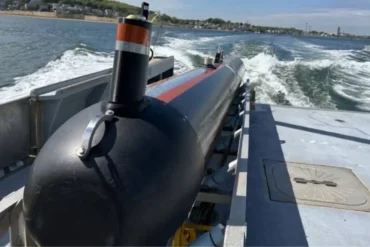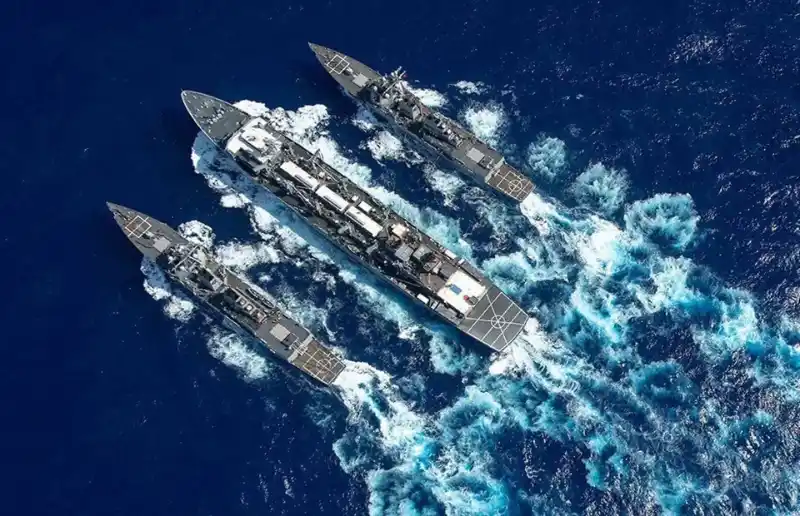
The U.S. Navy has taken a decisive step to reinforce its digital warfighting backbone by awarding General Dynamics Information Technology (GDIT) a $988 million contract to modernize and sustain fleet-wide command and control networks. The award reflects a strategic recognition that modern naval power is no longer defined solely by hulls, missiles, or aircraft, but by the resilience, speed, and survivability of the information networks that bind them together in combat.
Issued in December 2025 and publicly confirmed in January 2026, the contract falls under the Ship and Air Command, Control, Communications, Computers, Combat, Intelligence, Surveillance, and Reconnaissance Systems Support (SACSS) program. Its structure—a one-year base period, four additional one-year options, and a six-month extension—signals an intent to sustain continuous modernization rather than pursue a limited, one-off technology refresh. This long-term approach underscores how critical C5ISR has become to every dimension of naval operations.
At its core, the SACSS award is about keeping the fleet operationally coherent in an era where maritime warfare is increasingly contested across cyber, electromagnetic, and information domains. As adversaries invest heavily in long-range sensors, precision strike systems, and electronic warfare capabilities, the Navy’s ability to sense, decide, and act faster than its opponents depends on the integrity of its command networks. This contract is designed to ensure those networks remain robust under pressure.
Strategic Scope of the SACSS Program
The SACSS contract authorizes GDIT to deliver end-to-end integration services across a broad range of naval platforms and operational environments. These services span engineering, procurement, installation, logistics, and operational testing for surface combatants, aircraft carriers, Coast Guard vessels, manned and unmanned aircraft, and shore-based facilities. Rather than focusing on a single system or technology, SACSS addresses the full lifecycle of C5ISR capabilities, from initial installation to sustained operational readiness.
This holistic scope is essential because modern naval platforms rely on tightly integrated digital ecosystems. Radios, cryptographic equipment, tactical data links, processing hardware, antennas, and mission applications must function as a synchronized whole. Any weak link—whether outdated software, incompatible hardware, or insecure interfaces—can degrade combat effectiveness. SACSS exists to close those gaps systematically, ensuring upgrades reach the fleet quickly and reliably.
Turning Digital Transformation into Shipboard Reality
While official disclosures avoid listing specific systems, the operational meaning of the contract is clear: digital transformation at sea. GDIT’s role includes taking new and upgraded technologies from program offices and delivering them directly to ships at the pier, aircraft on the flight line, or facilities ashore. This includes not only installation but also validation and verification testing to ensure systems perform as intended before platforms return to operational duty.
A key feature of SACSS is its emphasis on pier-side modernization, allowing ships to receive major upgrades without entering dry dock. This approach minimizes downtime and maximizes fleet availability, a critical factor as operational demands continue to rise. By enabling modernization while vessels remain in the water, the Navy preserves readiness while still advancing its technological baseline.
Structural and Physical Integration Challenges
C5ISR modernization is often misunderstood as a purely digital effort, but SACSS highlights its physical and structural complexity. GDIT’s responsibilities extend to heavy fabrication work, including the construction and welding of external sponsons—large structural additions required to mount new antennas, sensors, or mission equipment. These modifications demonstrate that modern command networks frequently demand changes to a ship’s physical architecture, not just its software stack.
Such work requires close coordination with shipyards, fleet maintenance teams, and operational commanders. Every structural change must account for weight, balance, electromagnetic compatibility, and survivability, reinforcing why a single, experienced integrator is critical to executing fleet-wide upgrades at scale.
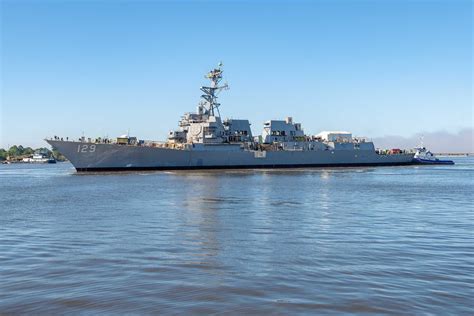
Decision Speed and Network Survivability
The tactical payoff of the SACSS program lies in decision superiority. In high-end maritime conflict, the side that can process sensor data faster, distribute it securely, and translate it into coordinated action gains a decisive edge. Navy leadership has consistently emphasized that future sea control will be contested not just kinetically, but across the electromagnetic spectrum and cyberspace.
Modernized C5ISR networks enable ships to operate effectively even when communications are degraded, jammed, or attacked. By hardening networks and improving data fusion, SACSS supports the Navy’s ability to fight through disruption rather than withdrawing when conditions deteriorate. This resilience is essential for maintaining credible deterrence and combat effectiveness in contested regions.
Enabling Distributed Maritime Operations
The contract directly supports the Navy’s doctrine of Distributed Maritime Operations (DMO), which relies on widely dispersed forces coordinating seamlessly to mass effects at decisive moments. DMO demands resilient, adaptable networks capable of linking sensors, shooters, and command nodes across vast distances.
Under this concept, the network itself becomes a weapon. SACSS-style integration ensures that as software versions evolve, cyber vulnerabilities emerge, or new gateways are introduced, the overall architecture remains coherent. This continuous integration model allows legacy systems to interoperate with newer platforms, preserving combat power while the fleet transitions to future designs.
Impact on Aegis and Missile Defense Platforms
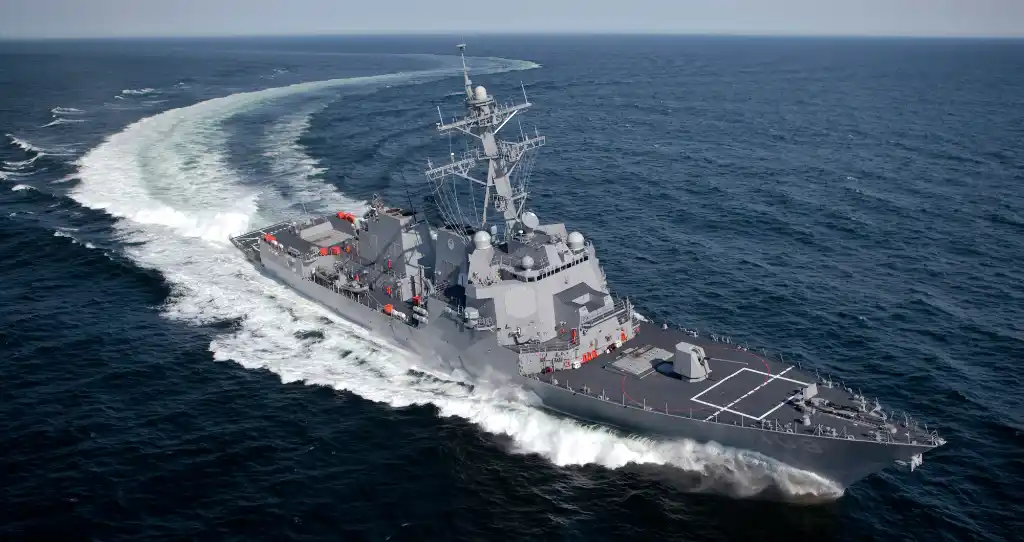
Guided-missile ships, particularly those equipped with the Aegis Combat System, stand to benefit significantly from the SACSS modernization effort. These platforms depend on high-quality track data and rapid information exchange to perform air defense, sea control, and ballistic missile defense missions. Enhanced data links and processing capabilities improve cooperative engagement, allowing ships to share sensor data and engage threats collectively.
In environments saturated with electronic warfare and cyber threats, upgraded command networks ensure that Aegis-equipped ships can maintain fire-control-quality solutions even under attack. This capability is central to protecting carrier strike groups and critical maritime corridors.
Broader Benefits for Carriers and the Coast Guard
Aircraft carriers function as floating command hubs, coordinating air, surface, and subsurface operations across strike groups. Reliable, secure connectivity between airborne sensors, shipboard command centers, and joint force networks is essential for sustaining sortie generation and strike coordination. SACSS enhancements strengthen this connective tissue, ensuring carriers remain effective command nodes in joint and coalition operations.
The inclusion of U.S. Coast Guard vessels reflects the Navy’s emphasis on interoperability. Cutters operating alongside Navy forces or supporting defense missions must integrate seamlessly into shared command networks. By standardizing and modernizing C5ISR capabilities, SACSS reduces interoperability gaps and strengthens maritime security cooperation.
A Long-Term Investment in Naval Relevance
GDIT has characterized the award as recognition that C5ISR systems are foundational to how the Navy senses, communicates, and fights. More than a procurement action, the $988 million contract represents a long-term investment in operational relevance. It ensures today’s fleet remains credible and lethal while new platforms and architectures are still under development.
In an era defined by rapid technological change and intensifying strategic competition, the Navy’s commitment to sustained command network modernization sends a clear message. Maritime dominance in the 21st century will belong to forces that can integrate information faster, protect it more effectively, and exploit it decisively. Through the SACSS program and its partnership with General Dynamics, the U.S. Navy is positioning its fleet to do exactly that.