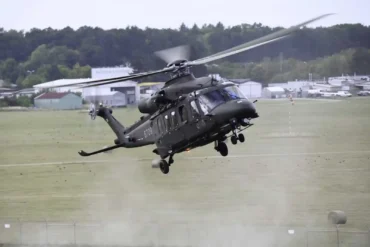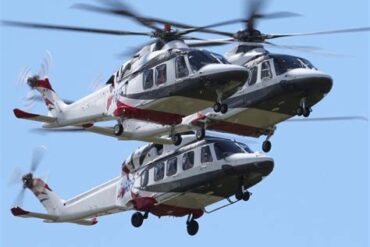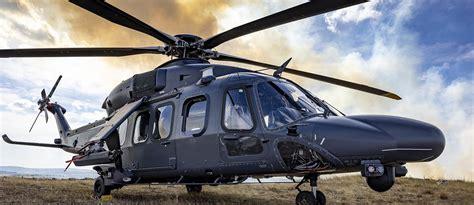
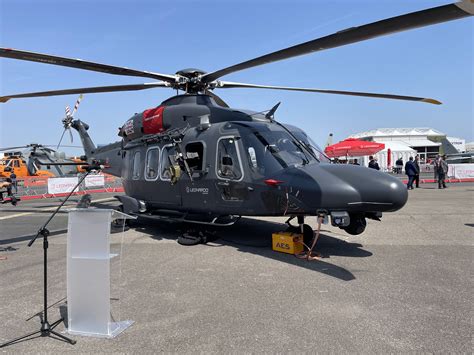
The United Kingdom has formally committed £1 billion to procure 23 Leonardo AW149 medium-lift helicopters under the long-anticipated New Medium Helicopter (NMH) programme, ending years of industrial uncertainty and resetting the architecture of British rotary-wing capability. The contract, awarded by the UK Ministry of Defence on March 2, 2026, secures production at Leonardo’s historic Yeovil facility in Somerset and consolidates multiple aging helicopter fleets into a single, modern platform engineered for adaptability, survivability, and NATO interoperability.
This decision lands at a pivotal moment for Britain’s defence industrial base. The AW149 selection follows earlier budget revisions that reduced the initial requirement from up to 44 aircraft to 23, aligning procurement with revised spending priorities. While the fleet size narrowed, the strategic significance deepened: the award not only stabilizes domestic helicopter manufacturing but anchors the UK as the production center for future export variants tied to this configuration.
The contract also extends beyond crewed aviation. Alongside the AW149 order, the Ministry of Defence confirmed additional investment in Proteus, the UK’s first autonomous rotary-wing uncrewed air system developed in partnership with the Royal Navy. The integration of crewed and autonomous systems is no longer speculative doctrine; it is being built into the industrial plan from day one.
A Decisive Turn in the New Medium Helicopter Programme
The NMH programme was conceived to simplify a fragmented fleet structure that relied on multiple helicopter types performing overlapping missions. Over time, the Royal Air Force and other UK services had sustained aircraft including the Aérospatiale SA 330 Puma HC2, the Bell 212, and Airbus Helicopters H135 Juno and H145 Jupiter variants. Each platform required its own training pipelines, maintenance chains, logistics contracts, and technical specializations. Consolidation into a single medium-lift type promises operational coherence and cost discipline.
The competition formally opened in February 2024 after years of pre-tender analysis and strategic review. By early 2026, Leonardo’s AW149 remained the sole active bidder following competitor withdrawals. Final approval arrived just before the expiration of the current tender window, preventing a further delay that could have disrupted industrial continuity at Yeovil.
The AW149’s selection effectively bridges the capability gap left by the retirement of the Puma HC2 fleet earlier this year. The Puma, long a workhorse of British tactical airlift, served in operational theatres ranging from the Balkans to Afghanistan. Its departure created urgency. The AW149 steps into that vacuum with expanded performance margins, modern avionics, and greater growth potential.
Yeovil: Britain’s End-to-End Military Helicopter Hub
The industrial implications are as significant as the operational ones. Leonardo’s Yeovil site is the United Kingdom’s only facility capable of designing and manufacturing military helicopters end-to-end. Approximately 3,300 jobs are sustained at the Somerset plant, with around 650 positions directly linked to the NMH programme. Across Leonardo’s wider UK footprint and supply chain dependencies, up to 12,000 jobs connect to helicopter production anchored at Yeovil.
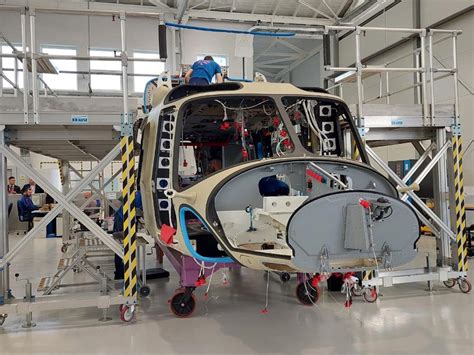
The plant’s lineage traces back to 1915, when it operated under the Westland name producing fixed-wing aircraft before transitioning into rotary-wing manufacturing during the 1950s. Over decades, Yeovil specialized in platforms such as the Merlin and Wildcat helicopters, supporting domestic fleets and export customers. The last major UK government helicopter order prior to NMH dates back to 2006 for approximately 60 Wildcat aircraft. The AW149 award therefore marks the first substantial domestic helicopter production contract in over a decade.
The agreement increases UK workshare to more than 40 percent for this configuration of the aircraft. Export prospects amplify that figure. Leonardo projects that international orders assembled in Yeovil could exceed £15 billion over the next ten years. Identified requirements in roughly 20 countries for new medium-lift helicopters position the AW149 as a competitive offering, now carrying the credibility of a home-nation endorsement.
Technical Anatomy of the Leonardo AW149
The AW149 occupies the 8.6-tonne maximum take-off weight class, positioning it firmly within the modern medium-lift category. It measures 17.6 meters in overall length with rotors turning and features a fuselage length of 13.0 meters. Power is generated by two General Electric CT7-2E1 turboshaft engines, each rated at approximately 2,000 shaft horsepower, driving a five-blade fully articulated main rotor and four-blade tail rotor.
Maximum cruise speed reaches 145 knots, with a maximum level-flight speed of 165 knots. Typical operational range extends to around 500 nautical miles, expandable via auxiliary fuel tanks. A service ceiling of 20,000 feet and design tolerance for hot-and-high conditions equip the aircraft for diverse operational theatres, from desert environments to maritime deployments.
The cockpit is fully digital, built around a glass architecture with four large multi-function displays and dual flight management systems. A four-axis digital automatic flight control system enables single or dual pilot operations, enhancing mission flexibility. Compatibility with night vision goggles and secure tactical data links ensures NATO-standard interoperability.
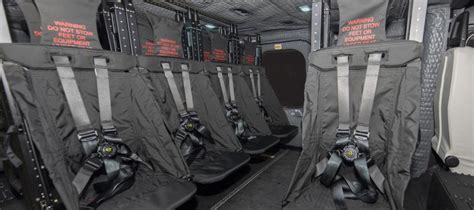
Cabin volume exceeds 12 cubic meters, supporting up to 16 fully equipped troops or 18 passengers in high-density configuration. In medical evacuation layout, the aircraft can accommodate up to six stretchers plus medical personnel, with integrated onboard medical power. An external cargo hook rated at 2,720 kilograms allows underslung load operations, while internal payload capacity can reach approximately 2,850 kilograms, depending on configuration.
Survivability, Modularity, and Mission Expansion
The AW149 is engineered with military survivability standards embedded at structural level. Crashworthy fuel systems, energy-absorbing landing gear, and reinforced seating enhance occupant protection. Optional ballistic panels, self-sealing fuel tanks, and a defensive aids suite—including radar warning receivers and missile warning systems—allow operators to tailor protection to threat environments.
Large sliding cabin doors on both sides, each 1.6 meters wide, facilitate rapid troop deployment, hoist operations, or fast-roping. The helicopter is certified for operations from unprepared surfaces and naval decks, with folding rotor blades available for shipborne storage. That maritime adaptability aligns closely with the UK’s expeditionary posture and carrier strike doctrine.
The aircraft’s design leaves headroom for future mission growth. Intelligence, surveillance, and reconnaissance packages can be integrated. Communications relays, electronic warfare modules, or light armament configurations are technically feasible within the platform’s payload and power margins. The AW149 is not merely a replacement; it is a scalable node within an evolving networked battlespace.
Consolidating Three Fleets into One Operational Backbone
Under NMH, the AW149 absorbs roles previously divided among three aircraft categories. The retired Puma HC2, operating in the 7.4-tonne class, handled tactical transport, battlefield lift, and humanitarian missions. The Bell 212, lighter at approximately 5.1 tonnes, supported overseas garrison commitments in locations such as Brunei and Cyprus. The Airbus H135 Juno and H145 Jupiter fleets, positioned in the 3 to 3.8-tonne range, were primarily tied to training under the UK Military Flying Training System.
By merging these mission sets into a unified medium-lift platform, the Ministry of Defence aims to streamline logistics chains, standardize pilot conversion pathways, and simplify maintenance ecosystems. Fewer airframe types translate to concentrated technical expertise, reduced spares fragmentation, and improved readiness metrics.
This rationalization carries doctrinal implications. A single adaptable platform encourages cross-role flexibility. Aircrews trained on the AW149 can transition between tactical lift, disaster relief, overseas support, and potentially maritime augmentation without type conversion. That elasticity is particularly valuable in an era of constrained manpower and unpredictable deployment demands.
Integrating Autonomy: The Proteus Dimension
Parallel to the AW149 acquisition, the UK is investing in Proteus, an autonomous rotary-wing uncrewed air system developed with the Royal Navy. Proteus completed its first flight in late January and is intended to support missions including aspects of anti-submarine warfare and maritime surveillance.
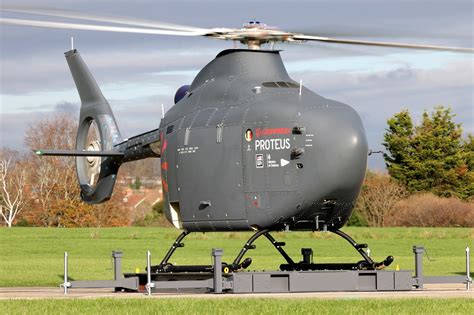
The industrial co-location of crewed AW149 production and Proteus assembly at Yeovil signals a deliberate convergence strategy. Rather than treating uncrewed systems as isolated adjuncts, the UK is exploring optionally crewed concepts and manned-unmanned teaming frameworks. The vision anticipates scenarios where an AW149 could operate in coordination with autonomous rotorcraft for reconnaissance, sensor extension, or logistics resupply.
This pairing reflects a broader shift in defence planning: survivability increasingly depends on distributed sensing and risk dilution. Uncrewed assets can probe contested zones, extending the operational reach of crewed helicopters while reducing exposure. Embedding that trajectory within the NMH framework future-proofs the investment.
Strategic and Economic Context
The AW149 award aligns with a broader defence spending trajectory targeting 2.6 percent of GDP from 2027, with £270 billion allocated across the current parliamentary cycle. The Ministry of Defence spends nearly £7 billion annually with the defence industry in the South-West region alone, supporting more than 37,000 jobs. NMH thus sits within a substantial industrial ecosystem rather than standing as an isolated procurement.
Export potential remains a defining variable. With identified medium-lift helicopter requirements across 20 countries, Yeovil could emerge as a primary European production node for the AW149 configuration. Should projected orders materialize, employment in the South West could expand to roughly 3,900 jobs, representing a significant workforce increase.
The reduction from an initially anticipated 44 aircraft to 23 underscores fiscal realities, yet the contract secures continuity at a moment when domestic helicopter manufacturing faced uncertainty. Industrial capability, once lost, is difficult to rebuild. The NMH decision preserves sovereign expertise in design, assembly, systems integration, and lifecycle support.
A Platform Anchored in Continuity and Adaptation
The AW149’s selection closes a prolonged chapter of evaluation while opening a new phase of structural modernization for UK rotary aviation. It replaces legacy fleets, consolidates mission profiles, safeguards a century-old manufacturing lineage at Yeovil, and intertwines crewed and autonomous development paths.
This is not merely a fleet update. It is a recalibration of how Britain structures its medium-lift backbone, how it sustains aerospace employment, and how it positions itself within a competitive export landscape. The AW149 now becomes both instrument and symbol: a tangible airframe carrying the weight of operational demands and industrial ambition in equal measure.