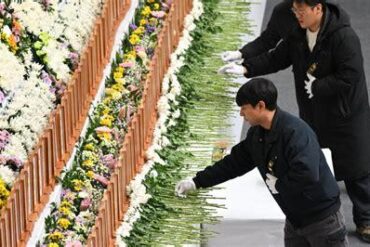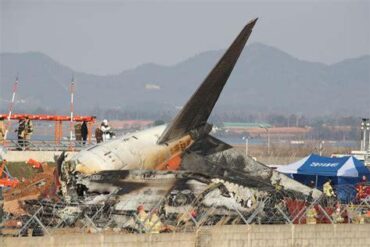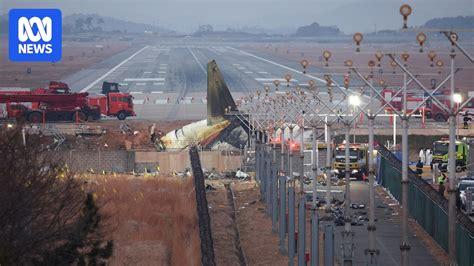
On December 29, 2024, tragedy unfolded at South Korea’s Muan International Airport when Jeju Air flight 7C-2216, a Boeing 737-800 inbound from Bangkok, attempted an emergency landing and collided with a concrete barrier at the end of the runway. A newly released investigation report confirms what many had feared: the crash was survivable—had the concrete wall not been there. The loss of 179 lives might have been averted if airport authorities had heeded previous warnings and replaced the structure with a compliant, collapsible alternative.
A Catastrophic Collision That Didn’t Have to Be Fatal
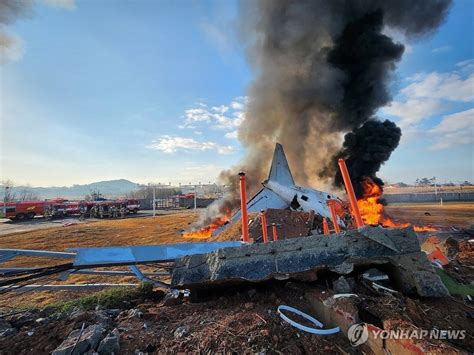
The findings of the final investigation, led by South Korea’s Aircraft Accident Investigation Board (AAIB), reveal a haunting reality. The Jeju Air flight had suffered a series of mechanical and operational failures, ultimately culminating in a belly landing. Despite the odds, the aircraft’s initial touchdown was relatively stable. The plane skidded across 770 meters of runway before being stopped—not by physics or friction—but by a concrete barrier that should never have existed.
Simulations run by the Korean Institute of Structural Engineering demonstrated that without the barrier, the aircraft would likely have come to a halt without flipping or bursting into flames. Survivability rates in such cases are typically high when passengers remain secured and the fuselage stays intact. The problem was not just the wall’s presence—it was its illegitimacy. The structure was non-compliant with aviation safety regulations and had been flagged for removal years prior.
Regulatory Negligence and Institutional Failures
The concrete wall’s sole function was to support one of Muan Airport’s outdated navigation facilities. While critical equipment support is necessary, aviation regulations dictate that such structures must be collapsible or frangible—designed to give way in the event of a crash. Muan Airport failed to comply. Documents cited in the report show that the wall had been listed as non-compliant since at least 2020. Yet no corrective action was undertaken.
By ignoring these warnings, airport authorities not only failed in their duty of care but also violated international aviation safety standards. The report notes that international guidance by ICAO (International Civil Aviation Organization) requires runway end safety areas (RESAs) to be free of hazards and, where necessary, equipped with engineered materials arrestor systems (EMAS) or other deformable structures.
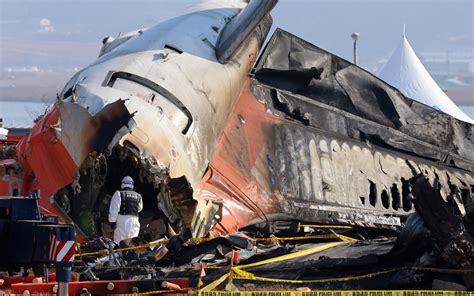
This was not just an unfortunate design flaw—it was a fatal regulatory breach.
A Chain Reaction of Avoidable Tragedy
Although the concrete wall served as the final blow, the chain of events leading to the crash included multiple layers of operational failure, each compounding the severity of the incident. This cascade of errors closely aligns with the Swiss Cheese Model of accident causation: a series of vulnerabilities lining up to allow disaster to slip through.
The report identified three critical contributing factors:
- Bird Strike and Engine Shutdown: During an attempted go-around, the aircraft encountered a flock of birds. Blood and feather remains were found in both engines. The pilots, however, mistakenly shut down the less-damaged engine (engine #1), leaving the aircraft with no thrust at a crucial moment.
- Landing Gear Failure: Due to the power loss, the landing gear could not be deployed. The belly landing, while severe, was well within survivable thresholds.
- Loss of Braking Systems: With no engine reverse thrust or wheel brakes available, the aircraft had no deceleration systems besides surface friction, making the presence of a compliant runway end even more critical.
These factors underscore not only the complexity of the situation but the importance of last-resort safety mechanisms—like collapsible barriers—to save lives even when everything else goes wrong.
The Survivors and the Final Toll
Onboard were 181 individuals—175 passengers and six crew. The final death toll stood at 179. Only two crew members stationed at the rear of the aircraft survived. Their survival was attributed to the structural buffering at the tail, which bore less of the impact when the aircraft’s nose and midsection collided headfirst into the wall.
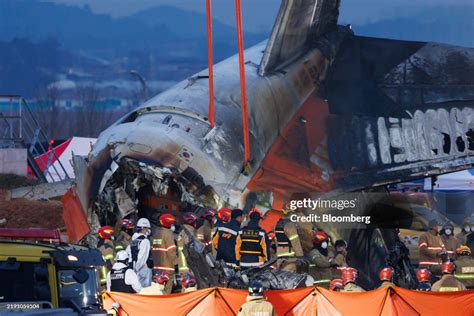
Witnesses from nearby control towers and first responders described a scene of chaos: flames erupting upon impact, rapid spread of fire fueled by ruptured fuel tanks, and a fuselage quickly engulfed in smoke. The speed of the fire rendered any large-scale evacuation virtually impossible.
Aftermath and Airport Closure
In the wake of the crash, Muan International Airport was immediately shut down. Authorities initially announced a temporary closure but extended it indefinitely as investigations unfolded. The Ministry of Land, Infrastructure and Transport has since declared that the airport will remain closed until April 2026 for comprehensive infrastructure reviews and remedial works.
Beyond the runway itself, several other non-compliant structures were discovered during subsequent safety audits. Pressure is now mounting on aviation oversight bodies to tighten enforcement mechanisms and to mandate immediate action when risks are flagged.
Lessons in Blood: A Call for Safety Reform
The Jeju Air disaster is now being cited in policy discussions both within South Korea and internationally as a stark example of what happens when safety standards are ignored. Regulatory agencies are facing criticism not only for the presence of the wall but for the culture of complacency that allowed it to remain for years.
The investigation board has made several urgent recommendations:
- Immediate replacement of all solid runway-end structures at South Korean airports with collapsible alternatives.
- Mandatory annual audits of all runway safety zones.
- Enhanced training protocols for emergency engine shutdown and landing gear management.
- Establishment of real-time wildlife monitoring near airport vicinities.
These proposals, while promising, will require enforcement and funding to become reality. Families of the victims, along with aviation safety advocates, are demanding transparency and accountability from the Ministry of Transport and Jeju Air.
Aviation Safety Hinges on the Last Line of Defense
The Jeju Air crash reveals a brutal truth: not all tragedies in aviation stem from technical malfunction. Sometimes, the deadliest factor is the human decision not to act on known dangers. The passengers of flight 7C-2216 survived the landing—but not the wall. That wall, unmoved and unaddressed, became the defining line between life and death.
As Muan Airport prepares to reopen, the legacy of this disaster must not fade into bureaucratic files. It must instead galvanize a systemic overhaul of airport safety oversight, ensuring that no future flight ends in such preventable loss. The true cost of this crash is measured not only in lives lost but in the sheer avoidability of the outcome.
South Korea’s aviation system—and others around the world—must remember: runway safety is not optional. It is the last defense when all else fails.