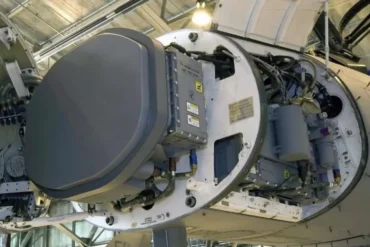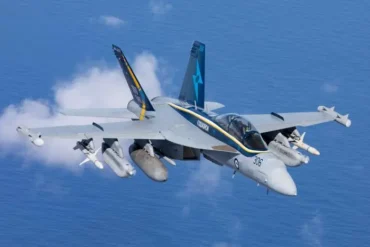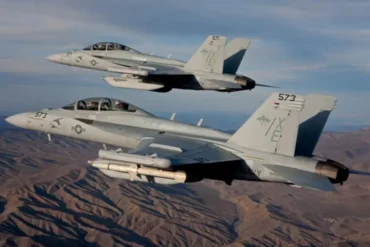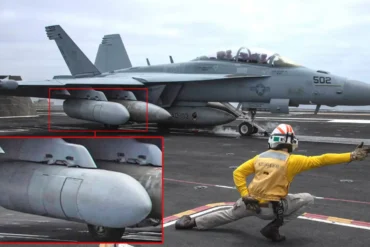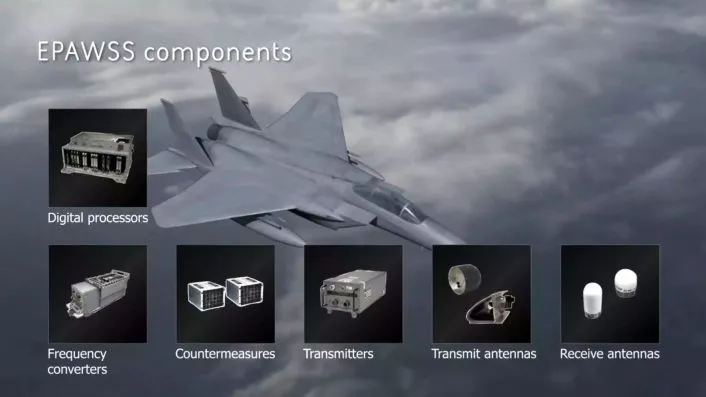
The F-15 Eagle Passive Active Warning Survivability System (EPAWSS) represents a revolutionary advancement in electronic warfare (EW) technology, significantly enhancing the combat capabilities and survivability of the F-15E Strike Eagle and F-15EX Eagle II. Designed to counter modern threats in contested airspace, EPAWSS integrates cutting-edge threat detection, jamming, and situational awareness functions into a single, highly efficient suite.
Core Features and Capabilities
Advanced Electronic Warfare Integration
EPAWSS consolidates multiple electronic countermeasure (ECM) functions into a unified system, replacing the legacy AN/ALQ-135 Tactical Electronic Warfare System (TEWS). This system interfaces seamlessly with the AN/APG-82(V)1 AESA radar and Advanced Display Core Processor II, enabling real-time signal processing, threat geolocation, and defensive countermeasures.
Enhanced Countermeasures and Self-Defense
EPAWSS significantly improves chaff and flare dispensing capabilities, increasing the number of countermeasure dispensers from 8 to 12, effectively deploying up to 360 cartridges. This enhancement allows the F-15 to effectively counter infrared-guided missiles (IR threats) and man-portable air defense systems (MANPADS).
Furthermore, the system employs cognitive electronic warfare, leveraging machine learning (ML) algorithms to analyze and neutralize previously unknown radar signatures. This feature was successfully demonstrated during the 2023 Northern Edge exercises, where the system autonomously identified and jammed adversary signals.
Survivability in Contested Airspace
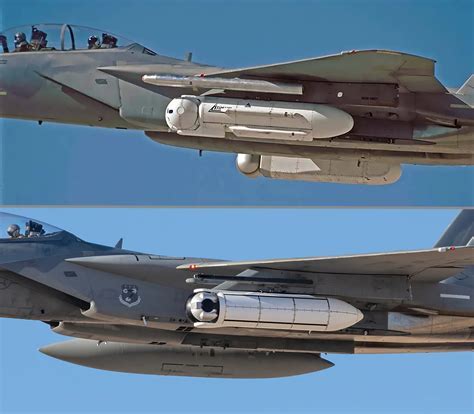
The system provides full-spectrum electromagnetic warfare (EW) capabilities, allowing F-15s to operate effectively against modern integrated air defense systems (IADS). By detecting, classifying, and mitigating enemy radars, EPAWSS enables the aircraft to penetrate deep into hostile airspace.
Its software-defined digital architecture supports rapid updates, allowing for real-time adjustments to combat evolving threats such as low-probability-of-intercept (LPI) radars and active electronically scanned array (AESA) guided missiles.
Reduced Maintenance and Weight Efficiency
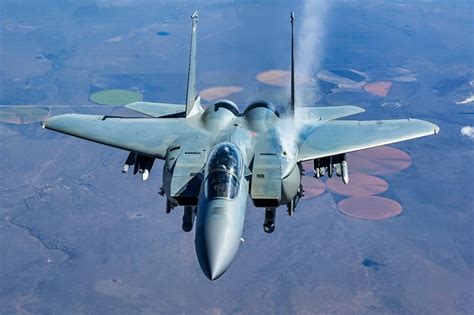
One of the critical improvements over previous systems is EPAWSS’s reduced weight and enhanced modularity. Unlike the bulky legacy TEWS system, EPAWSS is lighter, more compact, and supports two-level maintenance. Fault isolation is conducted at the line-replaceable module (LRM) level, minimizing downtime and streamlining field repairs.
Deployment and Production Status
Operational Capability Milestones
The Initial Operational Capability (IOC) for EPAWSS was achieved in early 2024 following rigorous Initial Operational Test and Evaluation (IOT&E) trials. The system’s effectiveness was validated in multiple simulated combat scenarios, confirming its superiority over legacy EW systems.
In January 2025, the U.S. Air Force approved full-rate production (FRP) of EPAWSS, awarding a $616 million contract to Boeing. Deliveries will continue through 2030, ensuring that both new and retrofitted F-15 models benefit from the system’s advanced EW capabilities.
Retrofitting Legacy F-15E and F-15EX Integration
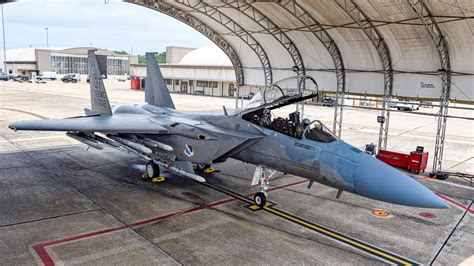
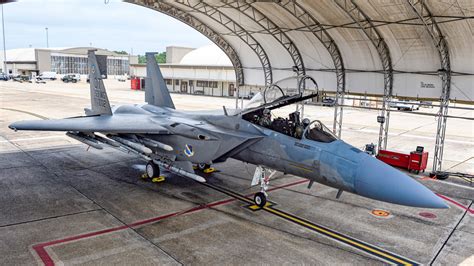
EPAWSS is currently being retrofitted onto 99 F-15E aircraft, with the first modified jet delivered to the 48th Fighter Wing at RAF Lakenheath in January 2025. All newly built F-15EX Eagle II aircraft will feature EPAWSS as a standard component, ensuring the Air Force’s latest fleet remains viable against modern threats.
Future Upgrades: EPAWSSv2
Enhanced Processing and Threat Detection
BAE Systems is actively developing an upgraded version of the system, EPAWSSv2, featuring:
- Increased processing power for faster threat response and simultaneous engagement of multiple targets.
- Expanded frequency coverage to counter new-generation enemy radars.
- Advanced cognitive EW algorithms that allow adaptive jamming techniques.
- Fiber-optic towed decoys, further improving survivability.
While some software upgrades from EPAWSSv2 will be applicable to the baseline version, the full suite is expected to be deployed primarily on retrofitted F-15Es and newly manufactured F-15EXs.
Strategic Impact and Challenges
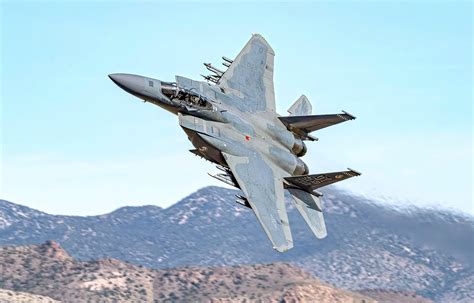
EPAWSS significantly enhances the F-15’s capability to counter threats posed by near-peer adversaries like China and Russia. The system enables F-15s to operate effectively against:
- Sophisticated anti-air missile systems such as S-400 and S-500.
- Networked enemy fighter aircraft using AESA radars.
- Electronic warfare threats from ground-based and aerial jammers.
Despite these advancements, budget constraints and fleet size reductions pose challenges for full-scale deployment. The U.S. Air Force’s decision to cut F-15EX orders from 144 to 98 units could impact EPAWSS adoption rates, though retrofit programs for legacy F-15E models remain a priority.
FAQ
What is the main advantage of EPAWSS over previous F-15 electronic warfare systems?
EPAWSS combines multiple electronic warfare functions—including threat detection, jamming, and countermeasures—into a single, integrated system. It replaces the older AN/ALQ-135 TEWS, offering real-time adaptability, expanded frequency coverage, and cognitive EW capabilities.
How does EPAWSS help the F-15 survive in modern combat environments?
The system enables F-15E and F-15EX aircraft to operate in highly contested airspace by detecting and neutralizing enemy radar systems, countering infrared and radar-guided missiles, and employing adaptive jamming techniques.
Will EPAWSS be updated in the future?
Yes, EPAWSSv2 is currently under development by BAE Systems, featuring improved processing power, expanded radar detection capabilities, and fiber-optic towed decoys. These upgrades will be integrated into future F-15EX models and some retrofitted F-15Es.
The EPAWSS program ensures that the F-15E and F-15EX remain at the forefront of modern air combat, reinforcing their status as the U.S. Air Force’s premier air superiority platforms. With its cutting-edge electronic warfare capabilities, the system provides a critical edge against emerging threats, ensuring mission success in contested environments.