Overview
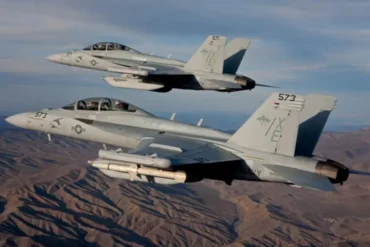
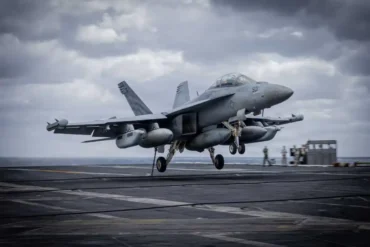
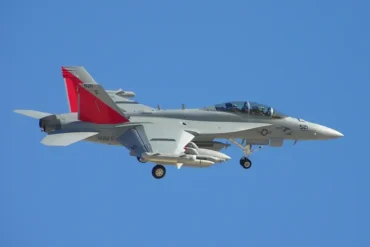
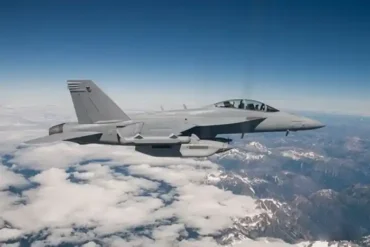
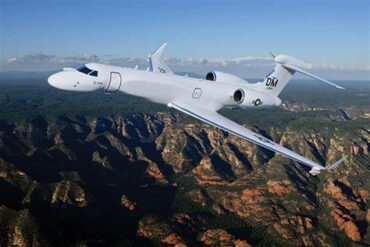
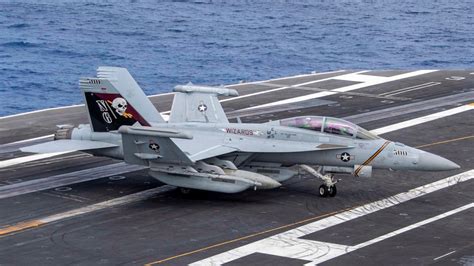
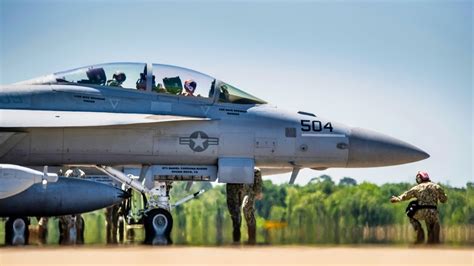
The EA-18G Growler is a carrier-based electronic warfare aircraft developed by Boeing for the United States Navy. Based on the F/A-18F Super Hornet, the Growler was designed to replace the aging EA-6B Prowler and has been a critical asset in electronic warfare (EW) operations since entering service in 2009. Combining the maneuverability of a fighter jet with cutting-edge electronic attack capabilities, the Growler specializes in Suppression of Enemy Air Defenses (SEAD), electronic jamming, and communication warfare, making it an indispensable tool for achieving electromagnetic spectrum dominance in modern combat.
Design and Technological Features
Airframe and Performance
The EA-18G retains the aerodynamic characteristics of the F/A-18F, ensuring superior maneuverability and survivability. It is powered by two General Electric F414-GE-400 turbofan engines, allowing it to achieve a top speed of Mach 1.8 and a combat range of approximately 2,300 kilometers. The aircraft also supports aerial refueling, extending its operational endurance significantly.
Advanced Electronic Warfare Systems
- AN/ALQ-218V(2) Tactical Receiver: This wideband receiver system detects, identifies, and locates enemy radar emissions across all frequency bands, enabling the Growler to track even advanced frequency-hopping radars.
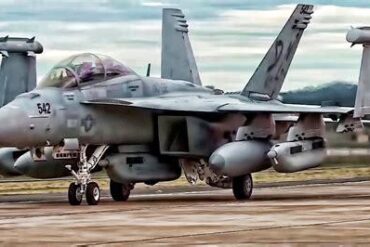
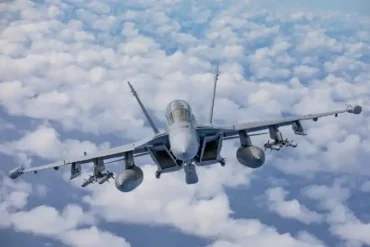
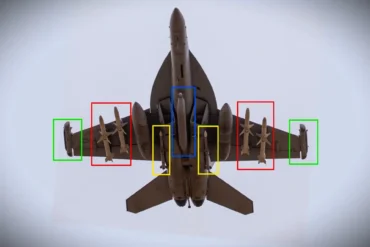
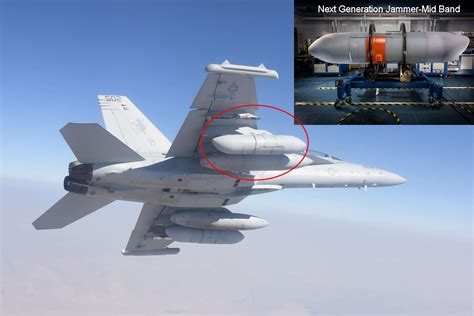
- AN/ALQ-99 Jamming Pods: Covering 64 MHz to 40 GHz, these pods perform precision jamming against enemy radars and communication networks. The system is set to be replaced by the AN/ALQ-249 Next Generation Jammer (NGJ), which enhances effectiveness against stealth aircraft and advanced radar threats.
- Integrated Communications Countermeasures: The Growler employs INCANS technology, ensuring friendly forces can communicate seamlessly while enemy communications are disrupted.
Radar and Weapons Integration
- AN/APG-79 Active Electronically Scanned Array (AESA) Radar: Provides enhanced situational awareness and target acquisition capabilities.
- AGM-88 HARM (High-speed Anti-Radiation Missile): Designed to destroy enemy radar installations.
- AIM-120 AMRAAM and AIM-9 Sidewinder Missiles: Allow the Growler to engage enemy aircraft in self-defense.
- Precision-Guided Munitions: Enhancing strike capability against high-value enemy assets.
Combat Role and Tactical Applications
Electronic Attack and SEAD/DEAD Missions
The Growler is designed for electronic attack (EA), including jamming, deception, and suppression of enemy air defenses (SEAD/DEAD). By neutralizing radar and missile guidance systems, it protects friendly aircraft from enemy surface-to-air missile (SAM) systems and integrated air defense networks.
Full-Spectrum Jamming Capabilities
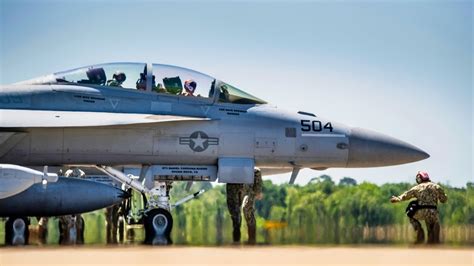
Operating across very high frequency (VHF) to 18 GHz bands, the Growler is capable of disrupting multiple enemy systems simultaneously, including radars, communications, and data links. This ability significantly degrades an adversary’s situational awareness and command-and-control infrastructure.
Air Combat and Networked Warfare
- During combat exercises, the Growler has successfully jammed and targeted F-22 Raptor radars, demonstrating its ability to neutralize fifth-generation stealth fighters.
- Works in conjunction with F-35 Lightning II and F-22 Raptor to provide electromagnetic shielding, allowing stealth aircraft to operate with increased effectiveness.
- Integrates with airborne early warning (AEW) platforms and unmanned aerial vehicles (UAVs) to coordinate multi-domain warfare operations.
Survivability and Combat Endurance
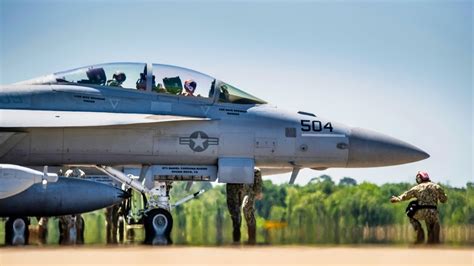
The Growler benefits from advanced electronic countermeasures, reducing its vulnerability to enemy fire. Its low vulnerability design, combined with its high-speed agility, makes it more resilient than legacy aircraft like the F-16 and EA-6B Prowler.
History and Global Deployment
Development Timeline
- 2001: The U.S. Navy initiates plans to replace the EA-6B Prowler.
- 2006: EA-18G completes its maiden flight.
- 2009: Growler officially enters U.S. Navy service, forming the core of carrier strike group electronic warfare assets.
Operational Deployments
- Played a key role in Iraq and Syria, conducting electronic suppression against hostile air defenses.
- Actively deployed in the Indo-Pacific, countering emerging Chinese and Russian radar technologies.
- Royal Australian Air Force (RAAF) acquired EA-18Gs to enhance regional electronic warfare capabilities.
Future Upgrades and Strategic Evolution
Next-Generation Jamming Systems
- AN/ALQ-249 (Next Generation Jammer – Mid Band): Under development by Raytheon, this system provides 10 times the power of the ALQ-99, enhancing counter-stealth capabilities.
- Gallium Nitride (GaN) Technology: Improves jamming efficiency while reducing power consumption.
AI Integration and Autonomous Operations
- Machine Learning Algorithms: Enable adaptive jamming techniques against evolving threats.
- Unmanned EA-18G Wingmen: Plans for drone collaboration to extend electronic attack range.
Multi-Domain Warfare Integration
- Enhanced satellite connectivity and cyber warfare capabilities.
- Future coordination with space-based electronic attack assets to create a global EW network.
Frequently Asked Questions
What makes the EA-18G Growler different from the F/A-18 Super Hornet?
While based on the F/A-18F Super Hornet, the EA-18G Growler is specifically designed for electronic warfare, featuring advanced jamming systems and radar suppression capabilities rather than traditional air-to-air and air-to-ground combat roles.
Can the EA-18G Growler engage in dogfights?
Although not designed primarily for air-to-air combat, the Growler can defend itself using AIM-120 AMRAAM and AIM-9 Sidewinder missiles. It has successfully engaged stealth aircraft in training by disrupting enemy radar systems.
What are the future enhancements planned for the EA-18G Growler?
Upgrades include AN/ALQ-249 jamming pods, AI-driven jamming algorithms, integrated drone operations, and enhanced multi-domain connectivity to counter next-generation threats.
The EA-18G Growler remains the world’s premier electronic warfare aircraft, ensuring air superiority through unmatched electronic attack capabilities and advanced networked warfare integration.