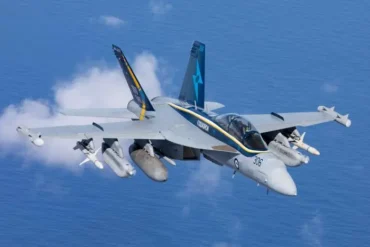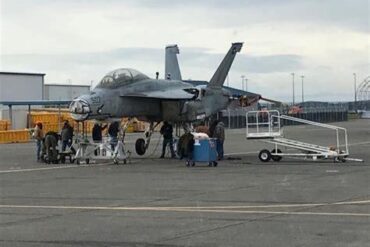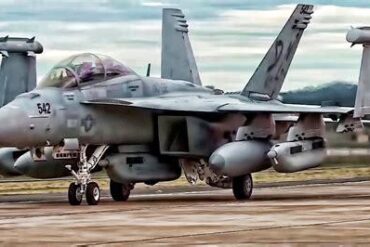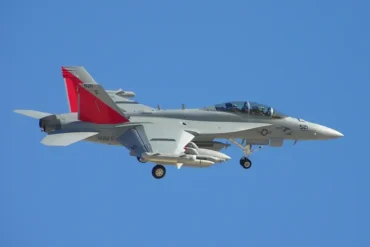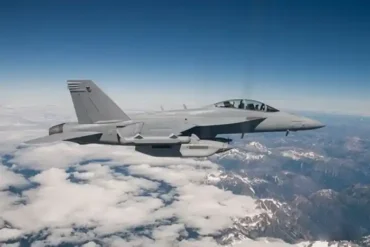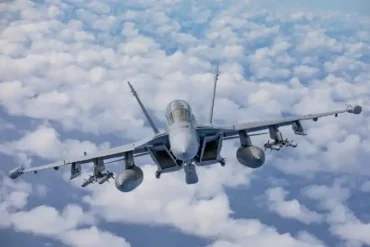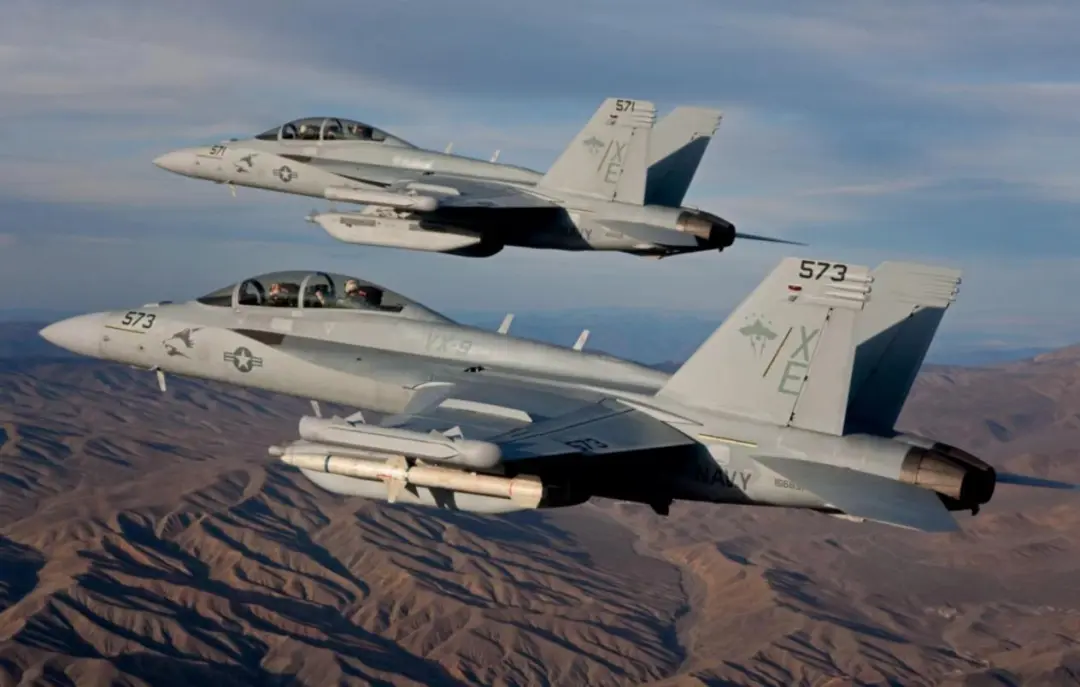
The EA-18G Growler, developed by Boeing for the U.S. Navy, is the world’s premier electronic warfare (EW) aircraft, replacing the aging EA-6B Prowler. Based on the F/A-18F Super Hornet, it combines fighter-like agility with cutting-edge electronic attack capabilities. Designed to suppress enemy air defenses and support coalition forces, the Growler plays a vital role in modern network-centric warfare.
Advanced Electronic Warfare Systems
The EA-18G Growler boasts state-of-the-art EW systems that allow it to jam, detect, and disrupt enemy communications and radar networks while maintaining situational awareness.
AN/ALQ-218 Tactical Receiver
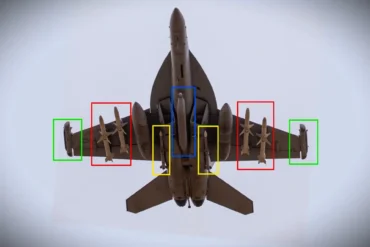
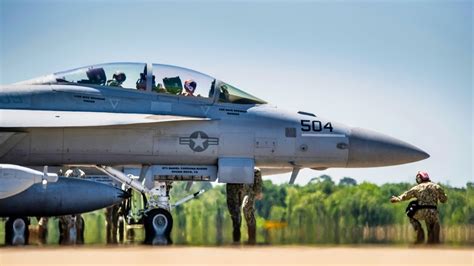
Mounted in wingtip pods, the AN/ALQ-218 enables Listen While Jamming (LWI) capabilities, allowing the Growler to detect enemy emissions while actively disrupting radar and communication signals. This system provides real-time electronic intelligence (ELINT), crucial for suppression of enemy air defenses (SEAD) missions.
AN/ALQ-99 Tactical Jamming Pods
The AN/ALQ-99 system provides broad-spectrum jamming across multiple frequency bands (0.064–18 GHz), countering threats such as radar-guided missiles and enemy command-and-control networks. The system’s air-driven turbines supply power at high altitudes, optimizing jamming effectiveness.
Next-Generation Jammer (NGJ)
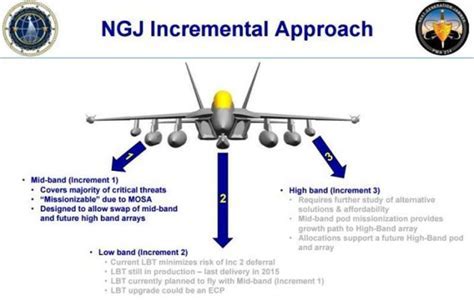
The Next-Generation Jammer (NGJ) replaces the AN/ALQ-99, introducing significantly higher power output and wider frequency coverage. The NGJ-Mid Band (ALQ-249), already operational, enhances jammer efficiency with GaN (gallium nitride) technology, allowing longer-range disruption and increased resistance to enemy electronic countermeasures.
INCANS Communication System
The INCANS (Interference Cancellation System) enables the Growler to maintain UHF communications even while conducting active jamming operations. This is a first for U.S. tactical aircraft, ensuring seamless coordination during combat missions.
Combat and Self-Defense Capabilities
Beyond electronic warfare, the EA-18G Growler features a potent combat loadout, allowing it to engage enemy targets while maintaining survivability in contested airspace.
Weapon Systems
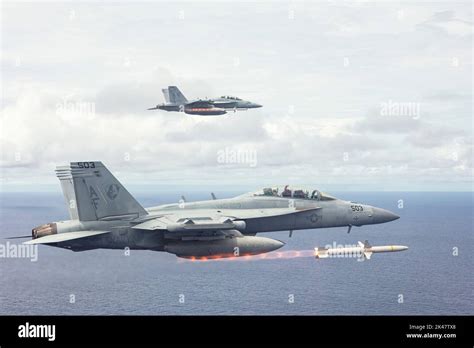
- AGM-88 HARM (High-speed Anti-Radiation Missile): The primary weapon for radar suppression, designed to home in on enemy radar emissions and neutralize air defense systems.
- AIM-120 AMRAAM: Medium-range air-to-air missile, providing self-defense against enemy aircraft.
- AIM-9X Sidewinder: Infrared-guided missile, particularly used by the Royal Australian Air Force (RAAF) Growlers for close-range engagements.
Payload Capacity
The Growler can carry up to 17,750 lbs of external ordnance across nine hardpoints, integrating jamming pods, fuel tanks, and munitions for mission flexibility.
Sensor and Radar Integration
The EA-18G Growler incorporates advanced radar and sensor technologies for both electronic attack and situational awareness.
AN/APG-79 AESA Radar
A modified Active Electronically Scanned Array (AESA) radar, derived from the F/A-18E/F Super Hornet, enhances airborne electronic attack (AEA) capabilities. The GaN-enhanced system improves target detection, range, and resistance to jamming.
USQ-113(V) Communications Countermeasures
This system disrupts VHF/UHF enemy command networks, mitigating threats such as GPS-guided weapons and improvised explosive devices (IEDs).
FLIR Pods (Optional)
Used by RAAF Growlers, Forward-Looking Infrared (FLIR) pods enhance target identification, reducing response time in combat scenarios.
Networked Warfare and Interoperability
The EA-18G Growler is fully integrated into joint-force operations, enhancing networked warfare capabilities.
TTNT Data Link
The Tactical Targeting Network Technology (TTNT) provides real-time data-sharing, enabling sensor-to-shooter capabilities. This ensures seamless coordination without revealing Growler’s own electronic footprint.
Joint Tactical Information Distribution System (JTIDS)
Operating on the Link-16 data link, the Growler securely transmits battlefield intelligence, ensuring encrypted, jam-resistant communication with allied forces.
FORCEnet Compatibility
The Growler serves as a critical node within the U.S. Navy’s FORCEnet, enabling real-time command coordination with surface vessels, submarines, and aircraft.
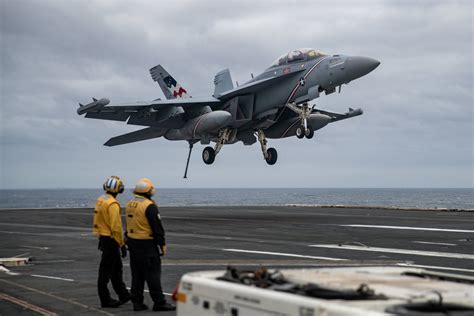
Operational Flexibility and Survivability
The EA-18G Growler retains key attributes of the F/A-18F Super Hornet, ensuring carrier suitability and high survivability in modern combat scenarios.
Carrier Compatibility
With catapult launch and arrested landing capabilities, the Growler is fully carrier-operational, allowing rapid deployment in naval missions.
Speed and Range
- Maximum speed: Mach 1.8
- Combat radius: 450+ miles
- Ferry range: 1,800 miles with external fuel tanks
Crew Efficiency
Unlike the four-man EA-6B Prowler, the Growler operates with a two-person crew (pilot and electronic warfare officer), supported by advanced automation systems.
Future Upgrades and Global Deployment
NGJ Incremental Upgrades
The Next-Generation Jammer program is evolving, with low-band and high-band variants planned from 2024 onward to counter emerging threats, including stealth-detecting radar systems.
International Operators
The Royal Australian Air Force (RAAF) operates 13 EA-18G Growlers, featuring unique FLIR and AIM-9X enhancements.
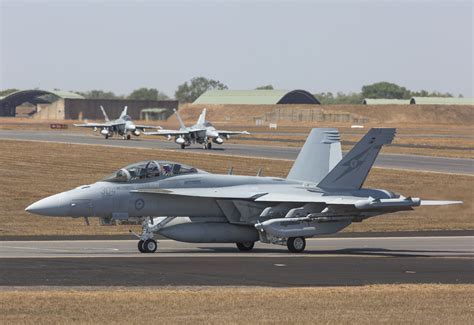
Conclusion
The EA-18G Growler stands as an unrivaled electronic warfare platform, combining electronic dominance with combat lethality. Its cutting-edge technology, networked warfare capabilities, and future upgrades ensure continued superiority in SEAD/DEAD operations, making it indispensable to U.S. and allied air forces.
FAQ
What makes the EA-18G Growler unique?
The Growler’s ability to jam, detect, and neutralize threats while maintaining fighter agility sets it apart from traditional electronic warfare platforms.
How does the EA-18G Growler defend itself?
Equipped with AIM-120 AMRAAM and AIM-9X missiles, the Growler retains self-defense capabilities against aerial threats while executing electronic warfare missions.
What are the future upgrades for the EA-18G Growler?
Planned upgrades include low-band and high-band NGJ systems, increased power output, and enhanced network warfare integration to counter evolving electronic threats.