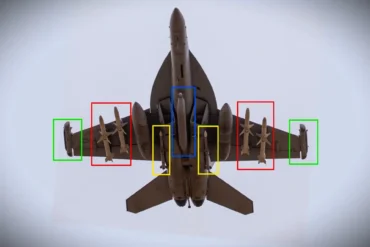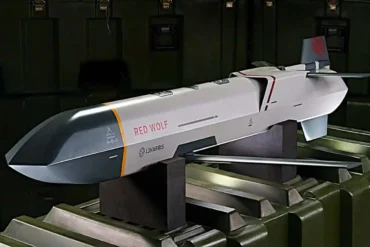
The quiet battlefield is rarely silent. It hums with radar pulses, encrypted chatter, and invisible beams of intent. In that contested electromagnetic wilderness, dominance is no longer decided by speed or altitude alone, but by who can see, interpret, and disrupt signals faster than the opponent can think. Into this arena steps Boeing’s newly contracted AN/ALQ-264(V) “Beowulf” electronic warfare system, a deeply integrated upgrade designed to sharpen the U.S. Navy’s EA-18G Growler into something closer to a cognitive predator than a mere aircraft.
Awarded under a contract valued at nearly $489 million, the program marks a deliberate shift toward networked, software-defined electronic warfare, where processing power and system integration carry as much weight as raw jamming output. The Growler, already the Navy’s primary airborne electronic attack platform, is about to gain a new brain.
The Beowulf System: A New Layer of Intelligence Inside the Growler
The AN/ALQ-264(V), carrying the mythic name “Beowulf,” is not simply another pod or bolt-on device. It is best understood as a centralized electronic warfare processing architecture, designed to orchestrate how the aircraft senses, analyzes, and attacks the electromagnetic spectrum.
Unlike traditional upgrades that focus on isolated capabilities, Beowulf appears to function as a coordination node, knitting together sensors, jammers, and processing units into a more unified system. That distinction matters. Electronic warfare is not just about blasting noise; it is about precision interference, targeting specific frequencies, waveforms, and timing windows with surgical intent.

The system includes a mix of hardware components—A-Kits and B-Kits—that suggest both structural integration and modular flexibility. A-Kits typically represent aircraft-installed infrastructure, while B-Kits are mission-specific electronic modules. This dual-layer design hints at a system built for adaptability, allowing rapid updates as threats evolve.
Within this architecture, sensor control units coordinate signal detection and classification, while power control units manage the significant electrical demands of high-performance electronic warfare systems. This may sound mundane, but power management is the unsung bottleneck of modern combat systems—no power, no dominance.
From Detection to Disruption: Closing the Loop Faster
At the heart of Beowulf’s promise lies a deceptively simple idea: compress the time between detection and response.
In current electronic warfare operations, the cycle involves detecting a signal, identifying its type, determining its threat level, and then selecting an appropriate countermeasure. Each step introduces delay. Against modern air defense systems that operate in milliseconds, delay is vulnerability.
Beowulf likely reduces this lag by integrating processing and decision-making pathways, enabling near-real-time responses. Think of it as moving from a relay race to a reflex arc. The aircraft doesn’t just react—it anticipates.
This becomes especially critical when dealing with frequency-agile radars, which constantly shift their emissions to avoid jamming. A system that can track, predict, and adapt to those shifts in real time turns a defensive posture into an offensive one.
Enhancing the Growler’s Existing Arsenal
The EA-18G Growler is already a formidable machine, built on the proven F/A-18F Super Hornet platform and optimized for electromagnetic dominance. Its current toolkit includes the AN/ALQ-218 wideband receiver, which detects and identifies radar emissions, and the AN/ALQ-99 jamming pods, capable of overwhelming enemy sensors with high-power interference.
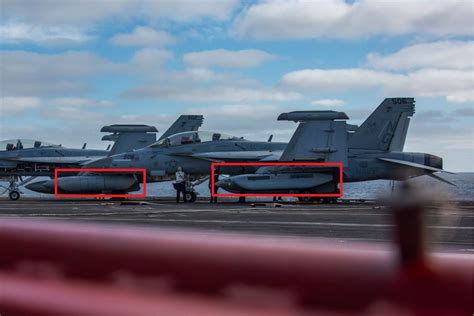
However, these systems were developed in an earlier era of electronic warfare, where threats were less adaptive and less interconnected. The emerging battlefield features integrated air defense systems (IADS) that fuse data from multiple sensors, share information across networks, and adapt in real time.
Beowulf’s role is not to replace these systems but to elevate their effectiveness. By acting as a central processing and coordination hub, it can optimize how jamming resources are deployed, ensuring that each emission is targeted, efficient, and strategically timed.
It will also likely integrate with the AN/ALQ-249 Next Generation Jammer (NGJ), a newer system designed to replace the aging ALQ-99 pods. The synergy between NGJ’s advanced jamming capabilities and Beowulf’s processing power could produce a system that is far more than the sum of its parts.
Engineering the Invisible: Program Scope and Industrial Footprint
The development effort spans multiple locations, reflecting the complexity of modern defense systems. Approximately 61% of the work will take place in Baltimore, Maryland, focusing on electronic warfare subsystem development. Another 28% occurs in St. Louis, Missouri, a hub for Boeing’s aircraft integration expertise, while the remaining 11% unfolds in Bethpage, New York, contributing additional engineering support.
This distribution is not accidental. Electronic warfare systems demand cross-disciplinary integration, combining software engineering, signal processing, hardware design, and systems architecture. It is less like building a machine and more like constructing a living system of interdependent functions.
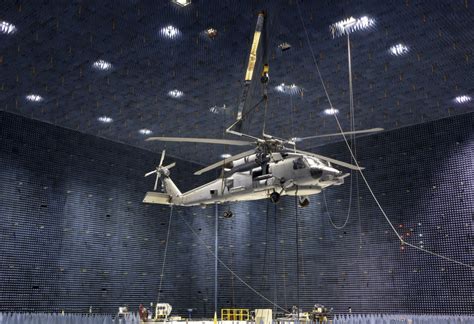
The program is scheduled to continue through 2030, a timeline that reflects both the technical challenges involved and the rapidly evolving threat landscape. Early funding allocations—just under $34 million—indicate that the project is still in a development and integration phase, where prototypes are refined and tested before operational deployment.
Why Electronic Warfare Matters More Than Ever
Modern warfare has quietly shifted from visible destruction to invisible disruption. Destroying a radar site is effective, but blinding it temporarily at the right moment can achieve the same operational result with less risk and cost.
Electronic warfare operates across three primary functions: electronic support, electronic attack, and electronic protection. These correspond to sensing, disrupting, and defending within the electromagnetic spectrum. Mastery of these functions enables forces to shape the battlespace without firing a shot.
The importance of this capability becomes clear when examining historical conflicts. During the Vietnam War, early electronic warfare efforts dramatically reduced the effectiveness of SA-2 surface-to-air missiles, turning a lethal threat into a manageable risk. By the Gulf War in 1991, electronic attack had become a cornerstone of air operations, with aircraft like the EA-6B Prowler conducting thousands of sorties to suppress Iraqi air defenses.
What has changed since then is not the principle, but the complexity of the environment. Today’s adversaries employ multi-layered, networked defense systems that can adapt, reconfigure, and even deceive incoming threats. In this context, static or slow-reacting systems become liabilities.
Beowulf as a Cognitive Warfare Engine
There is a compelling way to interpret Beowulf—not just as hardware, but as a cognitive extension of the aircraft.
Electronic warfare increasingly resembles a contest of perception and decision-making. The side that can interpret the electromagnetic environment more accurately and act more quickly gains a decisive edge. In this sense, Beowulf functions as a machine intelligence layer, augmenting human operators and enabling faster, more informed decisions.
This does not imply autonomy in the science fiction sense, but rather enhanced decision support, where the system filters vast amounts of signal data and presents actionable insights to the crew. The result is a tighter loop between observation and action, which is the essence of modern combat effectiveness.

The philosophical twist here is subtle but important: warfare is no longer just about controlling territory, but about controlling information flows. In that domain, speed and clarity of interpretation become weapons in their own right.
Strategic Implications for Carrier Strike Groups
The EA-18G Growler operates as part of carrier air wings, providing electronic attack support to a wide range of missions. With Beowulf integrated, its role could expand from a supporting asset to a central enabler of air operations.
Carrier strike groups rely on coordinated actions across multiple platforms—fighters, surveillance aircraft, drones, and ships. Electronic warfare sits at the intersection of all these elements, influencing how effectively they can operate in contested environments.
A more capable Growler means:
- Improved survivability for strike aircraft approaching defended targets
- Greater disruption of enemy command and control networks
- Enhanced flexibility in mission planning and execution
In essence, Beowulf strengthens the electromagnetic umbrella under which other assets operate. It does not just protect; it actively shapes the battlespace.
The Quiet Evolution of Warfare Technology
There is a tendency to focus on visible innovations—hypersonic missiles, stealth aircraft, autonomous drones. Yet some of the most transformative changes occur in systems that leave no visible trace.
Electronic warfare is one such domain. Its effects are often invisible, its successes rarely dramatic, and its failures potentially catastrophic. A radar that never locks on, a missile that never launches, a communication link that silently fails—these are the quiet victories that define modern conflict.
Beowulf fits squarely into this category. It represents an evolution rather than a revolution, but one that aligns with a broader trend toward integration, adaptability, and information dominance.
Looking Toward 2030 and Beyond
By the time Beowulf reaches full integration around 2030, the electromagnetic battlefield will likely be even more contested. Advances in artificial intelligence, quantum sensing, and spectrum management could introduce entirely new challenges—and opportunities.
The real test of systems like Beowulf will not be their initial capabilities, but their capacity for evolution. A modular, software-driven architecture suggests that updates and enhancements can be deployed without redesigning the entire system, a critical advantage in a rapidly changing environment.
There is a certain poetic symmetry in naming this system after a legendary warrior. In the original tale, Beowulf defeats monsters not just through strength, but through adaptation and cunning. The modern version operates in a different arena, but the principle holds: victory belongs to those who can understand the battlefield more deeply and act more decisively.
And in the strange, invisible war of signals and silence, that kind of intelligence might be the most powerful weapon of all.