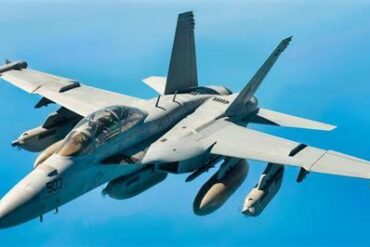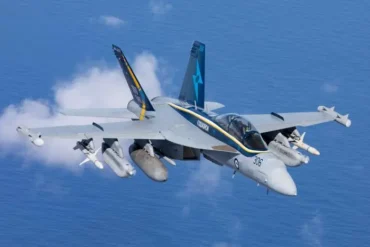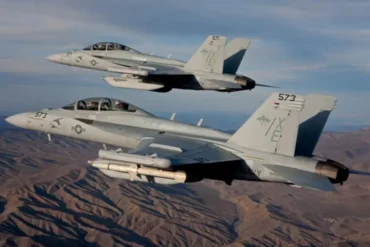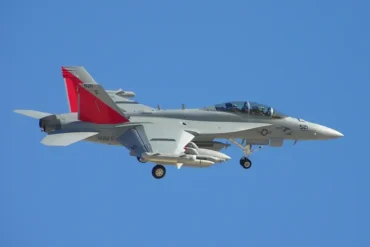
The destruction of two United States Navy EA-18G Growler aircraft during a mid-air collision over Idaho has become one of the costliest non-combat military aviation accidents in recent American history. The incident unfolded during the “Gunfighter Skies” air show at Mountain Home Air Force Base on May 17, 2026, when the two advanced electronic warfare jets collided while performing a synchronized aerial demonstration before spectators.
Both aircraft were completely destroyed. According to the US Navy, each EA-18G Growler carries an estimated price tag of nearly $68 million, bringing the total financial loss to approximately $136 million. Remarkably, all four aviators aboard the two aircraft survived after ejecting moments before impact, avoiding what could have become a catastrophic mass-casualty disaster.
The collision immediately sparked national debate surrounding the risks of military air shows, especially when frontline combat aircraft packed with sensitive electronic warfare technology are used in complex demonstration maneuvers. Beyond the financial impact, the crash also represents the sudden loss of two of the Navy’s most specialized operational aircraft at a time when electronic warfare capabilities are becoming increasingly critical in modern combat environments.
For military aviation observers, the Idaho collision was not simply another air show accident. It exposed the enormous operational value attached to modern tactical aircraft and renewed questions about whether demonstration flights involving advanced combat platforms justify the risks involved.
EA-18G Growler Aircraft Are Among the Navy’s Most Specialized Combat Platforms
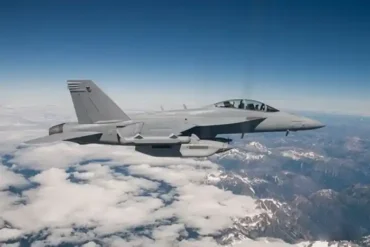
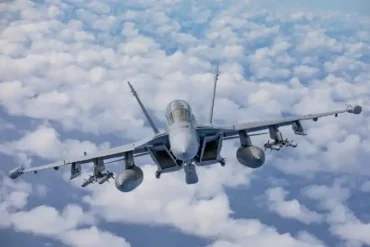
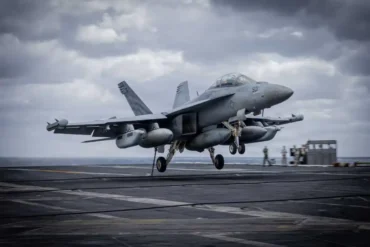
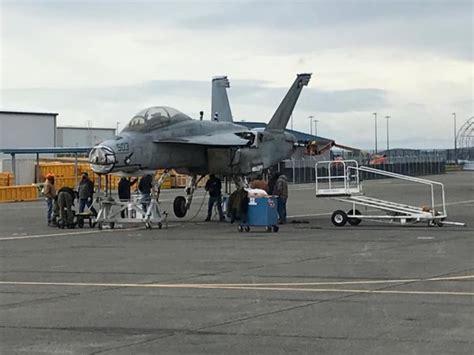
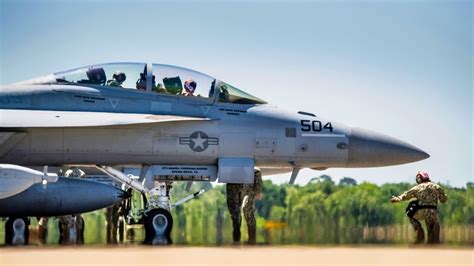
The EA-18G Growler is far more than a conventional fighter jet. Developed from the Boeing F/A-18F Super Hornet, the Growler serves as the United States Navy’s premier airborne electronic attack aircraft. Since entering operational service in 2009, the platform has become a cornerstone of American electronic warfare strategy.
Unlike standard fighters focused primarily on dogfighting or strike missions, the Growler is specifically designed to disrupt and cripple enemy electronic systems during combat operations. Its mission includes jamming hostile radar networks, interfering with communications infrastructure, suppressing enemy air defenses, and protecting allied aircraft operating in contested airspace.
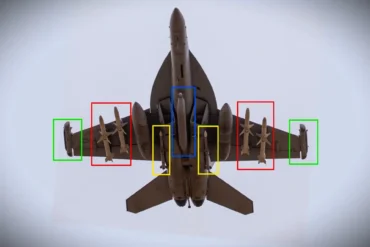
The aircraft carries highly advanced systems such as the AN/ALQ-218 receiver suite and ALQ-99 tactical jamming pods. These technologies allow Growler crews to detect electronic emissions, identify radar threats, and launch sophisticated electronic attacks in real time. In modern warfare, electronic dominance can determine whether combat aircraft survive hostile engagements, making the Growler one of the most strategically valuable aircraft in the Navy inventory.
Despite its electronic warfare specialization, the EA-18G still retains lethal combat capability. The aircraft can carry AIM-120 AMRAAM air-to-air missiles alongside other weapons systems while simultaneously conducting electronic attack missions. This dual-role flexibility has made the Growler indispensable in both conventional conflicts and high-end strategic operations.
Production numbers for the aircraft remain relatively limited. Boeing has manufactured fewer than 200 Growlers for the US Navy and allied operators, making every airframe particularly valuable. Replacing destroyed aircraft is neither quick nor inexpensive. New production orders require congressional funding approvals, manufacturing allocation, and years of delivery timelines.
The loss of two Growlers in a single incident therefore represents more than the destruction of expensive hardware. It significantly impacts operational readiness, fleet availability, and long-term force planning for the Navy’s electronic warfare community.
Mid-Air Collision Happened During High-Risk Demonstration Maneuvers
The collision occurred during the “Gunfighter Skies” air show hosted at Mountain Home Air Force Base in Idaho. Air shows involving military tactical aircraft often feature tightly coordinated formation flying, rapid directional changes, and synchronized aerobatic maneuvers intended to showcase pilot precision and military professionalism.
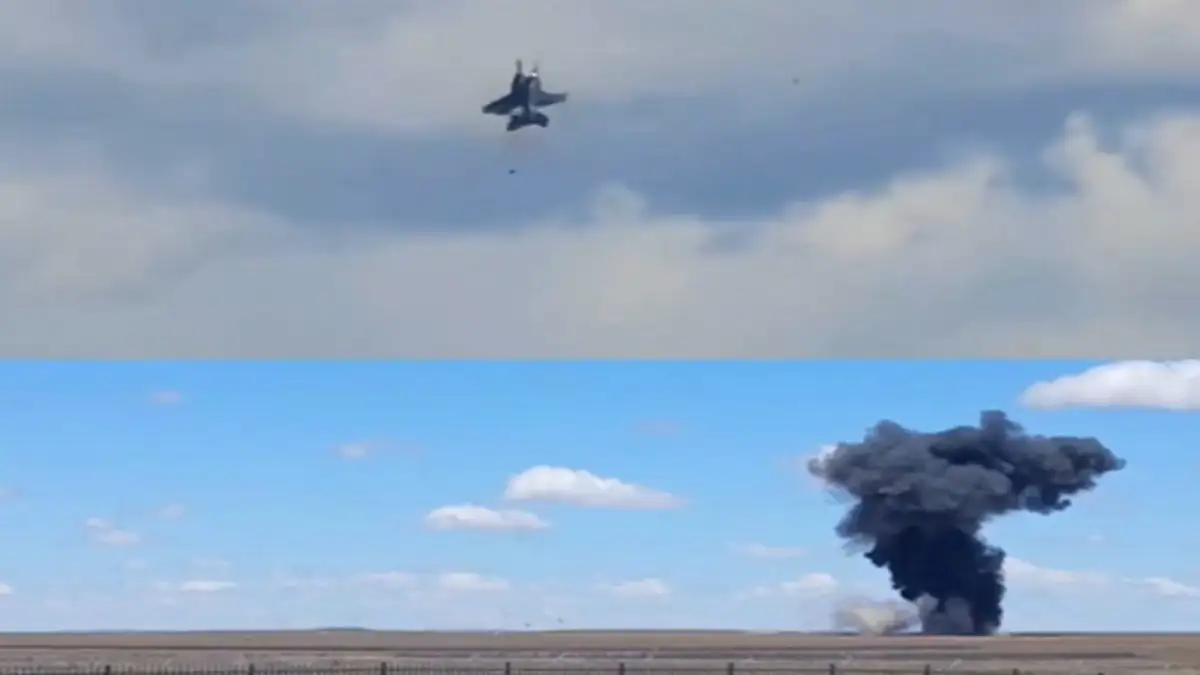
Witness videos captured the terrifying moment the two EA-18G Growlers made contact while maneuvering at relatively low altitude. Seconds later, both aircraft rapidly descended toward the ground as debris scattered through the sky.
Military aviation experts noted that demonstration flights leave extremely little margin for error. Unlike routine operational missions conducted in controlled tactical environments, air show performances prioritize visual precision and close aircraft positioning for public spectators. Even minor miscalculations in spacing, timing, or maneuver coordination can quickly escalate into catastrophic accidents.
The violent nature of the Idaho collision immediately triggered emergency response operations across the base. Black smoke rising near the crash site was visible from significant distances as emergency crews rushed toward the impact zones.
Investigators are expected to examine multiple factors, including formation spacing, pilot communication, maneuver sequencing, and possible mechanical or environmental contributors. Military aviation accident investigations typically involve extensive flight data analysis, maintenance reviews, cockpit communication evaluations, and eyewitness assessments before final conclusions are released.
All Four Aviators Survived Thanks to Advanced Ejection Systems
Despite the catastrophic destruction of both aircraft, all four crew members survived after successfully ejecting before impact. Aviation specialists described the outcome as extraordinarily fortunate considering the speed, altitude, and suddenness of the collision.
Each EA-18G Growler operates with a two-person crew consisting of a pilot and an electronic warfare officer. During the Idaho accident, all four aviators managed to activate their escape systems within seconds of the mid-air impact.
Modern military aircraft such as the Growler are equipped with advanced “zero-zero” ejection seat systems. These systems are specifically engineered to function even at zero altitude and zero airspeed, dramatically improving survival chances during low-level emergencies.
When activated, explosive charges and rocket motors propel the crew members away from the aircraft with enough force to allow parachute deployment even under extremely limited conditions. Over decades of military aviation history, zero-zero technology has saved thousands of pilots and aircrew members during combat losses, mechanical failures, and training accidents.
In the Idaho incident, survival depended on immediate crew reaction and the flawless performance of the aircraft’s escape systems. Aviation analysts noted that low-altitude collisions are particularly dangerous because crews often have only fractions of a second to recognize the emergency and initiate ejection procedures.
The Navy later confirmed that none of the crew members suffered life-threatening injuries. Considering the severity of the collision, many experts viewed the survival of all four aviators as a remarkable demonstration of both pilot training and modern aerospace engineering.
Air Show Accident Renews Debate Over Military Aviation Risks
Military air shows have long served as public outreach and recruitment tools across the United States. Demonstration teams and tactical aircraft displays allow civilians to witness military aviation capabilities firsthand while helping inspire future generations of pilots, engineers, and service members.
Supporters argue that such events reinforce public confidence in military professionalism while giving aviators opportunities to maintain precision flying skills under demanding conditions. Former military officials have frequently emphasized the recruiting value of these performances, especially among younger audiences exposed to advanced combat aircraft for the first time.
However, the Idaho collision has reignited criticism regarding the operational risks associated with flying frontline combat aircraft in demonstration environments. Critics argue that exposing irreplaceable military assets to unnecessary risk during public performances creates avoidable financial and operational consequences.
That debate has intensified as military aircraft become increasingly sophisticated and expensive. Modern combat jets now integrate advanced radar systems, classified mission software, encrypted communications architecture, and highly specialized electronic warfare technology. Replacing destroyed aircraft requires not only enormous funding but also years of manufacturing and testing.
The destruction of two Growlers therefore represents far more than the visible loss of airframes. Sensitive systems, mission equipment, and highly specialized fleet capacity disappeared within seconds during the collision.

The Navy Faces Growing Pressure Over Operational Readiness and Aircraft Costs
The Idaho crash arrives during a period of growing concern surrounding military aviation readiness across multiple branches of the US armed forces. Rising aircraft costs, aging fleets, maintenance backlogs, and increasing operational demands have placed additional pressure on military planners attempting to preserve readiness while controlling expenditures.
The EA-18G Growler fleet occupies a uniquely important role in American military strategy because electronic warfare capabilities are expected to become even more decisive in future conflicts involving advanced adversaries. Electronic attack aircraft help suppress enemy radar coverage, shield strike packages, and create operational openings for other combat platforms.
Losing two Growlers simultaneously therefore carries strategic implications beyond immediate replacement costs. Fleet availability becomes more constrained, training schedules may require adjustment, and operational deployment flexibility can be affected until replacement aircraft eventually enter service.
For now, investigators continue examining exactly what caused the mid-air collision over Idaho. The findings could influence future air show safety policies, formation flight procedures, and operational restrictions involving advanced military aircraft demonstrations.
What remains undeniable is the extraordinary scale of the loss. Within moments, two of the Navy’s most advanced electronic warfare aircraft vanished in a fiery collision that cost approximately $136 million and renewed difficult questions about balancing military outreach with operational risk.