The skies above Idaho turned chaotic during what was meant to be a precision aerial demonstration, as two U.S. Navy EA-18G Growler electronic warfare jets collided mid-air, forcing all four crew members to eject in a split-second life-or-death decision. The incident, which unfolded near Mountain Home Air Force Base, has already triggered an intensive investigation while raising urgent questions about formation flight safety during high-performance demonstrations.
The aircraft, assigned to the U.S. Navy and operating under Electronic Attack Squadron VAQ-129, were performing at the Gunfighter Skies Air Show when the collision occurred. Witnesses described a tightly choreographed maneuver that abruptly devolved into a catastrophic miscalculation, captured in a now widely circulated video showing the trailing jet closing distance far too quickly before striking the lead aircraft from above.
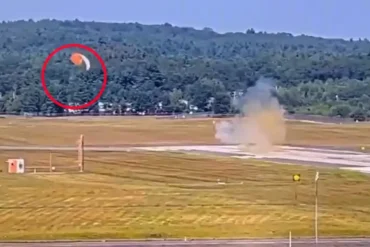
The violent impact caused both EA-18G Growlers to become entangled mid-air, spiraling uncontrollably as aerodynamic forces tore at their structures. Within seconds, the aircraft pitched erratically—first nose-up, then plunging nose-down—before the unmistakable flashes of four ejection seats firing punctuated the chaos. All crew members successfully escaped, descending by parachute as the crippled jets fell away.
Footage of the mid air collision between a pair of Navy Super Hornets/Growlers during the Gunfighter Skies Air Show at Mountain Home Air Force Base moments ago. pic.twitter.com/yQqPavmSWk
— OSINTtechnical (@Osinttechnical) May 17, 2026
Dramatic Footage Reveals Split-Second Catastrophe
The video evidence offers a rare and sobering look into how quickly precision aviation can turn perilous. The trailing Growler appears to misjudge spacing during a formation maneuver, its nose clipping the rear section of the lead jet. The contact point—high and slightly offset—suggests a breakdown in spatial awareness or timing, both critical in close-formation flying.
What makes the footage particularly striking is the immediate loss of control following the collision. Rather than separating cleanly, the aircraft remain momentarily locked together, amplifying the instability. This entanglement likely reduced any chance of recovery, forcing the crews to initiate ejection almost instantly.
The synchronized ejection sequence highlights the rigorous training embedded within naval aviation. Each EA-18G carries two crew members—a pilot and an electronic warfare officer—both of whom must coordinate under extreme stress. The near-simultaneous deployment of all four ejection seats underscores both the severity of the incident and the effectiveness of emergency protocols.
Air Show Halted as Emergency Response Mobilizes
Following the crash, officials immediately shut down the Gunfighter Skies Air Show, marking an abrupt end to what had been anticipated as a major aviation event. Emergency responders secured the area near Mountain Home Air Force Base, while military authorities initiated a full investigation into the circumstances surrounding the collision.
A spokesperson for Naval Air Forces Pacific confirmed that the aircraft were based out of Whidbey Island, Washington, and were conducting a scheduled demonstration flight at approximately 12:10 p.m. local time. The base was temporarily placed under lockdown as recovery teams assessed debris fields and ensured no further risks remained.
The incident also casts a shadow over the return of the air show itself, which had not been held since 2018 following a fatal hang gliding accident. The revival of the event was intended to showcase aviation excellence and community engagement—an objective now overshadowed by the dramatic mishap.
Inside the EA-18G Growler: America’s Electronic Warfare Powerhouse
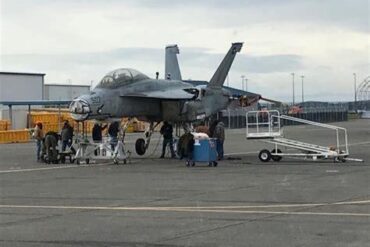
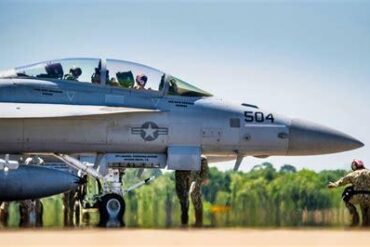
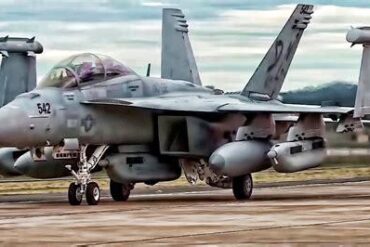
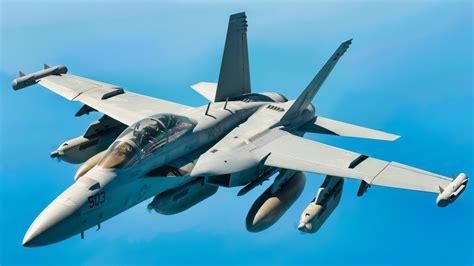
At the center of the incident is the Boeing EA-18G Growler, a highly specialized platform developed by Boeing. Derived from the F/A-18F Super Hornet, the Growler represents the cutting edge of airborne electronic attack capabilities, designed to dominate the electromagnetic spectrum in modern combat environments.
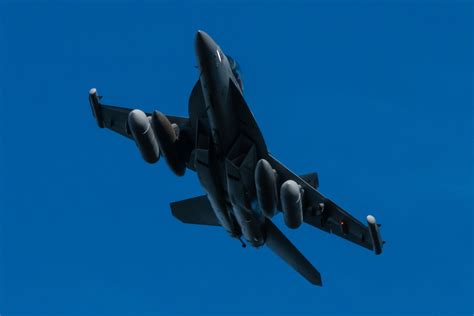
Unlike traditional fighter jets, the Growler’s primary mission is not air-to-air combat but electronic suppression. It disrupts enemy radar, communications, and targeting systems, effectively blinding adversaries and creating safe corridors for allied aircraft. Equipped with ALQ-99 jamming pods and advanced AN/ALQ-218 receivers, the aircraft can detect and neutralize threats across a wide frequency range.
Its integration of the APG-79 Active Electronically Scanned Array radar provides enhanced tracking and targeting capabilities, while the Joint Helmet-Mounted Cueing System allows pilots to manage complex battlefield data in real time. Despite its electronic warfare focus, the Growler retains formidable defensive capabilities, including AIM-120 AMRAAM missiles for self-protection.
Formation Flying Risks in High-Performance Demonstrations
While military pilots are extensively trained for formation flying, the margin for error remains razor-thin—particularly during public demonstrations where precision and spectacle intersect. Flying in close proximity at high speed requires constant spatial awareness, flawless communication, and precise timing.
In this case, the trailing aircraft’s approach vector suggests either a miscalculated closure rate or a breakdown in visual reference. Even a minor deviation in speed or angle can result in catastrophic overlap, especially when aircraft are separated by mere meters.
The incident also highlights the inherent tension between operational training and public demonstration. While such displays showcase military capability, they also compress complex maneuvers into tighter visual formations, increasing risk exposure. Investigators will likely examine flight data, pilot inputs, and environmental conditions to determine the exact cause.
Investigation Underway as Safety Questions Intensify
The U.S. Navy has launched a formal investigation to reconstruct the sequence of events leading to the collision. This process will involve analyzing flight recordings, maintenance logs, and pilot communications, as well as reviewing the demonstration profile itself.
Key questions remain unresolved: Was the maneuver executed as planned? Did mechanical factors play a role? Or was human error the decisive factor in those critical seconds before impact?
What is already clear, however, is that the outcome could have been far more tragic. The successful ejection of all four crew members stands as a testament to both the engineering of the Growler’s safety systems and the discipline of its aircrews.
As the investigation unfolds, the incident serves as a stark reminder of the risks inherent in military aviation—even in controlled environments. Precision, power, and performance define aircraft like the EA-18G Growler, but when those elements falter, the consequences unfold with unforgiving speed.