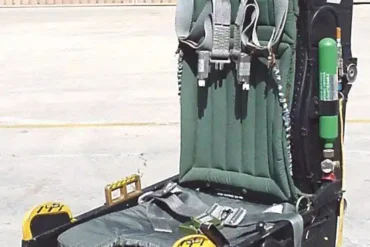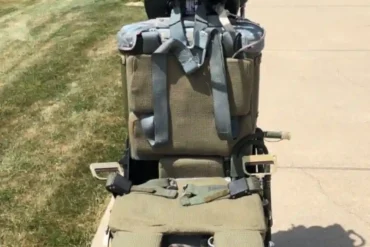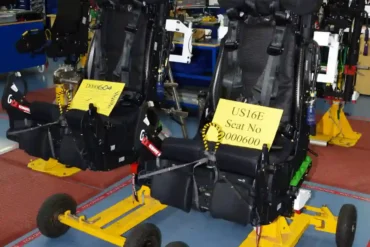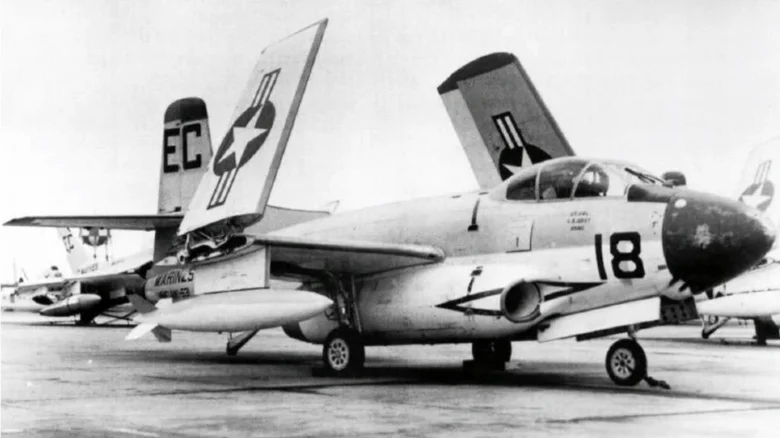
The history of military aviation is filled with bold engineering experiments, but few were as unusual as the escape system fitted to the Douglas F3D Skyknight. While modern fighter pilots rely on sophisticated rocket-powered ejection seats capable of blasting them clear of an aircraft in fractions of a second, the Skyknight used a completely different approach. Instead of firing its crew upward through the canopy, this Cold War-era naval fighter required its occupants to slide down a metal chute and exit through the bottom of the aircraft.
Built during the late 1940s, the Skyknight emerged during a period when aviation technology was advancing at an extraordinary pace. Jet propulsion had transformed air combat, allowing aircraft to fly faster and higher than ever before. However, one critical safety challenge remained unresolved: how to safely evacuate pilots from high-speed jets. Traditional methods used in propeller-driven aircraft were no longer practical, and many of the technologies that define modern ejection seats had not yet been perfected.
The Douglas F3D Skyknight was designed for a specialized mission. Unlike sleek dogfighters built primarily for speed and agility, the aircraft was intended to operate as an all-weather, night-fighting platform. To accomplish this task, it carried advanced radar equipment that occupied significant space within the fuselage. Accommodating this technology forced designers to adopt an unusual cockpit arrangement, placing the pilot and radar operator side by side rather than in tandem.
The side-by-side seating layout offered operational advantages, allowing both crew members to coordinate more effectively during nighttime interception missions. However, it created a major problem when engineers began designing an emergency escape system. Conventional ejection seats launch occupants upward through the canopy. With two crew members seated next to each other, simultaneous upward ejection presented substantial risks of collision and injury.
After evaluating alternatives, engineers devised one of the most unconventional escape methods ever installed in a combat aircraft.
Why the Skyknight Needed a Completely Different Escape System
The Skyknight’s large radar installation and broad fuselage shape made traditional ejection-seat configurations difficult to implement. Rather than redesigning the entire aircraft, Douglas engineers created a downward escape system centered around a metal evacuation chute.
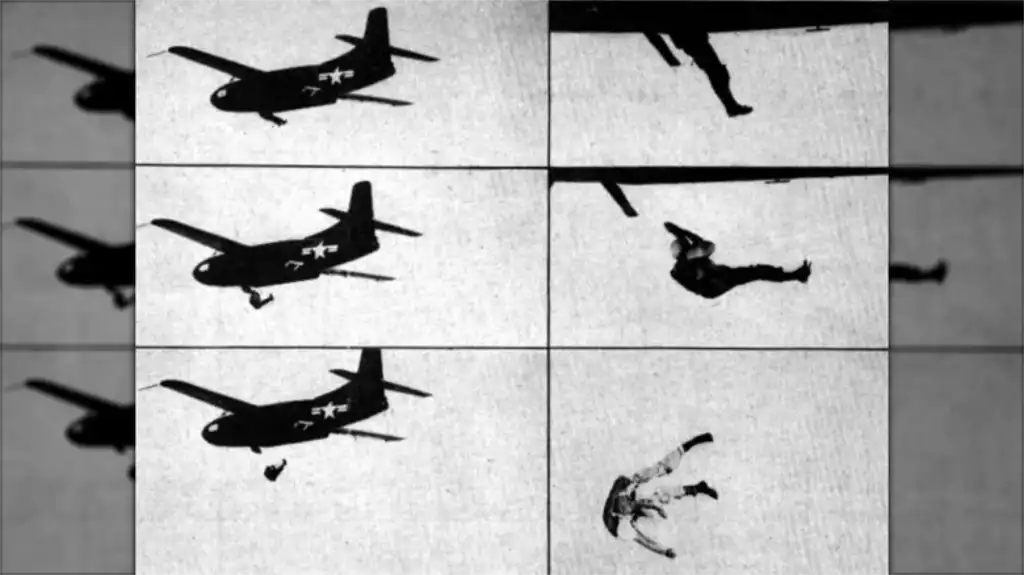
Positioned behind the cockpit, the chute extended through the aircraft’s belly between the twin jet engines. In an emergency, crew members would leave their seats and physically descend through this passageway before exiting the aircraft. The concept seemed counterintuitive, especially when compared to the explosive power associated with modern ejection systems, yet it solved a complex engineering challenge with remarkable simplicity.
Before escape procedures began, the cockpit would be depressurized. The seats could then pivot inward, creating access to the evacuation opening. One crew member would open the chute cover, grasp a horizontal support bar, and lower himself into the escape tunnel. Gravity and airflow would carry him safely out of the aircraft’s underside. The second crew member would follow moments later.
What made the system particularly fascinating was that it allowed personnel to leave the aircraft without being launched into potentially hazardous structures above the cockpit. By directing the escape path downward, engineers avoided many of the risks associated with side-by-side seating arrangements.
The Combat Aircraft That Made Aviation History
Although remembered today for its strange escape mechanism, the Skyknight earned an impressive combat record during the Korean War. Operated by both the U.S. Navy and the U.S. Marine Corps, the aircraft specialized in nighttime interception missions against enemy aircraft.
Its advanced radar gave crews the ability to locate and engage targets in darkness, a capability that few fighters possessed at the time. The aircraft achieved a historic milestone when it became the first jet fighter to shoot down another aircraft during a nighttime jet-versus-jet engagement.
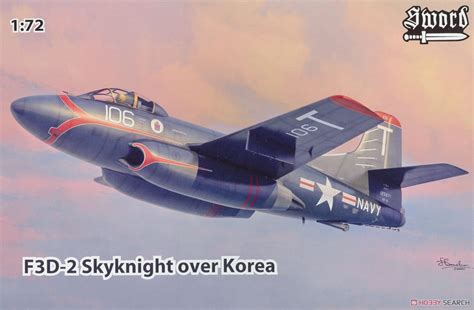
Skyknight crews routinely ventured deep into hostile territory, searching for Soviet-designed MiG fighters operating under cover of darkness. These missions were inherently dangerous. Mechanical failures, combat damage, or fuel emergencies could force crews to abandon their aircraft far from friendly lines. In such situations, the unusual escape chute represented their best chance of survival.
An Innovative Solution Before Modern Ejection Seats
Today, military aviators trust highly advanced rocket-assisted ejection seats capable of operating at extreme speeds and altitudes. These systems represent decades of engineering refinement and extensive testing. Yet the Skyknight belongs to a unique era when aircraft designers often had to invent entirely new solutions to unprecedented problems.
The downward escape chute may appear primitive compared with contemporary systems, but it demonstrated impressive ingenuity. Rather than relying on explosive force, it used careful design and aerodynamic principles to move crew members safely away from the aircraft.
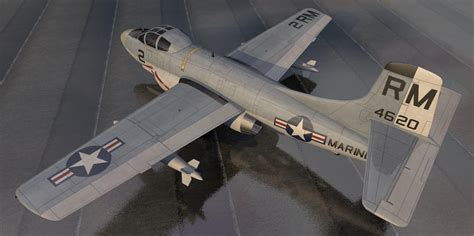
The Douglas F3D Skyknight remains one of the most fascinating examples of unconventional military aviation engineering. Its strange ejection method was not a gimmick or a temporary workaround. It was a practical, effective solution tailored to a highly specialized aircraft. In an age defined by rapid technological experimentation, the Skyknight proved that sometimes the safest way out of a fighter jet was not up—but down through the belly of the airplane itself.