The F-16 Fighting Falcon has remained one of the most widely utilized fourth-generation fighter aircraft globally. Its adaptability, cost-effectiveness, and advanced avionics have allowed it to remain relevant in modern air combat. One of the most critical aspects of the F-16’s modernization efforts lies in its electronic warfare (EW) capabilities, which have undergone significant upgrades to counter evolving radar and missile threats. This article explores the development, technological breakthroughs, testing progress, and strategic implications of the F-16’s electronic warfare systems, with a particular focus on the AN/ALQ-257 Integrated Viper Electronic Warfare Suite (IVEWS).
Evolution of the F-16’s Electronic Warfare Systems
Early Upgrades and External Pods
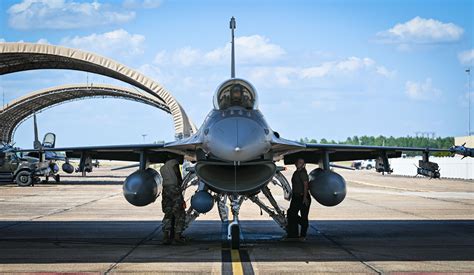
The initial electronic warfare enhancements for the F-16 involved externally mounted electronic countermeasure (ECM) pods, such as the AN/ALQ-131 and AN/ALQ-184. These systems provided essential radar jamming and threat detection but had limitations, including increased drag and reduced weapon station availability.
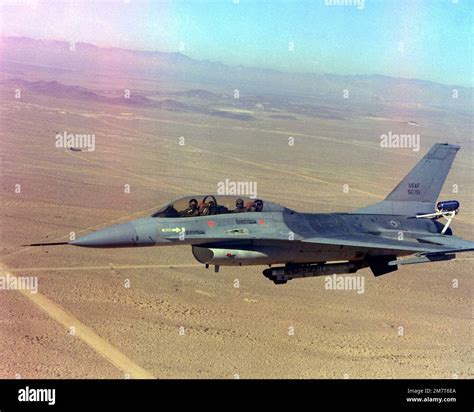
In 2008, the Pakistan Air Force equipped its F-16 fleet with the AN/ALQ-211(V)9 electronic warfare pod, significantly improving radar warning and jamming capabilities. This system provided enhanced situational awareness, automated threat response, and improved survivability against modern air defense systems.
The Shift Toward Fully Integrated EW Systems
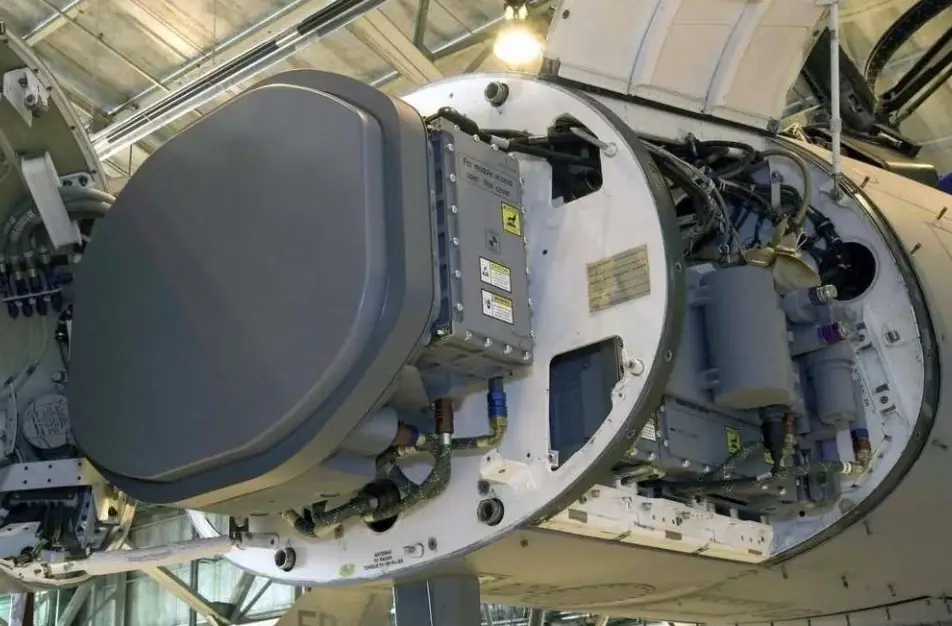
With the advancement of radar-guided threats, a more integrated and sophisticated electronic warfare system became a necessity. In 2024, the U.S. Air Force began testing the AN/ALQ-257 IVEWS, an advanced internal electronic warfare suite designed to offer fifth-generation levels of protection against modern threats.
Key Technological Advancements in the F-16’s EW Systems
1. Digital and Modular Architecture
The IVEWS system features an all-digital open-architecture design, allowing software-defined functionality that enables real-time adaptability against emerging threats. This modular architecture allows field-upgradable components, reducing maintenance costs and increasing operational longevity.
2. Multi-System Integration
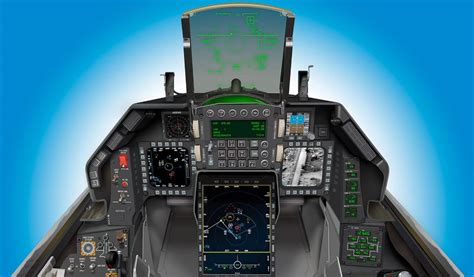
One of the most significant advantages of the AN/ALQ-257 is its seamless integration with the AN/APG-83 Active Electronically Scanned Array (AESA) radar. This fusion enables synchronized radar warning, electronic jamming, and weapon control, allowing the F-16 to suppress and engage threats simultaneously. Unlike older systems that required pilots to manually manage EW responses, IVEWS operates autonomously, responding to threats within milliseconds.
3. Enhanced Jammer Capabilities
IVEWS incorporates ultra-wideband digital radio frequency memory (DRFM) jamming technology. This allows it to deceive even the most advanced millimeter-wave radar systems used by next-generation air defense networks. Compared to legacy AN/ALQ-131 pods, the IVEWS provides a much greater frequency range and faster response times, making it highly effective against modern surface-to-air missile (SAM) systems.
4. Stealth Optimization and Internal Integration
Unlike external pod-based EW solutions, IVEWS is internally housed within the airframe, which provides multiple advantages:
- No drag penalty compared to pod-mounted systems, improving flight performance.
- Frees up external hardpoints for additional weapons or fuel tanks.
- Reduced radar cross-section (RCS), improving survivability in contested airspace.
Testing and Combat Readiness
Laboratory and Flight Testing
In 2024, the U.S. Air Force conducted extensive ground-based testing of IVEWS at the Benefield Anechoic Facility at Edwards Air Force Base. These tests simulated complex electromagnetic environments to assess the system’s performance against a wide range of radar threats.
Following successful ground trials, IVEWS underwent flight testing aboard an F-16 Block 50 aircraft to evaluate its real-world effectiveness in contested environments. Results confirmed that IVEWS could successfully detect, identify, and counter a wide spectrum of enemy radar emissions while allowing uninterrupted operation of the F-16’s radar and weapon systems.
Real-World Exercise Performance
In 2021, during the Northern Lightning Exercise, a surrogate aircraft equipped with an early IVEWS prototype demonstrated the system’s ability to jam mobile air defense systems. These trials proved IVEWS could provide electromagnetic suppression capabilities equivalent to fifth-generation aircraft like the F-35 Lightning II.
Strategic Significance and Future Applications
Countering Modern Air Defense Threats
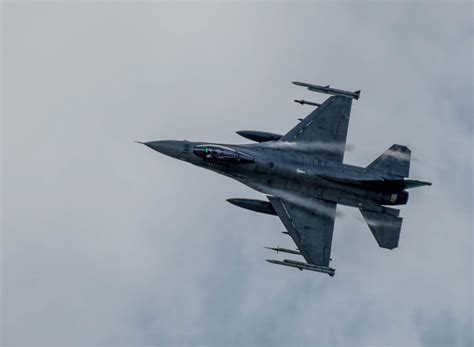
The IVEWS suite represents a critical leap in the F-16’s survivability in modern air combat scenarios. Advanced air defense systems, such as integrated mobile SAM networks, are designed to rapidly activate and engage aircraft before they can react. IVEWS mitigates these threats by enabling rapid threat detection and automated countermeasures, reducing the risk of an F-16 being locked onto or engaged.
Integration with Unmanned Systems
Future air combat doctrine emphasizes manned-unmanned teaming (MUM-T). The F-16, equipped with IVEWS, will likely collaborate with unmanned aerial vehicles (UAVs) that serve as scouts, decoys, or electronic attack platforms. This synergy enhances mission effectiveness, allowing UAVs to absorb enemy radar attention while the F-16 carries out precision strikes.
Global Fleet Modernization
With over 25 nations operating the F-16, the AN/ALQ-257 IVEWS provides an affordable and effective upgrade for legacy aircraft. This enhances combat viability and ensures the F-16 remains relevant beyond 2040. As global air forces face increasing electronic threats, the integration of next-generation EW technology into existing platforms will be critical.
Conclusion
The F-16 Fighting Falcon has successfully transitioned from a fourth-generation multirole fighter to an electronic warfare-capable platform through the integration of the AN/ALQ-257 IVEWS. Featuring digital architecture, multi-system fusion, advanced jamming capabilities, and internal integration, this system ensures the F-16 can operate effectively against modern and future threats. With testing slated for completion in 2025, IVEWS is set to solidify the F-16’s role in electromagnetic warfare-dominated battlefields.
FAQ
1. How does the AN/ALQ-257 IVEWS compare to previous F-16 EW systems?
IVEWS is a fully integrated system that replaces legacy external ECM pods such as the AN/ALQ-131. It provides faster, more automated threat response, better jamming performance, and seamless radar integration, ensuring superior survivability.
2. Can older F-16 models be upgraded with IVEWS?
Yes, IVEWS is designed to be retrofitted onto existing F-16s, making it an ideal modernization solution for air forces worldwide looking to extend their fleet’s operational lifespan.
3. How does IVEWS enhance F-16 stealth capabilities?
By moving EW components internally, IVEWS reduces the aircraft’s radar cross-section (RCS), eliminates drag penalties, and frees up weapon stations, making the F-16 more survivable in contested airspace.