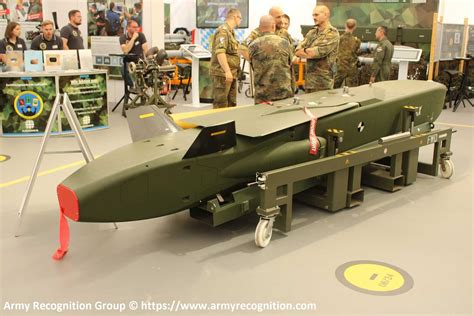
The Taurus KEPD 350 missile represents the pinnacle of European cruise missile technology—a weapon forged not just in engineering brilliance but also in geopolitical necessity. With a unit cost ranging between €950,000 and €1.2 million (roughly $1.1 million to $1.4 million), this air-launched cruise missile combines range, stealth, and surgical precision into one of the most expensive yet lethal standoff weapons currently in operational service.
Origins and Development of the Taurus KEPD 350
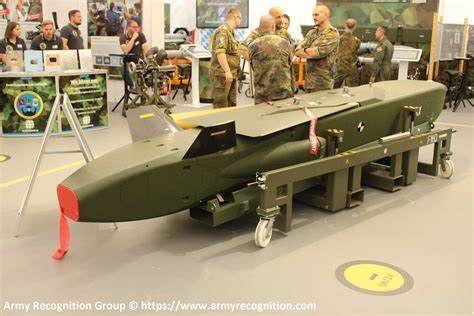
Developed by Taurus Systems GmbH, a joint venture between Germany’s MBDA and Sweden’s Saab Dynamics, the Taurus missile emerged from a design philosophy shaped by Europe’s shifting security architecture in the late 1990s and early 2000s. This long-range precision weapon was engineered to strike heavily fortified targets with minimum exposure to enemy air defenses, an increasingly vital requirement in the age of anti-access/area denial (A2/AD) strategies.
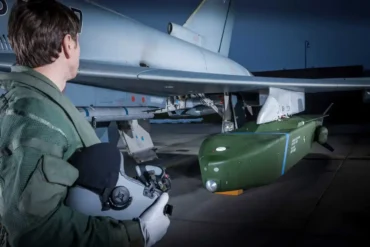
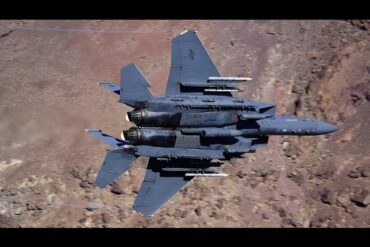
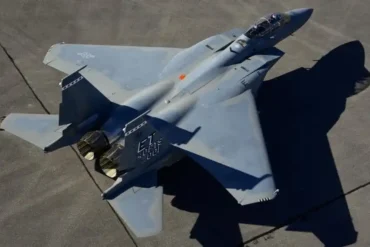
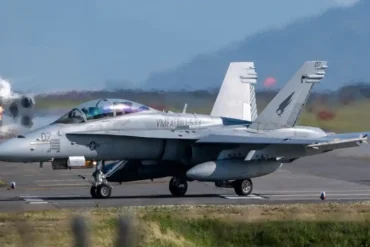
The missile saw its first combat deployment under limited operational testing, but its full strategic significance would unfold over the following decades. Today, nations like Germany, South Korea, and Spain have integrated it into their military arsenals, optimizing the missile for platforms such as the F-15K Slam Eagle and EF-18 Hornet.
Price Tag and Procurement Realities
The Taurus does not come cheap. Each missile costs between €950,000 and €1.2 million, a price that can surge when incorporating platform integration, training infrastructure, support equipment, and mission planning systems. Germany’s most recent procurement initiative highlights this reality: a €2.1 billion contract for 600 next-generation Taurus Neo missiles, translating to an average cost of around €3.5 million per unit when including associated systems. The first batch is expected to be delivered by 2029.
This makes the Taurus not just a weapon but a long-term strategic investment—an asset requiring careful integration into national defense doctrines and strike planning infrastructure.
Navigational Supremacy and Terrain-Hugging Flight
The Taurus missile is propelled by a turbojet engine, flying at subsonic speeds (Mach 0.8–0.9). But what makes it stand out is not speed, but survivability. It cruises at ultra-low altitudes, often skimming as low as 35 meters (115 feet) above ground level. This flight profile is specifically designed to evade radar detection and anti-aircraft systems.
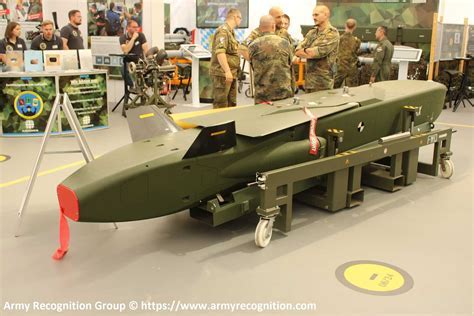
The guidance system is where Taurus becomes a true standout. Unlike traditional cruise missiles that rely solely on GPS, the KEPD 350 integrates a quad-mode navigation suite:
- Inertial Navigation System (INS) for internal reference
- GPS for global coordinate correction
- Terrain Referenced Navigation (TRN) for contour matching
- Image-Based Navigation using stored visual data
This technological fusion enables the missile to operate in GPS-denied environments, including during electronic warfare conditions, ensuring high mission reliability even in hostile airspace.
Smart Destruction: The MEPHISTO Warhead
Powering its devastating terminal phase is the 1,058-pound MEPHISTO warhead—an acronym for Multi-Effect Penetrator, Highly Sophisticated and Target Optimized. Designed specifically for hardened and deeply buried targets (HDBTs), MEPHISTO is a dual-stage warhead that doesn’t simply explode on impact. Instead, it uses resistance sensors to detect different structural layers before detonating at the optimal point within the target structure.
This makes it particularly effective against reinforced concrete bunkers, command centers, underground facilities, and key infrastructure nodes. The missile’s final trajectory involves a sharp climb followed by a near-vertical dive, which maximizes the kinetic impact and ensures precise warhead delivery to the intended strike depth.
Deployment and Strategic Use by Allied Nations
Countries like Germany, South Korea, and Spain have embraced the Taurus as a core component of their long-range strike capability. In Germany’s case, it remains the only air-launched standoff cruise missile in active service, underlining its doctrinal significance in both national and NATO defense structures.
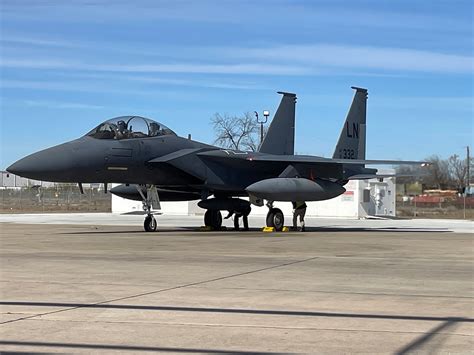
In South Korea, the Taurus is mounted on the F-15K Slam Eagle and used primarily as a deterrence tool against North Korean nuclear and missile facilities. The missile allows the Republic of Korea Air Force (ROKAF) to hold strategic targets at risk deep inside hostile territory without endangering pilots or platforms.
Geopolitical Weight: Ukraine and the Kerch Bridge Dilemma
While several NATO members operate the Taurus, it is Ukraine’s interest in the missile that has amplified its prominence on the geopolitical stage. As Kyiv continues its struggle to repel Russian forces entrenched in Crimea and eastern Ukraine, it has identified the Taurus KEPD 350 as uniquely suited to strike targets like the Kerch Bridge, a logistical artery linking Russia to occupied Crimea.
Ukrainian military strategists view the Taurus as the only Western missile capable of penetrating the heavily defended bridge, thanks to its stealthy approach, terrain navigation, and fortification-piercing warhead. However, Germany has resisted requests for export approval, citing fears that such deep-strike capability could escalate the conflict and potentially draw NATO deeper into direct confrontation with Russia.
This tension underscores the Taurus missile’s latent strategic and political weight. Its very deployment—or non-deployment—can influence diplomatic balances and alter the tempo of battlefield developments.
Technological Edge and Comparative Advantage
The Taurus sits within an elite group of long-range, precision cruise missiles that includes the Storm Shadow/SCALP, AGM-158 JASSM, and Russian Kh-101. Yet, its blend of stealth, guidance autonomy, and target-optimized warhead gives it a significant edge in certain scenarios:
- Longer autonomous flight with TRN/visual nav in GPS-denied zones
- Deeper penetration against HDBTs
- Reduced vulnerability due to ultra-low flight paths
Unlike the Storm Shadow, which is often tied to British or French aircraft, the Taurus has demonstrated broader platform adaptability. Integration with non-European jets such as the F-15K shows its flexibility in diverse geopolitical and tactical settings.
The Future: Taurus Neo and Defense Modernization
Looking ahead, the upcoming Taurus Neo variant is set to push boundaries even further. Germany’s €2.1 billion order signals more than just a replenishment—it is an investment in future-proofing strategic air power. Although full specifications remain under wraps, the Neo is expected to include:
- Enhanced survivability in contested electronic warfare environments
- Improved warhead performance against next-gen bunkers
- Upgraded mission planning tools and real-time re-targeting potential
In an era where loitering munitions, hypersonics, and AI-integrated battlefield networks are transforming modern warfare, the Taurus Neo’s evolution will be critical in ensuring NATO’s ability to conduct precision deep strikes without risking manned aircraft.
Final Thoughts: Costly, Capable, and Critically Strategic
The Taurus KEPD 350 is more than an expensive missile—it is a paradigm of 21st-century standoff warfare. Its combination of navigation independence, terrain masking, target-optimized warheads, and strategic deterrence makes it one of the most formidable cruise missiles in global arsenals today.
Whether disrupting underground bunkers in North Korea, threatening command centers in Crimea, or standing ready as NATO’s long-range strike option, the Taurus isn’t just about hitting a target—it’s about reshaping the strategic landscape while doing so with surgical precision.