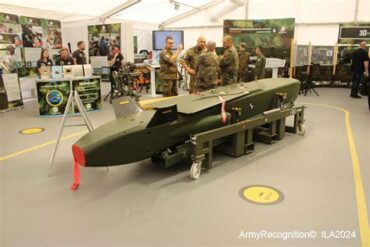
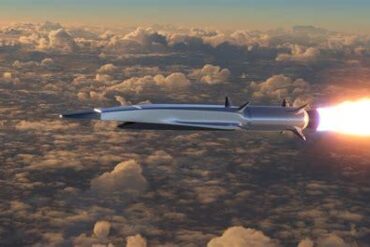
In the world of modern warfare, speed and stealth are decisive. The scramjet missile, a marvel of aerospace engineering, stands at the forefront of this evolution. By harnessing Supersonic Combustion Ramjet (scramjet) propulsion, these hypersonic missiles attain velocities exceeding Mach 5, making them nearly impossible to intercept with current air defense systems. Their combination of speed, range, and maneuverability is redefining global military strategies.
Unlike traditional rocket systems that must carry oxidizers onboard, scramjet missiles utilize atmospheric oxygen, dramatically reducing payload weight and allowing more space for fuel or warheads. This efficiency stems from their air-breathing design, where the engine compresses and combusts air at supersonic speeds without the use of rotating components. However, this advanced propulsion requires an external booster to achieve the initial operational speed — typically Mach 4–5 — before the scramjet engine can ignite.
Engineering Brilliance: How Scramjet Missiles Work
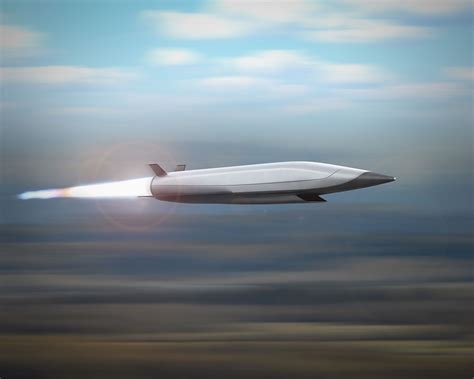
At the heart of the scramjet missile lies its air-breathing engine. Unlike turbojets or ramjets, a scramjet maintains supersonic airflow throughout the engine, allowing combustion to occur even while air rushes through at extreme velocities. This process demands precise control over airflow and fuel injection, as combustion must take place within milliseconds.
Key components of scramjet engine operation include:
- Inlet compression: Air is compressed via the missile’s high-speed forward motion, eliminating the need for rotating compressors.
- Supersonic combustion chamber: Fuel is injected and combusted in a high-speed airflow, generating extreme thrust.
- Nozzle expansion: Exhaust gases expand through the nozzle, propelling the missile forward at hypersonic speed.
This elegant design eliminates complex turbines, enabling lighter construction and improved fuel efficiency. However, because the engine cannot operate at low speeds, scramjet missiles depend on a separate launch system — such as a rocket booster or a high-speed aircraft — to achieve ignition speed.
Tactical Advantages: Why Scramjet Missiles Are Game-Changers
The military significance of scramjet missiles cannot be overstated. These weapons are not only fast — they are unpredictable, maneuverable, and capable of evading traditional radar tracking and interception systems. Their ability to operate within the atmosphere offers several strategic benefits:
- Extremely short reaction time for targets, reducing the window for interception.
- Flight paths that can be adjusted mid-course, making their trajectory unpredictable.
- High survivability against current missile defense systems, including advanced radar and interceptor platforms.
- Reduced logistical weight due to atmospheric oxygen intake.
These capabilities enable deep-strike missions against high-value targets with minimal warning, reshaping the calculus of deterrence and defense.
From Labs to Launchpads: A Timeline of Global Scramjet Development
Though theoretical studies of air-breathing engines trace back to the mid-20th century, it was not until the 1990s and early 2000s that scramjet technology took flight. Key historical milestones include:
- 1991: First scramjet-powered flight test conducted via a joint NASA-CIAM (Russia) project.
- 2002: HyShot program by the University of Queensland achieves successful supersonic combustion during test flights.
- 2004: NASA X-43A becomes the first scramjet-powered vehicle to produce thrust in flight, setting a record speed of Mach 9.6.
Since then, national defense programs have invested billions into hypersonic R&D.
United States
The U.S. leads in scramjet-based missile testing and development. Major initiatives include:
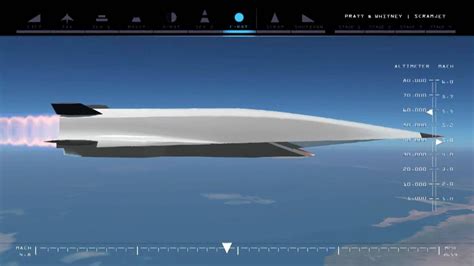
- X-51A Waverider: Successfully demonstrated sustained scramjet-powered flight.
- Hypersonic Air-breathing Weapon Concept (HAWC): A DARPA project achieving key milestones in speed and control.
- Hypersonic Attack Cruise Missile (HACM): A current joint venture between Raytheon and Northrop Grumman, aiming for operational deployment.
India
India’s DRDO (Defence Research & Development Organisation) has made rapid progress. In April 2025, its scramjet engine test sustained combustion for over 1,000 seconds, the longest on record. This feat signals a potential range of 1,500–2,500 km, positioning India as a serious contender in the hypersonic race.
Russia
Russia has emphasized hypersonic capabilities through the development of both air-launched ballistic and scramjet systems:
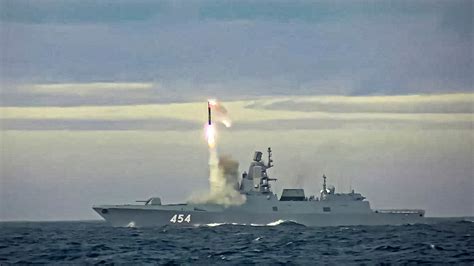
- Kinzhal (Dagger): A hypersonic air-launched ballistic missile already deployed.
- Zircon: A scramjet-powered cruise missile, reportedly capable of Mach 8–9 speeds, designed to target ships and land-based systems.
China and Others
China, France, Iran, and North Korea have all announced active hypersonic research programs. China’s DF-ZF glide vehicle and efforts in scramjet integration are watched closely by Western analysts.
Confronting Complexity: The Technical Hurdles of Scramjets
Despite global interest and funding, scramjet missile development remains one of the most technically demanding fields in aerospace. The challenges lie not just in design but also in sustaining performance under extreme flight conditions.
Combustion at Supersonic Speeds
Igniting and maintaining stable combustion in an airflow that moves faster than sound is inherently difficult. The fuel and air must mix, ignite, and burn completely in fractions of a second. This necessitates incredibly precise control systems and fuel injectors.
Heat Management and Materials Science
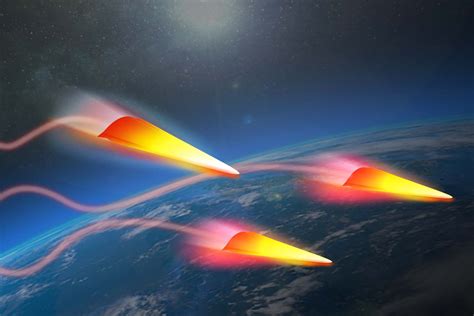
Flying at Mach 5+ generates skin temperatures above 1,000°C (1,832°F) due to air friction and compression. To survive, scramjet missiles require materials with high thermal resistance, such as carbon-carbon composites, reinforced ceramics, and active cooling systems. Advanced coatings and ablative layers also help dissipate heat.
Guidance and Control at Hypersonic Velocities
At such speeds, even a slight trajectory correction can lead to catastrophic failure. Scramjet missiles must have finely tuned guidance, navigation, and control (GNC) systems capable of making rapid decisions under dynamic aerodynamic pressures. The GNC system must account for:
- Atmospheric variability
- Rapid changes in pressure and density
- Shockwave interactions
Booster Integration and Launch Platforms
Because scramjets cannot function until reaching hypersonic velocity, they rely on boosters or aircraft to bring them up to speed. This increases the complexity and cost of deployment. Whether air-launched or ground-launched, seamless integration between booster and missile is essential for mission success.
Strategic Implications: Changing the Face of Warfare
Scramjet missiles are not just an engineering marvel — they are a geopolitical force multiplier. Their ability to neutralize hardened targets from thousands of kilometers away, all within minutes, redefines modern deterrence theory.
- First-strike capabilities: Hypersonic speed allows for decapitation strikes on command centers before adversaries can respond.
- Anti-access/Area denial (A2/AD): Scramjets can bypass traditional defense bubbles, threatening aircraft carriers and airbases.
- Arms race acceleration: With multiple nations pursuing deployment, scramjet missiles are fueling a new dimension of the global arms race.
The strategic ambiguity surrounding their deployment timelines and operational capabilities adds further tension. Scramjets blur the line between conventional and nuclear delivery systems, raising concerns among defense analysts and arms control advocates.
The Future of Scramjet Missiles
As countries refine hypersonic propulsion, the scramjet missile will continue to evolve. Upcoming developments will likely include:
- Reusable scramjet-powered UAVs, reducing cost per mission.
- Miniaturized engines for tactical applications.
- Integration with AI for smart target selection and real-time adjustments.
- Hybrid systems, combining scramjet engines with other propulsion modes for extended range and flexibility.
International treaties and arms control frameworks will also need to adapt, as the spread of scramjet technology could alter strategic balances and reduce crisis stability.
Conclusion: Entering the Age of Hypersonic Dominance
Scramjet missile technology represents a paradigm shift in aerospace and military doctrine. With unmatched speed, reduced reaction windows, and deep-strike precision, it renders traditional defense systems increasingly obsolete. As global powers race to deploy these weapons, we are witnessing the dawn of a new era — one defined not just by nuclear capability, but by the mastery of hypersonic propulsion.
To remain secure in this future, nations must not only innovate but also collaborate to establish norms and prevent escalations driven by this unprecedented technological leap.