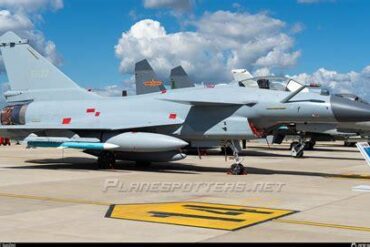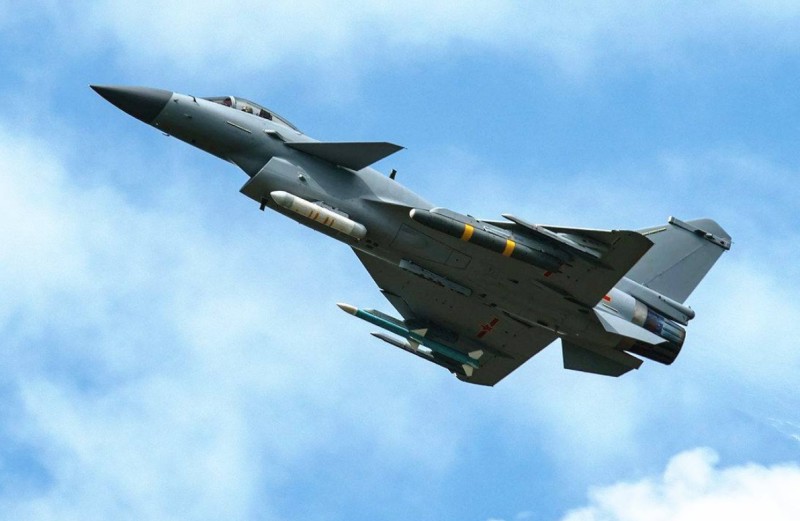
The J-10C Fighter represents the cutting edge of China’s military aviation, standing as a pinnacle of design and technology in the realm of multirole fighter jets. As the latest iteration of the J-10 series, this fourth-generation (or “fourth-and-a-half-generation”) fighter integrates a host of advanced features, including sophisticated avionics, powerful engines, and enhanced weapon systems. Developed by the Chengdu Aircraft Industry Group (CAIG), the J-10C has become a crucial asset for the Chinese Air Force, as well as for international clients.
In this article, we will explore the design characteristics, technological innovations, and strategic significance of the J-10C, providing a comprehensive analysis of its place in modern aerial warfare.
Design and Aerodynamic Features of the J-10C Fighter
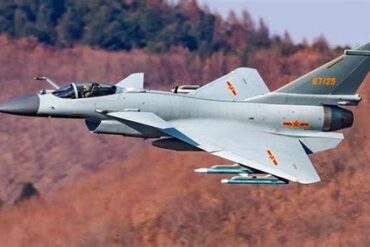
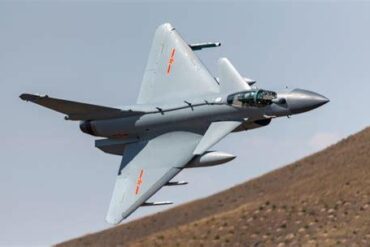
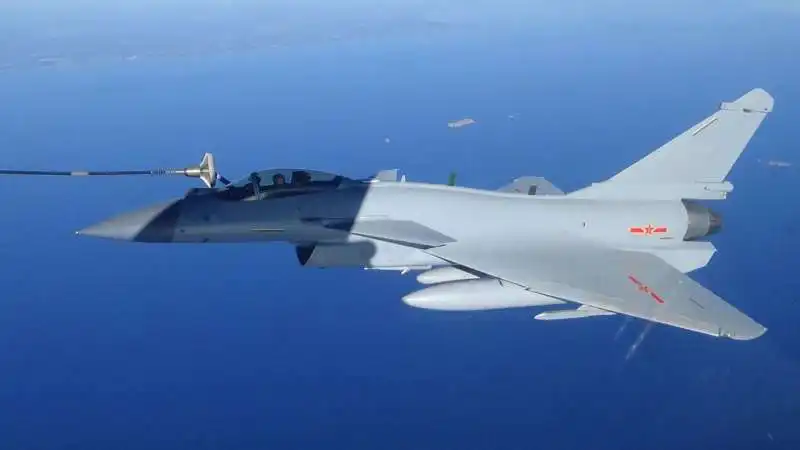
The design of the J-10C follows the legacy of the J-10 series with a delta-winged canard configuration, often referred to as a “duck wing” layout. This configuration allows for exceptional maneuverability, making the aircraft highly agile in combat, especially in high-speed aerial engagements. The triangle-shaped wings combined with the forward-swept canards provide remarkable control in high-speed flight, facilitating both air superiority and quick-response capabilities.
Aerodynamic Layout for Enhanced Performance
The J-10C retains the duck-wing layout from its predecessors, which has proven effective in a wide variety of combat situations. This configuration enhances the aircraft’s ability to perform complex maneuvers, such as sharp turns and high-speed engagements, which are critical in modern air-to-air combat scenarios. The aircraft’s aerodynamics contribute directly to its ability to outmaneuver enemy fighters, making it a formidable opponent in aerial dogfights.
The canard design in particular improves pitch control and contributes to the fighter’s overall agility, which is crucial during both air-to-air and air-to-ground missions. The J-10C’s agility makes it a versatile multirole aircraft, able to switch seamlessly between offensive air combat, defensive interception, and precision ground attack roles.
Stealth Features and Low Radar Cross Section
In terms of stealth capabilities, the J-10C incorporates subtle design modifications aimed at reducing its radar cross-section (RCS) when compared to earlier models. This includes the optimized shape of the fuselage and radar-absorbent coatings designed to minimize its visibility on enemy radar systems.
While the J-10C is not a stealth fighter in the same class as the J-20, it is an aircraft that has undergone stealth optimizations to enhance its survivability in contested airspace. These improvements ensure that the J-10C can engage in combat with reduced likelihood of detection, thus allowing it to perform surprise strikes or escort missions with a higher degree of safety.
Advanced Avionics and Sensor Systems
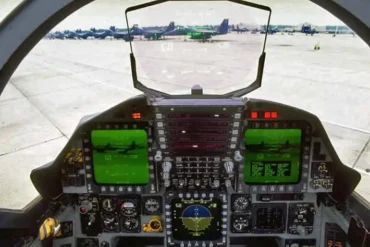
The J-10C is equipped with cutting-edge avionics that significantly enhance its combat effectiveness. These systems provide the pilot with superior situational awareness, targeting precision, and anti-jamming capabilities, all of which are critical in modern warfare.
Active Electronically Scanned Array Radar (AESA)
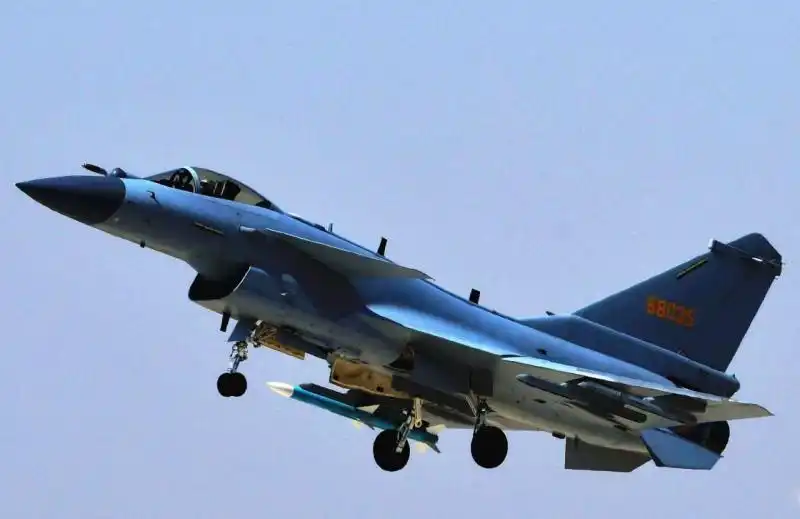
At the heart of the J-10C’s avionics suite is the active electronically scanned array (AESA) radar, an advanced radar system that delivers superior target detection and tracking performance. The AESA radar provides a number of advantages over traditional radar systems, including:
- Long-range detection: The AESA radar offers improved range and accuracy, allowing the aircraft to detect enemy aircraft and ground targets from significant distances.
- Anti-jamming capabilities: The AESA radar’s electronic agility allows it to operate effectively in environments where electronic warfare is a concern. This makes the J-10C a more formidable opponent in contested airspace.
- Multi-target tracking: The radar is capable of simultaneously tracking multiple targets, making the aircraft more efficient in high-density combat scenarios, such as intercepting incoming missiles or coordinating multirole operations.
Electro-Optical and IR Systems
In addition to radar, the J-10C is equipped with advanced infrared search and track (IRST) systems and electro-optical targeting systems. These systems enable the fighter to operate effectively in low-visibility conditions, including night operations or adverse weather. The IRST system, which is integrated into the aircraft’s forward-facing optical turret, allows it to track enemy aircraft or ground targets using thermal signatures, thus providing a stealthy method of detection without relying on radar emissions.
Moreover, the laser targeting pod enables the J-10C to conduct precision strikes against both air and ground targets, further enhancing its versatility in combat.
Helmet-Mounted Display System (HMDS)
The J-10C’s helmet-mounted display system (HMDS), identical to the one used on the J-20, offers a revolutionary leap in the fighter’s combat capabilities. The HMDS enables the pilot to track targets and deploy weapons by simply looking at the target. This “look and shoot” capability significantly enhances the pilot’s response time in aerial engagements, especially when dealing with off-axis threats or when conducting close-quarter combat.
The HMDS is an indispensable tool for enhancing the pilot’s situational awareness, allowing them to focus on the battle without needing to rely on traditional cockpit instruments for targeting.
Powerplant and Performance Metrics
WS-10B Engine
The J-10C is powered by the WS-10B turbofan engine, which provides the aircraft with a substantial increase in thrust and reliability compared to previous models, such as the AL-31FN engine used in earlier J-10 variants. The WS-10B engine is a significant advancement in domestic Chinese engine technology, offering improved fuel efficiency and operational lifespan. The increase in thrust from the new engine also enhances the aircraft’s ability to perform high-speed maneuvers, further bolstering its agility and acceleration in combat situations.
The WS-10B’s performance allows the J-10C to reach a top speed of around Mach 2 and operate at a service ceiling of 18,000 meters, giving it the ability to engage both high-altitude and low-level targets with precision. These capabilities ensure that the J-10C can maintain air superiority in a variety of operational environments.
Combat Radius and Payload Capacity
The J-10C has an impressive combat radius of 550 kilometers under normal operational conditions, with the potential to extend this range significantly through aerial refueling. This extended range ensures that the J-10C can operate far beyond its home base, providing support for extended operations over contested regions or during extended air patrols.
With 11 weapon hardpoints, the J-10C has the capacity to carry up to 6,000 kilograms of armament, including a variety of air-to-air missiles such as the PL-10 and PL-15, as well as precision-guided bombs like the LS-6 glide bomb. The versatility of its weapon systems makes the J-10C capable of fulfilling multiple mission types, from air superiority and interception to precision strike and electronic warfare.
Multirole Combat Capabilities
The J-10C is a true multirole aircraft, designed to meet a wide variety of combat scenarios. Its ability to perform both air-to-air and air-to-ground missions makes it a crucial asset for modern air forces. The fighter is equally adept at intercepting hostile aircraft, conducting electronic warfare, and delivering precision strikes on critical ground targets.
Air Superiority and Interception
With its combination of advanced radar systems, long-range missiles, and high agility, the J-10C is capable of achieving air superiority in highly contested environments. The fighter’s PL-15 long-range missile provides it with the ability to engage enemy aircraft beyond visual range (BVR), while the PL-10 missile is optimized for close-range dogfights.
Ground Attack and Precision Strikes
The J-10C’s ability to carry precision-guided munitions such as the LS-6 glide bomb enables it to conduct highly accurate strikes against enemy infrastructure, command centers, and critical assets. This multirole functionality enhances the aircraft’s value in modern combined-arms warfare, allowing it to perform a wide range of operational tasks without the need for specialized platforms.
International Deployment and Strategic Value
Global Users of the J-10C
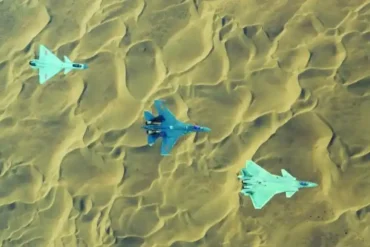
While the J-10C was developed primarily for the Chinese Air Force, it has also found international buyers. Notably, the Pakistan Air Force (PAF) has inducted the J-10C into its fleet, enhancing its operational capabilities against regional adversaries. The aircraft’s advanced capabilities, including its helmet-mounted display and long-range missile systems, provide the PAF with a distinct advantage in air superiority.
Additionally, the Egyptian Air Force has also received its first batch of J-10CE fighters, marking a significant expansion of the aircraft’s export profile. The J-10C’s combat effectiveness, advanced avionics, and multirole capabilities make it an appealing option for air forces looking to modernize their fleets.
Strategic Importance of the J-10C
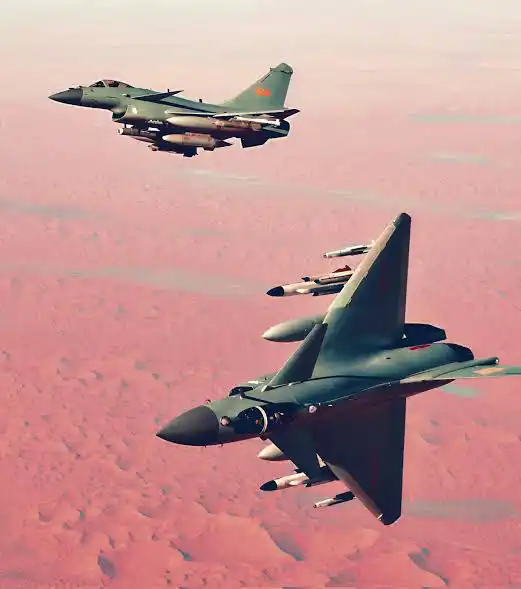
The J-10C holds significant strategic value for China and its international partners. As one of the key components of China’s growing air force capabilities, the J-10C complements the stealthy J-20 in a two-tiered air combat strategy, where the J-10C serves as the highly maneuverable multirole fighter capable of engaging a wide variety of threats and missions, while the J-20 takes on the role of a stealthy air superiority fighter.
In terms of regional power projection, the J-10C allows China to expand its influence and assert control over critical areas, particularly in the Asia-Pacific and Indian Ocean regions. This aircraft’s advanced radar, missile systems, and multirole versatility enable it to serve as a deterrent against adversaries and as a key asset in regional conflicts.
Impact on Air Superiority in the Indo-Pacific Region
The induction of the J-10C into the fleets of countries such as Pakistan and Egypt has raised the stakes in regional air combat dynamics, particularly in the Indo-Pacific. For example, India and China have long been engaged in a rivalry in this region, and the presence of the J-10C in Pakistan’s fleet shifts the balance of power. The J-10C’s superior radar systems, advanced weapons, and high agility provide Pakistan with a capable counter to India’s fourth-generation fighters, like the Sukhoi Su-30MKI and Dassault Rafale.
In a similar vein, the Egyptian Air Force‘s acquisition of the J-10CE positions Egypt as a stronger regional player in North Africa and the Middle East. The fighter’s multirole capabilities will prove crucial in conducting air patrols, air superiority missions, and counterterrorism operations within these volatile regions.
Technological Evolution and China’s Aerospace Ambitions
The J-10C is not merely a military asset; it is a testament to China’s evolving aerospace capabilities. Over the years, China has transitioned from merely imitating foreign aircraft designs to developing indigenous designs with cutting-edge technologies. The J-10 series represents this leap, with the J-10C being the most advanced and refined model to date.
From Reverse Engineering to Indigenous Innovation
The early development of the J-10 involved reverse engineering foreign designs, most notably the Israeli Lavi fighter, but the J-10C showcases China’s ability to innovate independently. The aircraft’s sophisticated avionics, including the AESA radar and IRST systems, are domestically developed, reflecting China’s growing expertise in military electronics and aircraft design. The engine development, too, with the WS-10B engine, is a critical achievement in China’s quest for self-sufficiency in aerospace technology.
The J-10C and China’s Aerospace Strategy
The J-10C is not just a fighter aircraft; it plays an essential role in China’s broader aerospace strategy. By developing advanced combat aircraft such as the J-10C and J-20, China aims to build a self-reliant air force that is capable of operating in complex and contested environments. This technological evolution is crucial for China’s aspirations to project power globally and to challenge the dominance of traditional military powers, such as the United States and Russia, in the air combat arena.
A Growing Export Market
As a testament to the J-10C’s design and technological prowess, China has successfully exported the aircraft to Pakistan and Egypt, and other nations are reportedly interested in purchasing the fighter. This international appeal showcases the global competitiveness of the J-10C, as well as China’s ability to export advanced military technology to allies and strategic partners. The growing presence of the J-10C on international markets signals China’s increasing influence in the global defense industry.
Conclusion: The Future of the J-10C and Its Role in Modern Warfare
The J-10C fighter is a true showcase of China’s aerospace capabilities, combining cutting-edge radar, avionics, weaponry, and maneuverability to create an aircraft that is capable of performing multiple roles in modern combat. Its advanced features, such as the AESA radar, helmet-mounted display system, and WS-10B engine, ensure that the J-10C is a formidable contender in air-to-air combat, precision strikes, and electronic warfare.
With its multirole capabilities, advanced sensors, and increased survivability, the J-10C is poised to shape the future of aerial warfare in both China and international markets. It is not merely a combat aircraft; it represents a technological leap that underscores China’s growing power and influence on the global stage.
As China continues to refine and enhance the J-10 series, it is clear that the J-10C will remain at the forefront of its military aviation strategy, offering a potent tool for both regional defense and power projection. With global demand for advanced fighter jets rising, the J-10C’s role as an export fighter and its place within the Chinese Air Force will continue to evolve, ensuring that it remains a critical component of modern aerial combat.
The J-10C is not just a fighter; it is a symbol of China’s technological advancements and its determination to become a dominant force in the skies. As the future of warfare increasingly shifts towards high-tech, multirole aircraft, the J-10C stands ready to take on the challenges of tomorrow’s combat environments.