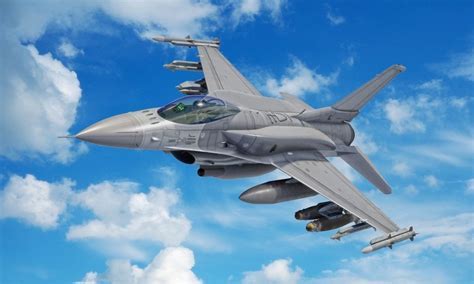
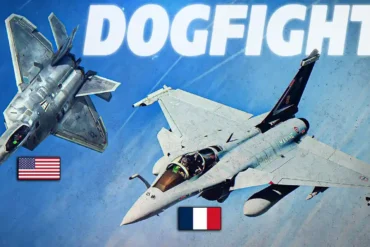
The competition between the F-16V “Viper” and the J-10C “Vigorous Dragon” represents a significant comparison in modern fighter jet capabilities. The Lockheed Martin F-16V is an advanced upgrade of the F-16 Fighting Falcon, incorporating cutting-edge avionics and radar improvements. In contrast, the Chengdu J-10C, developed by China, benefits from a modern design, advanced electronics, and powerful indigenous weaponry. This article provides a detailed comparison of these two fourth-generation fighters across multiple dimensions, including radar technology, weapon systems, maneuverability, reliability, and operational effectiveness.
Radar and Avionics Systems
J-10C: Advanced GaN-Based AESA Radar
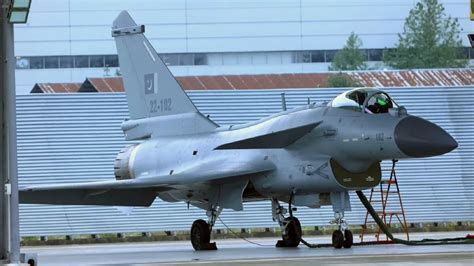
The J-10C is equipped with a Gallium Nitride (GaN) Active Electronically Scanned Array (AESA) radar, which provides superior detection range, multi-target tracking, and enhanced electronic counter-countermeasures (ECCM) capabilities. According to Pakistani pilots who have operated both aircraft, the J-10C’s radar performance is comparable to the F-35’s AN/APG-81, giving it an edge in detecting stealth and maneuvering targets.
F-16V: APG-83 SABR AESA Radar
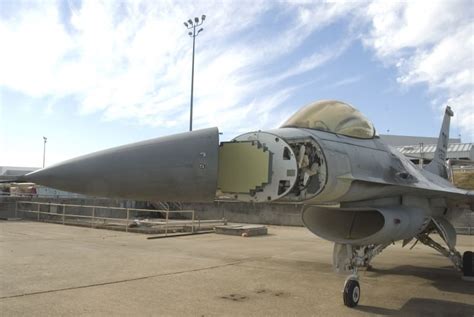
The F-16V features the Northrop Grumman APG-83 Scalable Agile Beam Radar (SABR), an upgrade over previous F-16 models. While it introduces AESA capabilities, its power output and cooling limitations restrict its maximum detection range to approximately 160 km, which is lower than the J-10C’s GaN-based radar. Moreover, Taiwan’s F-16V fleet suffers additional constraints due to lack of upgraded engines, further limiting radar efficiency.
Weapon Systems and Missile Superiority
J-10C: PL-15 and PL-10 Dominate Beyond and Close Combat
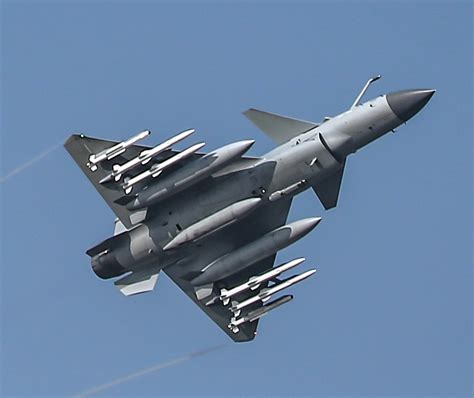
One of the J-10C’s most formidable advantages is its PL-15 long-range air-to-air missile (AAM), which boasts a theoretical range of 250-300 km, far exceeding the F-16V’s AIM-120C (105 km) and AIM-120D (180 km). Additionally, the J-10C employs the PL-10 high off-boresight infrared missile, which, combined with an infrared search and track (IRST) system, enables radar-silent target acquisition in close-range engagements.
F-16V: AIM-120D and AIM-9X Inferior in Range
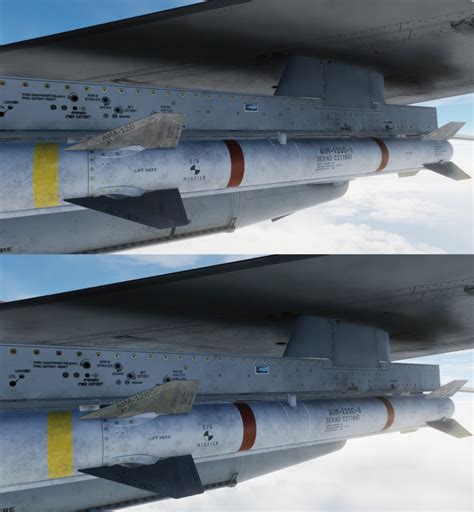
The F-16V’s primary missile, the AIM-120D, has a maximum range of 180 km, still inferior to the J-10C’s PL-15. Taiwan’s fleet does not include the AIM-120D, further restricting its air-to-air engagement range. In close combat, the AIM-9X Sidewinder offers high off-boresight targeting, but lacks the IRST capabilities of the PL-10-equipped J-10C.
Maneuverability and Powerplant Performance
J-10C: Canard Configuration and WS-10B Engine
The J-10C’s canard-delta wing design improves agility, reducing drag and allowing better high-angle-of-attack maneuvers. It is powered by the WS-10B turbofan engine, producing 13.2 tons of thrust, giving it a superior thrust-to-weight ratio (TWR) compared to the F-16V. Pakistani pilots note that the J-10C offers similar agility to the F-16 but with slightly reduced instantaneous turn rates.
F-16V: Mature Aerodynamics but Aging Engine
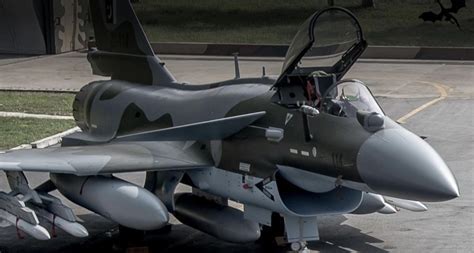
While the F-16V’s aerodynamics are time-tested and provide excellent dogfighting abilities, Taiwan’s F-16V models rely on the outdated F100-PW-220 engine, delivering only 10.7 tons of thrust. This results in an inferior TWR compared to the J-10C, especially given the increased weight due to upgraded avionics.
Reliability and Combat Record
J-10C: High Reliability with Minimal Incidents
Since its introduction in 2015, the J-10C has been regarded as a reliable platform, with no major accidents reported after transitioning to the indigenously developed WS-10B engine. The Pakistan Air Force (PAF), a major operator, has expressed satisfaction with its performance and maintenance efficiency.
F-16V: Higher Accident Rates
The global F-16 fleet has a cumulative accident rate of approximately 15%, and Taiwan’s F-16V units have experienced multiple incidents, such as the 2021 crash due to mechanical failure. These concerns raise questions regarding long-term operational safety and sustainment challenges.
Operational Integration and Fleet Strength
J-10C: Integrated into a Networked Battle System
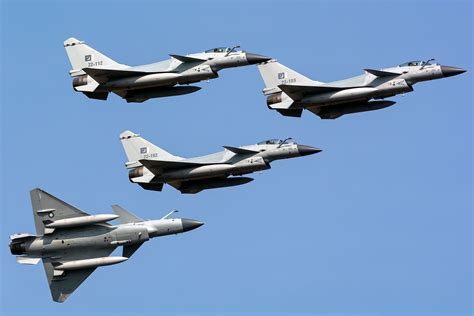
The People’s Liberation Army Air Force (PLAAF) operates the J-10C within a highly integrated aerial warfare ecosystem, including support from KJ-500 airborne early warning aircraft, J-20 stealth fighters, and electronic warfare platforms. The PLAAF possesses over 500 J-10C units, ensuring numerical and qualitative superiority in potential conflicts.
F-16V: Outnumbered and Lacking Support Infrastructure
Taiwan operates 207 F-16V aircraft, significantly fewer than China’s J-10C fleet. Additionally, Taiwan lacks dedicated airborne early warning (AEW) and electronic warfare (EW) assets, reducing the F-16V’s ability to operate at its full potential in a contested environment.
Conclusion: Which Fighter Holds the Advantage?
The J-10C outperforms the F-16V in several key aspects, including radar capability, missile superiority, maneuverability, and operational integration. While the F-16V is a proven, versatile fighter, its aging airframe, limited missile range, and lack of integration into a modern combat system make it less competitive against the J-10C in a direct confrontation. In the context of a potential Taiwan Strait conflict, the PLAAF’s numerical and technological advantages would further tilt the balance in favor of the J-10C.
Frequently Asked Questions (FAQ)
1. Which fighter has a better radar system?
The J-10C’s GaN-based AESA radar provides a longer detection range, better electronic warfare resistance, and superior multi-target tracking compared to the F-16V’s APG-83 GaAs-based radar.
2. How do their missile capabilities compare?
The J-10C’s PL-15 missile has a maximum range of 250-300 km, which is significantly greater than the F-16V’s AIM-120D (180 km). Additionally, the J-10C features an IRST-equipped PL-10 close-range missile, whereas the F-16V relies on AIM-9X without IRST.
3. Which fighter is more reliable in combat?
The J-10C has demonstrated high reliability, with no major accidents since adopting the WS-10B engine. In contrast, the F-16V has a higher accident rate, with Taiwan’s fleet experiencing several incidents in recent years.