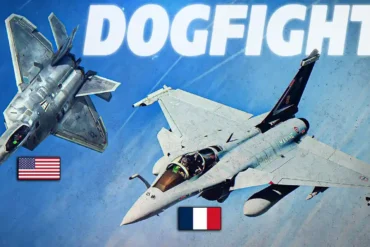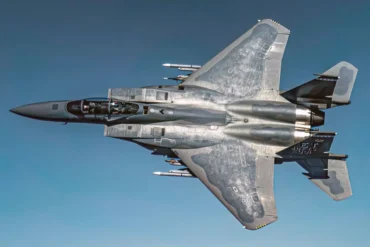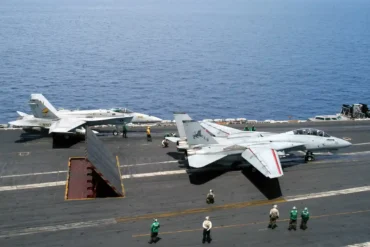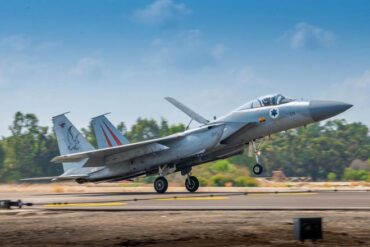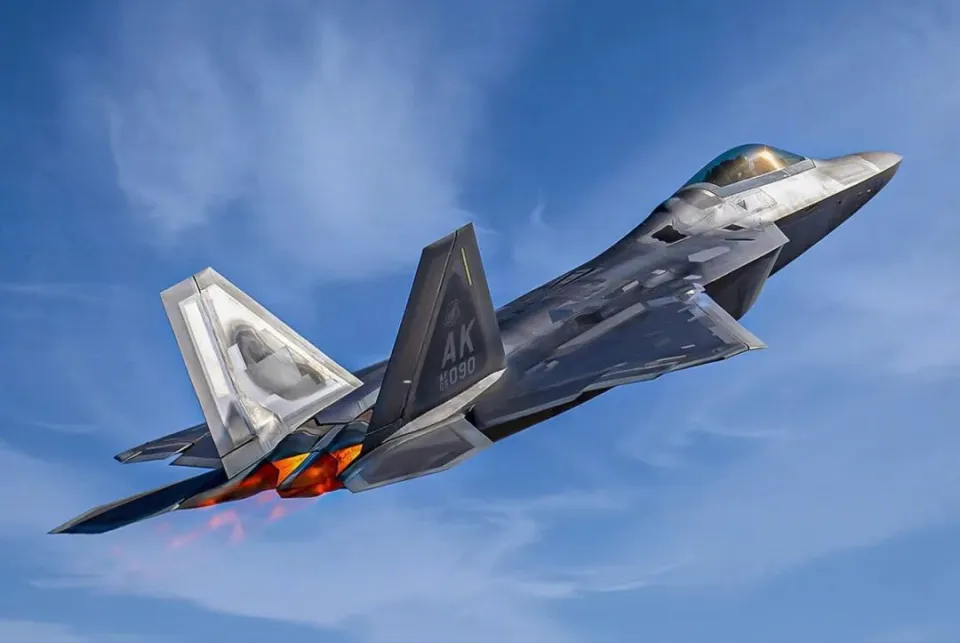
The F/A-18 Super Hornet and F-22 Raptor are two of the most formidable fighter jets in the U.S. military arsenal. While the F-22 Raptor is an advanced fifth-generation air superiority fighter, the F/A-18E/F Super Hornet is a versatile fourth-generation multirole carrier-based aircraft. This article provides an in-depth comparison of these two aircraft, analyzing their design philosophy, stealth capabilities, maneuverability, avionics, weapon systems, and operational costs.
Design and Mission Roles
F-22 Raptor: Air Superiority Specialist
The Lockheed Martin F-22 Raptor was designed primarily as an air dominance fighter, excelling in stealth, supercruise, sensor fusion, and unmatched maneuverability. It was developed under the Advanced Tactical Fighter (ATF) program to ensure the U.S. maintained air superiority in highly contested environments.
Key features include:
- Stealth-first design, with internal weapon bays to reduce radar cross-section.
- Supercruise capability, allowing sustained speeds of Mach 1.5 without afterburners.
- Advanced avionics, including the AN/APG-77 AESA radar for long-range target acquisition.
- Thrust vectoring nozzles, enabling superior maneuverability.
F/A-18E/F Super Hornet: Multi-Role Naval Fighter
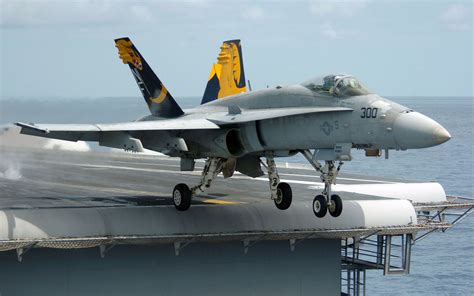
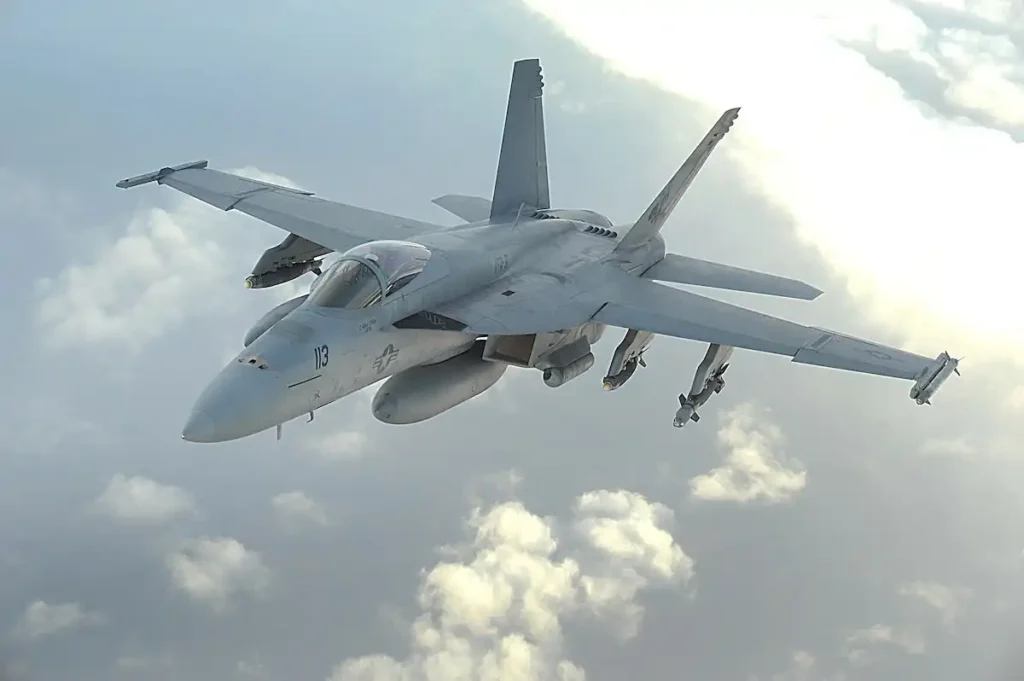
The Boeing F/A-18E/F Super Hornet serves as the workhorse of the U.S. Navy, capable of executing air-to-air combat, ground strikes, electronic warfare, and reconnaissance missions. It was designed to operate from aircraft carriers, making it an indispensable part of naval aviation.
Key features include:
- Carrier suitability, with reinforced landing gear and folding wings for deck storage.
- Multi-role adaptability, capable of carrying air-to-air, air-to-ground, and anti-ship weapons.
- AN/APG-79 AESA radar, providing superior target detection and tracking.
- Enhanced survivability, with electronic warfare countermeasures such as the ALQ-214 system.
Stealth and Survivability
F-22: The Ultimate Stealth Fighter
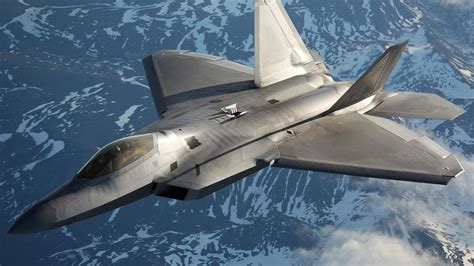
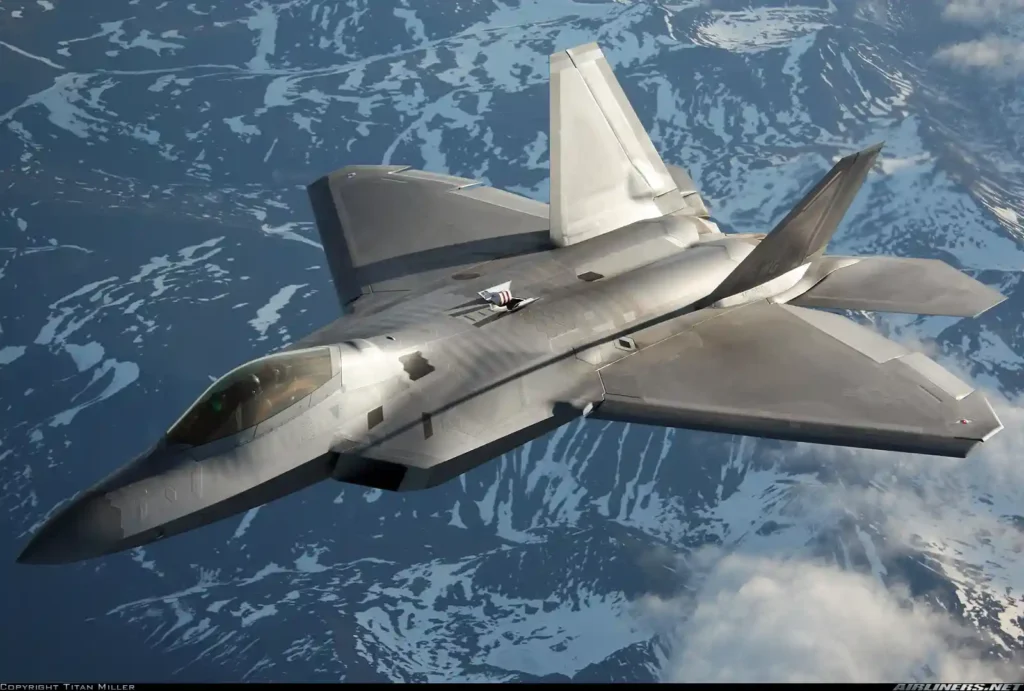
The F-22’s radar cross-section (RCS) is estimated at 0.0001 to 0.08 square meters, making it one of the hardest aircraft to detect. It achieves this through:
- Radar-absorbent materials (RAM) and coatings that reduce radar reflection.
- Internal weapons bays, minimizing its radar signature.
- Optimized airframe shaping, with sharp angles and seamless paneling to deflect radar waves.
Additionally, the F-22 features passive detection with the TacIRST infrared tracking system, allowing it to locate targets without emitting radar signals.
F/A-18E/F: Electronic Warfare for Survival
Unlike the F-22, the Super Hornet lacks stealth-focused design but compensates with:
- Electronic warfare capabilities, including active jamming and radar deception.
- Reduced radar cross-section (RCS) compared to legacy Hornets, but still significantly higher than the F-22.
- Potential upgrades, including stealth-enhancing external pods under the “Advanced Super Hornet” program.
Maneuverability and Performance
F-22 Raptor: Unmatched Air Combat Agility
The F-22 is superior in dogfighting scenarios, thanks to:
- Thrust vectoring control (TVC), allowing extreme angles of attack and post-stall maneuvering.
- Twin Pratt & Whitney F119-PW-100 engines, each producing 156 kN of thrust.
- Supercruise at Mach 1.5, enabling it to engage or disengage at will without using afterburners.
F/A-18E/F Super Hornet: Carrier-Optimized Performance
While less maneuverable than the F-22, the Super Hornet offers excellent low-speed handling and excels in carrier operations. Key aspects include:
- F414-GE-400 engines, each producing 98 kN of thrust.
- Top speed of Mach 1.8, but no supercruise capability.
- Aerodynamic stability, optimized for low-speed carrier landings and takeoffs.
Weapons and Avionics
F-22: High-Speed, Low-Observability Arsenal
The F-22 is designed for first-shot, first-kill engagements, using:
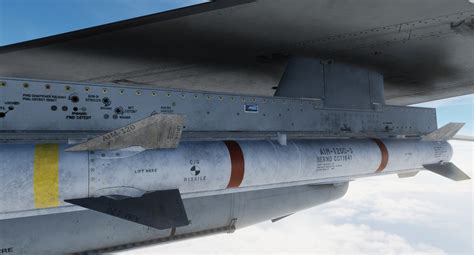
- AIM-120D AMRAAM (160 km range) for beyond-visual-range combat.
- AIM-9X Sidewinder for close-range engagements.
- Limited ground-attack capability, using JDAMs or SDBs.
- AN/APG-77 AESA radar, with long-range detection and jamming resistance.
F/A-18E/F: Versatile Multi-Role Firepower
The Super Hornet can carry up to 8 tons of weaponry, including:
- AIM-120 AMRAAM, AGM-154, and AGM-158 JASSM for long-range strike missions.
- Anti-ship missiles (AGM-84 Harpoon) for maritime operations.
- AN/APG-79 AESA radar, offering robust tracking capabilities.
Operational Costs and Deployment
F-22: High Cost, Limited Numbers
- Unit cost: $150 million per aircraft.
- Maintenance-intensive, requiring specialized stealth coatings.
- Only 187 produced, limiting its availability.
F/A-18E/F: Cost-Effective and Scalable
- Unit cost: $70 million per aircraft.
- Lower operational costs, designed for mass deployment.
- Extensive naval deployment, expected to serve beyond 2040.
Conclusion: Complementary Roles in U.S. Air Power
The F-22 dominates air superiority engagements with stealth, supercruise, and maneuverability, making it ideal for first-strike missions against enemy air forces. Meanwhile, the F/A-18E/F excels in multirole naval operations, offering flexibility for carrier-based missions, ground strikes, and electronic warfare. Together, these aircraft form a complementary force, ensuring U.S. dominance in aerial warfare.
Frequently Asked Questions
1. Why was the F-22 Raptor discontinued?
The F-22 program was halted after producing 187 units due to budget constraints, evolving warfare needs, and the focus on multi-role aircraft like the F-35.
2. Can the F-18 Super Hornet defeat an F-22 in combat?
In a direct dogfight, the F-22 holds a significant advantage due to stealth, supercruise, and superior maneuverability. However, tactical teamwork and electronic warfare could give an F/A-18 formation a fighting chance.
3. What is replacing the F/A-18 Super Hornet?
The F-35C Lightning II is the primary replacement for the Super Hornet, but upgraded F/A-18 versions will remain in service alongside the F-35 until at least the 2040s.