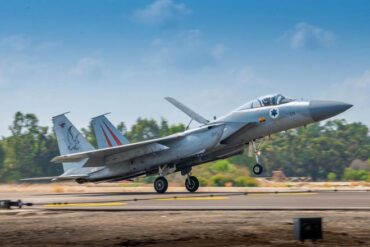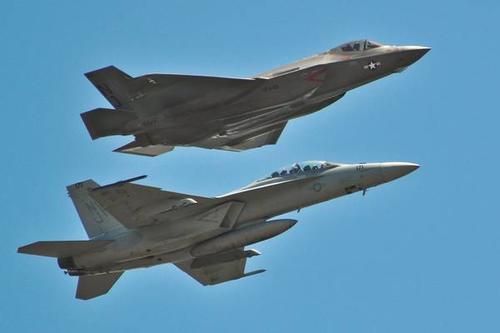
The F/A-18 Super Hornet and the F-35 Lightning II represent two distinct generations of fighter aircraft, each with unique capabilities, design philosophies, and operational roles. While the F/A-18E/F remains a formidable fourth-generation multi-role fighter, the F-35 exemplifies the advancements of fifth-generation stealth technology. This comparison examines their stealth capabilities, avionics, maneuverability, weapon systems, and overall battlefield effectiveness.
Stealth and Radar Cross-Section (RCS)
F-35 Lightning II: Stealth Dominance
The F-35 is engineered as a stealth fighter with a radar cross-section (RCS) of approximately 0.005 square meters—comparable to a golf ball. This is achieved through:
- Continuous curved surfaces that reduce radar reflections.
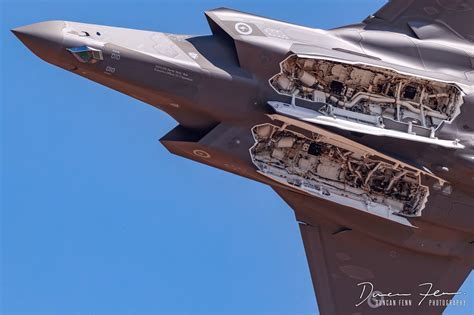
- Internal weapons bays, preventing radar detection from external stores.
- Radar-absorbent materials (RAM) coating the fuselage.
Its superior stealth allows it to penetrate heavily defended airspace and evade enemy detection, making it highly effective in modern warfare.
F/A-18 Super Hornet: Limited Stealth Capabilities
The F/A-18, being a fourth-generation fighter, was not designed with stealth in mind. It has an RCS of approximately 3 square meters, significantly larger than the F-35. Even with upgrades like conformal fuel tanks and limited RCS reductions in the Block III version, its radar signature remains orders of magnitude greater than the F-35’s, making it more susceptible to detection by enemy air defenses.
Avionics and Battlefield Awareness
F-35: Cutting-Edge Sensor Fusion
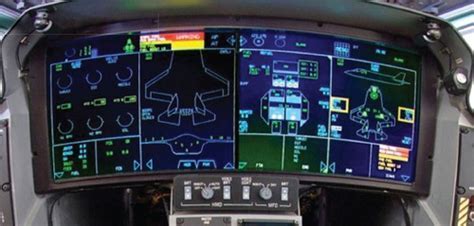
The F-35 integrates some of the most advanced avionics ever deployed in a fighter jet. Key systems include:
- AN/APG-81 AESA Radar, offering superior target tracking.
- Electro-Optical Distributed Aperture System (EODAS), providing 360-degree real-time battlefield awareness.
- Electro-Optical Targeting System (EOTS), enhancing precision strike capabilities.
- Electronic warfare suite, allowing it to jam enemy radars independently.
F/A-18: Advanced but Dependent on Support
The F/A-18E/F features the AN/APG-79 AESA radar, which provides excellent target tracking but lacks the full sensor fusion capabilities of the F-35. It is dependent on support assets such as AWACS (Airborne Warning and Control System) and dedicated electronic warfare aircraft like the EA-18G Growler to operate in heavily contested environments.
Engine and Maneuverability
F-35: Power with Limitations
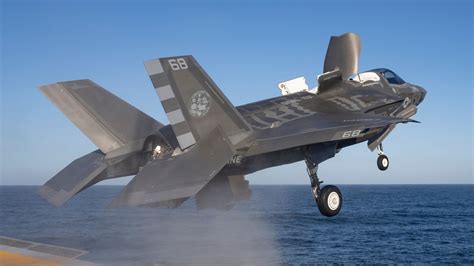
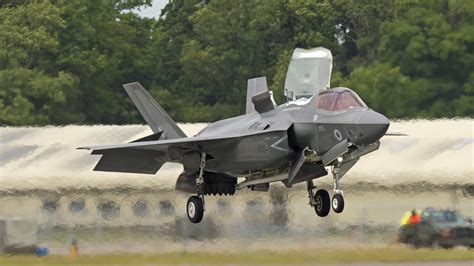
The F-35 is powered by a single Pratt & Whitney F135 engine, delivering 191 kN (25,000 kgf) of thrust. This enables the F-35B variant to perform short takeoff and vertical landing (STOVL) operations. However, its single-engine design results in a lower top speed of Mach 1.6 and somewhat limited maneuverability compared to twin-engine fighters.
F/A-18: Twin-Engine Advantage
The F/A-18E/F is equipped with two General Electric F414 engines, producing a combined 178 kN (18,000 kgf each) of thrust. While its thrust-to-weight ratio is lower than the F-35, its twin-engine configuration provides greater survivability in combat. The Super Hornet is capable of reaching Mach 1.8, making it slightly faster than the F-35 and more maneuverable in traditional dogfights.
Weapon Systems and Payload Capacity
F-35: Precision and Stealth-Oriented Loadout
The F-35 prioritizes stealth over raw firepower. It features:
- Internal weapon bays carrying AIM-120 AMRAAM or JDAM precision-guided bombs.
- Maximum payload of 6.8 tons (external stores reduce stealth effectiveness).
- Advanced targeting and precision-guided munitions integration.
F/A-18: Heavier Load, More Versatile Weapons
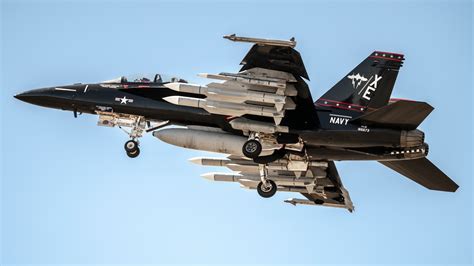
The F/A-18 is designed for high payload capacity, capable of carrying up to 8.1 tons of ordnance, including:
- Air-to-air missiles (AIM-120, AIM-9X).
- Air-to-ground munitions (JDAM, AGM-88 HARM, Harpoon anti-ship missiles).
- Greater variety of external weapon configurations, at the cost of increased radar visibility.
Role in Modern Warfare
F-35: The Future of Networked Warfare
The F-35 is not just a fighter; it is a force multiplier. Its ability to:
- Share data across the battlefield enhances coordination.
- Operate deep within enemy territory undetected makes it indispensable for first-strike missions.
- Continuous software updates (Block 4 upgrade) will further expand its electronic warfare and AI-assisted decision-making capabilities.
F/A-18: The Workhorse of Carrier-Based Operations
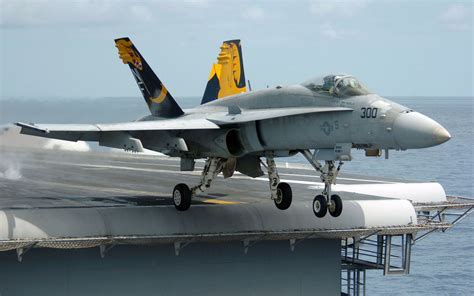
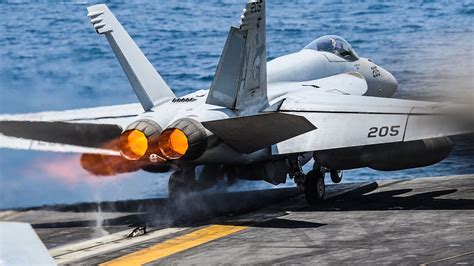
While the F/A-18 is gradually being replaced by the F-35, it remains a key part of carrier air wings. With Block III upgrades, it continues to serve as a highly reliable multi-role fighter, ideal for medium-threat environments, carrier strike groups, and maritime strike missions.
Conclusion: Choosing Between Fourth and Fifth-Generation Fighters
The F-35 Lightning II and F/A-18 Super Hornet represent two distinct eras of military aviation. The F-35’s stealth, advanced sensors, and networked warfare capabilities make it indispensable for penetrating contested airspace and executing first-strike missions. The F/A-18, despite its larger radar cross-section, remains a cost-effective, battle-tested platform that provides high mission availability and firepower.
Ultimately, the choice between these aircraft depends on operational requirements: whether stealth and electronic dominance are prioritized, or if high payload capacity and affordability are more important.
FAQ
1. Why is the F-35 considered superior to the F/A-18 in modern air combat?
The F-35’s stealth, advanced avionics, and sensor fusion capabilities allow it to detect and engage threats before being detected itself, providing a significant tactical advantage over the F/A-18, which relies on traditional radar systems and support aircraft.
2. Can the F/A-18 Super Hornet still be effective against fifth-generation threats?
While the F/A-18 is an advanced fourth-generation fighter, it lacks the stealth capabilities necessary to survive in heavily contested airspace against advanced air defense systems and enemy stealth aircraft. However, with support from electronic warfare platforms and AWACS, it remains an effective multi-role fighter.
3. What are the major drawbacks of the F-35 compared to the F/A-18?
The F-35 is more expensive to procure and maintain, has a lower maximum speed (Mach 1.6 vs. Mach 1.8), and carries fewer weapons internally due to stealth constraints. The F/A-18’s twin-engine design also provides better survivability in combat situations where engine redundancy is crucial.