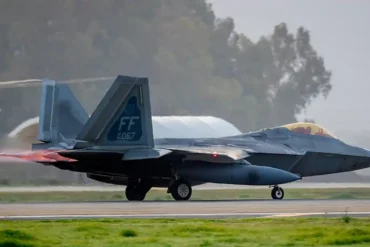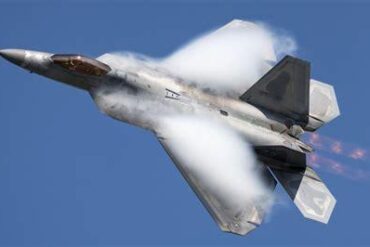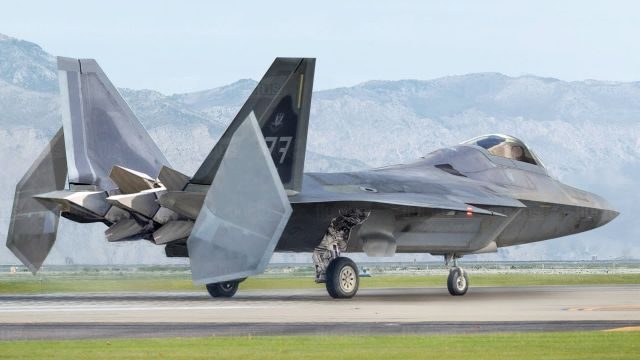
The F-22 Raptor, the world’s first fifth-generation stealth fighter, has remained at the forefront of air superiority since its introduction in 2005. However, rapid technological advancements and the emergence of rival fifth-generation fighters—such as China’s J-20 and Russia’s Su-57—necessitate comprehensive modernization efforts. The U.S. is actively implementing upgrades that elevate the F-22 to a “5.5-generation” standard, ensuring its continued dominance in future air combat scenarios. This article explores the core upgrades and strategic objectives of the F-22 modernization program.
Enhancing Sensors and Electronic Warfare Systems
Infrared Search and Track (IRST) & Distributed Infrared Sensors
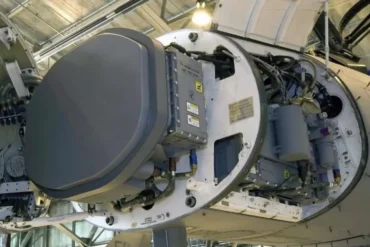
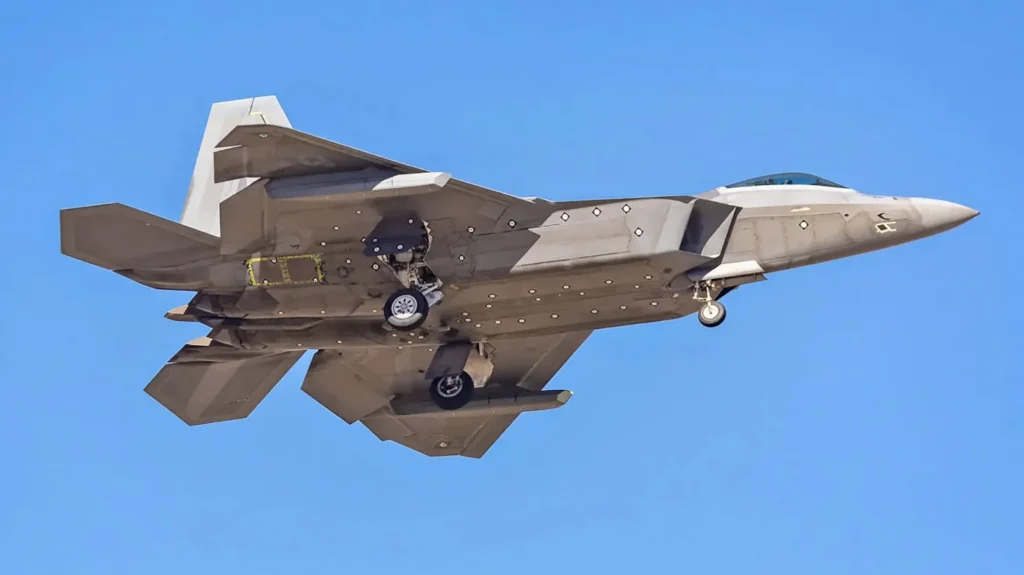
The F-22’s situational awareness is receiving a major boost with the integration of a Distributed Infrared Sensor Array (TacIRST) and an underwing-mounted IRST pod. These systems enable passive detection of stealth targets without the need to activate onboard radar, significantly improving missile warning and long-range identification capabilities.
Open Mission Systems (OMS) and Software Upgrades
To enhance interoperability with platforms like the F-35 Lightning II and the B-21 Raider, the F-22 is adopting an open-architecture mission system derived from Next-Generation Air Dominance (NGAD) technology. The integration of Release 4 software baseline allows seamless data sharing through networks such as Link-16, creating a multi-domain information fusion capability.
Improving Range and Stealth Performance
Low-Drag Stealth Fuel Tanks (LDTP)
The F-22’s combat radius is increasing by 20% with the introduction of low-drag conformal fuel tanks. These advanced stealth-compatible external tanks reduce aerodynamic drag while preserving radar-evading characteristics, extending the aircraft’s operational range beyond 1,500 km.
Next-Generation Stealth Coatings and Composite Skins
Borrowing advancements from the F-35 program, the F-22 is receiving next-generation radar-absorbent coatings and a more durable composite skin. These modifications enhance stealth survivability, reduce maintenance costs, and improve overall operational readiness.
Upgrading Weapons and Firepower
Integration of AIM-260 JATM and Directed Energy Weapons
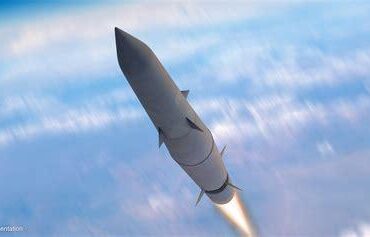
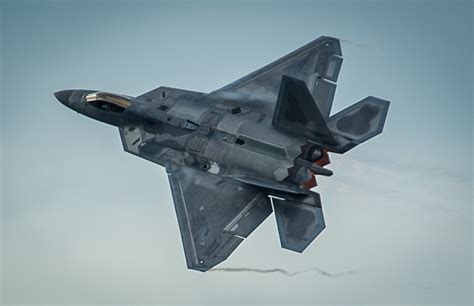
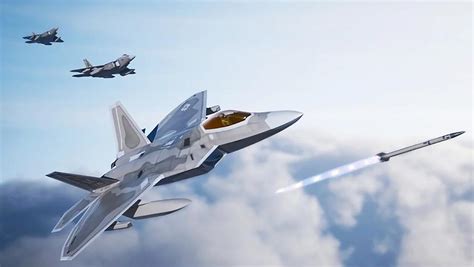
To maintain air-to-air superiority, the F-22 is integrating the AIM-260 Joint Advanced Tactical Missile (JATM)—a beyond-visual-range missile exceeding 180 km in range, replacing the aging AIM-120 AMRAAM. Additionally, provisions for directed energy weapons, including laser-based missile defense systems, are being explored.
Machine Learning-Based Electronic Warfare (EW) Suite
The incorporation of an AI-driven electronic countermeasures (ECM) system) allows the F-22 to analyze enemy radar signatures in real-time and deploy adaptive jamming strategies, significantly enhancing survivability in contested environments.
Structural Improvements and Future Technology Validation
Aerodynamic Enhancements and Airframe Modifications
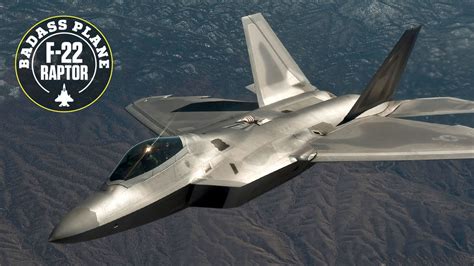
The F-22 is undergoing aerodynamic refinements, including larger main wings and the removal of horizontal stabilizers, which increase fuel capacity while slightly compromising agility. These adjustments address the aircraft’s traditional “short-legged” operational range.
Testing Sixth-Generation Fighter Technologies
As part of the Next-Generation Air Dominance (NGAD) initiative, the F-22 serves as a testbed for future combat systems. Experimental upgrades include AI-assisted decision-making, distributed sensor fusion, and hypersonic weapons integration, shaping the evolution of the sixth-generation fighter.
Strategic Intent and Operational Challenges
Countering Near-Peer Adversaries
The modernization of the F-22 is crucial in countering the growing presence of Chinese J-20 and Russian Su-57 fighters. To reinforce deterrence, upgraded F-22s are being strategically stationed in Guam and Alaska, ensuring air dominance over the Indo-Pacific region and the First Island Chain.
Bridging the Sixth-Generation Fighter Gap
With the NGAD program experiencing delays (expected service entry post-2030), the F-22 must act as a transitional air superiority fighter until a viable replacement emerges. The upgrades aim to extend its relevance into the 2040s, ensuring continued U.S. air dominance.
Cost and Supply Chain Constraints
Each modernized F-22 incurs an upgrade cost of approximately $37 million per unit, and restarting the production of obsolete components poses significant budgetary and logistical challenges. The allocation of resources between the F-22, B-21 Raider, and NGAD remains a contentious issue within U.S. defense planning.
Conclusion
The F-22 modernization program is not merely a performance enhancement initiative but a strategic imperative aligning with the U.S. Air Force’s distributed lethality doctrine. By incorporating stealth advancements, sensor fusion, and multi-domain warfare capabilities, the F-22 is transforming from a pure air superiority fighter into a networked combat asset. However, the aircraft’s aging airframe and high operational costs raise concerns about its long-term sustainability. Over the next decade, the effectiveness of these upgrades will significantly influence the Indo-Pacific aerial power balance.
FAQ
1. How does the F-22’s IRST upgrade improve its combat effectiveness?
The new Distributed Infrared Sensor Array (TacIRST) and IRST pod enable the F-22 to detect stealth aircraft passively without using radar, enhancing long-range target tracking and missile threat detection in contested environments.
2. Why is the AIM-260 JATM being integrated into the F-22?
The AIM-260 JATM offers greater range and advanced countermeasure resistance compared to the AIM-120 AMRAAM. This ensures the F-22 can engage enemy aircraft from beyond visual range (BVR), maintaining its air superiority edge.
3. What role will the F-22 play in future U.S. air combat strategy?
The modernized F-22 will serve as a critical air dominance asset until the NGAD fighter becomes operational. It will act as a multi-domain battle node, integrating with F-35s, B-21s, and other platforms to enable joint combat operations.