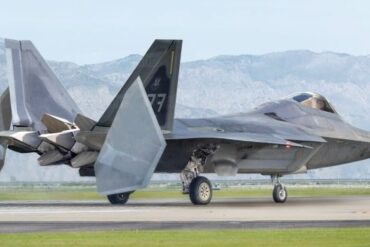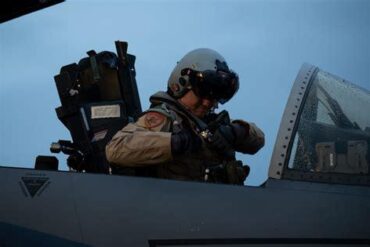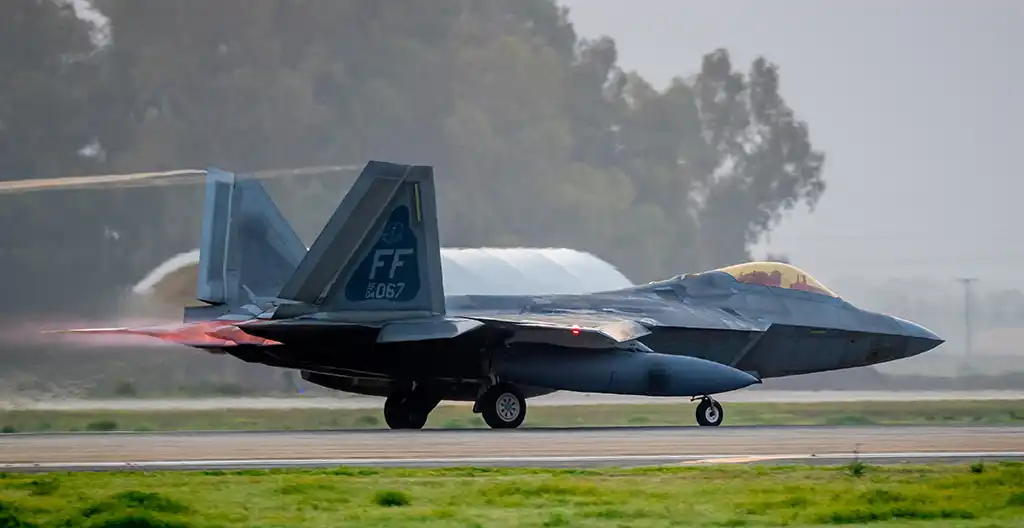
The deployment of U.S. F-22 Raptor stealth fighters to Qatar has been a significant element of U.S. military strategy in the Middle East. These deployments are a direct response to evolving regional threats, aiming to project power, enhance deterrence, and maintain strategic stability in a volatile geopolitical environment. The F-22 Raptor, one of the most advanced stealth fighters in the world, is renowned for its air superiority, advanced stealth capabilities, and supersonic speeds. This article explores the key details and operational significance of these deployments, highlighting the broader geopolitical and military contexts in which they occur.
1. The 2019 Deployment: Escalation with Iran
In June 2019, the U.S. Air Force deployed F-22 Raptors to Al Udeid Air Base in Qatar for the first time. This deployment came amid rising tensions with Iran, following the downing of a U.S. RQ-4 Global Hawk drone by Iranian forces. The proximity of Qatar to Iran, only about 300 km across the Persian Gulf, made it a strategically important location for the rapid deployment of advanced military assets.
Objectives of the 2019 Deployment
- Deterrence: The primary objective of stationing the F-22 Raptors in Qatar was to deter Iranian aggression and safeguard U.S. interests in the region. Given the volatile situation, the U.S. military sought to project force and signal its readiness to respond swiftly to any further provocations by Iran.
- Targeting Air Defenses: Military analysts suggested that the F-22 Raptors were positioned to neutralize Iran’s advanced air defense systems, including the S-300 missile systems, which could pose a significant threat to non-stealth aircraft in a potential conflict. The stealth capabilities of the F-22 allowed it to penetrate highly defended areas without detection, making it a critical asset in such operations.
- Rapid Response Capability: The F-22 Raptors stationed in Qatar had the ability to reach Iranian airspace in under 10 minutes at supersonic speeds. This rapid response capability was a crucial factor in the deployment, ensuring that the U.S. could act swiftly in the event of an escalation.
Deployment Scale and Numbers
While the exact number of F-22 Raptors deployed remained classified, photographs from the period showed at least 5-6 aircraft stationed at Al Udeid Air Base. Some reports indicated that up to 12 F-22s were present at the base during the height of the deployment. This strategic positioning allowed for both a show of force and a significant increase in the U.S. military’s operational capabilities in the region.
2. The 2024 Deployment: Supporting Israel and Countering Iran
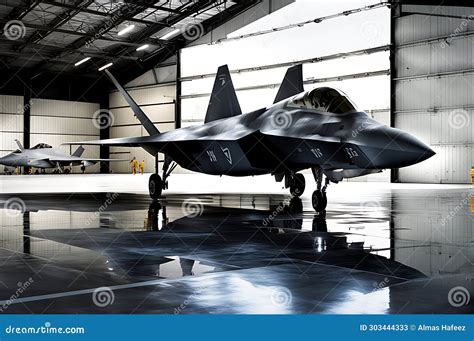
In August 2024, the U.S. redeployed 12 F-22 Raptors to Qatar in response to increased tensions in the Middle East, particularly following Israeli airstrikes in Tehran. These strikes were seen as a significant escalation in the long-standing U.S.-Israel alliance, with fears of Iranian retaliation driving the need for a robust military response. The redeployment of the F-22s to Al Udeid Air Base in Qatar was part of a broader U.S. strategy to reinforce its regional allies and provide additional air superiority in a highly contested environment.
Strategic Shifts and Operational Adjustments
- Relocation from UAE: The shift from Al Dhafra Air Base in the United Arab Emirates (UAE) to Qatar was driven by growing tensions in the Gulf region, particularly regarding the UAE’s ties with China and the resulting restrictions on U.S. military operations in the country. This move was a direct reflection of strained U.S.-UAE relations, which underscored the importance of Qatar as a reliable partner in the region.
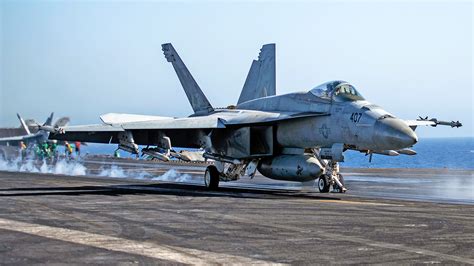
- Enhanced Multirole Presence: The deployment of F-22 Raptors to Al Udeid was not an isolated move. Alongside the F-22s, the base also hosted F/A-18E/F Super Hornets and E-2 Hawkeye early warning aircraft, significantly enhancing the joint operational capabilities of the U.S. military in the region. This integrated force structure provided a multi-layered defense and a more versatile response to any regional threats.
Capabilities and Limitations of the F-22 Raptors
While the F-22 Raptors provided unmatched air superiority, there were inherent limitations that affected their operational effectiveness in the vast Middle East theater. Key factors included:
- Stealth and Speed: The F-22’s stealth capabilities remained a critical asset in maintaining air superiority, enabling it to evade enemy radar and strike with precision. However, its relatively short operational range meant that it often required aerial refueling to operate effectively across the vast distances of the region.
- Electronic Warfare Gaps: Unlike the newer F-35 fighter jets, the F-22 Raptors lacked advanced electronic warfare systems. This limitation meant that the aircraft were less effective in contested environments where electronic jamming and other countermeasures could disrupt operations.
3. Qatar’s Role as a U.S. Military Partner
Qatar has emerged as a central hub for U.S. military operations in the Middle East, and its partnership with the United States plays a crucial role in shaping the region’s defense dynamics.
Al Udeid Air Base: The Heart of U.S. Operations
Al Udeid Air Base serves as the largest U.S. military facility in the Middle East, hosting over 11,000 personnel and a wide range of critical military assets. These assets include B-52 bombers, KC-135 tankers, and advanced surveillance aircraft. The base’s strategic location in Qatar positions it as a critical platform for rapid deployment and force projection in the region, particularly in response to threats from Iran and other state actors.
Geopolitical Significance of Qatar
Qatar’s alignment with Western interests makes it a preferred staging ground for high-risk missions. Unlike the UAE, which has developed closer ties with China, Qatar has remained steadfast in its support of U.S. military initiatives. This alignment, combined with its proximity to key regional flashpoints, ensures that Qatar will continue to play a pivotal role in U.S. military strategy in the Middle East.
4. Operational Challenges and Criticisms of the F-22
Despite its advanced capabilities, the F-22 Raptor has faced significant operational challenges that have affected its overall effectiveness in Middle Eastern operations.
Maintenance and Readiness Issues
The F-22 Raptors are known for their complex maintenance needs and fragile stealth coatings, which have contributed to historically low readiness rates. At times, the F-22 fleet has faced readiness rates of approximately 50%, meaning that only half of the deployed aircraft were fully operational at any given time. This maintenance burden has been a significant concern for U.S. military planners, especially in high-stakes operational environments.
Performance in Asymmetric Conflicts
While the F-22 Raptor excels in conventional warfare scenarios and is particularly effective against state actors like Iran, its performance in asymmetric conflicts has been less impressive. In regions like Syria, where terrain, outdated intelligence, and irregular forces present unique challenges, the F-22 has struggled to deliver efficient strikes, highlighting the need for more versatile platforms in such environments.
Conclusion: F-22 Raptors in Qatar and U.S. Military Strategy
The deployment of F-22 Raptors to Qatar underscores the United States’ commitment to maintaining a strong military presence in the Middle East, particularly in countering Iranian aggression and supporting regional allies like Israel. While the F-22’s capabilities in air superiority and stealth are unmatched, the aircraft’s operational limitations necessitate the integration of newer platforms like the F-35 and next-generation drones to ensure a more flexible and adaptable military response. Qatar’s strategic location and partnership with the United States ensure that it will continue to play a critical role in the U.S. Middle Eastern defense architecture.
FAQ
1. Why did the U.S. deploy F-22 Raptors to Qatar in 2019?
In June 2019, the U.S. deployed F-22 Raptors to Qatar as part of a broader strategy to deter Iranian aggression following the downing of a U.S. drone by Iran. The deployment aimed to protect U.S. interests in the region and enhance air superiority over potential adversaries.
2. What role does Al Udeid Air Base play in U.S. military operations?
Al Udeid Air Base is the largest U.S. military base in the Middle East, serving as a hub for a variety of military operations. The base hosts key assets such as B-52 bombers, KC-135 tankers, and F-22 Raptors, enabling rapid deployment and force projection across the region.
3. What are the limitations of the F-22 Raptors in Middle Eastern operations?
While the F-22 Raptors are highly effective in conventional warfare and air superiority, they face limitations in asymmetric conflicts and require aerial refueling for long-range operations. Additionally, their electronic warfare capabilities are not as advanced as those of newer platforms like the F-35.