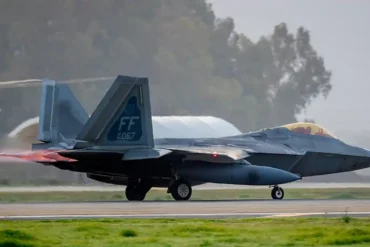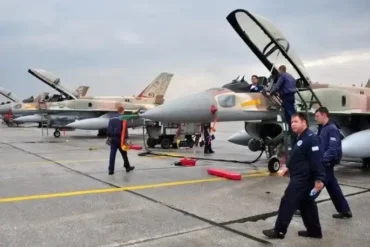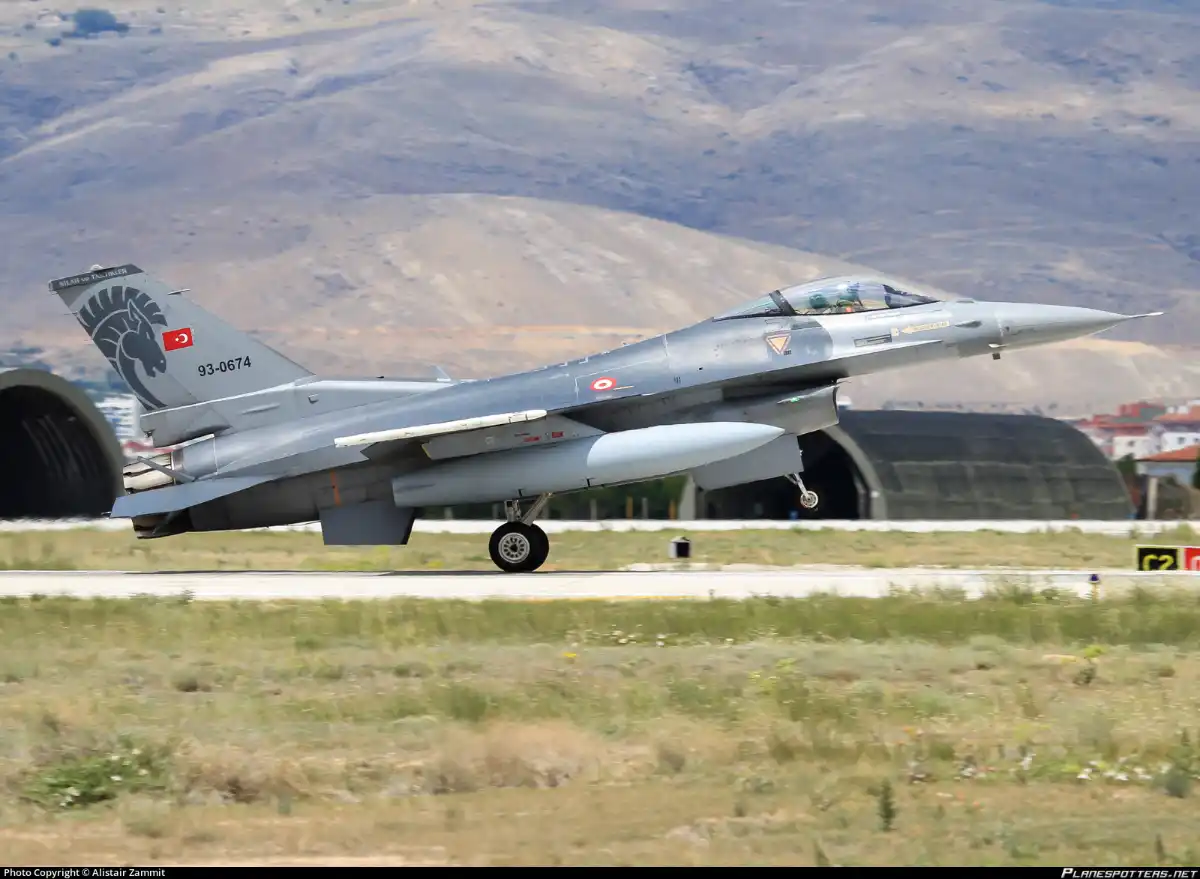
The Turkish F-16 fighter jets are an integral part of Turkey’s military strategy, serving as a cornerstone of its air force for decades. These multirole aircraft have not only solidified Turkey’s place in regional conflicts but have also become a symbol of its air defense capabilities. Over time, the F-16 fleet has evolved through various upgrades, acquisitions, and operational experiences, making it a key asset in Turkey’s national security framework. In this article, we will delve deeply into the history, current advancements, operational use, and political implications of the Turkish F-16 fleet, providing an extensive analysis of how these aircraft have shaped both domestic and international military dynamics.
Recent Acquisition and Modernization Agreements: Strengthening Air Power
In January 2025, Turkey reached a significant milestone in its military aviation capabilities by finalizing a $23 billion deal with the United States for the purchase of 40 new F-16 Block 70/72 fighters and the upgrade of 79 existing F-16s. This agreement is pivotal for multiple reasons, signaling not only a modernization of Turkey’s air force but also a deeper strategic alignment between the two nations. The newly acquired F-16s represent the most advanced variants available to U.S. allies, equipped with cutting-edge technology to enhance Turkey’s air defense and military readiness.
Key Features of the Upgraded F-16s
The upgraded F-16 Block 70/72 fighters are designed to provide superior capabilities, including:
- Improved Radar Systems: With the integration of the Active Electronically Scanned Array (AESA) radar, the F-16 will significantly enhance its detection range and target tracking capabilities. This system allows the aircraft to track multiple targets simultaneously, a crucial factor in modern warfare.
- Advanced Cockpit Systems: The upgrade includes a modernized cockpit, complete with glass displays, voice command systems, and integrated mission planning tools. This allows pilots to maintain situational awareness and respond rapidly to battlefield dynamics.
- Enhanced Weapons Compatibility: The Block 70/72 variants can integrate a broader array of munitions, including air-to-air, air-to-ground, and precision-guided munitions (PGMs), making it an incredibly versatile asset in various combat scenarios.
- Improved Engine Performance: The F-16’s engine has been upgraded to deliver better fuel efficiency and thrust, improving both its operational range and ability to engage targets effectively in high-threat environments.
These upgrades bolster Turkey’s NATO interoperability, ensuring that its military remains in sync with the alliance’s advanced technologies and strategies. The acquisition also reflects Turkey’s growing emphasis on modernizing its military forces to maintain an edge in regional conflicts and global power projections.
Operational Use in Regional Conflicts: A Combat-Ready Force
Turkey’s F-16s have been active participants in several regional conflicts, proving their capabilities in real-world combat scenarios. These aircraft have been involved in several high-profile incidents, underscoring Turkey’s military assertiveness and regional influence.
Nagorno-Karabakh Conflict (2020)
The Nagorno-Karabakh conflict between Armenia and Azerbaijan saw Turkish F-16s play a controversial yet crucial role. During the 2020 clashes, there were accusations from Armenia that Turkish F-16s had shot down an Armenian Su-25 fighter jet. While both Turkey and Azerbaijan denied these claims, the incident highlighted the central role of Turkish air power in supporting Azerbaijan’s military operations. This event demonstrated Turkey’s commitment to supporting its allies in the South Caucasus, especially in the face of increasing geopolitical tensions.
The use of F-16s in this conflict also showcased the aircraft’s ability to deliver precision strikes, offering Turkey a powerful tool to project power and influence in the region. By providing air superiority and advanced missile systems, Turkey enhanced Azerbaijan’s chances of success in the region.
Syrian Border Incidents (2013)
The Turkish F-16 fleet also gained prominence in 2013 when a Turkish F-16 intercepted and shot down a Syrian Mi-17 helicopter that had entered Turkish airspace near Hatay province. This was a clear demonstration of Turkey’s zero-tolerance policy toward airspace violations, emphasizing its sovereignty over its borders. The incident also underscored Turkey’s readiness to engage in direct military actions to safeguard its national security interests, particularly when dealing with hostile neighbors.
Other Operations: Counter-Terrorism and Air Strikes
Turkey has used its F-16s extensively in operations against Kurdish militant groups, especially in northern Iraq and Syria. These operations are part of Turkey’s broader strategy to combat terrorism and maintain control over its borders. F-16s have been instrumental in delivering airstrikes against insurgent positions, neutralizing threats, and deterring hostile activities.
Political and Strategic Implications: Geopolitics and Diplomacy
The acquisition of advanced F-16s and the ongoing upgrades to existing fleets carry significant political and strategic implications, not just for Turkey but for the broader geopolitical landscape. These developments reflect Turkey’s complex relationship with the United States, NATO, and its efforts to carve out a more independent foreign policy.
The U.S.-Turkey F-16 Deal: A Strategic Exchange
The agreement to purchase the F-16 Block 70/72 fighters is linked to broader geopolitical maneuvers. In exchange for the $23 billion deal, Turkey approved Sweden’s NATO membership in January 2025, marking a thaw in the diplomatic tension between the two nations. This move demonstrates the transactional nature of modern diplomacy, where military deals are often used to leverage political outcomes.
The deal also helps Turkey mitigate the diplomatic fallout from its previous acquisition of the Russian S-400 missile defense system, which led to its expulsion from the F-35 program. By securing the F-16 deal, Turkey has reaffirmed its commitment to NATO, even as it pursues a more diversified military procurement strategy.
Indigenous Fighter Development: The TF-X Program
While the F-16 remains central to Turkey’s air force, the country is also focused on developing its indigenous fighter aircraft, the TF-X. This program is aimed at reducing Turkey’s dependency on foreign military technology, particularly from the United States. However, the F-16 upgrades are seen as a critical interim solution to maintain Turkey’s air superiority until the TF-X becomes operational.
The TF-X program reflects Turkey’s long-term strategy to build a self-sufficient defense industry, capable of producing advanced military technologies. In this context, the F-16 continues to play a vital role in bridging the gap between Turkey’s current military needs and its future ambitions.
Historical Tensions and Diplomatic Fallout: A Legacy of Conflict
The history of Turkey’s use of F-16s is not without controversy. One of the most significant incidents was the downing of a Russian Su-24 fighter jet by Turkey in 2015, near the Syrian border. This event triggered a major diplomatic crisis, with Russia imposing sanctions and travel bans on Turkey. The incident highlighted the inherent risks of Turkey’s assertive foreign policy, particularly in regions with conflicting geopolitical interests, such as Syria.
The downing of the Russian jet demonstrated the broader tensions between NATO and Russia, with Turkey at the center of this power struggle. It also raised questions about Turkey’s military strategy and its role within NATO, as it sought to balance its relationships with both Western and Eastern powers.
Domestic and International Perceptions: Mixed Reactions
The Turkish F-16 fleet has garnered significant attention in both domestic and international forums. On one hand, Turkey’s military assertiveness, particularly in supporting Azerbaijan and conducting operations in Syria and Iraq, has been celebrated by many segments of Turkish society. The air force’s ability to project power and influence is seen as a reflection of Turkey’s growing regional and global stature.
On the other hand, critics argue that the U.S.-Turkey F-16 deal and Turkey’s military actions contribute to regional instability. The use of F-16s in various conflicts has raised concerns about the escalation of violence, particularly in sensitive regions such as the South Caucasus and the Middle East. Moreover, some analysts argue that Turkey’s reliance on military power could undermine its diplomatic efforts, particularly in negotiations with Russia and other regional powers.
Conclusion: The Turkish F-16 and the Future of Air Power
The Turkish F-16 fleet remains a cornerstone of Turkey’s military strategy, offering a potent combination of air superiority, versatility, and geopolitical influence. The recent acquisition of Block 70/72 fighters, along with the upgrades to existing aircraft, ensures that Turkey will maintain its technological edge in the region. However, the political and diplomatic implications of these developments are profound, with Turkey navigating complex relationships with both NATO and Russia.
As Turkey continues to modernize its military and invest in indigenous defense technologies, the F-16 will remain a central element in its efforts to assert its dominance in regional conflicts and safeguard its national security. The aircraft’s role in Turkey’s air force is not only a testament to its capabilities but also a symbol of the country’s strategic priorities in an ever-changing global landscape.