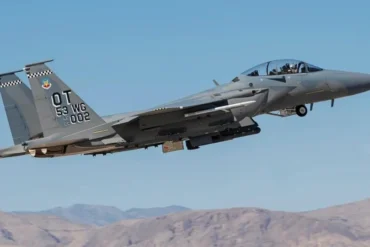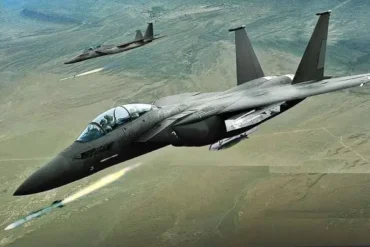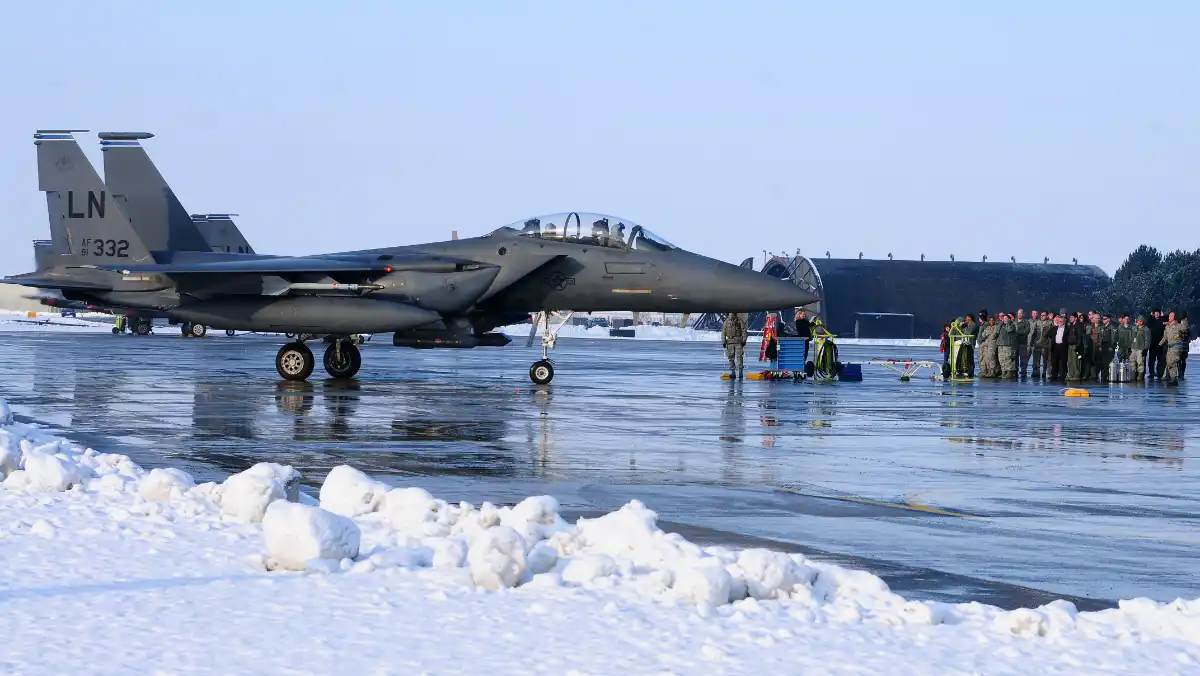
The F-15 Eagle has been one of the most dominant and revered fighter aircraft in military history. Known for its versatility, superior air combat capabilities, and reliability, the F-15 has served numerous air forces worldwide, with its presence spread across key airbases in various countries. In this article, we will take a deep dive into the various F-15 Eagle bases located globally, from the United States to the Middle East and Asia, highlighting the key units and missions tied to these strategic locations.
The Role of F-15 Eagles in Global Defense
The F-15 Eagle was originally developed by McDonnell Douglas (now part of Boeing) in the 1970s. It was designed to establish air superiority in aerial combat, capable of engaging multiple targets at once while maintaining high speeds and a high degree of maneuverability. Over the years, various models of the F-15 have been developed, including the F-15A/B, F-15C/D, F-15E, and F-15S, each tailored to meet different operational needs.
Due to its exceptional capabilities, the F-15 has been adopted by multiple countries around the world, forming the backbone of air superiority missions in many air forces. These bases play a crucial role in the operational readiness of these forces, providing strategic locations for maintenance, training, and deployment of the F-15 fleet.
Key F-15 Eagle Bases Around the World
Israel
Tel Nof Airbase
Tel Nof Airbase in Israel is one of the most significant F-15 Eagle bases. Located south of Tel Aviv, it hosts the 133rd Squadron, which operates various models of the F-15 (F-15A/B/C/D). This base is strategically important for Israel’s defense, offering rapid response capabilities in times of regional conflict. The 133rd Squadron has played a pivotal role in Israel’s air defense strategy, operating a fleet of F-15s that are frequently upgraded with the latest avionics and weapon systems to ensure continued air superiority.
Japan
Komatsu Air Base
Komatsu Air Base is one of the main F-15 Eagle bases in Japan, home to the 202nd Tactical Fighter Squadron. The Japanese F-15J fleet is a derivative of the F-15, specifically designed for Japan’s air defense needs. The F-15J is equipped with advanced radar and electronic warfare systems, making it a formidable force in East Asia.
Naha Air Base
Another significant F-15 Eagle base in Japan is Naha Air Base, located on Okinawa. This base supports the operational readiness of Japan’s F-15J fleet, which forms the backbone of the Japan Air Self-Defense Force (JASDF). The F-15J is deployed in a variety of roles, from air superiority to air policing missions over Japan’s territorial waters.
Japan’s acquisition of the F-15J/DJ fleet—assembled by Mitsubishi Heavy Industries—has bolstered its air defense capabilities, ensuring Japan’s ability to defend its airspace in the event of a regional conflict.
South Korea
Daegu Air Base
Daegu Air Base in South Korea hosts multiple squadrons of the F-15K, a variant of the F-15 specifically built for the South Korean Air Force. The base plays a key role in South Korea’s defense posture against potential threats from North Korea. The 102nd Fighter Squadron and 122nd Fighter Squadron operate the F-15K Batch 1, a modernized version equipped with advanced avionics and weapons systems.
Cheongju Air Base
Another key base in South Korea for the F-15K is Cheongju Air Base. Home to the 110th Fighter Squadron operating the F-15K Batch 2, this base further strengthens South Korea’s air defense capabilities. The F-15K is an advanced multirole fighter capable of engaging both air and ground targets, making it a versatile platform for a range of mission types.
Saudi Arabia
Dhahran Air Base
In Saudi Arabia, Dhahran Air Base is a critical location for the operation of the F-15C/D variants. The base is home to several squadrons, including the 5th, 34th, 13th, and 2nd Squadrons, all operating variants of the F-15C/D. Saudi Arabia’s air force has been heavily reliant on the F-15C/D for air superiority missions in the Middle East, with the aircraft playing a central role in maintaining regional stability.
Khamis Mushayt and Taif Air Bases
Khamis Mushayt Air Base and Taif Air Base are also home to key F-15 units in Saudi Arabia. These bases house the 92nd, 6th, and 55th Squadrons operating the F-15S variant, an advanced multirole fighter aircraft designed for precision strikes and air superiority missions.
Saudi Arabia’s extensive fleet of F-15S aircraft is a key component of its defense strategy, enabling it to project power across the region and maintain air superiority over hostile forces.
King Abdulaziz Air Base
King Abdulaziz Air Base is another important location for the operation of the F-15C/D and F-15S variants. This base is home to the 3rd Wing, which oversees the operation of Saudi Arabia’s F-15 fleet. These aircraft are equipped with advanced radar and weapon systems, ensuring their readiness for a wide range of combat operations.
Singapore
Paya Lebar Air Base
In Singapore, Paya Lebar Air Base serves as the home base for the 428th Fighter Squadron, which operates the F-15SG variant. The F-15SG is a modern multirole fighter, heavily customized for Singapore’s specific defense requirements. Singapore’s air force often conducts joint training exercises with the United States, further enhancing its operational readiness.
United States
Nellis Air Force Base, Nevada
Nellis AFB is one of the most important F-15 Eagle bases in the United States. It is home to the 422nd Test and Evaluation Squadron, which operates the F-15E Strike Eagle variant. This base plays a pivotal role in testing and evaluating new systems and tactics for the F-15 fleet, ensuring that the aircraft remain at the forefront of air combat capabilities.
Eglin Air Force Base, Florida
At Eglin AFB, the 85th Test and Evaluation Squadron operates both the F-15C/D and F-15E variants. Eglin is a key location for the testing of new weapons and systems for the F-15 platform, with a focus on ensuring that the aircraft remains effective in both air-to-air and air-to-ground combat.
Kingsley Field ANGB, Oregon
The 173rd Fighter Wing based at Kingsley Field ANGB operates the F-15C/D variants. This base is integral to the National Guard’s air defense mission in the Pacific Northwest, providing rapid-response capabilities to defend U.S. airspace.
Kadena Air Base, Japan
Kadena AB in Japan hosts the 44th and 67th Fighter Squadrons, operating the F-15C/D variants. Kadena is strategically located in the Pacific, making it a critical base for U.S. Air Force operations in the region. The base is often involved in joint exercises with allied nations and plays a key role in ensuring U.S. dominance in the Pacific theater.
RAF Lakenheath, United Kingdom
RAF Lakenheath in the United Kingdom is home to the 48th Fighter Wing, which operates the F-15E variant. This base plays a crucial role in NATO’s air defense strategy, providing a forward-deployed presence in Europe.
Mountain Home AFB, Idaho
Mountain Home AFB houses the 366th Fighter Wing, which operates the F-15E Strike Eagle variant. This base is essential for training and operational readiness, particularly for ground-attack and multirole missions.
Seymour Johnson AFB, North Carolina
At Seymour Johnson AFB, the 4th Fighter Wing operates the F-15E Strike Eagle. This base plays a vital role in training aircrew and maintaining combat readiness for the aircraft.
National Guard Units
Across the United States, several Air National Guard bases also host the F-15C/D variants, providing air defense capabilities in various regions:
- Barnes ANGB, Massachusetts: 104th Fighter Squadron
- Fresno ANGS, California: 144th Fighter Wing
- Jacksonville ANGB, Florida: 125th Fighter Wing
- New Orleans ANGB, Louisiana: 159th Fighter Squadron
NASA’s F-15 Fleet
NASA operates the F-15B/D variants at Armstrong Flight Research Center in California. These aircraft are used for various test and research purposes, contributing to the development of next-generation aerospace technologies.
Conclusion
The F-15 Eagle continues to be a formidable force in global air defense, with bases spread across strategic locations worldwide. From the deserts of Saudi Arabia to the Pacific theater in Japan and the United States, these bases are integral to maintaining air superiority in their respective regions. The F-15’s adaptability, combined with the diverse bases it operates from, ensures that it remains a critical asset in modern air forces. Whether engaged in air policing, combat operations, or joint training exercises, the F-15 remains a cornerstone of air defense capabilities across the globe.