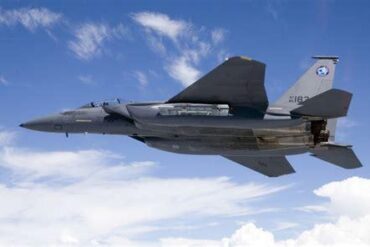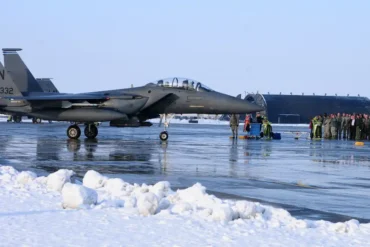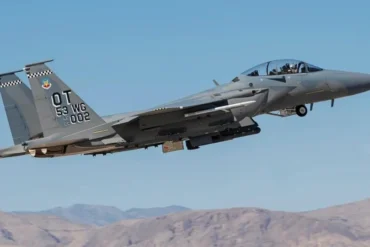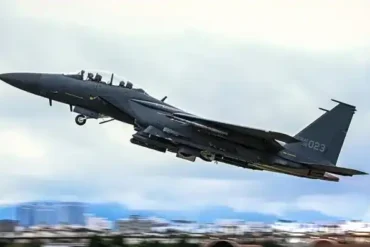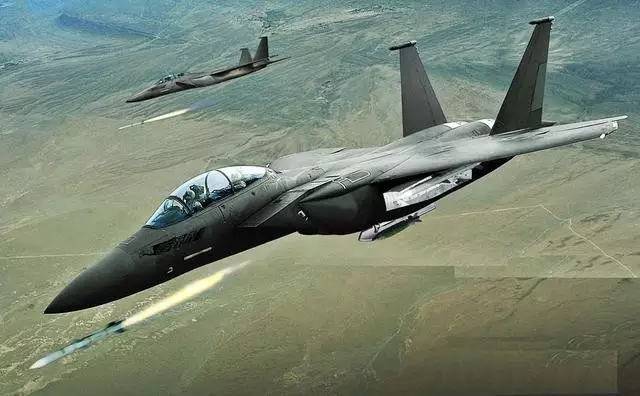
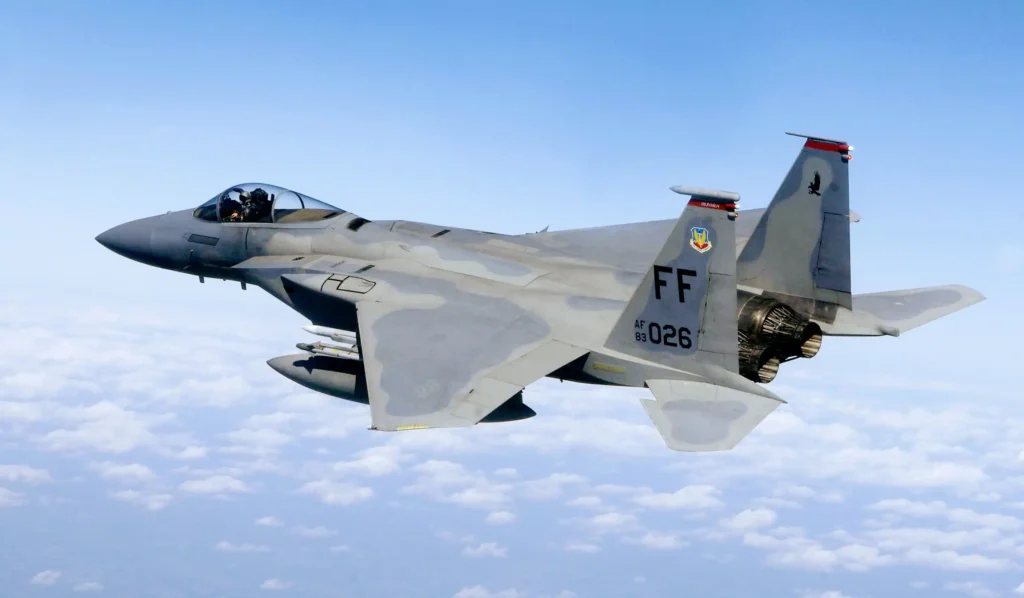
The F-15SE Silent Eagle is a fighter-bomber aircraft developed by Boeing as an upgraded version of the F-15E Strike Eagle. This aircraft was designed to combine the robust capabilities of the F-15E with advanced stealth technology. The Silent Eagle aims to offer reduced radar cross-section (RCS), greater survivability in hostile environments, and a better balance of combat versatility. However, it is important to understand the limitations and the design philosophy behind this aircraft. This article provides an in-depth exploration of the F-15SE, its design features, capabilities, and the role it plays in modern air combat.
The Development of the F-15SE Silent Eagle
The F-15SE’s design traces back to the evolution of the F-15E Strike Eagle, a dual-role fighter initially designed for precision strike missions. However, as radar detection technology improved and stealth became a priority in modern warfare, Boeing sought to update the F-15E to meet new challenges. The result was the F-15SE, which incorporated stealth technology through internal weapons bays and radar-absorbing materials (RAM).
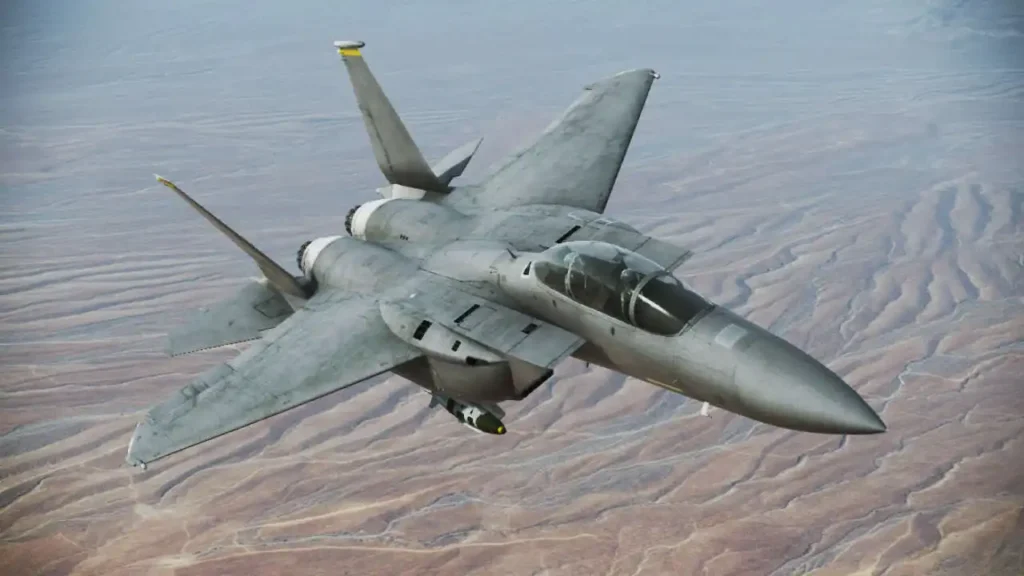
Despite being based on a platform that is more than four decades old, the F-15SE was conceived to be a cost-effective alternative to the F-22 Raptor. The F-22, with its advanced stealth and performance, faced production cuts due to high costs. In contrast, the F-15SE offered a blend of modern technologies with the familiar platform and at a significantly lower price point.
Key Features of the F-15SE Silent Eagle
Stealth Enhancements
The primary feature of the F-15SE Silent Eagle is its attempt to reduce the aircraft’s radar cross-section. Boeing made several modifications to the F-15E’s design to achieve this:
- Internal Weapons Bays: The F-15SE can carry four AIM-120 missiles inside its body, reducing the aircraft’s radar signature compared to external weapon hardpoints.
- Radar Absorbing Materials (RAM): To further reduce the aircraft’s radar signature, Boeing applied RAM coatings to critical surfaces. These materials absorb radar waves and deflect them, minimizing the risk of detection.
- Angled Vertical Stabilizers: The F-15SE features 15-degree angled vertical tails which are meant to deflect radar waves, thus reducing its signature when viewed from the front.
However, while these enhancements improve the F-15SE’s stealth compared to earlier F-15 models, it still does not reach the level of true stealth fighters like the F-22 or F-35. The aircraft’s Radar Cross Section (RCS) remains significantly larger than these fifth-generation fighters, though the changes make it less detectable than the baseline F-15E.
Airframe and Aerodynamics
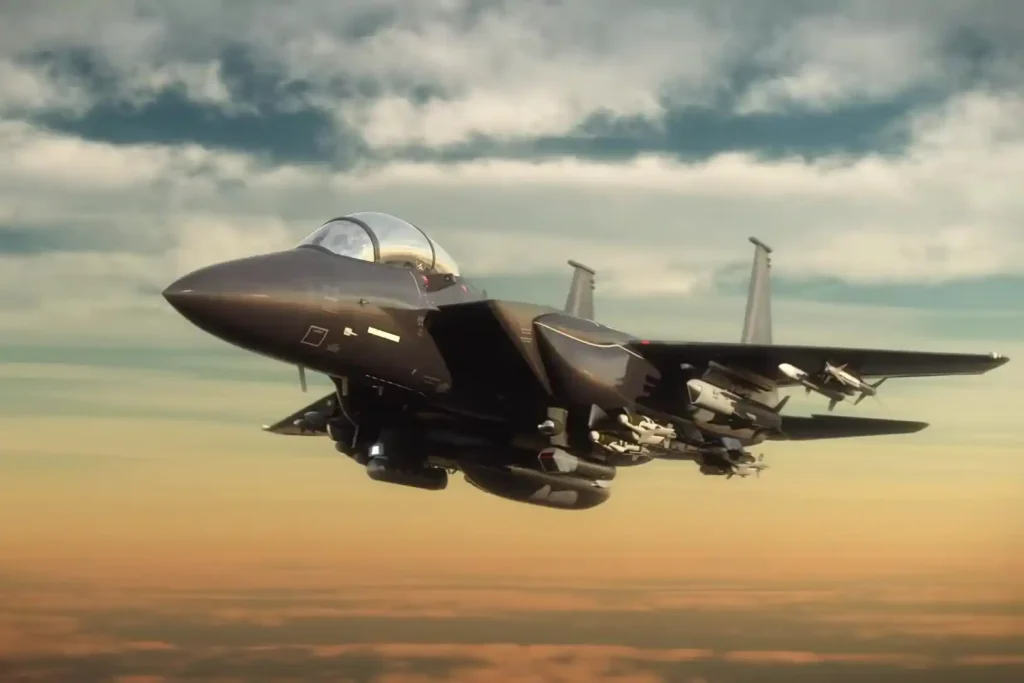
Despite the introduction of stealth technologies, the F-15SE Silent Eagle retains much of the original F-15E Strike Eagle’s airframe. The aircraft does not feature the drastic design changes seen in stealth fighters like the F-35, which has a highly angular body to reduce radar reflectivity. Instead, Boeing has relied on local modifications to the fuselage and the use of RAM to reduce the radar signature.
- Wings and Fuselage: The F-15SE maintains the familiar airframe of the F-15 series, but certain areas were redesigned, including changes to the wing geometry and the incorporation of stealth-enhancing features like curved leading edges and modified engine nacelles.
- Air Intake: The F-15SE continues to use traditional circular air intakes, unlike the more advanced stealth fighters that have canted or concealed intakes. This design choice limits the aircraft’s stealth capabilities from certain angles.
Advanced Avionics and Radar Systems
The F-15SE incorporates a suite of cutting-edge avionics to ensure it remains competitive in modern combat scenarios. These include:
- Active Electronically Scanned Array (AESA) Radar: The N/APG-63(V)3 AESA radar is one of the key upgrades. This radar system provides superior tracking and targeting capabilities, enabling the F-15SE to engage targets at long range while maintaining a low probability of detection.
- Integrated Electronic Warfare Systems: The F-15SE is equipped with advanced countermeasures to protect against enemy radar and missile threats. This includes systems for radar jamming and anti-missile countermeasures.
- Glass Cockpit: The cockpit features advanced multifunctional displays that provide pilots with real-time data on target location, weapons status, and flight performance. This system allows for better situational awareness and improved control during complex missions.
Internal Weapons Bay and Loadout
One of the major modifications of the F-15SE Silent Eagle over the F-15E is the incorporation of an internal weapons bay. This allows the aircraft to carry up to four AIM-120 AMRAAM missiles without increasing its radar signature. In addition to air-to-air missiles, the F-15SE retains the ability to carry a variety of air-to-ground ordnance, such as precision-guided munitions and bombs.
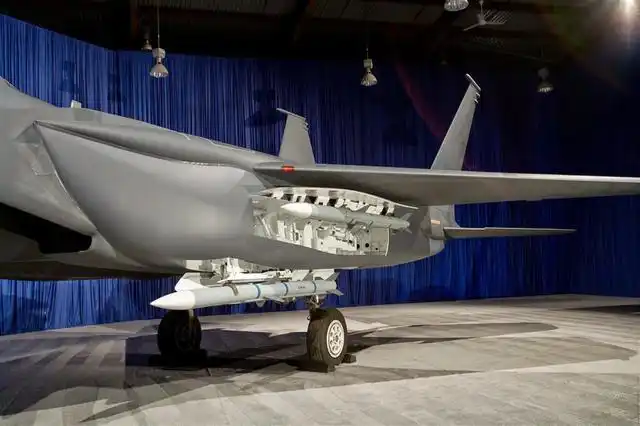
While this gives the aircraft a reduced radar signature, it also impacts the overall payload capacity. The F-15SE’s internal weapons bay limits its overall missile load compared to other aircraft that carry weapons externally. As a result, the aircraft may not be as effective in scenarios where maximum firepower is needed.
Performance and Speed
Despite the stealth modifications and internal weapons storage, the F-15SE Silent Eagle retains impressive performance characteristics, including:
- Maximum Speed: The aircraft can reach speeds of up to Mach 2.5, making it a formidable presence in both air-to-air and air-to-ground combat.
- Combat Radius: With the internal weapons bay configuration, the F-15SE’s combat radius is slightly reduced compared to the F-15E, but it still provides a range sufficient for a variety of mission profiles.
- Supercruise Capability: Like the F-15E, the Silent Eagle has the ability to fly at high speeds without afterburners, providing a more fuel-efficient solution for long-range missions.
Challenges and Limitations
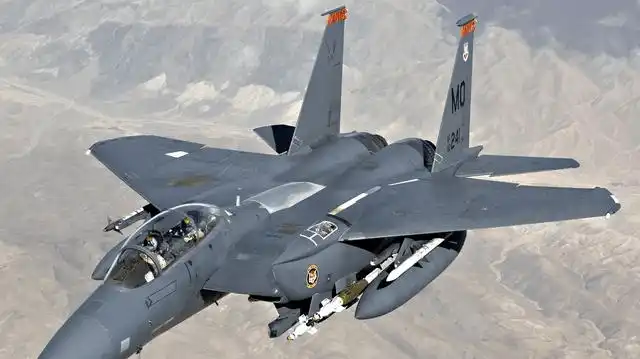
While the F-15SE presents several advancements over the legacy F-15E, it is still not a true stealth aircraft like the F-22 or F-35. There are several notable challenges and limitations that the F-15SE faces in comparison:
- Radar Cross Section: Although the F-15SE reduces the radar cross-section compared to earlier F-15 models, its overall RCS remains large when compared to true stealth fighters. This limits its effectiveness against advanced radar systems.
- Cost vs. Benefit: The cost of upgrading the F-15E to an F-15SE is significant, and many potential buyers may question whether the benefits in stealth and survivability justify the investment when compared to newer aircraft options like the F-35 or even the F/A-18E/F Super Hornet.
- Limited Market Appeal: Despite the advancements in stealth, the F-15SE has failed to secure widespread interest in the international market. Many countries that require stealth capabilities have opted for the F-35, and the F-15SE’s niche appeal has made it a difficult sell.
F-15SE Silent Eagle in Context: A Tactical Overview
The F-15SE Silent Eagle is often seen as a bridge between legacy fighter platforms and the next generation of stealth aircraft. While it may not possess the same level of stealth as fifth-generation fighters like the F-22 and F-35, it still offers a significant improvement over older F-15 models. Its role in modern combat is primarily as a multirole fighter-bomber, capable of engaging both air and ground targets with a blend of traditional F-15 strengths and some modern stealth enhancements.

Role in Air-to-Air Combat
In air-to-air combat, the F-15SE Silent Eagle excels due to its high speed, agility, and advanced radar systems. While its stealth features are limited, its AESA radar allows it to engage enemy aircraft at extended ranges, even in contested environments. The AMRAAM missiles and the ability to carry beyond-visual-range (BVR) weapons make the F-15SE a formidable adversary in aerial dogfights and air superiority missions.
Role in Strike Missions
The F-15SE’s ability to carry a diverse payload, including precision-guided munitions, makes it well-suited for precision strike operations. It can engage high-value targets with extreme accuracy, despite its limitations in stealth.
Compatibility with Allied Forces
One of the key selling points of the F-15SE was its ability to complement existing fleets of F-15 fighters and other allied aircraft. The aircraft could integrate into coalition operations alongside fighters like the F/A-18 Hornet and F-35, providing interoperability within multinational forces.
Conclusion: Is the F-15SE Silent Eagle Worth It?
The F-15SE Silent Eagle represents a compromise between cost, stealth, and performance. While it may not offer the full stealth capabilities of fifth-generation aircraft, it still provides a significant improvement over the legacy F-15E in terms of radar cross-section, range, and versatility. However, its high cost, combined with limited export success and the rise of next-generation fighters like the F-35, has kept it from becoming a widespread success.
For countries that need an affordable, multirole aircraft with some degree of stealth and a proven airframe, the F-15SE could still have a place. However, for nations seeking cutting-edge stealth and advanced capabilities, the F-15SE may ultimately be overshadowed by newer, more capable platforms.