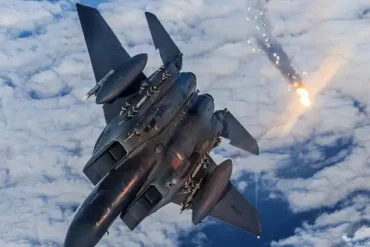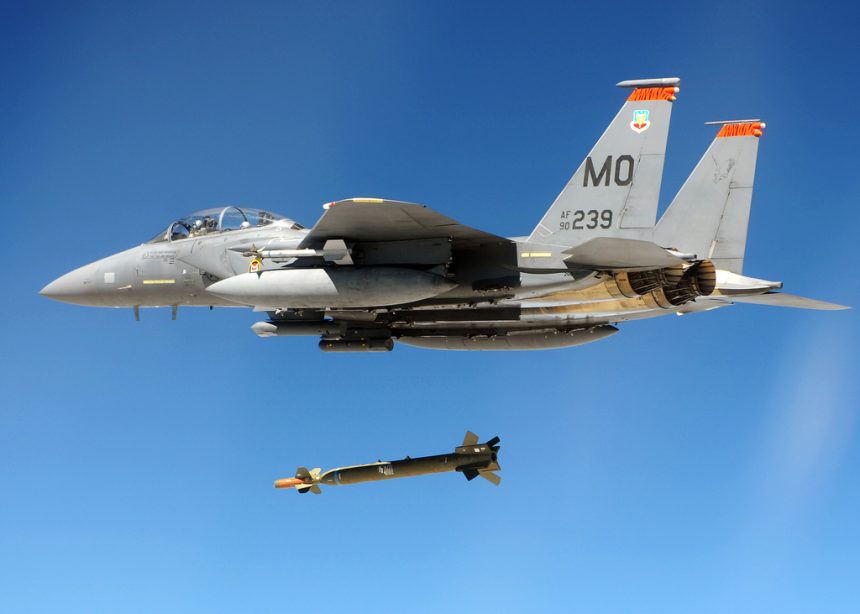
The F-15 Eagle has long been regarded as one of the most formidable air superiority fighters in the world. However, its operational history has been marked by multiple crash incidents that have raised concerns over structural integrity, aging airframes, and operational risks. This article provides an in-depth examination of notable F-15 crash events, their causes, and the broader implications for the United States Air Force (USAF).
2007 Missouri F-15C Crash and Fleet-Wide Grounding
On November 2, 2007, an F-15C Eagle crashed in Missouri during a routine training exercise. The pilot successfully ejected, but the investigation into the incident uncovered a serious structural flaw in the aircraft’s airframe.
Investigation Findings and Immediate Actions
The USAF launched an extensive investigation and discovered that the crash resulted from a structural failure in the aircraft’s fuselage, particularly around the longeron—a crucial component providing structural support. The failure was attributed to metal fatigue, exacerbated by years of service.
As a result, the USAF ordered a fleet-wide grounding of all F-15 models not currently engaged in combat missions, affecting nearly 739 aircraft. This marked the third time in the history of the F-15 program that the fleet had been entirely grounded due to safety concerns.
Broader Implications and Return to Service
Further analysis determined that over 150 F-15s displayed similar structural issues, leading to repairs and reinforced designs. The incident underscored the aging nature of the fleet, particularly for the F-15C, which had been in service since the 1970s.
2012 F-15E Crash in the UAE During Deployment
On May 3, 2012, an F-15E Strike Eagle assigned to the 366th Fighter Wing at Mountain Home Air Force Base, Idaho, crashed while flying over the United Arab Emirates (UAE) en route to Afghanistan. The two crew members—pilot and weapons systems officer—ejected safely, but the cause of the accident was not publicly disclosed.
Possible Causes and Deployment Strain
Given that the aircraft was on a long-range deployment mission, potential causes included:
- Mechanical failure due to extended flight hours
- Fuel system issues resulting from extreme desert conditions
- Crew fatigue from long-duration operations
The crash highlighted concerns about high operational stress placed on F-15E units deployed in Middle Eastern theaters, where long-distance missions and intense operational tempos can accelerate wear and tear.
2020 North Sea F-15C Crash: A Fatal Incident
One of the most tragic incidents occurred on June 15, 2020, when an F-15C from the 48th Fighter Wing at RAF Lakenheath, UK, crashed into the North Sea during a training mission. Unfortunately, the pilot, 1st Lt. Kenneth “Kage” Allen, did not survive.
Investigation and Key Findings
Initial reports confirmed that the aircraft was not engaged in combat and was conducting a routine training exercise. However, multiple factors were considered:
- Mechanical failure: The aircraft had been in service for nearly 40 years, making structural fatigue a possible cause.
- Weather conditions: The North Sea is known for rapidly changing weather, which could have contributed to loss of control.
- Pilot disorientation: Flying over open water can lead to spatial disorientation, a known hazard for pilots.
This accident reignited debates over the F-15C’s viability as an active fighter and strengthened arguments for its eventual replacement by the F-35A Lightning II.
2021 Lakenheath F-15E Engine Failure and Emergency Landing
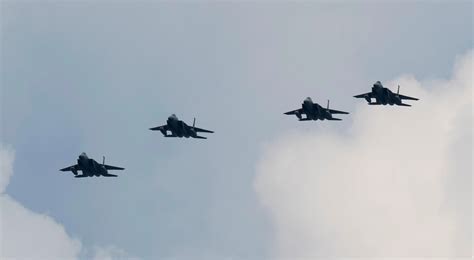
On July 13, 2021, an F-15E Strike Eagle stationed at RAF Lakenheath suffered an engine failure shortly after takeoff. The aircraft was observed emitting flames from one of its engines, prompting an emergency return to base.
Early Detection and Safe Landing
The incident was first identified by a civilian photographer, who alerted the base after capturing images of the aircraft’s engine fire. Fortunately, the pilot successfully executed an emergency landing, preventing a catastrophic outcome.
Maintenance Challenges and Aging Airframes
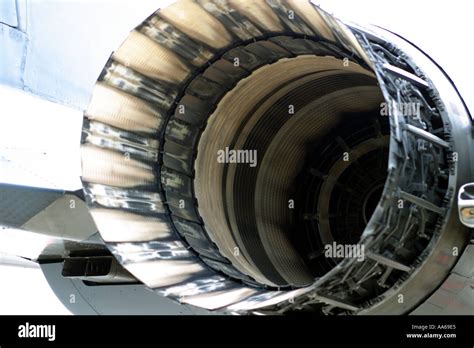
The F-15E’s Pratt & Whitney F100 engines are designed for high-performance thrust, but they require rigorous maintenance. The incident reflected ongoing challenges related to:
- Increased engine wear due to high sortie rates
- The need for enhanced maintenance cycles
- Future considerations for replacing aging aircraft components
Long-Term Impact and Upgrades to the F-15 Fleet
Despite multiple crashes and maintenance challenges, the F-15 remains a vital component of the USAF’s air superiority mission. However, concerns about its aging airframe and high operational costs have prompted several key modernization efforts:
Structural and Avionics Upgrades
- Advanced radar systems (AN/APG-63(V)3 AESA radar) to improve situational awareness
- New IRST (Infrared Search and Track) systems for enhanced enemy detection
- Reinforced airframes to mitigate metal fatigue risks
The Future: Transition to the F-15EX and F-35A
While some F-15C/D models are being retired, the USAF has introduced the F-15EX Eagle II, featuring:
- Modern avionics and fly-by-wire controls
- Extended operational lifespan and increased payload capacity
- Complementary role alongside the F-35A for air dominance
FAQ
1. Why do F-15 crashes occur despite their strong safety record?
Most F-15 crashes stem from structural fatigue, aging components, and extreme operational conditions. Additionally, long-term exposure to high-G maneuvers and extended flight hours increases the risk of mechanical failures.
2. What steps has the USAF taken to mitigate F-15 safety risks?
The USAF has implemented extensive inspection programs, fleet-wide grounding when necessary, and targeted upgrades to avionics and structural components. The introduction of the F-15EX also aims to modernize the fleet.
3. Will the F-15 be completely replaced by the F-35?
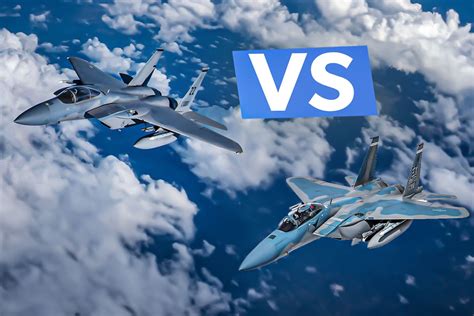
Not entirely. The F-15EX is intended to complement the F-35, providing high-speed air superiority and strike capabilities where necessary. However, legacy F-15C/D aircraft are gradually being phased out in favor of next-generation platforms.
The F-15 Eagle’s legacy is one of dominance and resilience, but as recent crashes have shown, its long service life brings significant operational challenges. The transition to newer models ensures that air superiority remains a cornerstone of modern aerial warfare.