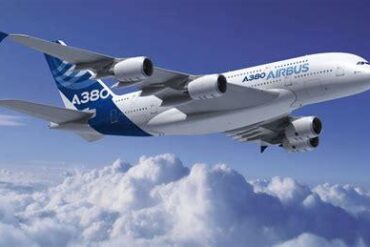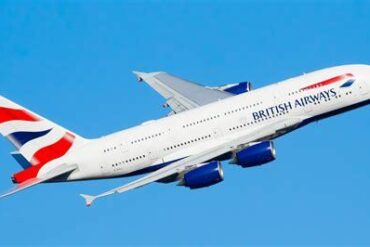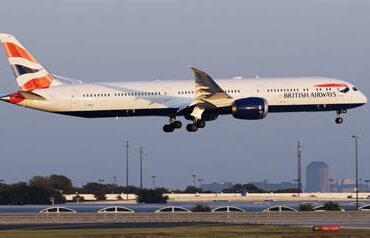
British Airways’ relationship with the Airbus A380 has always been symbolic of scale, ambition, and long-haul dominance from London Heathrow. When the airline introduced the double-decker giant in 2013, it was a clear statement of intent: maximize capacity on premium-heavy routes while reinforcing Heathrow’s role as a global hub. More than a decade later, the strategy has evolved. British Airways has now ended A380 flights on eight routes, reflecting deeper structural changes in demand, fleet planning, and competitive dynamics.
For an aircraft that once defined flagship travel, these withdrawals mark an important transition rather than a retreat. All twelve of British Airways’ A380s remain active, yet their deployment has become more selective, targeted, and commercially disciplined.
British Airways’ A380 fleet is relatively young by industry standards, averaging 11.8 years, making it the carrier’s second-oldest widebody group after the Boeing 777-200ER. Each aircraft seats 469 passengers, including 14 in first class and nearly 100 in business class, a layout designed to monetize dense premium traffic. Despite that, cabin age and product consistency have increasingly come under scrutiny, prompting a long-awaited retrofit program aimed at restoring competitiveness.
The routes that have lost the A380 tell a broader story about how global aviation demand has shifted since the pandemic and amid changing geopolitical and economic realities.
Why British Airways Is Pulling the A380 From Select Routes
Fleet decisions at British Airways are driven less by sentiment and more by network economics. The A380 thrives where slot constraints, sustained premium demand, and high load factors align perfectly. When any of those variables weaken, the aircraft becomes harder to justify compared to newer, more flexible widebodies like the A350-1000 or Boeing 787-10.
Several of the discontinued routes were never meant to be permanent A380 fixtures. Short-haul European services such as Frankfurt and Madrid were operational necessities during training cycles or pandemic disruptions. Others, like Doha, were tied to specific events, including the FIFA World Cup, rather than long-term strategy.
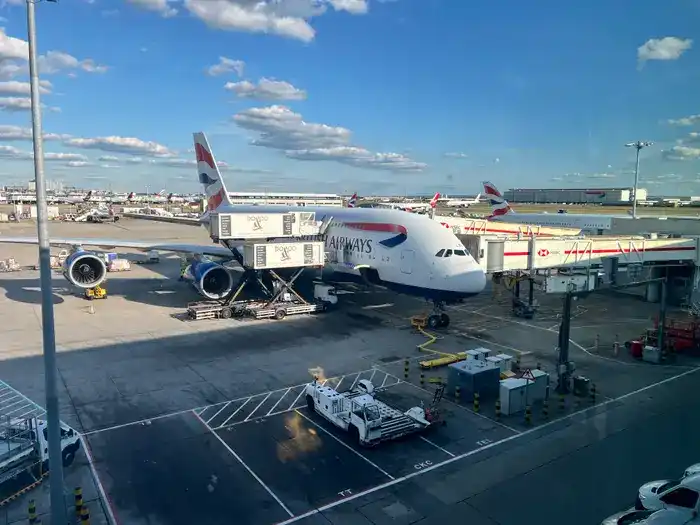
What stands out is the removal of the A380 from historically significant long-haul markets, particularly in Asia and North America, where demand patterns have fundamentally changed.
Hong Kong: From Flagship A380 Route to Daily A350
No route better illustrates this shift than London Heathrow to Hong Kong. With over 2,300 one-way A380 flights, Hong Kong was once a cornerstone of British Airways’ superjumbo network and ranked among its most heavily served A380 destinations globally. The route combined high passenger volumes with exceptional premium demand, making it ideal for the aircraft.
That equation no longer holds. Since COVID-19 and the increasing influence of mainland China, premium traffic flows have weakened, and competitive pressure from Cathay Pacific has intensified. British Airways, once operating up to three daily flights to Hong Kong, now serves the route once daily using the A350-1000, a clear signal of recalibrated expectations.
The withdrawal also reflects a broader retreat by non-Asian carriers, highlighted by Virgin Atlantic’s exit in 2022, leaving Cathay in a more dominant position than ever.
Washington Dulles: A Strategic Retreat, Not a Market Exit
British Airways’ A380 history at Washington Dulles International Airport has been episodic yet impactful. The aircraft first appeared on the route in 2014, operating daily for several years and reinforcing Dulles’ status as the primary international gateway to the US capital region.
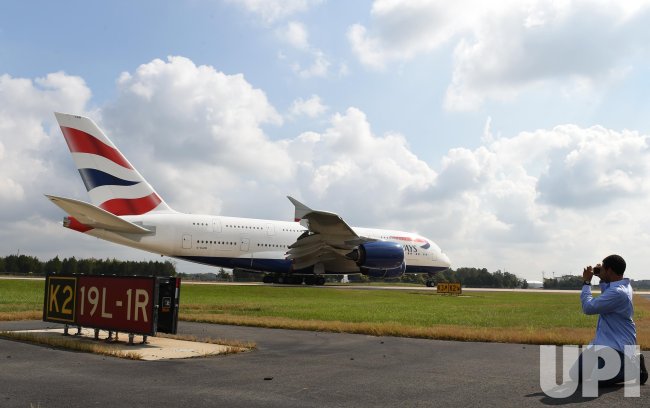
The A380 returned seasonally after the pandemic, most recently operating through late 2025. Its removal does not indicate reduced commitment. Instead, British Airways has opted for higher frequency using smaller aircraft, including the A350-1000 and multiple 787 variants. This approach offers greater schedule flexibility while maintaining overall capacity, a tradeoff increasingly favored across transatlantic networks.
Chicago O’Hare: Losing a Rare Superjumbo Experience
At Chicago O’Hare, British Airways provided the airport’s only regular A380 service, a distinction that added both prestige and capacity. Initially seasonal, the route later supported year-round A380 operations until late 2023. Its discontinuation places O’Hare among a small group of US airports that have lost regular A380 service entirely.
The decision underscores how even strong, premium-leaning markets can struggle to sustain ultra-large aircraft without consistent year-round demand.
The Full List of Routes Without British Airways A380s
British Airways no longer operates the Airbus A380 on the following routes from London Heathrow:
- Hong Kong
- Singapore
- Washington Dulles
- Chicago O’Hare
- Vancouver
- Frankfurt
- Doha
- Madrid
Each withdrawal reflects a unique mix of operational, commercial, and strategic considerations rather than a blanket rejection of the aircraft.
What This Means for the Future of BA’s A380 Fleet
The Airbus A380 remains central to British Airways’ long-haul identity, but its role has become more focused and less experimental. Routes like Los Angeles, Miami, San Francisco, and Johannesburg continue to justify the aircraft’s scale, especially where Heathrow slot scarcity and premium demand intersect.
Upcoming cabin retrofits will be critical. Without them, even the best-suited routes risk erosion against competitors offering newer interiors and more consistent products. With them, the A380 can still function as a profitable flagship rather than a nostalgic icon.
British Airways’ decision to end A380 flights on eight routes is not a sign of decline, but of adaptation. In an era defined by flexibility, efficiency, and targeted capacity, even the world’s largest passenger aircraft must earn its place every day.