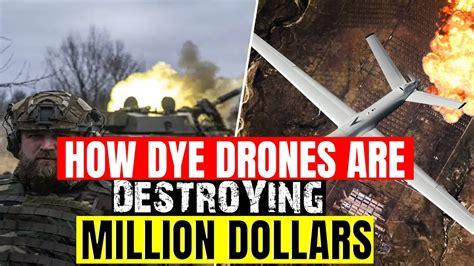
In the evolving landscape of modern warfare, cheap First Person View (FPV) drones have emerged as one of the most disruptive technologies, undermining the supremacy of multimillion-dollar main battle tanks. Once considered invincible assets of ground warfare, these behemoths are now increasingly vulnerable to small, agile, and affordable unmanned aerial vehicles (UAVs) that cost a fraction of their price. The asymmetry between cost and impact is staggering, and it is reshaping how militaries around the world think about offense, defense, and survivability.
The Rise of FPV Drones as Battlefield Game-Changers
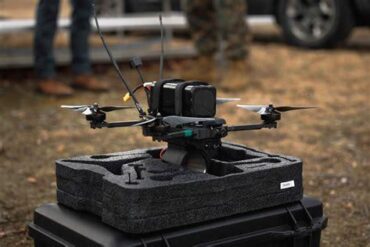
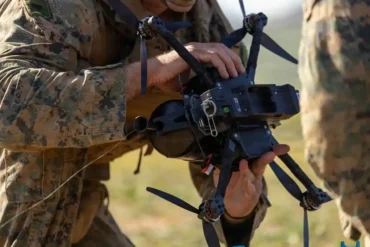
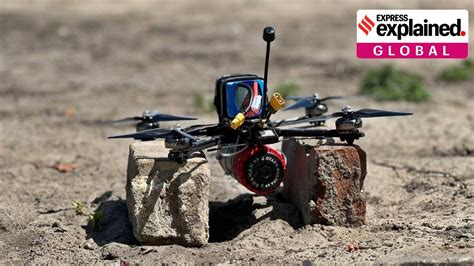
Originally intended for recreational use or small-scale surveillance, FPV drones have undergone a remarkable transformation. Built from off-the-shelf components and often customized by local engineers or enthusiasts, these drones provide real-time visuals to their remote operators. They allow operators to “see” from the drone’s perspective, delivering both situational awareness and pinpoint accuracy.
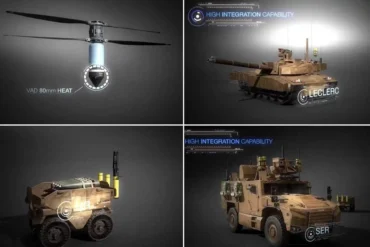
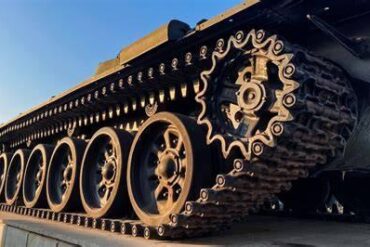
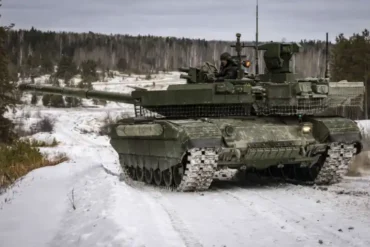
What makes them so lethal isn’t just their affordability—some models cost as little as $3,000—but their tactical role on the battlefield. Typically, reconnaissance drones locate enemy positions, including tanks. Once coordinates are confirmed, FPVs equipped with small warheads target critical points like tracks or rear engine compartments, rendering the tank immobile. Once disabled, larger bomber drones are dispatched to deliver the final blow, obliterating the multi-million-dollar machine with pinpoint precision.
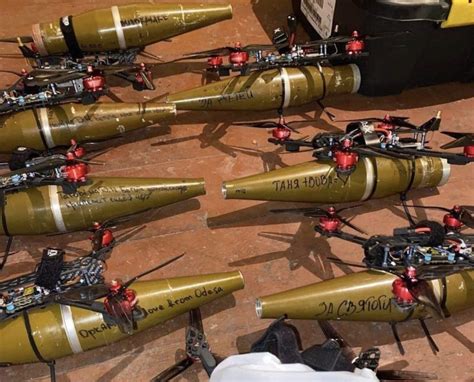
This tactical synergy between drone types creates a lethal multi-stage strike system that bypasses traditional tank armor and catches crews off-guard. As a result, tank crews often abandon their vehicles, realizing escape is their only option before a catastrophic strike occurs.
Ukraine’s Drone Doctrine: A Battlefield Laboratory
The most compelling real-world demonstration of this revolution came during Russia’s invasion of Ukraine in 2022. Initially a response to Russian superiority in artillery and armor, Ukraine’s mass-scale deployment of FPV drones flipped conventional wisdom on its head. By early 2025, the country had scaled up production to an astonishing 200,000 FPV units per month, a tenfold increase from the previous year.
Ukrainian forces showed that with enough drones and well-trained operators, even well-protected Russian tanks could be systematically neutralized. This level of production wasn’t just about numbers; it was about a doctrine shift—leveraging low-cost platforms to degrade high-cost enemy systems.
The Ukrainian model has since become a blueprint for other militaries interested in high-efficiency warfare. Unlike legacy systems that require years to develop and deploy, FPVs can be iterated quickly, adapted to field conditions, and operated by relatively lightly trained personnel.
Tactical Advantages and Strategic Implications
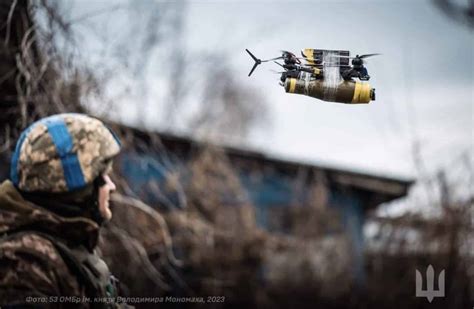
While their cost and agility make FPVs attractive, it’s their flexibility in application that truly distinguishes them. These drones can be used in urban combat, mountainous terrain, forests, or open plains. Operators can guide them through windows, beneath overpasses, or directly into exhaust ports.
This unpredictability has forced armored divisions to reconsider their deployment strategies. Tanks can no longer dominate the battlefield without adequate electronic warfare cover or drone shielding. Even then, counter-drone systems can’t guarantee safety, especially against FPVs operating in swarms or coordinated waves.
The psychological impact on enemy forces is also profound. Knowing that a cheap drone can arrive silently and end the mission—or worse, their lives—adds a level of stress that disrupts morale and decision-making under pressure.
Limitations of FPV Drones: Disposable but Effective
Despite their success, FPV drones are not without flaws. They’re often single-use and sacrifice durability for agility. Their operating range is limited, and they are highly susceptible to electronic jamming and GPS spoofing. Even moderate electronic countermeasures can blind or misdirect them.
They also struggle against fortified targets, underground bunkers, or advanced air defense systems that can detect and eliminate them at range. In essence, FPVs aren’t a universal solution—but they’re effective enough to consistently degrade enemy capabilities.
Nevertheless, these flaws are tolerable given their low cost and massive production volumes. Even a 30% success rate is acceptable when you’re fielding hundreds of thousands of drones annually.
America’s Answer: The T-REX Wargame
The U.S. military, never slow to learn from asymmetric threats, is now responding through its Technology Readiness Experimentation (T-REX) program. Modeled loosely on Topgun, the T-REX initiative pits drone operators against defensive teams in live, contested environments.
The purpose? To stress-test every layer of drone warfare—from the FPV drones themselves to the support ecosystem involving sensors, communication relays, artificial intelligence, and real-time decision-making protocols. These scenarios are designed to mimic future battlefields, not the wars of the past.
Operators are trained to counter jamming, spoofing, and real-time electronic warfare. At the same time, developers get feedback that helps iterate drone hardware and software faster than traditional defense programs allow. It’s a radical break from the bureaucracy-heavy processes that have defined U.S. weapons development for decades.
A Strategic Shift Toward Low-Cost Lethality
What we are witnessing is a fundamental transformation in military planning: a shift from a dependency on fewer, expensive assets to a philosophy of mass, adaptability, and attrition through numbers. FPV drones exemplify this shift.
Instead of fielding one $10 million system that must be protected at all costs, you can field 3,000 $3,000 drones and absorb losses while still achieving mission success. This mindset isn’t just tactical—it’s strategic, emphasizing disruption, denial, and degradation rather than destruction through brute force.
Militaries that fail to adapt to this new logic risk finding their most prized systems—tanks, artillery, even helicopters—obsolete and highly exposed on future battlefields.
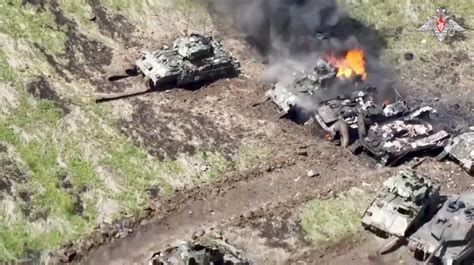
The End of Tank Dominance?
It would be premature to declare the death of the tank. After all, no other vehicle provides the same combination of mobility, firepower, and armor. But its dominance is certainly in question.
The cost-benefit ratio is increasingly unfavorable. If a $3,000 FPV drone can disable or destroy a $10 million tank, then the return on investment is catastrophic from the defender’s perspective. The more accessible FPV drones become, the more difficult it is to justify tank-heavy doctrines.
Armored divisions will need to evolve. That could mean integrated drone defenses, autonomous counter-swarm systems, or more agile armored platforms that are harder to target. But any solution will come with increased costs and complexity.
Conclusion: The Drone-Centric Future of Warfare
Cheap FPV drones are not just a tactical nuisance. They are a strategic equalizer, reshaping the cost equations that have governed military thinking for decades. Their success in Ukraine, adoption by U.S. experimental programs, and adaptability to a wide range of scenarios all point toward a future where small, smart, and numerous outweigh big, expensive, and few.
In a world where speed, scale, and flexibility define battlefield advantage, FPVs are no longer the underdog. They are the spearpoint of a new military age—one that may consign the tank, once the king of land warfare, to the annals of 20th-century dominance.