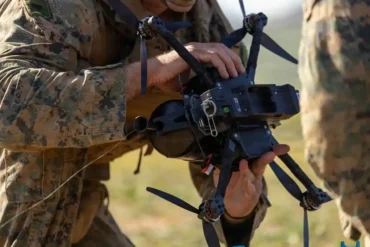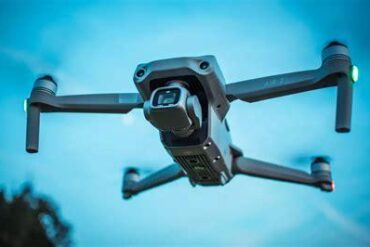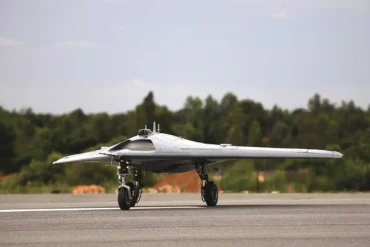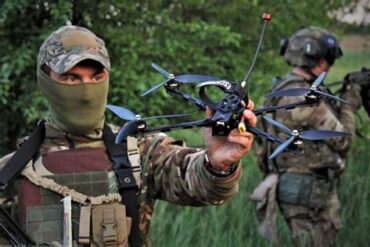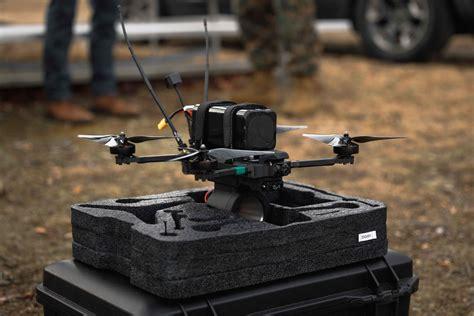
Modern warfare is undergoing a profound technological shift, and at the center of that transformation sits the first-person-view (FPV) strike drone. Once associated primarily with hobbyists and racing enthusiasts, these compact quadcopters have evolved into highly effective battlefield tools capable of reconnaissance, rapid attack, and real-time intelligence gathering. Recognizing this shift, the Tennessee Army National Guard has approved the acquisition of FPV strike drones for use in soldier training at its 117th Regional Training Institute (RTI) in Smyrna, marking a decisive step toward embedding modern drone warfare skills across the force.
The procurement reflects a wider strategic effort by the U.S. military to adapt training and tactics to the realities of modern conflict, where low-cost unmanned systems can dramatically compress the traditional “kill chain” from detection to engagement. By equipping soldiers with hands-on experience operating and countering FPV systems, the National Guard aims to ensure that troops entering future battlefields understand how to maneuver, communicate, and fight in an environment saturated with small unmanned aircraft.
Rather than purchasing a large fleet immediately, the Guard’s solicitation focuses on acquiring a limited number of advanced training drones under contract W912L726QA003, structured as a 100 percent small-business set-aside. Delivery is required within thirty days of award, underscoring the urgency of integrating drone-centric tactics into training programs. The decision signals that FPV strike drones are no longer experimental curiosities but essential tools for developing modern combat skills.
The Rise of FPV Strike Drones in Modern Land Warfare
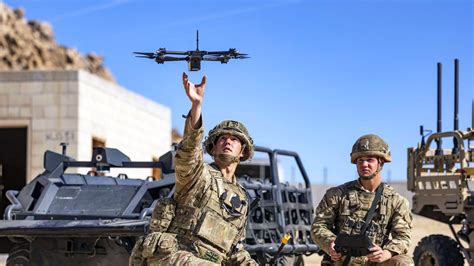
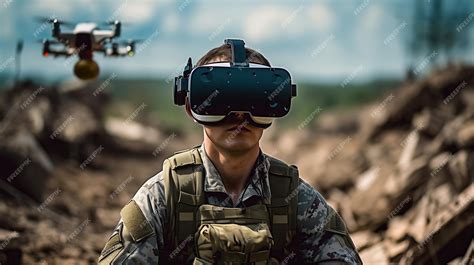
FPV drones occupy a unique niche among unmanned systems. Unlike larger reconnaissance drones designed for endurance and high-altitude observation, FPV systems emphasize speed, maneuverability, and close-range tactical control. Operators view the battlefield through a live camera feed transmitted to goggles or displays, effectively piloting the aircraft as if they were sitting inside it.
This pilot-eye perspective allows operators to guide drones through urban streets, forested terrain, and trench networks with extraordinary precision. The drone’s agility enables it to approach targets from unexpected angles, skim along tree lines, and exploit terrain features to evade detection. In modern conflicts, such capabilities have demonstrated how small drones can deliver disproportionate tactical effects.
For the National Guard, incorporating these systems into training represents an effort to bridge the gap between traditional unmanned aircraft training and real-world battlefield conditions. Soldiers must not only learn to operate drones but also understand how adversaries might deploy them against friendly forces.
Technical Specifications of the Training Drone Platform
The drones sought by the Tennessee Army National Guard represent a specific class of 5-inch FPV quadcopters designed for tactical performance rather than endurance. According to the solicitation, the aircraft must feature a 157-millimeter rotor base with 90-millimeter propellers, creating a compact yet powerful airframe capable of aggressive maneuvering.
Weight limitations require the drone to remain under three pounds, ensuring portability for soldiers operating in field conditions. Despite its small size, the aircraft must sustain at least twelve minutes of flight time while maintaining command-and-control links at distances of up to ten kilometers using an ExpressLRS communication system.
These specifications reveal a deliberate design philosophy. The aircraft must be light enough to launch quickly and maneuver through obstacles, yet capable of operating far enough from the pilot to conduct meaningful reconnaissance or simulated strike missions. The emphasis is on responsiveness, survivability, and real-time control, qualities that matter more in fast-moving engagements than long endurance.
Operating in GPS-Denied and Contested Electronic Environments
Modern battlefields are increasingly defined by electronic warfare, where GPS signals can be jammed and communications networks disrupted. The National Guard’s drone requirement reflects this reality. The aircraft must maintain stable flight and hold position even in GPS-denied conditions, forcing trainees to rely on onboard sensors and manual piloting skills.
To support these capabilities, the drone must carry integrated electro-optical and infrared sensors, providing thermal imaging for night or low-visibility operations. This sensor package transforms the small quadcopter into a miniature intelligence platform capable of detecting vehicles, personnel, and heat signatures concealed by terrain or camouflage.
Equally important is the inclusion of an AI-enabled flight computer, designed to assist with navigation, stabilization, and potentially automated targeting functions. While artificial intelligence will not replace human decision-making in training scenarios, its integration reflects the broader trend toward semi-autonomous drone systems that can assist operators during complex missions.
Secure communications are another critical component. The drone must feature AES-256 encrypted digital high-definition video transmission and operate across dual-band 2.4 GHz and 5.8 GHz frequencies, ensuring reliable data links even in contested spectrum environments. Redundant control systems, including the 915 MHz ELRS Gemini configuration, further enhance resilience against interference.
Integrating FPV Drones into the Army’s Tactical Network
A particularly significant requirement involves integration with the Android Team Awareness Kit (ATAK), a widely used geospatial software platform employed across the U.S. military. ATAK allows units to share maps, coordinates, and live intelligence across a common digital interface.
By linking FPV drones directly into this network, soldiers can transmit live video and reconnaissance data from the drone to commanders and other units in real time. The effect is to transform a small quadcopter into a networked sensor node within a larger battlefield information system.
In practical terms, a drone operator might launch a quadcopter to scout an urban intersection. Within seconds, the drone’s camera feed could appear on multiple soldiers’ devices, providing situational awareness before a patrol advances. This capability shortens decision cycles and enables faster, more coordinated responses during complex operations.
From Training Platform to Potential Strike Capability
While the current procurement focuses on drone assemblies rather than fully weaponized systems, the architecture clearly anticipates future lethal payload integration. The solicitation does not specify warheads or fusing mechanisms, but it leaves room for separate programs to provide these components under different authorities.
This approach mirrors ongoing research within the U.S. Army DEVCOM Armaments Center, which has been developing modular payloads for small unmanned systems. One such concept is AUDIBLE, a droppable munition designed for small drones. Another project, previously known as Project Shiv and now called Shank, focuses on one-way FPV strike missions using an explosively formed penetrator (EFP) warhead.
Testing has already demonstrated the potential of such systems. In 2025, the U.S. Army successfully conducted a live-fire demonstration involving an armed FPV drone, including an experimental air-to-air interception of another drone. These experiments highlight the expanding tactical roles that small unmanned aircraft may soon play.
Training the Next Generation of Drone-Literate Soldiers
The 117th Regional Training Institute serves as a critical hub for National Guard education. Located in Smyrna, Tennessee, the facility trains military police and other personnel from the Army National Guard, Army Reserve, and active-duty Army.
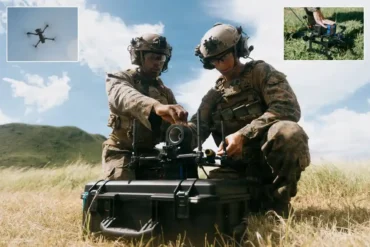
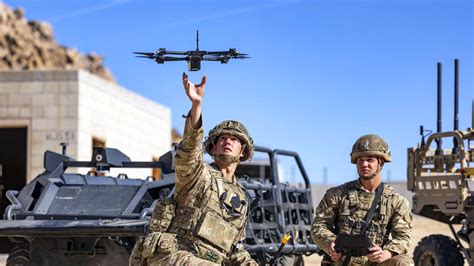
Integrating FPV drones into this environment allows instructors to expose soldiers to realistic drone tactics during training exercises. Trainees can practice reconnaissance missions, simulated strike profiles, counter-drone maneuvers, and rapid intelligence sharing, all using equipment similar to what might appear in operational theaters.
Other National Guard training centers are pursuing similar initiatives. Pennsylvania’s 166th Regional Training Institute has already introduced small unmanned aircraft into large-scale combat exercises. Oregon’s 249th RTI has expanded advanced drone courses, while Georgia has launched a dedicated drone operator pipeline designed to accelerate the adoption of autonomous systems across units.
Together, these programs form an emerging distributed training network that spreads drone expertise throughout the National Guard structure.
Blue UAS and Securing the Drone Supply Chain
Another important dimension of the Tennessee procurement involves supply chain security. The solicitation requires that any proposed aircraft appear on the Blue UAS Cleared List, a program managed by the Defense Innovation Unit (DIU).
Blue UAS identifies drones and components that meet cybersecurity standards, supply chain transparency requirements, and compliance with U.S. defense regulations. By restricting procurement to these approved systems, the National Guard ensures that training drones do not rely on components from restricted foreign suppliers.
By late 2025, the Blue UAS initiative had certified more than thirty-nine drone platforms and over 165 components, providing a vetted ecosystem for military and government users. The program has since transitioned management responsibilities to the Defense Contract Management Agency (DCMA), which oversees compliance and lifecycle oversight.
For training institutions, this requirement ensures that drones used in classrooms and field exercises are not only technologically capable but also secure, legally compliant, and scalable for future deployments.
A Strategic Signal About the Future Battlefield
Although the Tennessee National Guard’s purchase involves only a small number of drones, its strategic implications are significant. Military organizations often experiment with new technologies at limited scale before expanding adoption across the force. Training environments provide the perfect laboratory for refining tactics, testing equipment, and building institutional expertise.
The introduction of FPV strike drones into the National Guard’s training ecosystem suggests a recognition that small unmanned aircraft are now fundamental tools of modern warfare. Just as radios and night-vision equipment became standard soldier gear in previous decades, drone literacy is rapidly becoming a baseline skill.
Future conflicts will likely feature dense layers of aerial sensors, autonomous systems, and electronic warfare. Soldiers who understand how to operate, defend against, and coordinate with drones will possess a decisive advantage. By investing in realistic FPV training platforms today, the National Guard is preparing its formations for a battlefield where speed, data, and unmanned technology shape the outcome of every engagement.