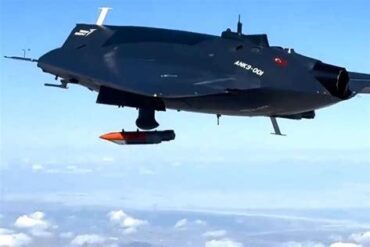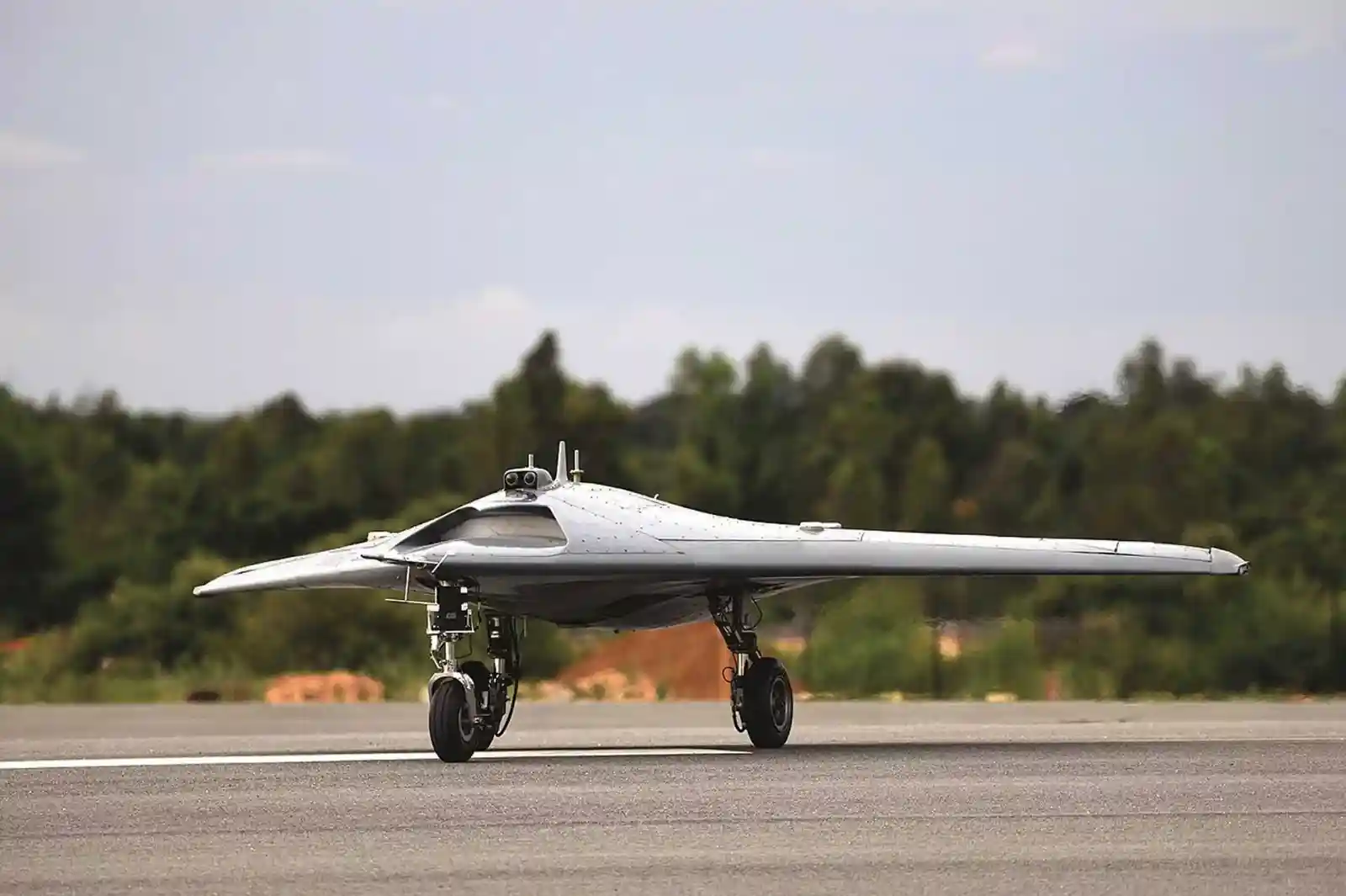
India is preparing to take a decisive step into the future of autonomous warfare with a proposed acquisition of 60 Ghatak stealth unmanned combat aerial vehicles (UCAVs). The recommendation, issued by the Defence Procurement Board on March 3, 2026, signals New Delhi’s intent to field an indigenous deep-strike drone capable of operating in heavily defended airspace. Once approved by the Defence Acquisition Council chaired by Defence Minister Rajnath Singh, the purchase would represent the first operational batch of a system designed to reshape the Indian Air Force’s strike capabilities for the coming decades.
The Ghatak UCAV, developed by India’s Defence Research and Development Organisation (DRDO), is central to the country’s long-term military modernization roadmap known as Vision 2047. This strategic framework envisions a future air force where manned fighters and autonomous aircraft operate together, combining the decision-making abilities of pilots with the persistence and risk tolerance of unmanned systems. By introducing a stealth combat drone capable of penetrating advanced air defense networks, India aims to create a flexible strike force able to engage strategic targets without exposing pilots to direct danger.
The Strategic Role of the Ghatak UCAV in Future Indian Air Power
The proposed fleet of 60 Ghatak drones represents more than a procurement decision; it marks a shift in how India intends to project air power. Unlike surveillance drones or remotely piloted aircraft traditionally used for reconnaissance, the Ghatak is designed as a fully capable combat platform. Its primary missions include deep strike operations, suppression and destruction of enemy air defenses (SEAD/DEAD), and precision attacks on strategic infrastructure.
In practical terms, this means the drone could be deployed ahead of conventional fighter formations to identify radar installations, missile batteries, and command centers, neutralizing them before manned aircraft enter contested airspace. Such operations significantly reduce risk for pilots while maintaining the element of surprise against sophisticated air defense networks.
The Ghatak’s mission architecture also allows for manned-unmanned teaming, where the drone works in coordination with aircraft like the HAL Tejas and the future Advanced Medium Combat Aircraft (AMCA). In these scenarios, the drone acts as both a sensor platform and a strike asset, expanding the reach and survivability of India’s fighter fleet.
Flying-Wing Stealth Design for High-Threat Environments
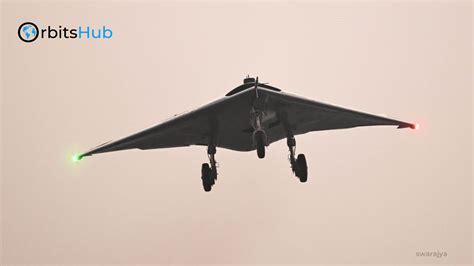
At the heart of the Ghatak’s design is a stealth-optimized flying-wing configuration, a layout chosen to minimize radar detection while maximizing aerodynamic efficiency. The aircraft eliminates traditional tail surfaces, reducing the number of angles that could reflect radar waves back toward enemy sensors. This approach mirrors stealth principles seen in other advanced aircraft designs, where smooth contours and minimal protrusions contribute to a low radar cross-section.
The flying-wing layout also offers operational advantages beyond stealth. Without a conventional fuselage-tail arrangement, the aircraft can distribute fuel and internal systems more efficiently, improving both range and endurance. This becomes particularly important for deep-strike missions that require long transit distances over hostile territory.
Weapons are stored in internal bays, allowing the drone to carry precision-guided munitions, missiles, and smart bombs without compromising its stealth profile. External pylons, commonly used on conventional aircraft, would dramatically increase radar visibility; the Ghatak avoids this vulnerability by concealing its payload within the airframe.
The airframe itself relies heavily on lightweight carbon composite materials, manufactured domestically. These materials reduce weight while maintaining structural strength, enabling the drone to sustain the aerodynamic stresses associated with long-range missions and high-altitude flight.
Indigenous Engine and Propulsion Architecture
A defining feature of the Ghatak program is its reliance on indigenous propulsion technology. The drone is expected to use a dry variant of the Kaveri turbofan engine, developed by the Gas Turbine Research Establishment (GTRE). This engine configuration produces roughly 52 kilonewtons of thrust without afterburning, prioritizing endurance and fuel efficiency rather than extreme speed.
Operating without afterburners offers several advantages. First, it reduces the aircraft’s infrared signature, making it harder for heat-seeking missiles and sensors to detect the drone. Second, it conserves fuel, extending the operational range during long missions that may involve hours of loitering over hostile territory.
The engine intake design further contributes to stealth by shielding reflective compressor blades from radar exposure. Combined with careful airframe shaping and internal weapon carriage, the propulsion system plays a critical role in maintaining the drone’s low-observable characteristics.
Autonomous Systems and Advanced Avionics
One of the most transformative aspects of the Ghatak is its high level of operational autonomy. Rather than relying solely on remote piloting, the aircraft is designed to perform complex missions using onboard computing and sensor systems.
Its avionics suite includes:
- Mission computers capable of autonomous navigation and decision support
- Fire control radar systems for target acquisition
- Identification friend-or-foe (IFF) technology
- Collision avoidance sensors
- Secure data links connecting the drone to command networks
These systems enable the aircraft to detect, track, and engage targets with minimal direct human intervention. While human operators remain involved in mission oversight and rules of engagement, the drone’s autonomous architecture allows it to respond rapidly to changing battlefield conditions.
Sensor fusion technology integrates data from multiple onboard sources, producing a unified operational picture. This capability allows the drone to prioritize targets, avoid threats, and coordinate with other aircraft during complex missions.
From the AURA Program to the Ghatak UCAV
The Ghatak program traces its origins to the Autonomous Unmanned Research Aircraft (AURA) initiative launched in 2009. That earlier effort aimed to explore the feasibility of an indigenous stealth combat drone capable of supporting India’s evolving military strategy.
Although the AURA program concluded in 2013, it laid the groundwork for a more mature project. Development of the Ghatak is led by the Aeronautical Development Establishment (ADE), with design contributions from the Aeronautical Development Agency (ADA) and operational input from the Indian Air Force.
A crucial stepping stone in this development path was the Stealth Wing Flying Testbed (SWiFT), an experimental UAV created to validate key technologies required for the future combat drone.
SWiFT Demonstrator and Early Flight Trials
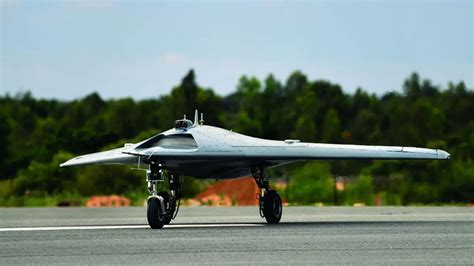
The SWiFT technology demonstrator, sometimes referred to as the Autonomous Flying Wing Technology Demonstrator, represents the experimental backbone of the Ghatak program. Measuring approximately 4 meters in length with a wingspan of 5 meters, the prototype weighs about one tonne and incorporates domestically developed avionics and flight control systems.
Two versions of the demonstrator were built—one with a pure flying-wing configuration and another featuring a vertical stabilizer for comparative testing. These prototypes allowed engineers to evaluate aerodynamic stability, autonomous navigation algorithms, and flight control laws necessary for tailless aircraft.
Ground taxi trials began in June 2021, marking the first step toward validating the system’s operational readiness. The project achieved a major milestone on July 1, 2022, when the drone conducted its maiden flight at the Aeronautical Test Range in Chitradurga, Karnataka. During the flight, the UAV completed takeoff, waypoint navigation, and landing entirely in autonomous mode.
Subsequent tests expanded the drone’s flight envelope, demonstrating high-speed automatic takeoff and landing, stable flight in the flying-wing configuration, and reliable autonomous navigation. These achievements confirmed the viability of the design and paved the way for the full-scale Ghatak combat platform.
Another milestone occurred on December 15, 2023, when the demonstrator completed an upgraded test flight featuring improved avionics and aerodynamic control systems. During this mission, the UAV successfully executed an autonomous landing using onboard sensors and navigation data, eliminating reliance on external radar or ground-based landing aids.
Vision 2047 and the Future of Autonomous Strike Operations
The planned acquisition of 60 Ghatak drones represents the initial operational phase of India’s autonomous combat aviation strategy. Within the Vision 2047 framework, unmanned aircraft will operate alongside conventional fighters to create a multi-layered air combat ecosystem.
In such a structure, stealth drones like the Ghatak could perform a range of roles:
- Penetrating defended airspace to destroy enemy radar and missile systems
- Conducting intelligence, surveillance, and reconnaissance missions
- Launching precision strikes against strategic targets
- Supporting manned aircraft during high-risk operations
The drone’s ability to operate ahead of fighter formations gives commanders a powerful new tool for shaping the battlefield before pilots enter the combat zone.
For India, the Ghatak program also represents a broader push toward technological self-reliance in defense manufacturing. By developing critical technologies domestically—from stealth airframes to turbofan engines and autonomous flight software—the country strengthens its strategic independence while expanding the capabilities of its aerospace industry.
As the procurement proposal moves through the approval process, the Ghatak stands poised to become one of the most ambitious unmanned combat aircraft programs undertaken by India. If fielded as planned, the stealth drone will not only transform how the Indian Air Force conducts strike operations but also signal the country’s arrival as a significant developer of next-generation autonomous combat systems.