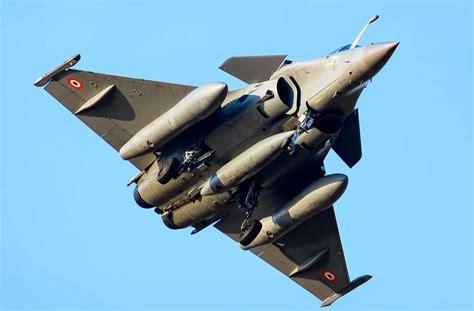
India is advancing toward one of the most consequential combat aviation procurements in its history as negotiations with France intensify over the acquisition of up to 114 Dassault Rafale fighter jets for the Indian Air Force. Anchored within the Multi-Role Fighter Aircraft (MRFA) program, the proposed deal reflects a convergence of operational urgency, industrial strategy, and long-term geopolitical alignment between New Delhi and Paris. With the Indian Air Force facing an acute squadron shortfall and an increasingly complex regional security environment, the Rafale expansion is emerging as a central pillar of India’s airpower recapitalization strategy.
The talks, reported to be in advanced stages, revolve around the induction of 90 Rafales in the F4 standard, with an additional option for 24 aircraft in the future F5 configuration. These negotiations are unfolding against the backdrop of French President Emmanuel Macron’s scheduled visit to India in February 2026, lending the discussions both political momentum and strategic visibility. More than a routine arms purchase, the prospective agreement is structured as a comprehensive aerospace partnership, embedding manufacturing, propulsion, and sustainment capabilities within India’s defense-industrial ecosystem.
The urgency driving this initiative is rooted in the Indian Air Force’s current force posture. With only 29 operational fighter squadrons against an authorized strength of 42, India is contending with the cumulative effects of retirements across legacy platforms such as the MiG-21, MiG-27, Jaguar, and Mirage 2000 fleets. While indigenous programs like the Light Combat Aircraft Tejas are gradually adding capacity, the pace of induction has not fully offset the rate of attrition, compelling the Air Force to pursue a proven, combat-ready solution at scale.
Strategic Logic Behind the MRFA Rafale Push
The MRFA program was conceived to address precisely this gap by inducting 114 modern 4.5-generation fighters capable of multi-role operations across India’s vast and diverse operational theaters. Rather than reopening a prolonged multi-vendor competition, the Indian Air Force has favored a government-to-government route for the Rafale, citing the aircraft’s established performance, logistical familiarity, and existing weapons ecosystem. This approach also benefits from a benchmark price reference established by India’s April 2025 contract for 26 Rafale-M carrier-based fighters, valued at approximately $7.4 billion, offering cost transparency for the much larger air force package.
Financially, the MRFA Rafale deal is expected to reach several tens of billions of euros once aircraft, weapons, training, spares, infrastructure, and long-term sustainment are factored in. The acquisition process will require sequential clearance from the Defence Acquisition Council, followed by cost negotiations and final approval by the Cabinet Committee on Security, with funding allocations spread across multiple defense budget cycles. Despite the scale, the Rafale’s interoperability with existing Indian systems and its high operational availability have strengthened its case within the defense establishment.
Industrial Transformation Through Domestic Manufacturing
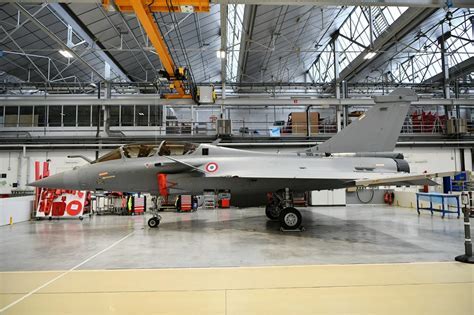
A defining feature of the proposed Rafale expansion is its emphasis on domestic manufacturing as a core element, rather than a peripheral offset obligation. Tata Advanced Systems Limited (TASL) has already entered into agreements with Dassault Aviation to manufacture key Rafale fuselage sections in India, supported by a dedicated production facility currently under construction in Hyderabad. This plant is designed to produce four major fuselage sections not only for Indian requirements but also for global Rafale orders, directly integrating India into Dassault’s international supply chain.
The Hyderabad facility is expected to begin deliveries by fiscal year 2028, with an initial capacity of up to 24 fuselages per year. This scale is intended to support sustained induction into the Indian Air Force while also anchoring long-term maintenance and upgrade pathways. Unlike earlier offset-driven programs, this model embeds Indian industry into the core manufacturing workflow, creating enduring competencies in aerostructures, quality assurance, and precision assembly.
Engines, Sustainment, and Lifecycle Sovereignty
Beyond airframe production, the industrial scope under discussion extends to propulsion and sustainment infrastructure, addressing one of the most critical determinants of fleet availability. Plans include an engine production facility in Hyderabad focused on the Safran M88 turbofan, alongside a maintenance, repair, and overhaul hub near Jewar in Uttar Pradesh. This MRO complex is positioned to support both Indian Air Force Rafales and the Indian Navy’s Rafale-M fleet, enabling shared logistics and economies of scale.
Collectively, these initiatives are projected to bring up to 60 percent of the Rafale’s manufacturing value into India by value, spanning production, maintenance, upgrades, and lifecycle support. For India, this represents a shift from buyer status to co-producer and long-term stakeholder, enhancing resilience against supply chain disruptions and reducing dependence on overseas sustainment during periods of heightened operational tempo.
Operational Lessons and Squadron Realities
The operational rationale for expanding the Rafale fleet was sharpened by its employment during Operation Sindoor in May 2025, when Indian forces conducted precision strikes under conditions of heightened regional tension. While India officially stated that no aircraft were lost and that all Rafales returned safely to base, Pakistan issued counterclaims alleging the downing of multiple Indian aircraft, including a Rafale. These assertions were formally rejected by New Delhi, but the episode underscored a more structural issue: numerical limitations constrain sustained operations, regardless of platform capability.
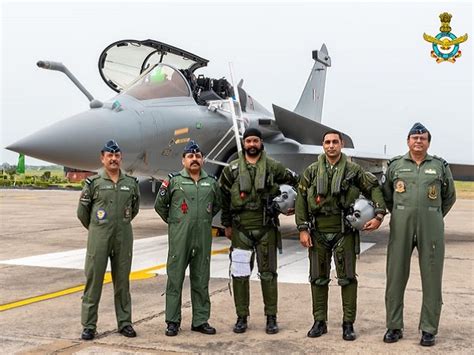
Frontline assets such as the Rafale and the Su-30MKI are widely regarded within India as technologically competitive in terms of sensors, weapons, and electronic warfare. However, with only 29 squadrons available, maintaining continuous readiness across multiple fronts places strain on personnel, maintenance cycles, and sortie generation rates. The MRFA Rafale induction is therefore as much about restoring mass and persistence as it is about acquiring advanced technology.
Rafale’s Design Philosophy and Export Appeal
The Rafale’s origins trace back to the late 1980s, when France sought to replace a diverse fleet—including the Mirage F1, Jaguar, and Super Étendard—with a single, sovereign multirole platform for both air force and naval use. Developed entirely under national control, the Rafale avoided the export constraints often associated with multinational programs, allowing France to retain full authority over software, weapons integration, and upgrades. This autonomy later became a decisive factor for export customers seeking operational independence.
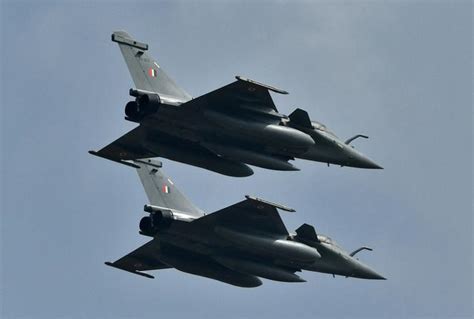
Technically, the Rafale was engineered for true multirole flexibility, capable of switching between air-to-air and air-to-ground missions within the same sortie. This contrasts with fighters that rely on specialized variants or reconfiguration between missions, offering commanders greater adaptability in fast-moving operational scenarios. For India, operating in geographically dispersed theaters with varied threat profiles, this versatility has proven particularly valuable.
F4 Today and the F5 Bridge to the Future
Under the MRFA proposal, the bulk of the aircraft would be delivered in the F4 standard, which represents the current apex of Rafale capability. F4 introduces enhanced networking, expanded weapons compatibility, improved sensor fusion, and refinements to the SPECTRA electronic warfare system, strengthening survivability in contested environments. These features are already aligned with India’s emphasis on network-centric warfare and joint operations.
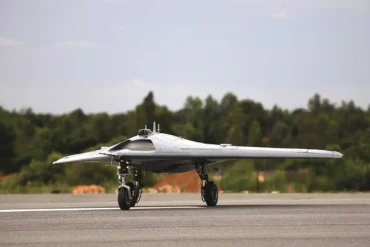
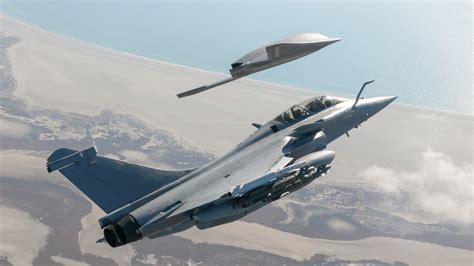
The optional F5 standard, expected to enter service in the 2030s, is conceived as a capability bridge rather than a generational leap. It is designed to extend the Rafale’s relevance well beyond 2040 by incorporating artificial intelligence-assisted decision support, deeper integration with unmanned systems such as the Dassault nEUROn, and enhanced data processing for operations in heavily jammed battlespaces. Rather than transforming the Rafale into a stealth aircraft, F5 aims to ensure seamless operation within mixed manned-unmanned formations, preserving combat effectiveness against evolving threats.
Performance, Payload, and Combat Credibility
In its most advanced configurations, the Rafale is powered by two Safran M88 engines and equipped with the RBE2 active electronically scanned array radar, delivering robust detection and tracking capabilities across multiple target sets. With a maximum takeoff weight of approximately 24.5 tonnes and an external payload capacity of around 9.5 tonnes across 14 hardpoints, the aircraft can carry a diverse mix of air-to-air missiles, precision-guided munitions, and anti-ship weapons.
Its combat radius exceeding 1,800 kilometers, depending on mission profile, provides strategic reach across the Indian Ocean region and along India’s land borders. Sensor fusion across radar, infrared, electronic support measures, and data links allows pilots to manage complex engagements with reduced cognitive load, a critical advantage in high-intensity scenarios characterized by dense air defenses and electronic interference.
A Strategic Signal Beyond Numbers
Beyond force structure and industrial gains, the prospective acquisition of 114 Rafales sends a broader strategic signal. It reinforces India-France defense ties, positions India as the only country besides France to operate both land-based and carrier-capable Rafales, and underscores New Delhi’s preference for reliable, sovereign partnerships over transactional procurement. As negotiations move toward conclusion, the MRFA Rafale deal stands poised to reshape India’s airpower trajectory for decades, blending operational necessity with industrial ambition in a single, far-reaching program.