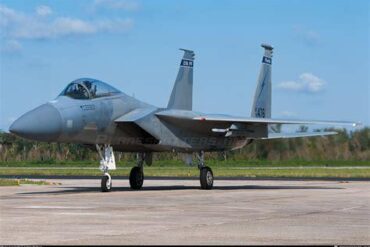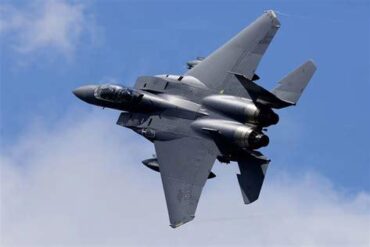
For nearly half a century, one aircraft has embodied the United States Air Force’s philosophy of absolute air dominance. The McDonnell Douglas F-15C/D Eagle is not merely a fighter jet; it is a technological statement forged during the Cold War and refined through decades of operational experience. Designed to seize control of the skies and never surrender it, the Eagle developed a reputation unmatched in modern air combat.
What makes the story remarkable today is not simply the aircraft’s legendary combat record. It is the fact that, despite being designed in the early 1970s, the F-15C/D remains the oldest dedicated fighter jet still flying within the U.S. Air Force’s operational structure, particularly through the Air National Guard. In a world increasingly dominated by stealth fighters and digital warfare systems, the continued presence of this fourth-generation aircraft reveals a powerful truth about aerospace engineering: a well-designed airframe can transcend generations.
The retirement of active-duty F-15C/D squadrons in 2025 marked the closing of a monumental chapter in aviation history. Yet the Eagle’s story did not end on that day. Across several American states, veteran aircraft still sit alert on runways, ready to launch within minutes to defend national airspace. These jets, many of which rolled off the production line during the Reagan administration, remain capable guardians of American skies.
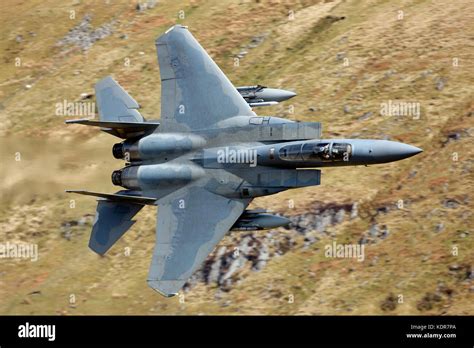
Understanding why the F-15C/D Eagle continues flying decades after its introduction requires looking back to the turbulent geopolitical climate that gave birth to it. The aircraft emerged from a moment when the United States realized it needed something radically better than what it already had.
Cold War Origins: The Birth of the F-15 Eagle
The late 1960s represented a turning point for American fighter design. Combat experiences during the Vietnam War exposed critical weaknesses in existing aircraft, particularly the F-4 Phantom II, which had been expected to dominate aerial combat. While powerful and versatile, the Phantom struggled in close-range dogfights against smaller Soviet-built fighters such as the MiG-17 and MiG-21.
At the same time, intelligence reports about the Soviet MiG-25 “Foxbat” interceptor triggered widespread concern inside the Pentagon. Early Western estimates suggested the Foxbat possessed extraordinary speed, altitude capability, and radar performance. Although later analysis showed many of those fears were exaggerated, the initial perception created urgency.
The United States Air Force responded with a bold concept: build a pure air superiority fighter designed from the ground up to defeat any adversary in the sky.
This initiative eventually produced the F-15 Eagle, developed by McDonnell Douglas. The aircraft was engineered around a straightforward yet ambitious doctrine: it must be able to outclimb, outturn, and outrun any opponent.
The result was revolutionary for its time. The Eagle featured:
- A powerful twin-engine configuration
- A large wing area for exceptional maneuverability
- A massive radar capable of detecting targets far beyond visual range
- The ability to carry multiple advanced air-to-air missiles
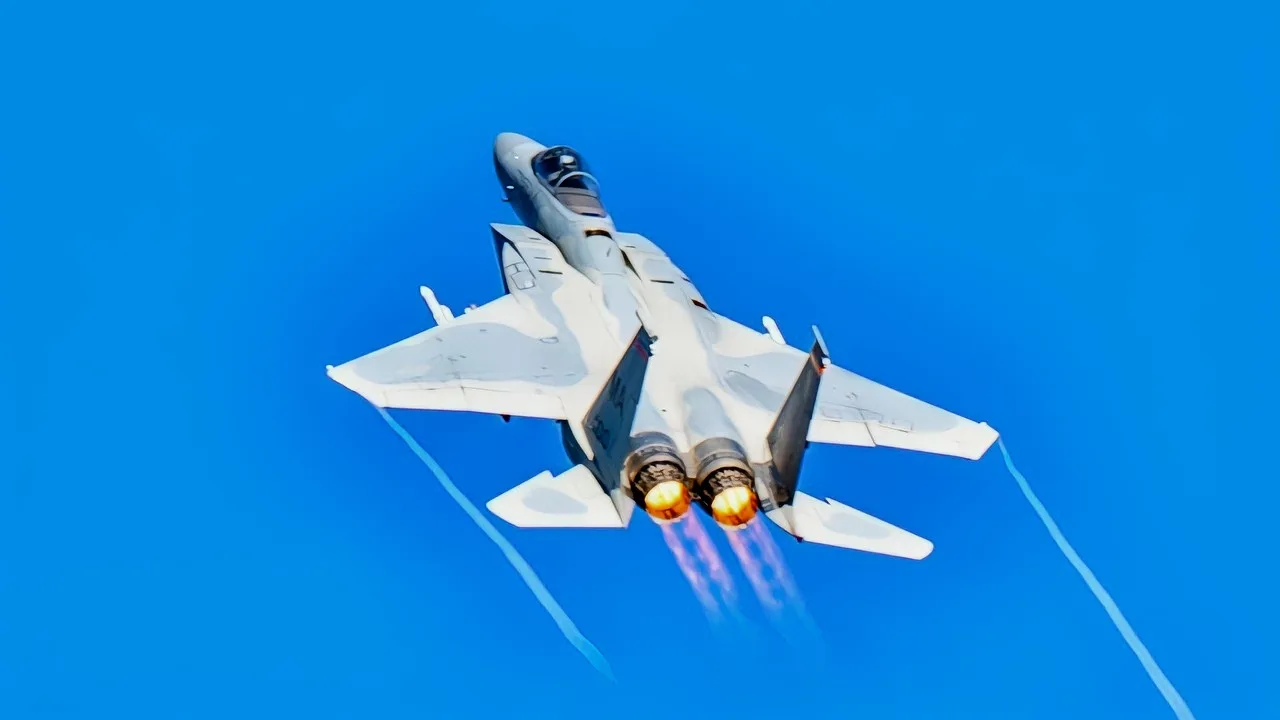
When the first F-15A entered operational service in 1976, it immediately proved that the design philosophy worked. Pilots described the aircraft as astonishingly powerful, capable of climbing almost vertically while carrying a full weapons load.
Just three years later, the improved F-15C and F-15D variants entered service, bringing additional fuel capacity, greater payload capability, and upgraded avionics.
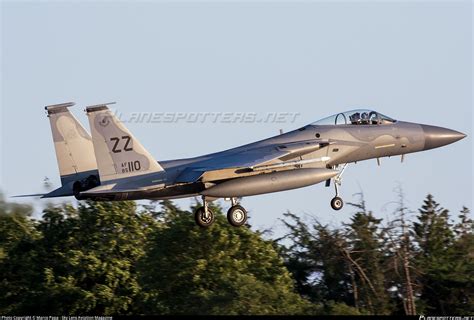
These upgrades allowed the Eagle to patrol vast airspaces and intercept threats at long distances—exactly the mission the Air Force had envisioned.
The Undefeated Air Combat Record
A fighter aircraft earns its reputation in combat, not on paper specifications. The F-15 Eagle built one of the most remarkable records in aviation history.
Across multiple conflicts involving U.S. allies and international operators, the Eagle achieved more than 100 confirmed air-to-air victories without a single combat loss.
This extraordinary record includes engagements during:
- The Lebanon War
- The First Gulf War
- Various Middle Eastern conflicts involving Israeli F-15 units
The combination of powerful radar, high thrust-to-weight ratio, and advanced missile systems allowed Eagle pilots to detect enemy aircraft early and engage them long before opponents could respond effectively.
Even in situations where dogfighting became unavoidable, the aircraft’s design offered enormous advantages. Pilots consistently reported that the Eagle maintained energy better than many competing fighters, allowing it to regain speed and altitude faster after aggressive maneuvers.
Former F-15 pilot Shari Williams once highlighted this advantage in a revealing comparison with the F-16. While the F-16’s fly-by-wire system limited how quickly control inputs could respond near aerodynamic limits, the F-15’s more direct control system allowed pilots to push the aircraft harder in certain maneuvering scenarios.
In close-range engagements, that difference could determine who survived.
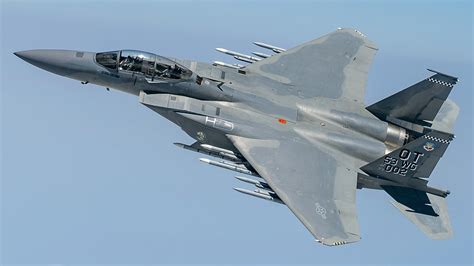
This lethal combination of power and precision made the Eagle a symbol of air dominance across decades of military aviation.
The Last Operational Eagles in the Air National Guard
When the U.S. Air Force retired its final active-duty F-15C/D squadrons in 2025, it marked the end of routine Eagle operations in frontline units. However, the aircraft continues flying within the Air National Guard (ANG), an essential component of the nation’s Total Force defense structure.
Guard units across the United States maintain a crucial mission known as Aerospace Control Alert (ACA). This role requires fighter aircraft and crews to remain ready around the clock to intercept unidentified or potentially hostile aircraft approaching American airspace.
Several Air National Guard wings have historically operated the Eagle in this role, including:
- 104th Fighter Wing – Massachusetts
- 142nd Fighter Wing – Oregon
- 144th Fighter Wing – California
- 159th Fighter Wing – Louisiana
- 173rd Fighter Wing – Oregon
These units cover some of the most strategically sensitive regions of the United States. Their pilots monitor dense civilian air traffic corridors, coastal approaches, and international air routes where unidentified aircraft occasionally appear.
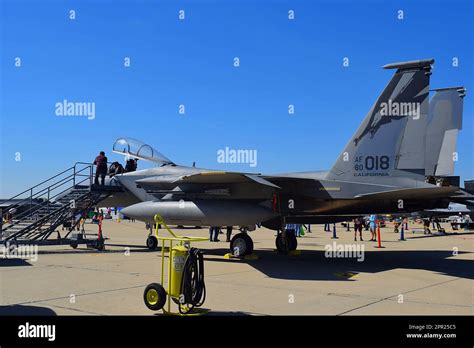
When an unknown aircraft enters protected airspace, Eagle crews can launch within minutes. Their mission might involve identifying a lost civilian aircraft, escorting a plane experiencing communication failure, or intercepting foreign military patrol aircraft approaching U.S. territory.
Many of the Eagles assigned to these units were built in the early 1980s, meaning they have accumulated decades of operational service. Yet they remain capable of performing demanding interception missions thanks to continuous upgrades and meticulous maintenance.
Modern Upgrades That Extended the Eagle’s Life
Keeping a fighter jet operational for more than forty years requires extraordinary effort. Engineers and maintainers have continuously modernized the F-15C/D fleet to ensure the aircraft could remain relevant against evolving threats.
One of the most significant improvements came with the installation of the AN/APG-63(V)3 Active Electronically Scanned Array (AESA) radar.
Unlike traditional mechanically scanned radar systems, AESA technology uses hundreds of small transmit-receive modules to steer radar beams electronically. This allows the system to track multiple targets simultaneously while resisting enemy electronic jamming.
The result dramatically increased the Eagle’s situational awareness and engagement range.
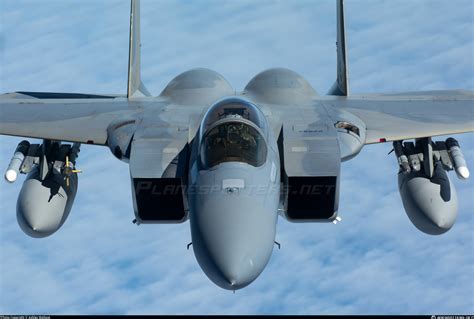
Cockpit modernization also transformed the pilot’s experience. The original analog instrumentation of the 1970s gradually gave way to digital multifunction displays, improved mission computers, and secure data networks such as Link 16, enabling the aircraft to share targeting information with other platforms.
Weapon systems also evolved. Modern F-15C/D aircraft can carry:
- AIM-120D AMRAAM beyond-visual-range missiles
- AIM-9X Sidewinder short-range missiles
- Helmet-Mounted Cueing Systems allowing pilots to lock targets simply by looking at them
Structural upgrades played an equally critical role. Airframes approaching or exceeding 8,000 flight hours required reinforcement of wings, fuselage sections, and internal components to maintain safety and performance.
These improvements effectively turned the aging Eagle into what many pilots informally describe as a “Generation 4.5 fighter”—not stealthy, but still extremely capable.
How the Eagle Compares With Other Long-Serving U.S. Air Force Aircraft
Although the F-15C/D Eagle is the oldest fighter type still flying in the Air Force structure, it is far from the oldest aircraft overall. Several other military platforms have served even longer, demonstrating the extraordinary longevity of well-designed aerospace systems.
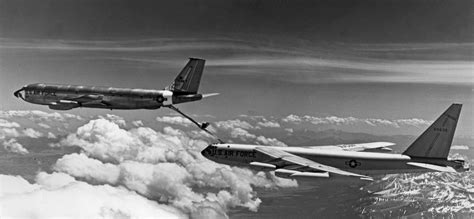
The most famous example is the B-52H Stratofortress, a strategic bomber first delivered in the early 1960s. The Air Force expects this aircraft to remain operational until at least the 2050s, meaning some airframes could approach a century of service.
Similarly, the KC-135 Stratotanker, the backbone of America’s aerial refueling capability, entered service in the late 1950s. Many aircraft still flying today are older than the pilots who operate them.
On the tactical side of aviation, the A-10 Thunderbolt II and F-16 Fighting Falcon have also demonstrated remarkable longevity. The F-16, introduced in the 1970s and 1980s, has undergone numerous modernization programs and now serves as one of the primary multi-role fighters across the U.S. and allied air forces.
Within this context, the F-15C/D’s long career fits a broader pattern in American military aviation. Aircraft that prove adaptable and cost-effective are often upgraded rather than replaced immediately.
Design excellence buys time.
The Final Operational Years of the Eagle
Even during its final operational phase, the F-15C/D remained far from obsolete. Guard units continued relying on it for daily air sovereignty missions, which require rapid interception capability rather than stealth penetration.
The aircraft’s extraordinary climb rate and acceleration make it ideal for scramble missions. Once airborne, the Eagle can quickly reach supersonic speeds and intercept targets dozens or even hundreds of miles away.
Typical missions include:
- Intercepting unidentified aircraft entering restricted airspace
- Escorting civilian aircraft that have lost radio communication
- Monitoring foreign military patrol aircraft near U.S. territory
- Participating in joint training exercises with allied forces
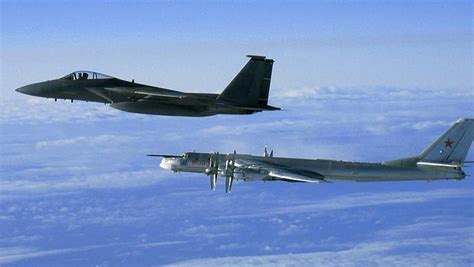
These missions rarely make headlines, yet they occur regularly. In several instances, U.S. fighters have intercepted Russian Tu-95 strategic bombers flying near Alaska or along North American air defense boundaries.
In these encounters, the Eagle performs exactly the role it was built for decades earlier: a fast, powerful interceptor ensuring that no unknown aircraft approaches American territory without identification.
The Transition to the F-15EX Eagle II
As remarkable as the F-15C/D’s longevity has been, the aircraft cannot remain operational forever. The U.S. Air Force has begun replacing the aging fleet with a modern successor known as the F-15EX Eagle II.
Although the new aircraft shares the same aerodynamic lineage as the original Eagle, the similarities end there. The F-15EX incorporates a completely modern digital architecture, advanced sensors, and a significantly larger weapons capacity.
It is designed to carry up to 12 air-to-air missiles while integrating seamlessly into modern network-centric warfare environments.
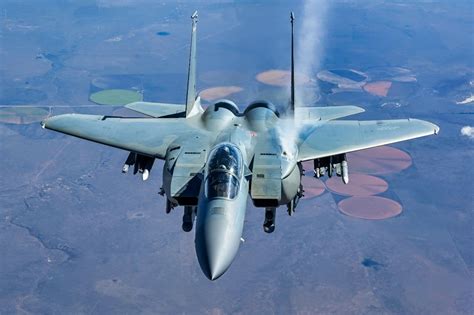
The F-15EX also benefits from structural improvements that allow the aircraft to reach 20,000 flight hours, more than double the lifespan of earlier models.
This transition reflects a strategic shift. The Air Force increasingly relies on stealth platforms such as the F-35 Lightning II for penetrating contested airspace, while aircraft like the F-15EX provide heavy weapons capacity, long range, and rapid response capability.
The Eagle lineage therefore continues, but in a dramatically updated form.
The Legacy of the Oldest Fighter Still Flying
The story of the F-15C/D Eagle reveals something profound about aerospace engineering and military strategy. Not every aircraft needs to be replaced immediately when new technology emerges. Sometimes the smartest approach is to evolve a proven platform until it finally reaches the limits of its potential.
For more than forty years, the Eagle served as the backbone of American air superiority. It guarded the skies during the Cold War, patrolled no-fly zones in the Middle East, and continued protecting the homeland long after its original designers had retired.
Even today, spotting an operational F-15C on an Air National Guard ramp is like seeing living aviation history. The aircraft connects generations of pilots, engineers, and maintainers who built and preserved one of the most successful fighter designs ever created.
When the final Eagle eventually leaves service, the sound of its twin Pratt & Whitney F100 engines launching into an emergency scramble will fade from the American soundscape.
Yet its legacy is secure.
The F-15C/D Eagle remains the oldest fighter jet still flying in the U.S. Air Force, and its decades of undefeated performance ensure that it will always occupy a legendary place in the history of air combat.