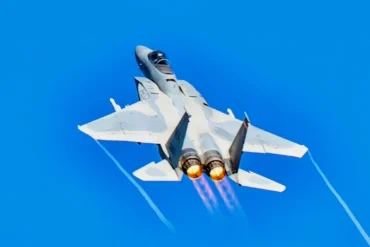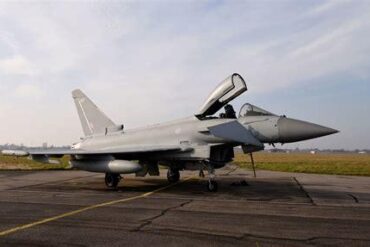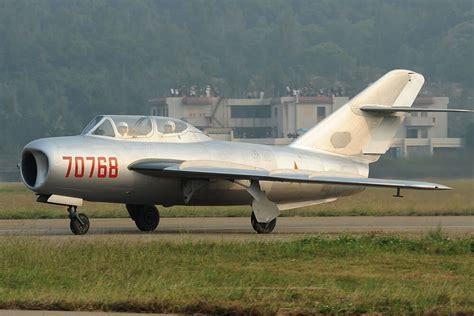
The modern battlefield is dominated by fifth-generation fighters like the F-35 Lightning II, boasting stealth, advanced avionics, and superior agility. However, amidst the buzz surrounding these airborne marvels, a relic from the Cold War continues to fly, defying age and obsolescence. The Shenyang J-5, a Chinese-built variant of the Soviet MiG-17, holds the distinction of being the oldest fighter jet still in active military service today. Despite being technologically antiquated and vastly outmatched, the Democratic People’s Republic of Korea (DPRK) continues to rely on this vintage jet, making it an unlikely yet fascinating subject in global aviation.
Origins of the Shenyang J-5: A Soviet Blueprint
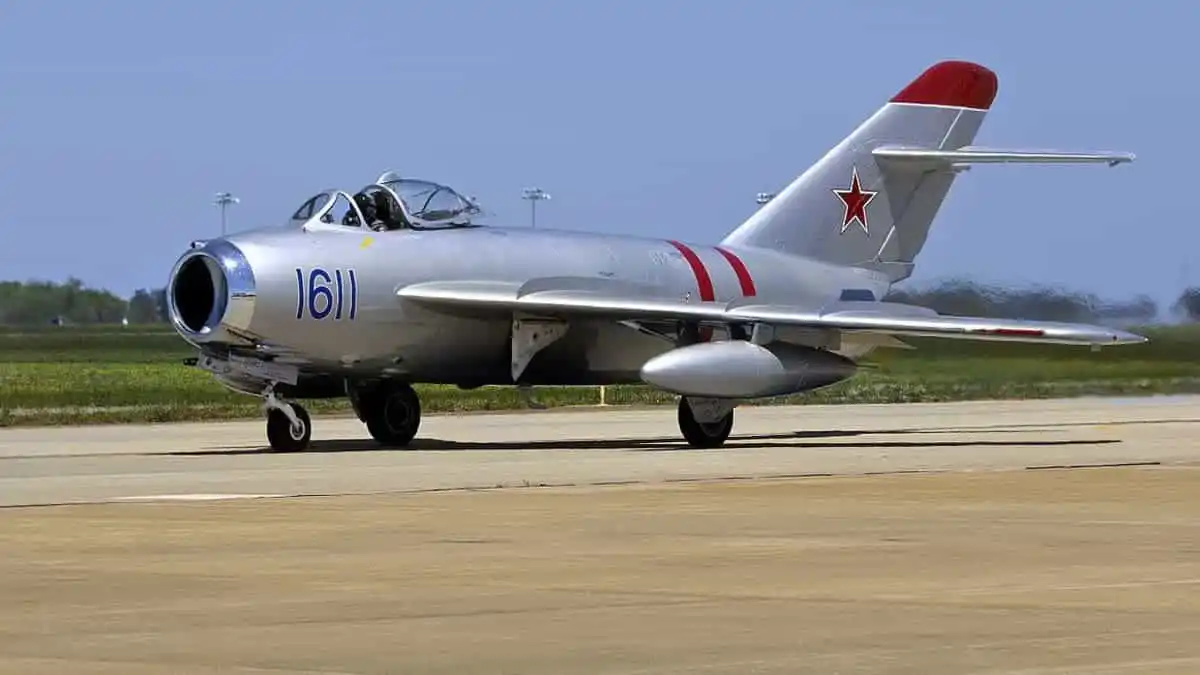
The Shenyang J-5‘s lineage traces directly to the Mikoyan-Gurevich MiG-17, itself a successor to the legendary MiG-15, which achieved infamy during the Korean War. Designed in the early 1950s by the Soviet Union, the MiG-17 addressed several performance issues of its predecessor, introducing a more swept-back wing design, increased stability at high speeds, and afterburning engines for greater thrust.
In 1956, China obtained a license to manufacture the aircraft domestically, resulting in the J-5’s maiden flight on July 19, 1956. It became the first jet fighter in service with the People’s Liberation Army Air Force (PLAAF). Exported under the name F-5, the aircraft saw widespread proliferation, eventually reaching more than 20 countries. However, only North Korea still operates the J-5 in a limited but symbolically significant capacity.
North Korea’s Enduring Use of the J-5 Fleet
With most nations long having retired the MiG-17 and its derivatives, North Korea’s continued use of the J-5 may seem bizarre, but it is grounded in both strategic necessity and limited access. The DPRK’s international isolation, particularly due to long-standing sanctions and arms embargoes, severely restricts its ability to acquire or manufacture modern fighter jets.
As a result, the nation has turned inward, preserving and refurbishing its existing stockpile. According to the 2025 World Air Forces report, North Korea is believed to maintain approximately 106 operational J-5s. Though unverified, these numbers reflect the scale of the DPRK’s effort to keep this aging airframe airborne, likely through a mix of reverse engineering, parts cannibalization, and underground manufacturing.
Technical Specifications: What the J-5 Can (and Can’t) Do
Technologically speaking, the J-5 is decades behind even third-generation aircraft. But understanding its capabilities provides insight into how it might still serve a role within North Korea’s broader defense posture.
- Engine: Klimov VK-1F afterburning turbojet
- Top Speed: 712 mph (subsonic)
- Service Ceiling: 54,790 feet
- Range: Approximately 1,035 miles with external drop tanks
- Armament:
- One 37mm Nudelman N-37 cannon
- Two 23mm NR-23 cannons
- Up to four early-generation air-to-air missiles
The VK-1F engine, itself a modified version of a British design, delivers enough thrust for modest air defense but lacks the thrust-to-weight ratio and fuel efficiency of contemporary engines. In terms of firepower, the J-5’s cannons are formidable against unarmored targets but irrelevant in a modern beyond-visual-range (BVR) combat scenario. Its outdated missiles pale in comparison to Western models like the AIM-120 AMRAAM or Russia’s R-77.
Strategic Utility in a Modern Context
From a purely tactical perspective, the J-5 is obsolete. It cannot compete with modern fighters in radar stealth, avionics, electronic warfare, or maneuverability. However, North Korea’s doctrine does not rely on air superiority but rather deterrence, asymmetric warfare, and layered defense. In that context, the J-5’s continued deployment can serve several secondary purposes:
- Pilot training: Simpler and cheaper to operate, the J-5 serves as a basic flight platform for new pilots.
- Decoy operations: In a conflict, older jets can be used to overwhelm enemy radar systems or lure out more advanced fighters.
- Air policing: North Korea’s limited airspace can still be patrolled effectively using subsonic jets.
- Symbolic and psychological leverage: Maintaining a fleet, however antiquated, projects the image of readiness and national sovereignty.
Historical Legacy of the MiG-17 and Its Derivatives
To grasp the full importance of the J-5, one must consider the impact of the MiG-17 during its heyday. In conflicts like the Vietnam War, the MiG-17 proved surprisingly effective against more advanced U.S. fighters due to its tight turning radius and cannon firepower. Pilots flying aircraft like the F-4 Phantom II had to adjust tactics to avoid being outmaneuvered by the nimble MiG.
This historical record explains why a platform like the J-5, though outdated, is not utterly useless. In controlled airspace with minimal adversarial interference, it can still perform basic roles that add to North Korea’s complex and layered military strategy.
Maintenance, Challenges, and Airworthiness Concerns
Operating a fleet of aircraft that are nearly 70 years old comes with serious logistical challenges. Airframe fatigue, metal corrosion, and obsolete electronics pose persistent risks. Without access to original parts or modern replacements, the DPRK is likely relying on:
- 3D printing and machining to fabricate missing components
- Parts cannibalization from decommissioned units
- Reverse-engineering of outdated Soviet schematics
- Indigenous improvisation for systems like avionics or hydraulic controls
The question of whether these aircraft are genuinely combat-ready or exist primarily for ceremonial or training purposes remains open. Flight testing, engine runtime limitations, and repair documentation are all unknowns in North Korea’s highly secretive defense ecosystem.
How Long Can the J-5 Keep Flying?
While extraordinary that the J-5 still flies in 2025, its operational timeline is finite. With each passing year, the airframes grow more fragile, the technology more irrelevant. However, North Korea’s resistance to modernization pressures, coupled with an apparent commitment to maintaining historical hardware, means the J-5 may remain aloft for a few more years — perhaps even another decade.
Unless North Korea undergoes radical political or economic reform that permits the acquisition of newer aircraft, the J-5 will likely continue its symbolic vigil. Its retirement will not be dictated by strategic doctrine, but by the simple physics of aging aluminum and dwindling spare parts.
A Symbol of Isolation and Resilience
In many ways, the Shenyang J-5 is more than an aircraft. It is a relic of the Cold War, a mechanical testament to a country that has long charted its own course. While the jet may not influence any future war’s outcome, its presence speaks volumes about North Korea’s unique blend of technological austerity, strategic stubbornness, and military symbolism.
At a time when aerial combat is increasingly defined by artificial intelligence, autonomous drones, and satellite-guided precision, the continued flight of the J-5 is a surreal reminder of a bygone era — and a startling indicator that in some corners of the world, the past is very much still airborne.