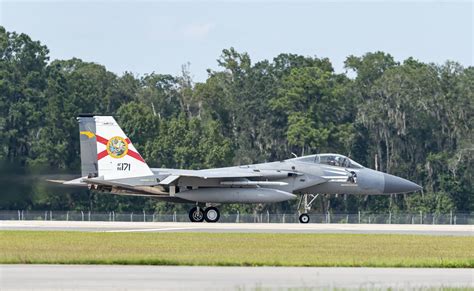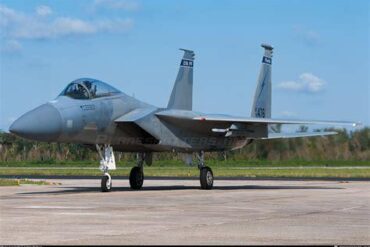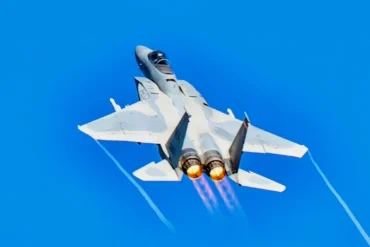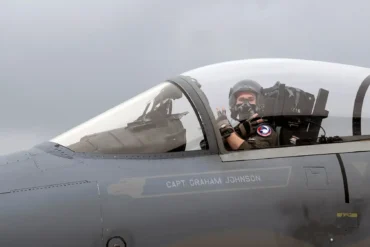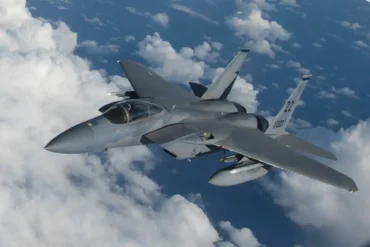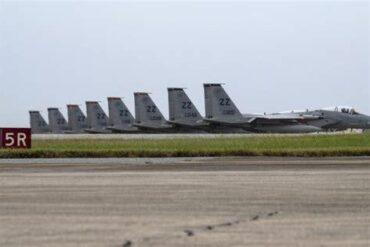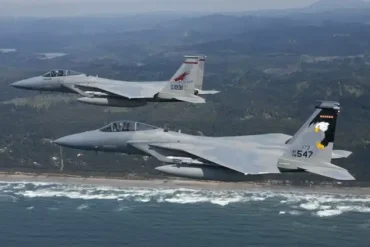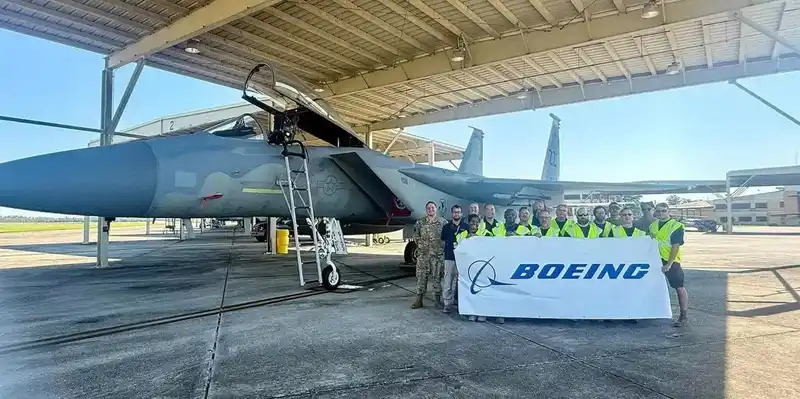
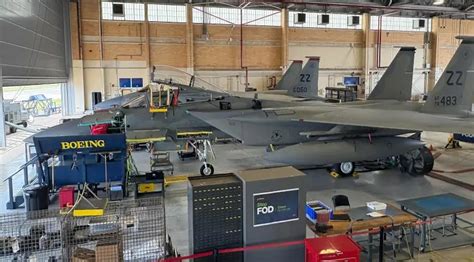
The F-15C Eagle, one of the most iconic air superiority fighters in U.S. Air Force history, has taken a major step toward modernization as Boeing officially completed upgrades on 37 aircraft under a long-running sustainment and enhancement program. The work, carried out at the Louisiana Air National Guard Base in New Orleans, ensures the venerable Eagle remains a capable and secure platform well into the 2030s, despite nearing its fifth decade of active service.
The upgrades mark the end of a four-year mission undertaken by Boeing’s Government Services team, reinforcing the U.S. Air Force’s commitment to maintaining combat readiness in an era of rapid technological evolution. Each aircraft underwent a detailed 62-day installation cycle, executed by a 30-member Boeing team, the majority of whom are military veterans with deep operational expertise in fighter maintenance and systems integration.
Strategic Purpose of the F-15C Modernization Program
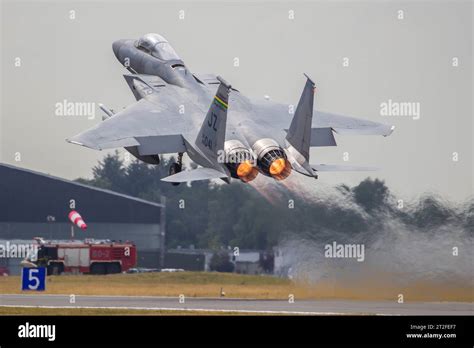
The modernization of the F-15C Eagle fleet was not a mere refresh of avionics or aesthetics—it was a strategic imperative. As adversaries continue to field advanced fifth-generation fighters and integrate multi-domain networks, the United States must ensure that legacy platforms like the F-15C remain interoperable, reliable, and lethal. Boeing’s upgrades directly address these needs by embedding the aircraft with next-generation computing and secure communication systems.
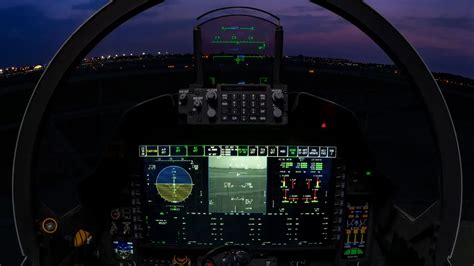
At the heart of these enhancements are two critical components: the Advanced Display Core Processor II (ADCP-II) and the Multi-Function Information Distribution System – Joint Tactical Radio System (MIDS-JTRS). Together, these technologies deliver a substantial leap in data processing, situational awareness, and secure tactical communications—elements essential to modern warfare.
Inside the Technology: ADCP-II and MIDS-JTRS
The ADCP-II serves as the aircraft’s mission computer brain, capable of processing immense amounts of data at speeds far exceeding its predecessor. It allows for the integration of advanced radar modes, sensor fusion, and real-time target tracking, all while supporting emerging combat software frameworks. This level of processing ensures the F-15C can still perform beyond-visual-range engagements with the precision and reaction speed expected in a 21st-century air battle.
Complementing this is the MIDS-JTRS, a powerful multi-channel radio system that enables secure, jam-resistant communications across air, land, and sea platforms. The system enhances data-link capabilities for both voice and digital transmissions, facilitating smoother coordination in network-centric warfare environments. Through MIDS-JTRS, the F-15C can seamlessly connect with AWACS, command centers, and even unmanned aircraft, ensuring its operational value remains unmatched among fourth-generation fighters.
A Testament to Veteran Expertise and Partnership
The successful completion of this modernization effort underscores Boeing’s continued partnership with the U.S. Air Force and the Louisiana Air National Guard’s 159th Fighter Wing. According to Ryan Hudson, Boeing’s F-15 Modification Manager, “the dedication of our mostly veteran team, coupled with advanced computing technology, ensures the F-15C remains relevant well into the 2030s.” This statement highlights both the human and technological aspects of the project—fusing field experience with cutting-edge innovation.
Each aircraft modification represented a symphony of engineering precision, logistics coordination, and mission assurance. The 30-person team worked tirelessly under demanding schedules, ensuring every aircraft was delivered on time and to the highest standards of airworthiness.
The Role of the 159th Fighter Wing in Modern Air Defense
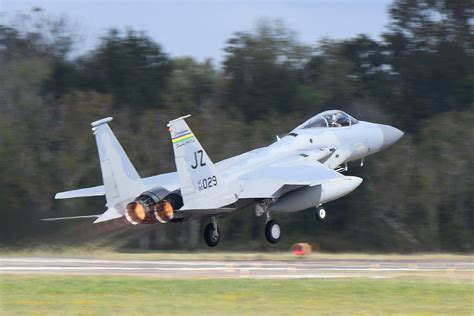
The 159th Fighter Wing (FW), headquartered at the Naval Air Station Joint Reserve Base New Orleans, has been an enduring symbol of air defense excellence for nearly a century. Tracing its origins back to World War II, the Wing transitioned to the F-15A/B Eagles in 1985 and later adopted the F-15C/D models in the mid-2000s. Its pilots have played pivotal roles in Operation Enduring Freedom, Operation Northern Watch, Operation Southern Watch, Kosovo, and the Global War on Terrorism.
Following the attacks of September 11, 2001, the 159th FW assumed critical NORAD alert missions for the Gulf Region, maintaining 24-hour readiness with two armed Eagles on standby. The completion of Boeing’s modernization work extends this tradition of readiness—ensuring that when the call comes, the unit can respond with aircraft equipped for modern, digital-age combat.
Extending the Eagle’s Flight Into the 2030s
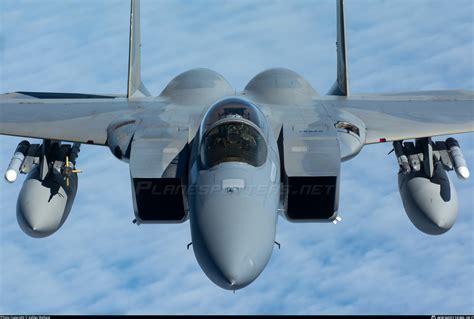
With nearly 50 years of operational service, the F-15C Eagle continues to defy the limits of time and technology. Designed during the Cold War, its twin-engine thrust-to-weight ratio, high maneuverability, and combat-proven avionics made it one of the most successful fighters in history, boasting an air-to-air kill ratio exceeding 100:0 in global combat records.
The recent upgrades serve as a bridge to the future, ensuring that even as newer platforms like the F-15EX Eagle II and the F-35A Lightning II enter service, the F-15C remains a formidable presence in homeland defense and allied operations. The introduction of the ADCP-II and MIDS-JTRS provides a technological backbone for future software-based enhancements, reducing the need for costly hardware retrofits and enabling seamless mission adaptability.
Engineering for Longevity and Lethality
Modernization is not only about new hardware—it’s about systemic resilience. The ADCP-II architecture supports modular upgrades, allowing for software-defined capabilities such as new radar integration, cyber-hardening, and electronic warfare adaptability. Combined with the MIDS-JTRS, which ensures encrypted interoperability with fifth-generation fighters, the F-15C now possesses an extended tactical lifespan that will carry it well into the next decade of air operations.
The upgrades also emphasize mission assurance—each system tested under rigorous Air Force certification processes to validate reliability under extreme operational conditions. The result is a fleet of Eagles that not only retain dominance in air-to-air engagements but also act as data relays and network enablers within the larger U.S. and allied combat ecosystem.
Boeing’s Broader Role in Fighter Sustainment
Boeing’s success in delivering this program highlights the company’s expertise in sustaining legacy aircraft while paving the way for next-generation integration. Similar modernization frameworks are being applied to the F-15E Strike Eagle and the F-15EX, creating a family of interoperable platforms that can share data, tactics, and mission support networks.
This continuity of design and support reflects Boeing’s long-term strategy—ensuring that no aircraft is left behind as the Air Force transitions to a multi-domain, digital combat environment. The F-15C’s modernization is not merely about keeping it in the air; it’s about elevating its role as a reliable, networked combat asset capable of contributing meaningfully to integrated operations alongside the latest generation of fighters.
The Path Toward Replacement: F-15EX and F-35A
While the F-15C continues to soar with renewed capability, the Air Force’s future fleet roadmap includes its gradual replacement with the F-15EX Eagle II and, in some units, the F-35A Lightning II. The 159th Fighter Wing is among those slated for eventual transition. However, the completion of Boeing’s current upgrades ensures that there will be no capability gap during this period of transition. The legacy Eagles will remain on active duty, ready to defend U.S. airspace and participate in joint operations.
The F-15EX, with its advanced fly-by-wire controls, digital backbone, and open mission systems architecture, represents the evolutionary successor to the F-15C. Yet, the older Eagles—enhanced by ADCP-II and MIDS-JTRS—still provide a critical training and operational bridge, enabling pilots to transition smoothly between generations while maintaining combat readiness.
Legacy of the Eagle: A Symbol of Air Superiority
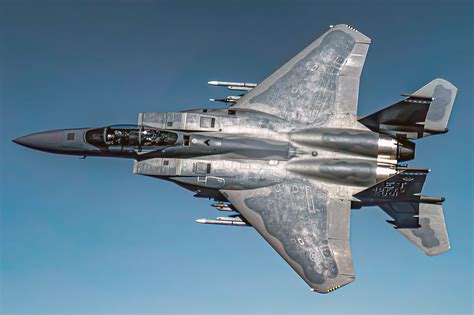
Few aircraft have achieved the legendary status of the F-15C Eagle. Since its first flight in 1972, it has been a symbol of uncontested air dominance, capable of outperforming adversaries with its twin Pratt & Whitney F100 engines, high-speed maneuverability, and unmatched kill record. The aircraft’s airframe, designed with low wing-loading and optimized thrust-to-weight ratio, allows it to execute tight turns without sacrificing speed—a critical advantage in dogfight scenarios.
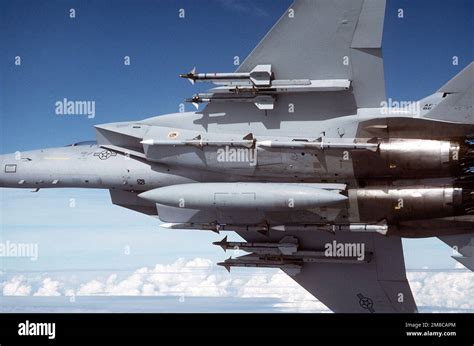
Armed with AIM-120 AMRAAMs, AIM-9 Sidewinders, and an internal 20mm M61 Vulcan cannon, the Eagle’s lethality remains unrivaled among fourth-generation fighters. The integration of the new mission systems now complements this raw power with information dominance, allowing the pilot to manage engagements using enhanced situational awareness and digital data feeds.
Looking Ahead: Sustaining America’s Air Superiority
The completion of Boeing’s F-15C upgrade program is more than a technical milestone—it is a strategic assurance that the United States maintains a credible, ready, and adaptable fighter force. With 37 upgraded aircraft, the Air Force can continue to project air superiority across both domestic and allied operations while preparing for the gradual arrival of its replacements.
In the words of Boeing’s leadership, this effort “sets the stage for future capabilities and innovation.” It demonstrates how heritage aircraft, when properly modernized, can serve as vital assets in a rapidly evolving combat landscape dominated by data, connectivity, and precision engagement.
For the men and women of the 159th Fighter Wing, the modernization of their Eagles signifies not just an upgrade—but a renewed commitment to defending the skies with the same spirit that has defined the F-15 since its birth. The Eagle, now sharper and smarter than ever, remains the guardian of American airpower as it enters its next decade of service.