Next month, a new frontier of warfare training begins as the Pentagon opens a cutting-edge drone combat school at Camp Atterbury, Indiana, transforming the state’s training grounds into the heart of the U.S. military’s unmanned systems evolution. Modeled heavily on the brutal drone tactics emerging from Ukraine’s warfront, the initiative marks a historic pivot in American defense strategy.
The program—under the umbrella of the Technology Readiness Experimentation (T-REX) initiative—seeks not only to sharpen U.S. drone capabilities, but to internalize the battlefield lessons coming out of Ukraine’s relentless and adaptive drone warfare.
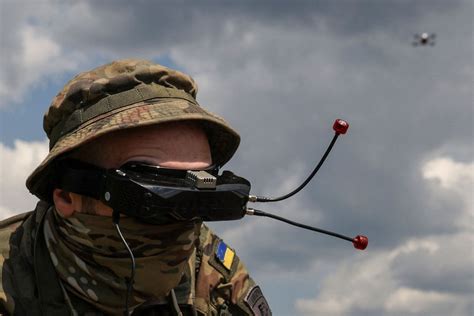
Ukraine’s Drone Doctrine Becomes the American Blueprint
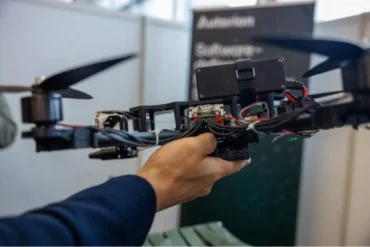
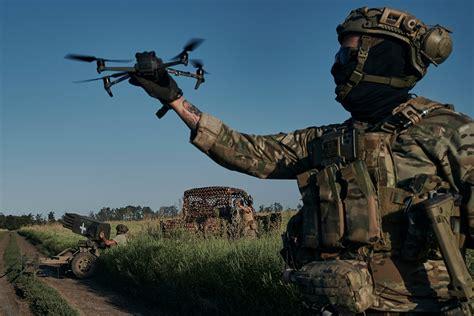
What once seemed like science fiction has now become doctrine: low-cost, agile FPV (First Person View) kamikaze drones have proven to be lethal, indispensable weapons in Ukraine’s arsenal. Initially deployed in small numbers during the early years of conflict with Russia, these drones are now produced at industrial scale—roughly 200,000 units per month, according to CNA analyst Sam Bendett.
The success of these drones lies in their simplicity, affordability, and adaptability. In the face of Russian electronic warfare, Ukrainian drone operators have had to innovate constantly, resulting in a battlefield evolution so dramatic that U.S. military planners are rethinking procurement, training, and technology deployment from the ground up.
T-REX: Simulating the Future of War in Indiana
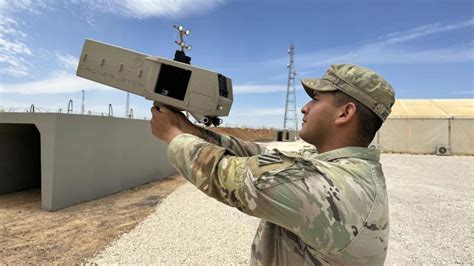
At the heart of this transformation is the T-REX program, which simulates urban drone combat through “red versus blue” drone skirmishes. These aren’t mere exercises—they’re live prototypes of future battlefields, testing not only FPV tactics but also counter-drone systems, electronic jamming resilience, and swarm coordination.
“We’re going to simulate the hardest battlefield conditions possible short of actual war,” said Alexander Lovett, Deputy Assistant Secretary of Defense for Prototyping and Experimentation. “And we’re going to do it with direct input from the only country that’s used drones at scale in high-intensity warfare—Ukraine.”
Ukrainian Advisors Bring Hard Truths
Ukrainian military advisors are slated to observe the T-REX drills and offer blunt, battlefield-tested feedback. Their presence underscores a pivotal shift: the U.S. military isn’t just studying Ukraine’s playbook—it’s inviting the authors to the table.
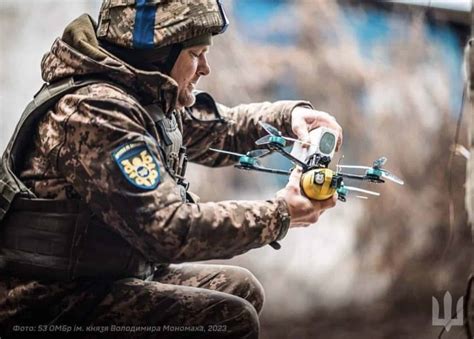
“If your stuff’s not in Ukraine, it’s not serious,” said Brandon Tseng, co-founder of Shield AI, a U.S.-based firm that supplies both American and Ukrainian forces. His statement speaks to the brutal filter that Ukraine’s war applies to military technology: only the most rugged, adaptable, and effective systems survive.
The U.S., constrained by FAA and FCC regulations that limit domestic use of GPS jamming and electromagnetic warfare simulations, has struggled to reproduce Ukraine’s operational environment. T-REX is a step toward closing that gap, with the Pentagon actively lobbying for expanded testing exemptions to simulate jamming-heavy conditions.
The Pentagon’s Replicator Program Falters
Initially intended to spearhead a new era of mass-produced, low-cost autonomous drones, the Replicator initiative has not met expectations. Bottlenecks in procurement and conservative acquisition practices have slowed delivery of relevant technologies to the field.
This has prompted Defense Secretary Pete Hegseth to authorize a dramatic pivot: decentralized procurement authority, allowing units to purchase drones directly from emerging vendors without wading through bureaucratic hurdles.
“We need to be world class, and we will,” Hegseth declared. “This isn’t about waiting three years for a contract. It’s about opening the aperture for innovation and getting it into the hands of warfighters—now.”
The Dawn of American Drone Dominance?
There is cautious optimism that this pivot could mark what Emil Michael, Undersecretary of Defense for Research and Engineering, called “the beginning of American drone dominance.” But Michael is also brutally honest: China, Russia, and Ukraine have a head start.
One of the U.S.’s primary disadvantages is its overregulation of testing environments. Unlike Ukraine, which routinely trains under active electronic warfare conditions, U.S. forces must rely on simulations that fail to capture the chaos of a real drone-infested battlefield.
Creative Autonomy and Decentralized Innovation
Analysts like Bendett argue that the U.S. will likely never match China’s industrial output or DJI’s market grip, but America can win through decentralized creativity and field-level autonomy. The Pentagon appears to be taking this to heart.
By empowering commanders and warfighters to select the drone systems that best fit their missions—and by learning directly from Ukraine’s innovations—the U.S. could create a mosaic of rapidly adaptable, interoperable drone technologies.
Michael emphasized that the path forward is not one-size-fits-all. “If you’re a smart builder… you could build to those specifications,” he said. “But those specs are being written by people with blood on their hands in Ukraine.”
Ukraine’s Drone Economy: A Wartime Innovation Engine
Ukraine’s drone transformation is not just about tactics—it’s a full-blown wartime economy. With tens of thousands of civilian engineers, hackers, and hobbyists repurposed as frontline developers, Ukraine has built the world’s most agile drone production ecosystem.
This collaborative, open-source approach has yielded modular drone designs, adaptive flight software, and swarming tactics that outmaneuver heavier and costlier systems.
By contrast, traditional U.S. defense contractors are burdened by bureaucratic inertia. The Pentagon’s new drone school is an attempt to absorb and institutionalize this insurgent innovation model.
Shield AI, Anduril, and the New Drone Vanguard
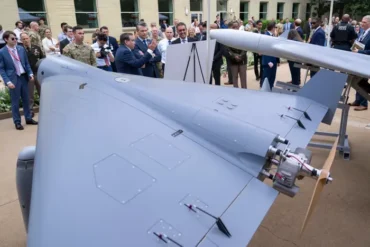
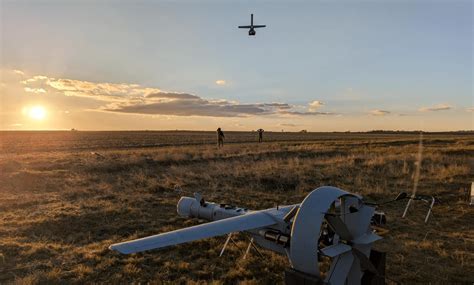
American startups like Shield AI and Anduril Industries are positioning themselves at the vanguard of this transformation. Shield AI’s V-BAT system and Anduril’s autonomous drone swarms are being fast-tracked for integration through T-REX.
These companies, many of which work directly with Ukrainian forces, have learned that survivability is king. If a drone fails in Ukraine, it’s dead weight. If it survives, it becomes a benchmark for what’s next.
The Next Phase: From Simulation to Deployment
The Indiana school is not an endpoint—it’s a launchpad for national adoption. According to Lovett, additional drone combat schools are already being scoped across Army, Navy, Air Force, and Marine Corps installations.
What makes the T-REX initiative unique is not just its realism, but its willingness to shed legacy thinking. Rather than fight the last war, the Pentagon is—perhaps for the first time—training for the next one, using Ukraine as a real-time case study.
Conclusion: Ukraine as the Unlikely Vanguard of U.S. Military Transformation
The opening of the Pentagon’s drone combat school in Indiana signals a pivotal moment in American military strategy. No longer content to rely solely on legacy systems or traditional procurement pathways, the U.S. is embracing a new doctrine—one built on decentralization, rapid innovation, and wartime feedback.
As Ukrainian advisors observe and critique T-REX exercises, their presence serves as a reminder that the future of warfare is already here—it’s just being written in blood on the battlefields of Donbas and Zaporizhzhia.
“If your stuff’s not in Ukraine, it’s not serious.” That quote now serves not just as critique, but as a guiding principle for America’s next-generation defense ecosystem.