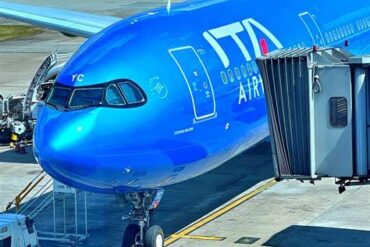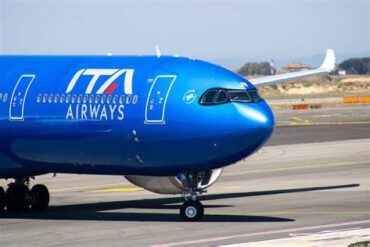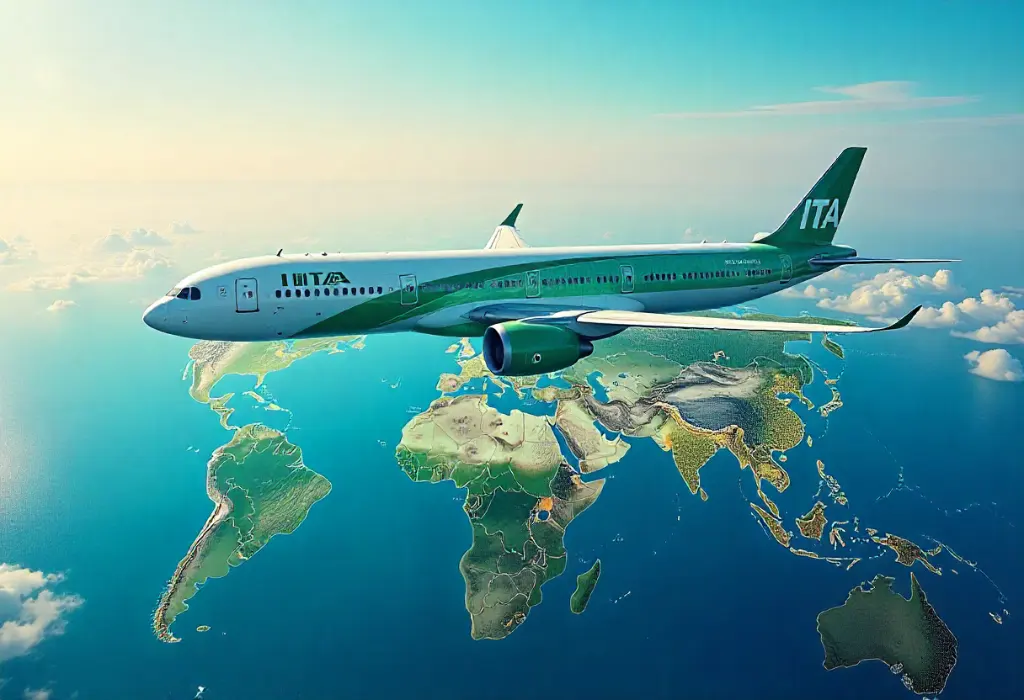
In a bold and transformative move, ITA Airways has unveiled a sweeping new 2026–2030 business strategy that redefines the future of Italy’s flagship airline. At the heart of this ambitious blueprint lies a commitment to long-haul expansion, environmental sustainability, fleet modernization, and deep global alliance integration. Anchored at Rome Fiumicino Airport, the strategy marks a significant pivot toward establishing ITA Airways as a premier international carrier capable of competing with Europe’s top aviation hubs.
Strategic Vision: Reasserting Italy’s Flagship Carrier
ITA Airways’ newly approved long-term strategy places a sharp focus on premium connectivity, economic efficiency, and sustainable aviation. This vision directly aligns with Italy’s broader goals of boosting international tourism and trade. By targeting both business and leisure markets, the airline aims to deliver service excellence that matches global expectations while integrating social and environmental accountability into every layer of operation.
From adopting cutting-edge aircraft to investing in human capital, the airline’s vision blends financial prudence with ecological responsibility, setting a precedent in an era when aviation must do more than just fly—it must lead.
Expanding Horizons: Long-Haul Network Growth from Rome
Beginning in 2026, ITA Airways will execute a significant expansion of its intercontinental route network from Rome Fiumicino. This move is designed to strengthen Italy’s role as a central global gateway and to funnel inbound tourism and business travel through the nation’s capital.
Key international markets are being targeted with new and increased services, including:
- North America: Planned new routes to Newark and Houston
- Asia: New services proposed for Osaka, Singapore, and Mumbai
- South America: Increased frequencies to Buenos Aires
- Africa: Under evaluation are Lagos and Abidjan
Seasonal leisure destinations such as Zanzibar, Havana, and Santo Domingo are also being considered to respond dynamically to peak demand cycles. This global thrust is matched by regional reinforcements in European and Mediterranean connectivity, leveraging strategic codeshare partnerships to offer robust intermodal service flexibility.
These strategic moves are expected to elevate Rome Fiumicino’s role from a primarily regional hub to a vital intercontinental node, enhancing Italy’s visibility and influence in the global aviation ecosystem.
Greener Skies: Fleet Renewal and Environmental Commitment
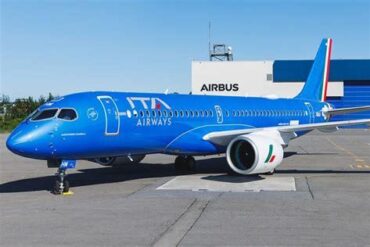
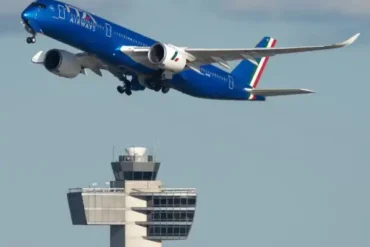
The fleet modernization effort set to begin in 2026 stands as the cornerstone of ITA Airways’ sustainability roadmap. By 2030, the airline aims to operate approximately 100 next-generation aircraft, featuring the most fuel-efficient and low-emission technology available.
Aircraft to be introduced include:
- Airbus A350s (approx. 4 units)
- Airbus A330-900neos (1 unit initially, with more expected)
Simultaneously, about 40 older aircraft will be retired by 2027, accelerating the transition toward an environmentally responsible fleet. This upgrade aligns with EU aviation targets, particularly around carbon emissions reductions and emissions allowances phase-out.
The benefits are twofold: a lower environmental footprint per passenger and improved cost-efficiency, thanks to reduced fuel consumption and maintenance requirements. In turn, passengers can expect quieter, cleaner, and more comfortable journeys, bolstering ITA Airways’ reputation as a future-ready airline.
Alliances That Matter: Star Alliance and Joint Ventures
ITA Airways is preparing to join Star Alliance by early 2026—an integration that will significantly expand its global footprint. This move is timed with its inclusion in key joint ventures, notably:
- Europe–North America (A++)
- Europe–Japan (J+)
These alliances are more than symbolic. They promise immediate and tangible benefits:
- Seamless global itineraries through codeshares
- Unified loyalty programs that reward cross-carrier travel
- Shared digital platforms and cargo services for streamlined operations
- Operational cost efficiencies and network synergies
With these integrations, ITA Airways gains access to vast new markets and reciprocal passenger flows, allowing it to compete on a scale previously out of reach for a national carrier emerging from restructuring.
Investing in People: Workforce Strategy for Growth
A strategy this bold requires not just technology and routes—but people. Starting in 2026, ITA Airways will launch a series of talent development and workforce expansion programs.
By the midpoint of the plan (2026–2028), the airline will actively recruit and train personnel across:
- Engineering and technical operations
- Digital aviation technologies
- Customer experience and logistics
This drive is not merely about scale. It’s about cultivating a cohesive, sustainability-minded workforce that aligns with ITA’s core mission. The emphasis will be on promoting innovation, environmental responsibility, and excellence in service delivery, enabling ITA Airways to become a globally competitive employer.
Implications for Travelers and the Industry
This ambitious transformation carries significant implications for global travelers and the broader aviation sector:
Rome Fiumicino is being positioned to rival other top-tier European hubs such as Frankfurt, Heathrow, and Charles de Gaulle. The new direct routes to strategic cities across four continents will simplify international travel for passengers flying to or from Italy, while improved alliance connectivity will reduce layover friction and expand destination options.
The introduction of next-gen widebody aircraft will offer eco-conscious travelers lower emissions per trip, while enhancing comfort and noise levels inside the cabin. Integrated loyalty programs and codeshare platforms mean passengers can enjoy greater rewards and booking flexibility, leading to a more unified and customer-centric experience.
From an economic standpoint, increased passenger flow, job creation, and heightened cargo throughput will invigorate Italy’s aviation and tourism sectors—positioning the country as not just a destination, but a transit and trade hub.
A Sustainable Future: Aviation as a Catalyst
This new chapter in ITA Airways’ evolution represents a blueprint for sustainable aviation in Europe. It reflects a rare balance between commercial ambition and environmental stewardship. If executed as planned, ITA Airways will transcend its current role, evolving into a standard bearer of what national carriers can achieve in a modern, decarbonizing world.
Between 2026 and 2030, Rome Fiumicino is expected to emerge as a top-tier international gateway, with ITA Airways serving as its beating heart. This transition will be closely watched by other carriers and policymakers, who may view it as a replicable model for blending growth with responsibility, and innovation with legacy.
From fleet strategy to staff recruitment, from green policies to global alliances, the airline is shaping a future where aviation is a force for good—a connector of people, a driver of economies, and a steward of the planet.