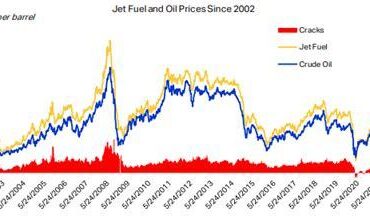
The 2026 Iran crisis has sent shockwaves through global aviation, transforming fuel from a manageable expense into a volatile, profit-eroding force. For JetBlue, the surge in jet fuel prices—climbing to $2.96 per gallon, a 15.2% increase year-over-year—has forced immediate recalibration. Fuel has always been one of the largest cost centers for airlines, but in this environment, it has become the defining variable separating resilient carriers from vulnerable ones.
This isn’t just a pricing issue; it’s a structural stress test. Disruptions in Middle Eastern oil supply chains have tightened availability, creating a cascading effect across global markets. For a hybrid carrier like JetBlue, which balances low-cost efficiency with premium offerings, the margin pressure is particularly acute. The airline’s response is not reactive improvisation—it is a calculated, multi-layered strategy designed to stabilize operations while preserving long-term competitiveness.
Strategic Capacity Cuts: Precision Over Panic
JetBlue’s most immediate lever is capacity reduction, but the nuance lies in how it is executed. Rather than broad, disruptive cuts, the airline is targeting off-peak travel periods, ensuring that high-demand routes remain intact. This approach reflects a disciplined understanding of demand elasticity—cut where it hurts least, preserve where it matters most.
The numbers reveal a measured response. A sub-1% reduction in Q2 capacity is followed by a more assertive 2–3% cut in the months ahead. These figures may appear modest, but in airline economics, even fractional adjustments can yield substantial cost savings when scaled across a network.
This strategy aligns with CEO Joanna Geraghty’s emphasis on controlling internal variables. Capacity is one of the few levers airlines can adjust quickly without compromising structural integrity. By fine-tuning supply to match demand, JetBlue is effectively insulating itself from the worst effects of fuel price volatility.
Florida’s Unexpected Strength: A Revenue Lifeline
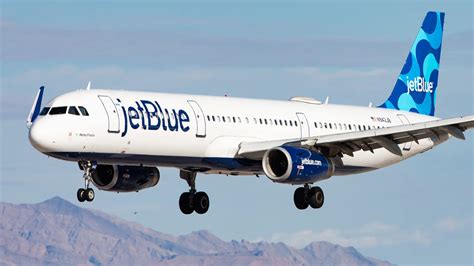
While the broader environment remains turbulent, Fort Lauderdale-Hollywood International Airport (FLL) has emerged as a bright spot in JetBlue’s network. The airline’s aggressive expansion in Florida has paid off, with capacity surging 23% year-over-year in Q1 2026. This growth has translated into a 5% increase in revenue per available seat mile, a critical metric for profitability.
This isn’t accidental success. JetBlue has strategically capitalized on market gaps left by competitors, particularly as Spirit Airlines scales back operations amid financial strain. By increasing frequencies and launching new routes in high-demand corridors, JetBlue has effectively absorbed displaced demand, turning a competitor’s weakness into its own advantage.
FLL now serves as more than just a regional hub—it is a core revenue engine. The airport’s performance underscores a broader truth in aviation strategy: resilience often comes from localized strength. While global conditions may be unstable, targeted market dominance can provide a stabilizing counterbalance.
Cost Discipline Beyond Capacity: The Quiet Efficiency Drive
Capacity adjustments alone cannot offset a fuel crisis of this magnitude. JetBlue has complemented its network strategy with aggressive cost optimization measures, focusing on operational efficiency and fuel management. These efforts include refining flight operations, optimizing routing, and leveraging data-driven insights to reduce unnecessary fuel burn.
Fuel optimization is no longer a technical detail—it is a strategic imperative. Every percentage point saved in fuel efficiency directly impacts the bottom line. JetBlue’s commitment to “evaluating opportunities to offset increased input costs” signals an ongoing, iterative process rather than a one-time fix.
This quiet efficiency drive often goes unnoticed compared to headline-grabbing capacity cuts, yet it plays an equally critical role. In an industry where margins are razor-thin, sustained profitability depends on relentless attention to operational detail.
Financial Reality Check: Growth Shadowed by Losses
Despite pockets of strength, JetBlue’s financial results paint a sobering picture. Operating revenue rose 4.7% to $2.24 billion, indicating steady demand and effective pricing strategies. However, this growth was overshadowed by a 6.5% increase in operating expenses, driven largely by fuel costs.
The consequence is stark: a 28.5% increase in operating loss, reaching $224 million, and a net loss of $319 million, up 53% from the previous year. These figures highlight the brutal arithmetic of the current environment—revenue gains are being outpaced by cost escalation.
This is not a failure of strategy but a reflection of macroeconomic forces. Even well-executed plans struggle to fully counterbalance a systemic cost surge. The key lies in minimizing damage while positioning for recovery, and JetBlue’s actions suggest a clear focus on both.
Balancing Survival and Strategy: JetBlue’s Forward Path
JetBlue’s approach to the 2026 fuel crisis is defined by balance. It is neither retreating aggressively nor maintaining unsustainable growth. Instead, the airline is threading a narrow path—cutting where necessary, investing where advantageous, and optimizing continuously.
The emphasis on high-demand markets, particularly in Florida, ensures that revenue streams remain robust. Meanwhile, targeted capacity reductions and cost discipline act as safeguards against further financial deterioration. This dual strategy reflects a mature operational philosophy: protect the core while adapting the edges.
There is also a subtle but important psychological dimension. By communicating decisive action and highlighting areas of success, JetBlue reassures investors and stakeholders that it remains in control, even in a volatile environment. Confidence, in this context, becomes an asset in its own right.
Conclusion: Resilience Engineered in Real Time
JetBlue’s response to the 2026 Iran crisis fuel spike is a case study in adaptive strategy. It demonstrates how airlines can navigate external shocks through a combination of precision adjustments, market opportunism, and operational rigor. The challenges are undeniable, and the financial strain is real, but the framework in place is designed for endurance.
In an industry where external forces often dictate outcomes, JetBlue is focusing on what it can control—and doing so with clarity and intent. That, more than any single metric, defines its path forward.