We explore the fierce, almost mythic evolution of fighter jet propulsion through five engines that reshaped what air power means. These machines are not just mechanical hearts; they are the molten cores of modern combat capability, bending metal, air, and thermodynamics into raw force. The following deep dive unpacks the engineering, performance, and strategic impact behind the Pratt & Whitney F135, F119, AL-41F1S, EJ200, and XF9-1, tracing how each has pushed the boundaries of thrust, speed, and maneuver dominance.
Fighter jets evolved from crude early designs into supernatural machines at an astonishing pace. The world’s first operational jet fighter, the Messerschmitt Me 262, staggered the imagination during World War II by shattering piston-era speed limits. Yet its Junkers Jumo 004 engines, producing barely 1,980 pounds of thrust, now read like footnotes—ancient relics compared to the monstrous systems powering fifth-generation fighters today.
Modern engines push well past 30,000 to 40,000 pounds of thrust, endure infernal operating temperatures, and tolerate extreme G-force environments while keeping pilots alive and aircraft responsive. They deliver not only raw acceleration but stealthier thermal signatures, smarter diagnostics, and supercruise capability—the prized ability to break the sound barrier without an afterburner.
These engines are the industrial alchemy behind aerial supremacy. Their stories, specifications, and battlefield implications reveal how air forces compete, innovate, and signal dominance in the global arena.
Pratt & Whitney F135: The Titan Behind the F-35 Lightning II
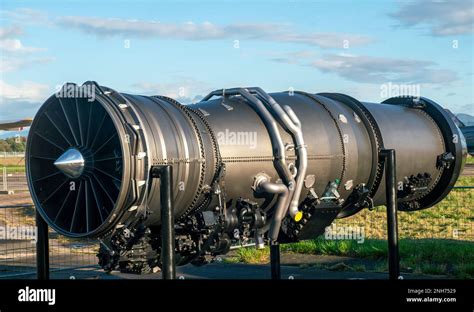
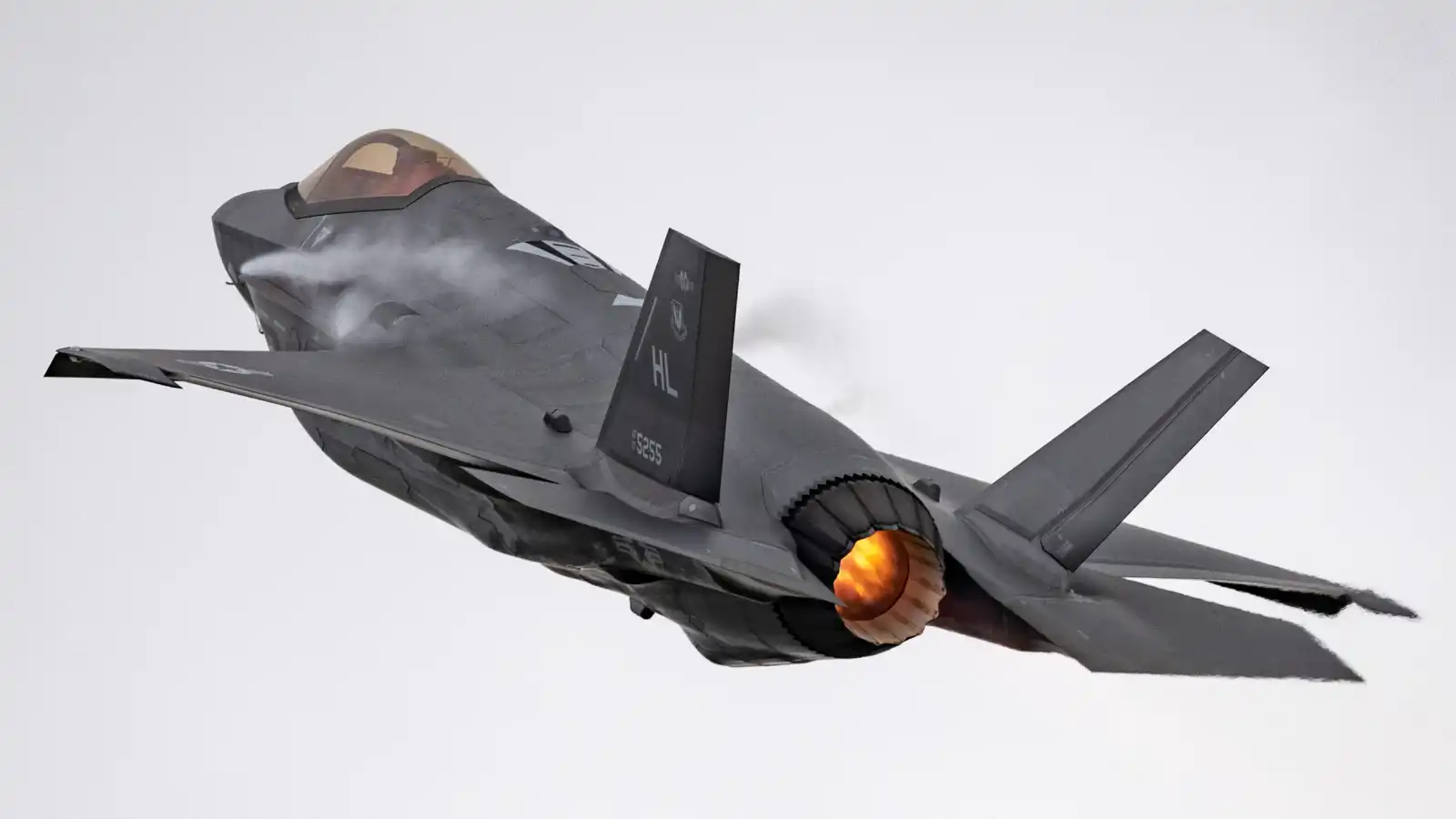
The Pratt & Whitney F135 is widely regarded as the apex predator of modern fighter jet engines. It is the heaving, fire-breathing core of the F-35—a stealth strike fighter engineered not merely for speed, but for data fusion, survivability, and versatility across land, sea, and air.
Its defining figure is both simple and staggering: 40,000+ pounds of thrust. This places it among the most potent military turbofans in aviation history. When the F-35A surges to Mach 1.6, climbs beyond 50,000 feet, or performs energy-intensive maneuvers while carrying precision weapons, it is the F135 that makes those feats possible.
Beyond its immense thrust, the engine weaves together thermal-signature suppression, self-monitoring diagnostics, durability improvements, and the ability to withstand punishing STOVL (short takeoff/vertical landing) demands in the F-35B variant. These features allow the F-35 fleet to stay airborne longer, survive contested environments, and integrate seamlessly with modern digital warfare ecosystems.
Pratt & Whitney F119: The Supercruising Soul of the F-22 Raptor
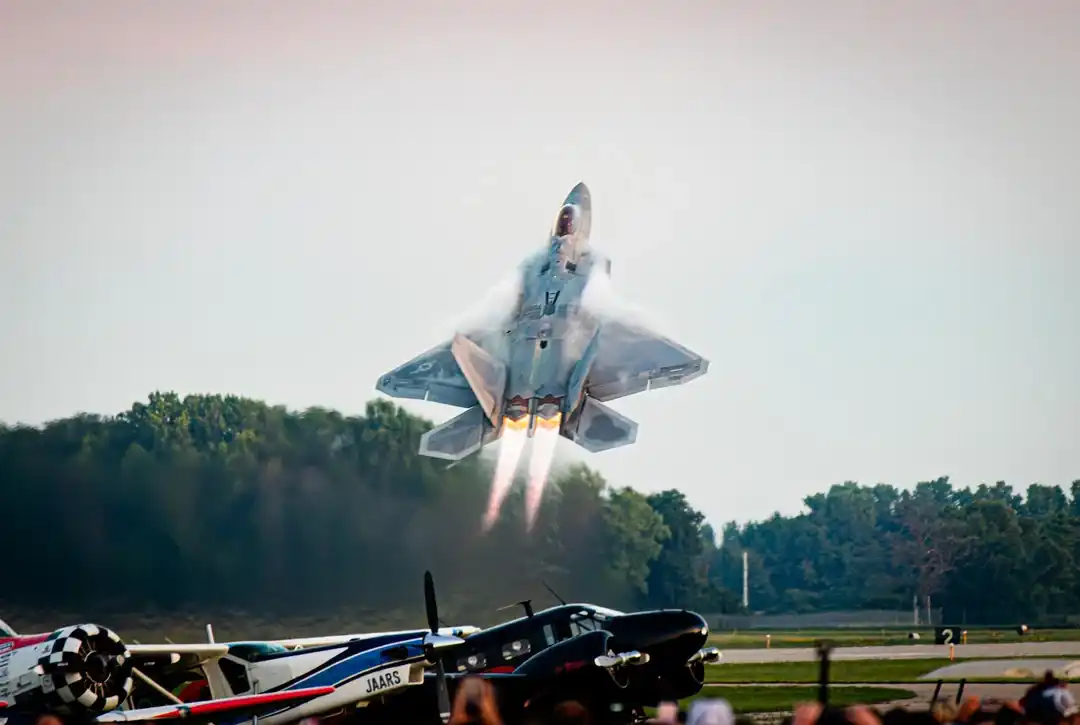
If the F135 is a titan, the F119 is a predator’s spine: agile, sharp, and built for dominance in contested airspace. Developed for the F-22 Raptor, this engine delivers around 35,000 pounds of thrust per unit, giving the twin-engine Raptor an explosive combined output of 70,000 pounds.
But the true magic is supercruise. The F119 allows the F-22 to storm through the sky at Mach 1.5+ without using an afterburner—a capability still rare in global aviation. This saves fuel, reduces infrared signatures, and lets the aircraft maneuver freely without the telltale plume of an afterburner.
Even more transformative is its two-dimensional thrust-vectoring. By angling exhaust nozzles up to 20 degrees, the Raptor can twist, pivot, and climb with balletic aggression, performing maneuvers that would be impossible for traditional jets. This grants a close-combat advantage that borders on unfair.
The F119 is a synergistic balance of stealth shaping, efficiency, and violent thrust potential—an engine that made the F-22 a living legend.
AL-41F1S: Russia’s Flagship Engine Driving the Su-35’s Vicious Agility
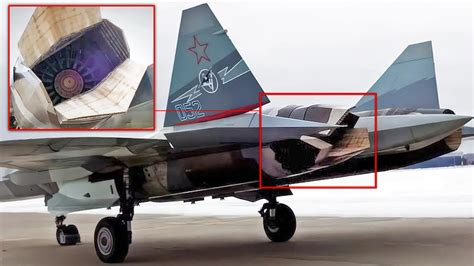
Russia’s engineering heritage in fighter propulsion is long and storied, and the AL-41F1S stands among its most formidable creations. Powering the Su-35, this engine generates up to 32,000 pounds of thrust with afterburner, enabling the aircraft to reach speeds surpassing Mach 2.
The Su-35 leverages this power to carry heavy weapons—including the GSh-301 autocannon and long-range R-37M missiles—while maintaining impressive agility thanks to advanced thrust-vectoring nozzles. These vectoring systems grant the Su-35 its signature airborne contortionism: ultra-tight turns, high-angle climbs, and short-field landing maneuvers uncommon for fighters of its size.
Recognized as a Generation 4++ jet, the Su-35 integrates many fifth-generation traits except full stealth. Its engine’s performance, particularly in supercruise and maneuver authority, plays a pivotal role in its reputation as one of the most feared air-combat platforms outside NATO.
EJ200: The Lightweight, High-Output Engine of the Eurofighter Typhoon

The EJ200, a product of Europe’s multinational EUROJET consortium, exemplifies extreme efficiency married to high output. While physically compact and lightweight, it unleashes 13,500 pounds of dry thrust and a muscular 20,000 pounds with afterburner, serving as the twin-engine backbone of the Eurofighter Typhoon.
This engine’s charm lies in its balance: minimal weight, smart health monitoring, long maintenance cycles, and notably low fuel consumption for its class. These traits allow the Typhoon to carry more internal fuel—roughly 7,600 kilograms—while retaining exceptional climb rates and maneuvering responsiveness.
Its reliability is battle-tested. First seeing combat in Operation Ellamy in 2011, the EJ200 continues to secure new orders, such as Spain’s acquisition of 59 additional engines slated for delivery in 2029. Rolls-Royce and its partners position it as a cornerstone propulsion system for Europe’s ongoing airpower evolution.
XF9-1: Japan’s Future-Shaping Leap Into Next-Generation Power
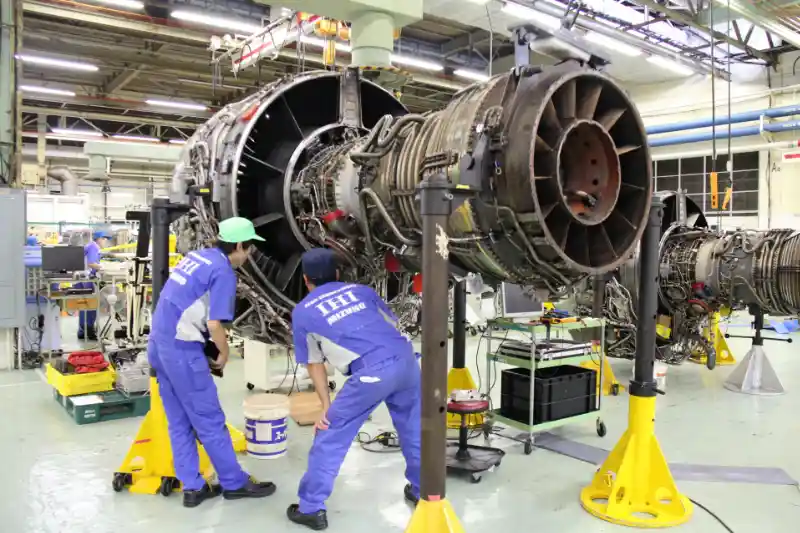
Japan’s XF9-1 represents a bold commitment to shaping the propulsion future of sixth-generation fighters. Developed by IHI Corporation, this low-bypass afterburning turbofan pushes boundaries with more than 24,000 pounds of dry thrust and over 33,000 pounds with afterburner, placing it among the most promising developmental engines in Asia’s defense sector.
Its true importance lies in potential. Current projections suggest optimized variants could exceed 44,000 pounds of thrust, positioning the engine as a leading candidate for India’s Advanced Medium Combat Aircraft (AMCA) program. Such an international partnership would reshape strategic alignments and accelerate next-generation fighter development across the Indo-Pacific.
Compact, efficient, and scorching in output, the XF9-1 is engineered for extreme thermal tolerances—crucial for future stealth aircraft that demand both power and low observability. While not yet installed on an operational fighter, its trajectory suggests it may become one of the defining engines of the 2030s.
The Global Race for Aerial Dominance
The evolution of fighter jet engines is a story of relentless competition—nations pushing metallurgy, fuel chemistry, computational analysis, and thermodynamics to extremes. Each generation brings hotter turbines, stronger alloys, smarter sensors, and deeper integration with digital avionics.
The F135’s raw might, the F119’s supercruise mastery, the AL-41F1S’s acrobatic thrust vectoring, the EJ200’s efficiency, and the XF9-1’s future promise each illuminate different philosophies in the global contest for air superiority.
These engines power the aircraft that project national identity, military strength, technological prowess, and geopolitical influence. Their development shapes alliances, doctrines, and the balance of power across continents. As new materials and hybrid propulsion concepts emerge, the next leap in fighter engine evolution promises to be even more dramatic, likely defining aerial warfare for decades.
The race continues, and the sky remains the proving ground where nations test the limits of physics, ambition, and innovation.